
Using a mobile mechanic does not void your car warranty. Under the Magnuson-Moss Warranty Act, manufacturers cannot deny warranty coverage solely because maintenance was performed by an independent shop or mobile provider, provided that the service meets manufacturer specifications and proper records are maintained.
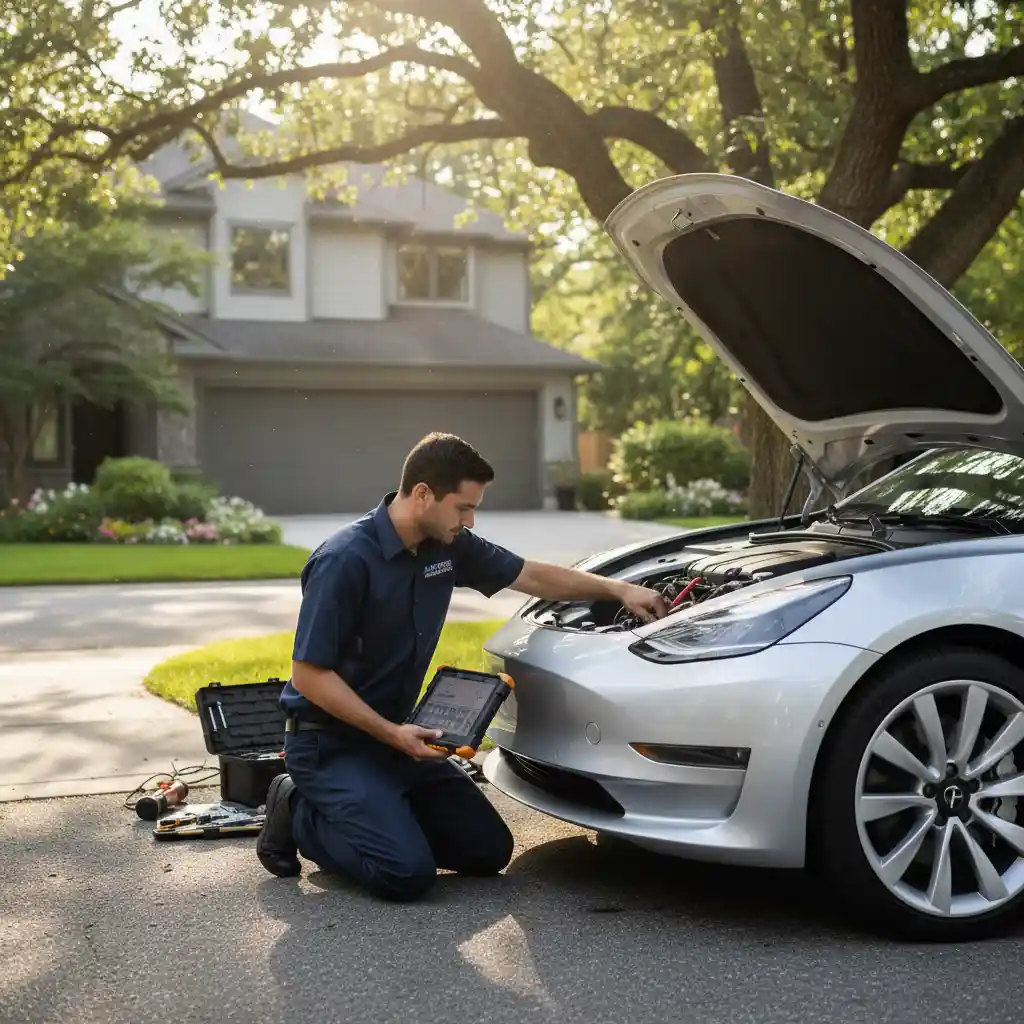
For decades, a pervasive myth has circulated within the automotive industry, suggesting that if you do not take your vehicle to the dealership for every oil change, tire rotation, or brake pad replacement, your manufacturer’s warranty will be instantly nullified. This fear keeps millions of car owners tethered to dealership service centers, often paying premium rates for convenience they could find elsewhere. However, the rise of premium mobile mechanic services has challenged this model, offering driveway service that is not only convenient but also entirely legal and safe for your vehicle’s warranty coverage.
The Myth of the Voided Warranty
The concept that your warranty is a fragile agreement that shatters the moment an independent wrench touches your engine is largely a marketing tactic employed by dealerships. Service departments are significant revenue generators for car dealerships, often more so than the sales floor itself. By implying that independent mechanics or mobile services lack the authority to work on a specific make or model, dealers create a captive audience.
In reality, the automotive service industry is regulated to prevent exactly this kind of monopoly. While modern vehicles are complex machines requiring specialized diagnostic tools and expertise, the right to repair and maintain your own property—or hire a professional of your choice to do so—is a protected consumer right. Whether you drive a Ford, a Toyota, or a BMW, the warranty is a binding contract regarding the quality of the vehicle’s manufacturing, not a coercion tool to force you into a specific service lane.
Understanding the Magnuson-Moss Warranty Act
To understand why a mobile mechanic cannot void your warranty simply by existing, one must look at the legal framework governing consumer products in the United States. Passed in 1975, the Magnuson-Moss Warranty Act is the federal statute that governs warranties on consumer products. Its primary purpose was to fix problems associated with vague or misleading warranties and to prevent manufacturers from forcing consumers to use their branded parts or services.
One of the most critical components of this act is the prohibition of “tie-in sales” provisions. Essentially, a manufacturer cannot require you to use their brand of oil filters, their brand of fluids, or their specific labor force to maintain your warranty unless they provide those parts and services for free.
According to the Federal Trade Commission (FTC), which enforces this act, a manufacturer or dealer can only deny warranty coverage if they can demonstrate that the specific work performed by the independent mechanic caused the failure in question. They cannot void the warranty simply because an independent mechanic touched the car.
Routine Maintenance vs. Warranty Repairs
To utilize mobile mechanics safely, it is vital to distinguish between routine maintenance and warranty repairs. Mixing these two up is where confusion often arises.
Routine Maintenance
Routine maintenance includes scheduled services outlined in your owner’s manual. This includes:
- Oil and filter changes
- Brake pad and rotor replacement
- Fluid flushes (coolant, transmission, brake fluid)
- Air filter and cabin filter replacement
- Spark plug replacement
- Battery replacement
You represent the paying customer for these services. Consequently, you have the legal right to have a mobile mechanic perform them in your driveway, or even do them yourself, without affecting your warranty status.
Warranty Repairs
Warranty repairs refer to fixing a defect in materials or workmanship that the manufacturer covers. For example, if your transmission fails prematurely due to a factory defect, or your infotainment screen goes black, these are warranty issues.
Crucial Note: Actual warranty repairs must be performed by an authorized dealership or service center to be covered financially by the manufacturer. A mobile mechanic cannot perform a free warranty repair and bill the manufacturer unless they are specifically authorized (which is rare for general independent mobile mechanics). If you suspect a factory defect, you should go to the dealer. For everything else, a mobile mechanic is perfectly safe.
The Critical Role of OEM and Equivalent Parts
While the who (the mechanic) doesn’t void the warranty, the what (the parts used) matters significantly. To maintain your warranty’s integrity, the parts installed must meet or exceed the specifications set by the Original Equipment Manufacturer (OEM).
There are generally two categories of parts:
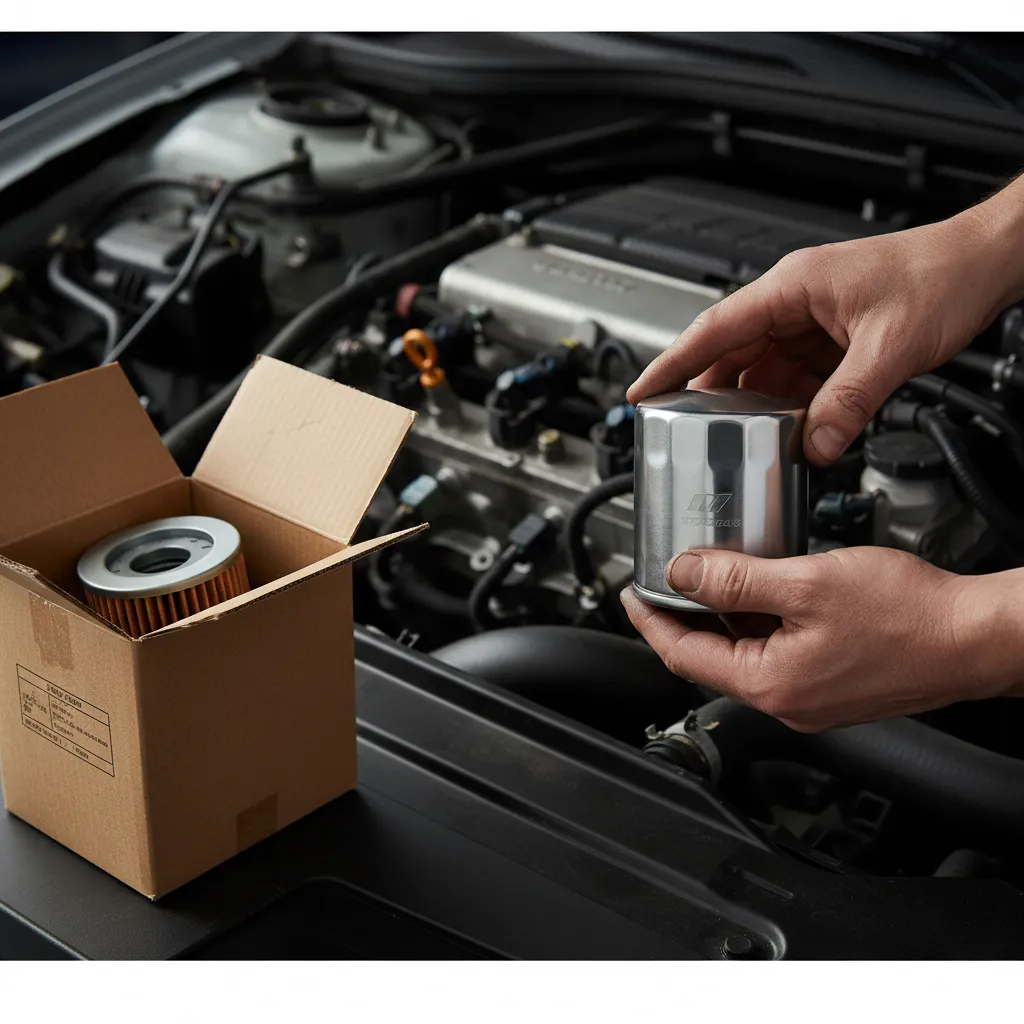
- OEM Parts: These are the exact parts made by the car manufacturer (e.g., a Honda oil filter in a Honda box).
- OEE (Original Equipment Equivalent) or Aftermarket Parts: These are parts made by third-party companies. Many are high quality, while others are cheap imitations.
A reputable mobile mechanic will use OEM or high-grade OEE parts. For instance, using a premium synthetic oil that meets the specific viscosity and API standards listed in your owner’s manual is perfectly acceptable. However, if a mechanic installs a sub-par oil filter that collapses and starves the engine of oil, the manufacturer can deny the warranty claim for that specific engine damage. The denial is not because a mobile mechanic did the work, but because the wrong part caused the failure.
Why Documentation is Your Safety Net
If a warranty dispute ever arises, the burden of proof initially falls on you to show that the vehicle was maintained according to the schedule. This is where documentation becomes your most powerful tool. The days of stuffing handwritten receipts into the glovebox are over; modern mobile mechanics often have an advantage here.
Most professional mobile mechanic services utilize digital platforms. When you book a service, everything is tracked electronically. Upon completion, you typically receive a detailed digital invoice via email that includes:
- Date and mileage of the service.
- Specific parts used (including part numbers).
- Labor performed.
- Notes on the vehicle’s condition.
This digital trail is often superior to the paperwork provided by small independent brick-and-mortar shops. If a dealership ever questions whether you changed your oil on time, forwarding a PDF invoice from your mobile mechanic with the timestamp and mileage is usually sufficient proof to satisfy the requirement.
When Can a Warranty Actually Be Voided?
It is important to be transparent: warranties can be voided, or more accurately, claims can be denied. However, this is rarely a blanket “voiding” of the entire warranty but rather a denial of coverage for specific components. Here is how a mobile mechanic scenario could theoretically lead to a problem, and how to avoid it.
Improper Installation
If a mobile mechanic strips the oil drain plug, leading to a massive oil leak and engine seizure, the manufacturer will not cover the engine replacement. That damage is a result of negligence, not a factory defect. In this case, the liability falls on the mobile mechanic’s insurance, not the car warranty. This is why hiring a licensed and insured mobile mechanic is non-negotiable.
Performance Modifications
If you hire a mobile mechanic to install a performance tuning chip, an aftermarket turbocharger, or a lift kit that alters the vehicle’s geometry, you are entering risky territory. Manufacturers can deny warranty claims if they can prove these modifications caused the failure. Routine maintenance does not fall into this category.
How to Choose a Warranty-Safe Mobile Mechanic
To ensure your vehicle remains compliant with warranty standards while enjoying the convenience of mobile service, follow these guidelines:
- Check for ASE Certification: The National Institute for Automotive Service Excellence (ASE) certifies mechanics. While not a legal requirement for warranty work, it is a strong indicator of competence.
- Verify Insurance: Ensure the provider carries liability insurance. If they make a mistake that damages your car (and voids a specific warranty claim), their insurance is your recourse.
- Request OEM/OEE Parts: When booking, specifically ask for parts that meet manufacturer specifications.
- Keep Digital Records: Save every invoice in a dedicated folder in your email or cloud storage.
For further reading on consumer rights and vehicle maintenance, reputable sources like Consumer Reports offer extensive guides on navigating dealer interactions vs. independent repairs.
Conclusion
The question “does a mobile mechanic void warranty” has a clear, legal answer: No. You are the owner of your vehicle, and the law protects your right to service it where you choose. Mobile mechanics offer a modern, efficient, and transparent alternative to the traditional dealership waiting room.
As long as the mechanic is competent, uses the correct parts, and you maintain records of the service, your warranty remains fully intact. Do not let fear-mongering dictate your service choices; rely on the law and the convenience of modern automotive care.
People Also Ask
Can a dealership deny warranty if I change my own oil?
No, a dealership cannot deny warranty coverage simply because you changed your own oil. However, you must keep receipts for the oil and filter purchase and keep a log of the date and mileage to prove the maintenance was done according to the schedule.
Does using aftermarket parts void my car warranty?
Using aftermarket parts does not automatically void your warranty. However, if an aftermarket part fails and causes damage to other components (e.g., a cheap air filter lets dirt into the engine), the manufacturer can deny coverage for that specific damage.
What is the Magnuson-Moss Warranty Act?
The Magnuson-Moss Warranty Act is a US federal law passed in 1975 that prevents manufacturers from forcing consumers to use specific branded parts or services to maintain their warranty, promoting competition and consumer choice.
Do mobile mechanics provide receipts for warranty proof?
Yes, professional mobile mechanics provide detailed invoices (often digital) listing the parts used, labor performed, mileage, and date. These invoices serve as valid proof of maintenance for warranty purposes.
Can I use a mobile mechanic for a recall repair?
Generally, no. Recall repairs and specific warranty work (fixing factory defects) must be performed by an authorized dealership to be covered financially by the manufacturer.
Does a mobile mechanic need to be ASE certified to keep my warranty?
Legally, no. The law does not require the mechanic to be ASE certified to maintain the warranty. However, using a certified mechanic ensures the work is done correctly, preventing damage that could lead to a warranty claim denial.