
Brake disc replacement mobile services involve certified mechanics traveling directly to your location to remove worn or damaged rotors and install new, high-quality replacements. This on-site solution eliminates the logistical hassle of repair shops while ensuring your vehicle’s braking system is restored to optimal safety standards using professional-grade tools and parts.
What Is Mobile Brake Disc Replacement?
In the evolving landscape of automotive maintenance, the demand for convenience has given rise to specialized mobile repair services. Specifically, brake disc replacement mobile services cater to vehicle owners who require urgent or scheduled brake maintenance without the downtime associated with traditional brick-and-mortar garages.
Brake rotors (also known as discs) are the large metal plates visible behind the wheels of your car. When you press the brake pedal, the calipers squeeze the brake pads against these spinning rotors to create friction, which slows and stops the vehicle. Over time, friction and intense heat wear these components down. A mobile service brings the shop to you—equipped with jacks, stands, pneumatic tools, and diagnostic equipment—to perform this critical swap in your driveway or office parking lot.
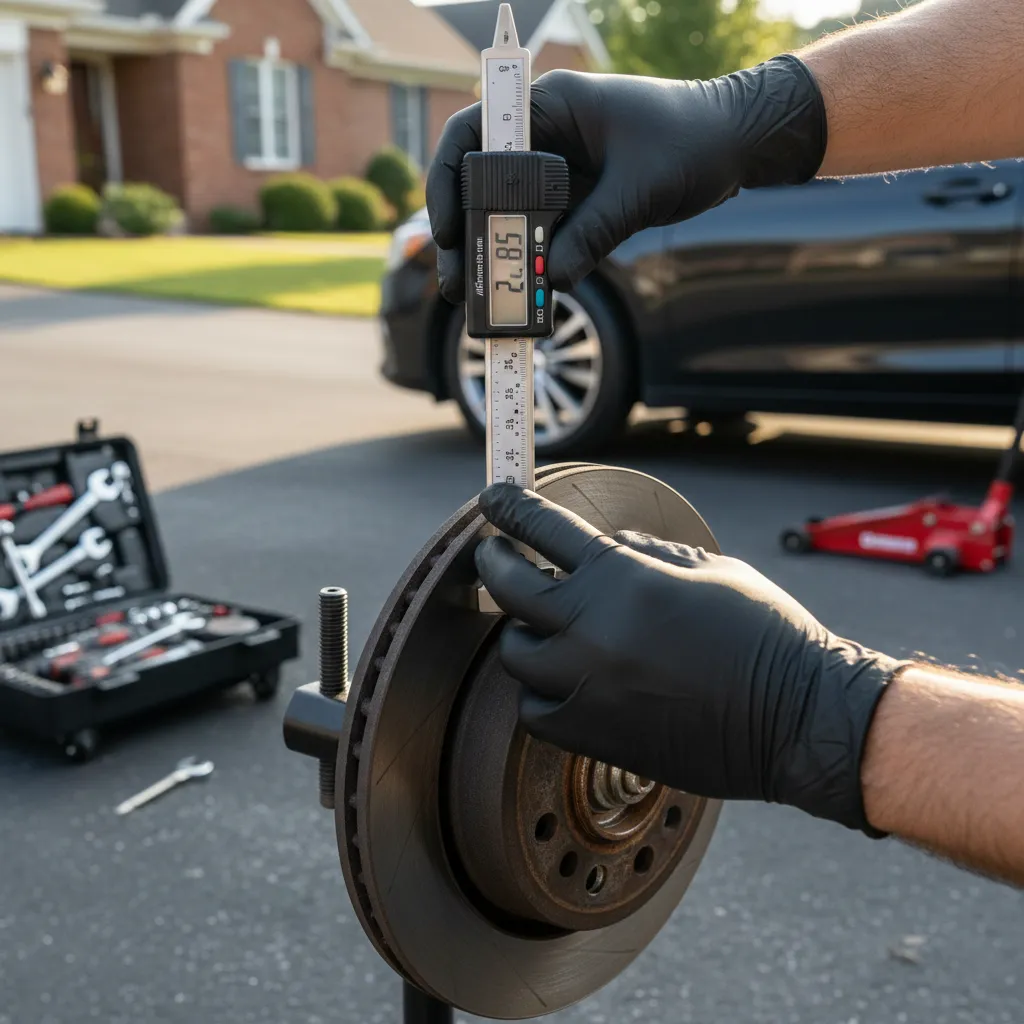
Critical Signs Your Brake Rotors Need Attention
Recognizing the symptoms of failing rotors is essential for road safety. Unlike brake pads, which often have built-in wear indicators that squeal, rotors can fail in ways that affect the handling and feel of the vehicle before they make noise.
1. Steering Wheel Vibration and Pulsation
The most common indicator of rotor issues is a noticeable vibration in the steering wheel or brake pedal when applying pressure. This is often attributed to “warped” rotors. Technically, rotors rarely warp from heat alone; instead, they develop thickness variation (DTV) caused by uneven transfer of friction material from the pads to the rotor surface. This uneven surface causes the pads to bounce as they pass over high spots, transmitting a pulsation back to the driver.
2. Grinding Noises
If you hear a loud growling or grinding sound, it usually means the brake pads have worn down completely, and the metal backing plate is digging into the rotor. This causes severe scoring (deep grooves) on the disc surface. Once metal-on-metal contact occurs, the rotor is usually destroyed and must be replaced immediately.
3. Blue Discoloration
Visible blue marks on the rotor surface indicate excessive heat buildup. When rotors overheat, the metal structure can change, leading to a phenomenon known as glazing. Glazed rotors have a hardened surface that friction material cannot grip effectively, significantly increasing stopping distances.
4. Visible Grooves and Scoring
Inspect your rotors through the wheel spokes. Healthy rotors should be relatively smooth. If you see deep concentric circles or grooves resembling a vinyl record, the surface integrity is compromised. These grooves reduce the contact area for the pads, diminishing braking power.
The Science of Diagnosis: Measuring Thickness and Runout
Professional technicians do not rely on guesswork. Determining whether a rotor needs replacement involves precise measurements using specific tools.
Rotor Thickness
Every vehicle manufacturer specifies a “Minimum Thickness” for brake discs, usually stamped on the hub of the rotor. Technicians use a micrometer to measure the disc at several points. If the rotor is at or below this minimum specification, it cannot dissipate heat effectively and risks cracking under stress. It must be discarded and replaced.
Lateral Runout
Runout refers to the amount of side-to-side wobble a rotor exhibits as it spins. Using a dial indicator, a mechanic can measure this wobble. Excessive runout leads to the “warped” sensation described earlier. While minor runout can sometimes be corrected, significant deviation requires new hardware.
For detailed safety standards regarding vehicle braking systems, the National Highway Traffic Safety Administration (NHTSA) provides extensive data on equipment requirements and safety compliance.
Replacing Discs vs. Skimming: The Modern Consensus
Decades ago, it was standard practice to “turn” or “skim” rotors—using a lathe to shave off a thin layer of metal to restore a flat surface. However, the automotive industry has shifted away from this practice for several reasons.
- Thinner Manufacturing: Modern rotors are designed to be lighter to improve fuel economy. This leaves less sacrificial metal to remove. Skimming them often brings them dangerously close to the minimum thickness discard limit immediately.
- Cost-Effectiveness: The cost of labor to set up a lathe and resurface a rotor often rivals the cost of a brand-new, high-quality aftermarket rotor.
- Longevity: A resurfaced rotor is thinner and heats up faster, making it more prone to warping again shortly after the service.
For these reasons, most reputable mobile mechanics advocate for full replacement to ensure a longer-lasting repair and superior safety.
Why Choose Mobile Brake Disc Replacement?
Opting for a mobile service offers distinct advantages, particularly for a transactional search intent where time and efficiency are paramount.
Transparency and Trust
When you take a car to a shop, you often leave it there and wait for a phone call. With mobile service, the work is performed right in front of you. You can see the old parts coming off and verify the quality of the new parts going on. This transparency builds trust and ensures you aren’t being upsold on unnecessary repairs.
Convenience and Safety
Driving a vehicle with compromised brakes to a shop is inherently risky. A mobile mechanic eliminates this danger. Furthermore, it saves you the time cost of arranging rides, sitting in waiting rooms, or dealing with loaner cars.
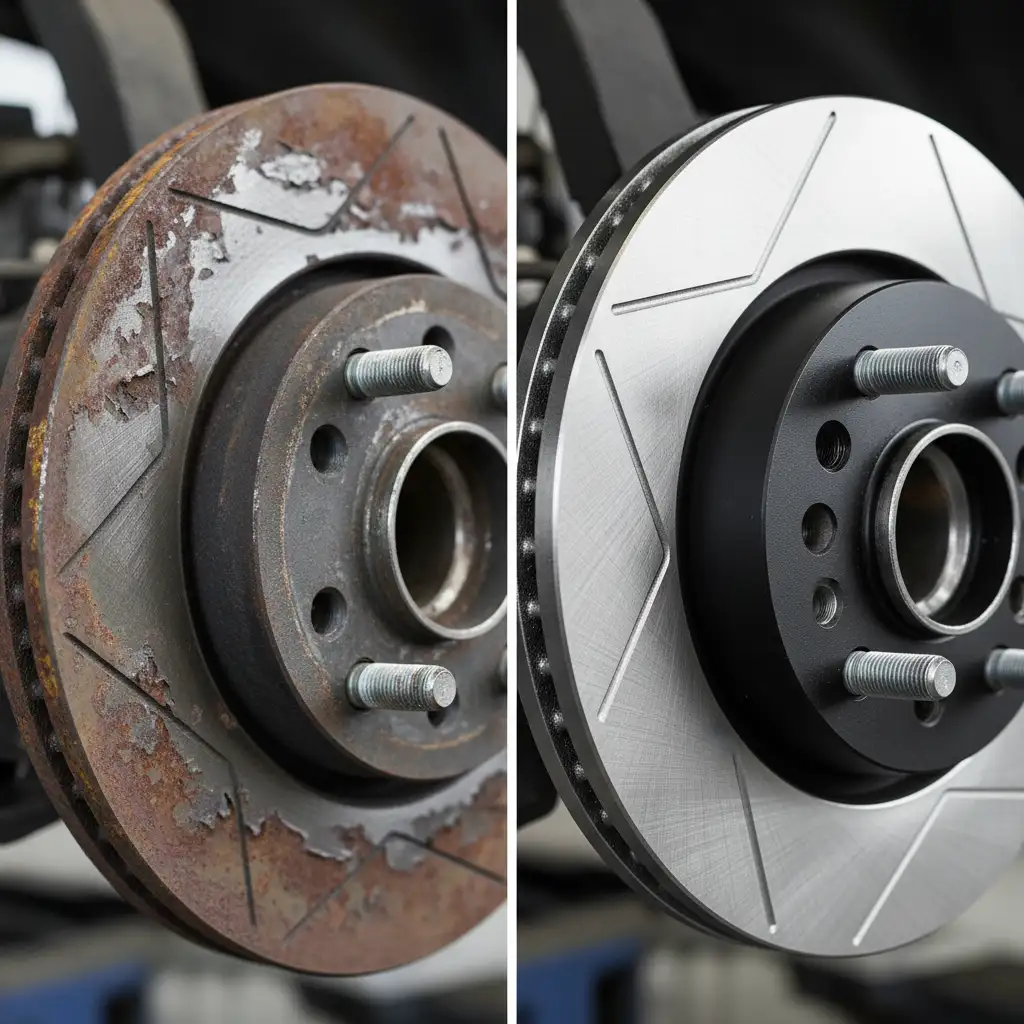
The Importance of Matching Pads and Rotors
When replacing rotors, it is an absolute rule of thumb to replace the brake pads simultaneously. Old pads will have worn into the shape of the old rotors (often with grooves). Placing old, uneven pads on a new, flat rotor results in poor contact, reduced braking power, and rapid damage to the new disc.
Friction Material Chemistry
The type of rotor should match the pad material. For example:
- Ceramic Pads: These are quieter and produce less dust. They work well with standard smooth rotors but require a proper bedding-in process to transfer a layer of film to the rotor.
- Semi-Metallic Pads: These offer aggressive stopping power and heat management but are more abrasive. They are often paired with drilled or slotted rotors in performance applications to help wipe away debris and gas.
The Professional Replacement Procedure
While this guide targets those seeking a service, understanding the workflow helps you verify the quality of the mobile mechanic’s work.
1. Lifting and Securing
The mechanic will lift the vehicle and secure it on jack stands. Relying solely on a hydraulic jack is a safety violation.
2. Removal of Caliper and Bracket
The brake caliper is removed and suspended via a hanger hook to prevent stress on the flexible brake line. The caliper bracket, which holds the pads, is then unbolted.
3. Rotor Removal
In salt-belt regions, rotors often seize to the hub due to rust. Mechanics use specialized hammers or pullers to break this rust bond without damaging the wheel bearing.
4. Hub Cleaning (Crucial Step)
This is where amateurs fail and professionals succeed. The wheel hub face must be wire-brushed until it is free of rust and debris. Even a speck of rust 0.005 inches thick can cause the new rotor to sit unevenly, leading to immediate runout and vibration. A light coat of anti-seize is often applied to prevent future corrosion.
5. Installation and Torque
The new rotor is installed. The caliper bracket and caliper are reinstalled with thread-locker on the bolts. Finally, the wheel is mounted, and lug nuts are torqued to manufacturer specifications. Uneven lug nut torque is a leading cause of rotor distortion.
6. Bedding In
The mechanic should perform a test drive to “bed in” the brakes. This involves a series of controlled stops to heat up the pads and transfer a uniform layer of friction material to the rotor.
Preventing Future Rotor Damage
Once you have invested in a brake disc replacement mobile service, you want your new brakes to last. Follow these tips to extend their lifespan:
- Avoid Thermal Shock: Do not wash your car immediately after a long drive. Spraying cold water on hot rotors can cause instant metal warping.
- Engine Braking: On long downhill descents, shift to a lower gear to let the engine slow the car, reducing heat buildup in the brakes.
- Proper Wheel Torque: If you ever change a tire yourself, use a torque wrench. Over-tightening lug nuts with an impact gun can distort the rotor hub.
For further reading on automotive maintenance standards, reliable sources like Kelley Blue Book’s Maintenance Guide offer excellent general advice for vehicle owners.
Frequently Asked Questions
Below are common questions regarding mobile brake disc replacement services.
How long does it take to replace brake rotors?
On average, replacing brake rotors and pads takes between 45 minutes to 1.5 hours per axle (front or rear). Mobile mechanics can often work faster as they are focused solely on your vehicle without the distractions of a busy shop environment.
Can I just replace rotors and not pads?
No, it is highly discouraged. Old brake pads will have wear patterns matching the old rotors. Installing them on new rotors results in uneven contact, reduced braking efficiency, and can quickly damage the new discs.
Is it cheaper to resurface or replace rotors?
While resurfacing (skimming) is technically cheaper in terms of parts, the labor cost often makes the total price comparable to replacement. Furthermore, replacement offers better longevity and safety, making it the more cost-effective choice in the long run.
How do I know if my rotors are warped?
The most tell-tale sign of warped rotors is a pulsation or vibration in the steering wheel or brake pedal when you apply the brakes, especially at highway speeds. You might also notice a shuddering sensation throughout the vehicle.
What is the average cost of mobile brake rotor replacement?
Costs vary by vehicle make and model, but generally, a mobile brake job including pads and rotors costs between $300 and $600 per axle. Mobile services often have lower overhead than dealerships, potentially offering more competitive pricing.
Do mobile mechanics offer warranties on brake jobs?
Yes, reputable mobile mechanic services typically offer warranties on both parts and labor. A common standard is a 12-month or 12,000-mile warranty, giving you peace of mind similar to a traditional repair shop.