
A mobile oil change Auckland service involves a fully equipped, certified mechanic traveling to your home or office to perform a comprehensive oil drain, filter replacement, and fluid refill. This on-site solution eliminates the need for workshop visits, providing a convenient, time-saving way to maintain engine health and warranty compliance without disrupting your schedule.
The Evolution of Automotive Care: Why Go Mobile?
The traditional model of automotive maintenance is undergoing a significant transformation. For decades, vehicle owners have been conditioned to believe that servicing a car requires taking time off work, navigating through traffic, and waiting in a sterile dealership lounge for hours. However, the rise of the on-demand economy has revolutionized how we approach vehicle maintenance. Mobile mechanics have bridged the gap between professional automotive care and ultimate convenience.
Opting for a mobile service does not mean compromising on quality. Modern mobile service vans are essentially workshops on wheels, equipped with state-of-the-art diagnostic tools, fluid extraction pumps, and high-grade lubricants. Whether you are parked in a driveway in the suburbs or an office car park in the city center, the service remains consistent, professional, and efficient. This shift is particularly relevant for routine maintenance like oil changes, which are vital for the longevity of the vehicle but are often delayed due to the inconvenience of visiting a physical garage.

The Critical Importance of Regular Oil Changes
Engine oil is frequently described as the lifeblood of a vehicle, and for good reason. It serves multiple critical functions that prevent catastrophic engine failure. Understanding these functions highlights why skipping a scheduled service is a financial risk no car owner should take.
Lubrication and Friction Reduction
An internal combustion engine contains hundreds of moving metal parts—pistons, valves, and camshafts—that operate at high speeds and under immense pressure. Without a protective layer of oil, these components would grind against each other, causing rapid wear and excessive heat. Fresh oil creates a microscopic film between these surfaces, allowing them to glide smoothly. Over time, oil breaks down and loses its viscosity, reducing its ability to protect these delicate components.
Heat Dissipation
While the radiator and coolant system are primarily responsible for regulating engine temperature, motor oil plays a supplementary role in cooling. As it circulates through the engine block, it absorbs heat from the hotter components, such as the pistons and cylinder walls, and transfers it to the oil pan where it can dissipate. Old, sludge-filled oil retains heat, which can contribute to engine overheating.
Cleaning and Sludge Prevention
Combustion is a dirty process. It produces by-products like soot, carbon, and varnish. High-quality motor oils contain detergents and dispersants that hold these contaminants in suspension, preventing them from depositing on engine surfaces. When the oil is changed, these trapped contaminants are drained away. If oil is left too long, it becomes saturated and turns into sludge—a gel-like substance that can block oil passages and starve the engine of lubrication. According to Wikipedia, the accumulation of sludge is a primary cause of engine seizures in neglected vehicles.
Synthetic vs. Mineral Oil: Selecting the Correct Lubricant
When booking a mobile oil change in Auckland, one of the primary decisions is choosing the type of oil. The choice depends on your vehicle’s make, model, age, and driving conditions. Using the wrong oil can void warranties and decrease performance.
Full Synthetic Oil
Synthetic oil is chemically engineered in a laboratory to have a consistent molecular structure. This uniformity provides superior protection against extreme temperatures and high stress. Synthetic oils flow better in cold starts (crucial for protecting the engine in the first few seconds of ignition) and resist breaking down under high heat. While more expensive upfront, synthetic oil typically allows for longer drain intervals and better fuel economy.
Mineral Oil (Conventional)
Mineral oil is derived directly from refined crude oil. It is generally thicker and flows slower than synthetics. It is often recommended for older engines with simple designs or high mileage, where the seals may be more prone to leaking with thinner synthetic oils. However, mineral oil breaks down faster and requires more frequent changes, usually every 5,000 kilometers.
Semi-Synthetic Blends
As the name suggests, this is a mixture of synthetic and mineral oils. It offers a middle ground, providing some of the high-performance benefits of synthetic oil at a lower price point than full synthetic. This is a popular choice for heavy-load vehicles, such as SUVs and trucks used for towing.
The Oil Filter Replacement Process Explained
Changing the oil without changing the filter is a futile exercise. The oil filter is the kidney of the engine; it screens out the contaminants that the oil collects. If the filter is clogged, a bypass valve opens to ensure the engine still gets oil, but that oil is dirty and unfiltered, accelerating wear.
Steps in a Professional Mobile Filter Replacement
- Identification: The mobile mechanic identifies the correct filter type (spin-on or cartridge) based on manufacturer specifications.
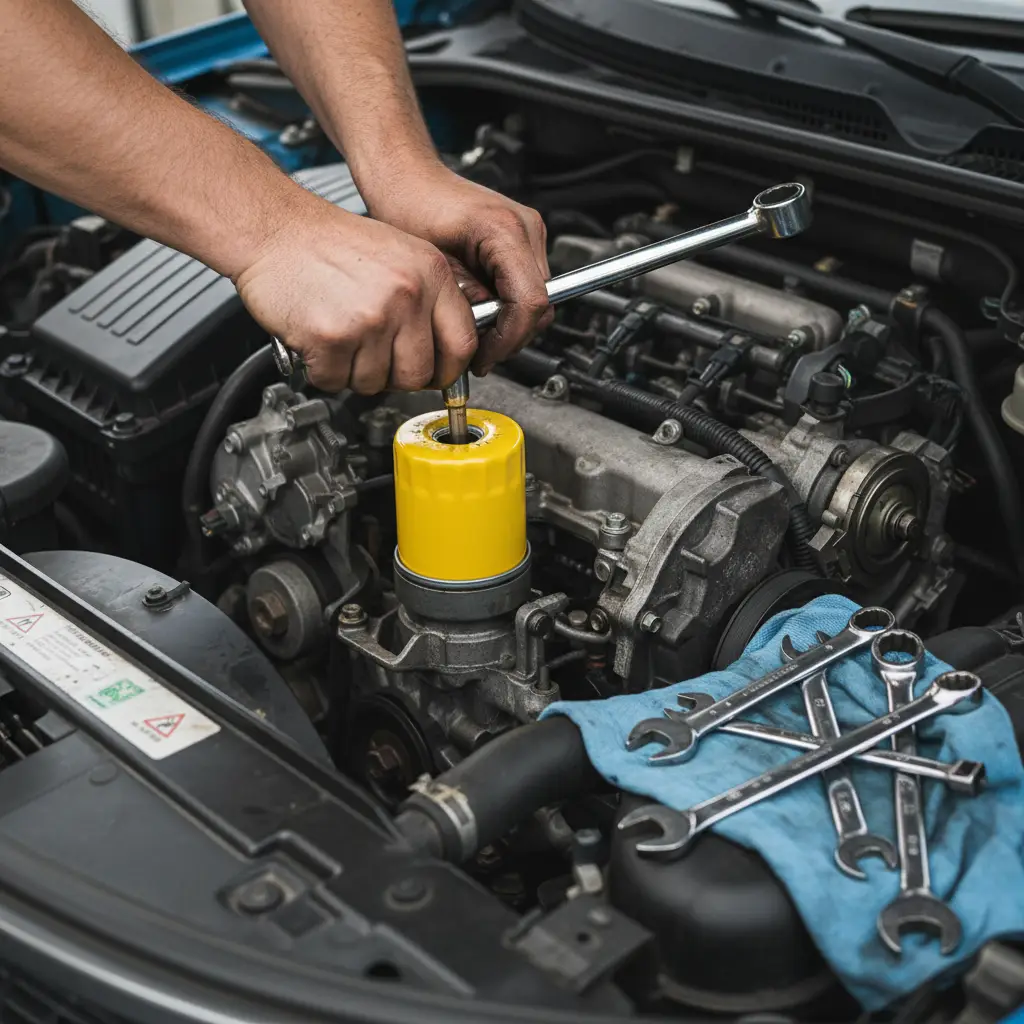
- Removal: Using a specialized filter wrench, the old filter is removed. Care is taken to catch any residual oil that drips during this process.
- Surface Preparation: The mechanic cleans the mounting surface on the engine block to ensure the new gasket will seal correctly. Old gasket material left behind can cause severe leaks.
- Lubrication: A small amount of fresh oil is applied to the new filter’s rubber gasket. This prevents the gasket from bunching up during installation and makes it easier to remove during the next service.
- Installation: The new filter is screwed on and tightened to the specific torque setting required. Overtightening can damage the threads, while undertightening can lead to oil loss.
Eco-Friendly Disposal: Managing Hazardous Waste
One of the hidden benefits of hiring a professional mobile service is the assurance of ethical waste disposal. Used motor oil is highly toxic. It contains heavy metals, hydrocarbons, and carcinogens. If disposed of incorrectly—such as pouring it down a storm drain or into the soil—it can contaminate groundwater and harm local ecosystems.
Professional mobile mechanics in Auckland are required to adhere to strict environmental regulations. They utilize a “cradle-to-grave” management system for waste oil. Once the oil is drained from your vehicle into a sealed container, it is transported to a licensed recycling facility.
The Recycling Process
Used oil is not trash; it is a resource. It can be re-refined into new base stock for lubricants, processed into fuel oils, or used as raw materials for the petroleum industry. Recycling just two gallons of used oil can generate enough electricity to run an average household for roughly 24 hours. By choosing a reputable mobile provider, you are actively participating in a circular economy and protecting New Zealand’s unique environment.
Why Choose a Mobile Oil Change in Auckland?
Auckland presents unique challenges for vehicle owners. The city’s geography, combined with heavy traffic congestion on major arteries like the Southern Motorway or the Harbour Bridge, makes visiting a workshop a logistical nightmare. For residents in the western suburbs, specifically, a 24/7 Mobile Mechanic in West Auckland: Fast, Reliable Service offers unparalleled convenience. A simple 30-minute service can turn into a half-day ordeal when factoring in travel time and waiting.
Convenience for the Urban Professional
Mobile oil change services in Auckland cater specifically to the busy lifestyle of the region. Mechanics can service your vehicle while you work in the CBD, attend meetings in Newmarket, or relax at home on the North Shore. This eliminates the need for courtesy cars or arranging rides with colleagues.
Transparency and Trust
When you visit a traditional workshop, the work is often done behind closed doors. With a mobile service, you have the opportunity to speak directly with the mechanic working on your car. You can see exactly what oil is being put in and ask questions about the condition of your vehicle. This transparency builds trust and ensures you aren’t being upsold on unnecessary repairs.
For more information on vehicle maintenance standards and safety, you can refer to the NZ Transport Agency (Waka Kotahi) guidelines on keeping your vehicle roadworthy.

Frequently Asked Questions (People Also Ask)
How much does a mobile oil change cost in Auckland?
The cost varies depending on the type of oil (synthetic vs. mineral) and the volume your engine requires. Generally, prices range from $120 to $250 NZD. While this might be slightly higher than a budget quick-lube station, the price includes the call-out fee and the convenience of the mechanic coming to you.
How often should I get my oil changed?
Most modern vehicles using synthetic oil should have their oil changed every 10,000 to 15,000 kilometers, or once a year, whichever comes first. Older vehicles using mineral oil may require changes every 5,000 kilometers. Always consult your vehicle’s owner manual for the manufacturer’s specific recommendations.
Does a mobile oil change void my car’s warranty?
No, provided the service is carried out by a qualified mechanic using parts and fluids that meet the manufacturer’s specifications. Mobile mechanics can stamp your logbook, ensuring your warranty remains valid. Always keep your receipts as proof of maintenance.
How long does the service take?
A standard mobile oil and filter change typically takes between 30 to 45 minutes. This is significantly faster than the total time investment required to drive to a workshop and wait for the service to be completed.
What happens if it rains during my appointment?
Most mobile mechanics are equipped to work in light rain or have pop-up shelters. However, for heavy rain or storms, if you do not have a carport or garage, the appointment may need to be rescheduled for safety and environmental reasons (to prevent oil washing away).
Can mobile mechanics perform other services during the oil change?
Yes, most mobile mechanics perform a general safety inspection during the oil change. Besides oil and filter changes, they can often perform other common services like replacing wiper blades, batteries, brake pads, Shock Absorber Replacement, air filters, and even provide Starter Motor Problems Diagnosis & Repair Auckland during the same visit if requested in advance.