
In New Zealand, the average wheel bearing replacement cost typically ranges between $350 and $650 NZD per wheel for standard Japanese and Korean vehicles. However, European models or 4WDs requiring complete hub assemblies can see costs rise to between $800 and $1,200 NZD. The final price is heavily influenced by labour rates, part availability, and whether the bearing is an integrated unit or a press-fit component.
Understanding Wheel Bearing Replacement Costs in NZ
When researching wheel bearing replacement cost NZ, it is essential to understand that there is no single fixed price. The automotive market in New Zealand is diverse, featuring a high volume of Japanese imports (JDM), a growing fleet of European vehicles, and rugged utility vehicles (utes). Each of these categories carries different parts pricing and labour requirements.
The cost is generally comprised of two main factors: the price of the replacement part and the labour time required to install it. In New Zealand, mechanic labour rates generally range from $90 to $160 NZD per hour depending on whether you visit an independent workshop or a franchise dealership.
Part Variations: Aftermarket vs. OEM
The cost of the bearing itself can vary significantly based on quality. Economy aftermarket bearings might cost as little as $80 to $150 NZD, while high-quality OEM (Original Equipment Manufacturer) parts from brands like SKF, Timken, or NSK can range from $200 to over $500 NZD. While it may be tempting to choose the cheapest option, New Zealand’s road conditions—often involving chip-sealed roads and winding terrain—demand high-quality steel to ensure longevity.
Vehicle Specific Pricing Examples
To give you a clearer picture of what to expect, consider these estimated price brackets common in the NZ market:
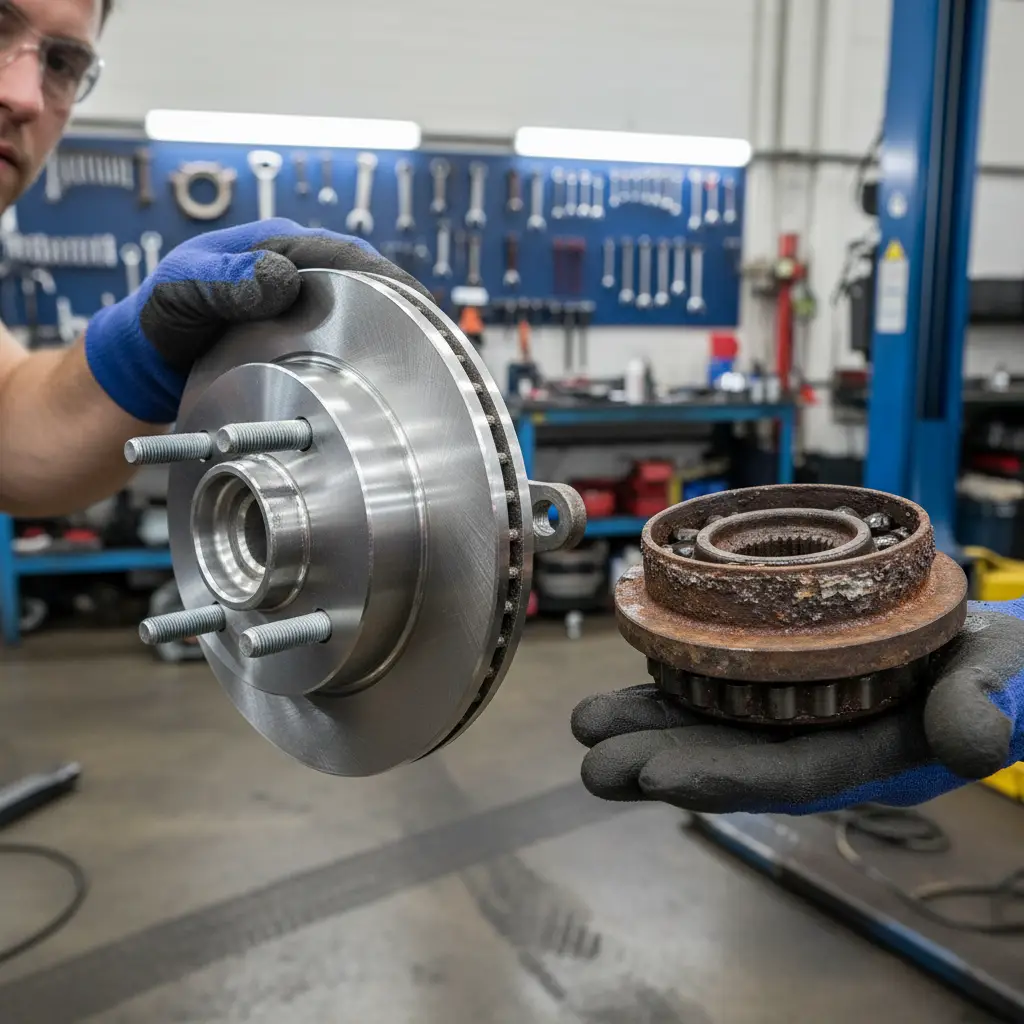
- Standard Hatchback (e.g., Toyota Corolla, Mazda Demio): These vehicles often use press-in bearings or simple bolt-on hubs. Expect to pay between $350 and $550 NZD per wheel.
- Mid-Size SUV (e.g., Toyota RAV4, Kia Sportage): Larger tires exert more force on bearings. Replacement costs typically sit between $450 and $700 NZD.
- European Vehicles (e.g., VW Golf, BMW 3 Series): These often utilize integrated hub assemblies with ABS sensors built-in. Parts are more expensive, pushing costs to $600 – $1,000+ NZD.
- 4WD and Utes (e.g., Ford Ranger, Toyota Hilux): Front wheel bearings on 4WD vehicles require more labour to dismantle the locking hubs and axle systems. Costs can range from $500 to $900 NZD.
Symptoms: Diagnosing the Humming Noise
Identifying a failing wheel bearing early can save you money and prevent catastrophic failure. The most common indicator is an audible change in your vehicle’s operation, but tactile symptoms also exist.
The Classic “Growl” or Hum
The definitive sign of a bad bearing is a noise that is often described as a hum, growl, or drone. This noise typically increases in pitch and volume as the vehicle accelerates. Unlike engine noise, the sound of a bad bearing is directly related to wheel speed, not engine RPM.
To diagnose which side is failing, pay attention to the noise while cornering:
- If the noise increases when you turn the steering wheel to the left, the weight of the car shifts to the right. This suggests the right-side bearing is faulty.
- If the noise increases when you turn to the right, the weight shifts to the left, indicating the left-side bearing is the culprit.
Play in the Wheel Hub
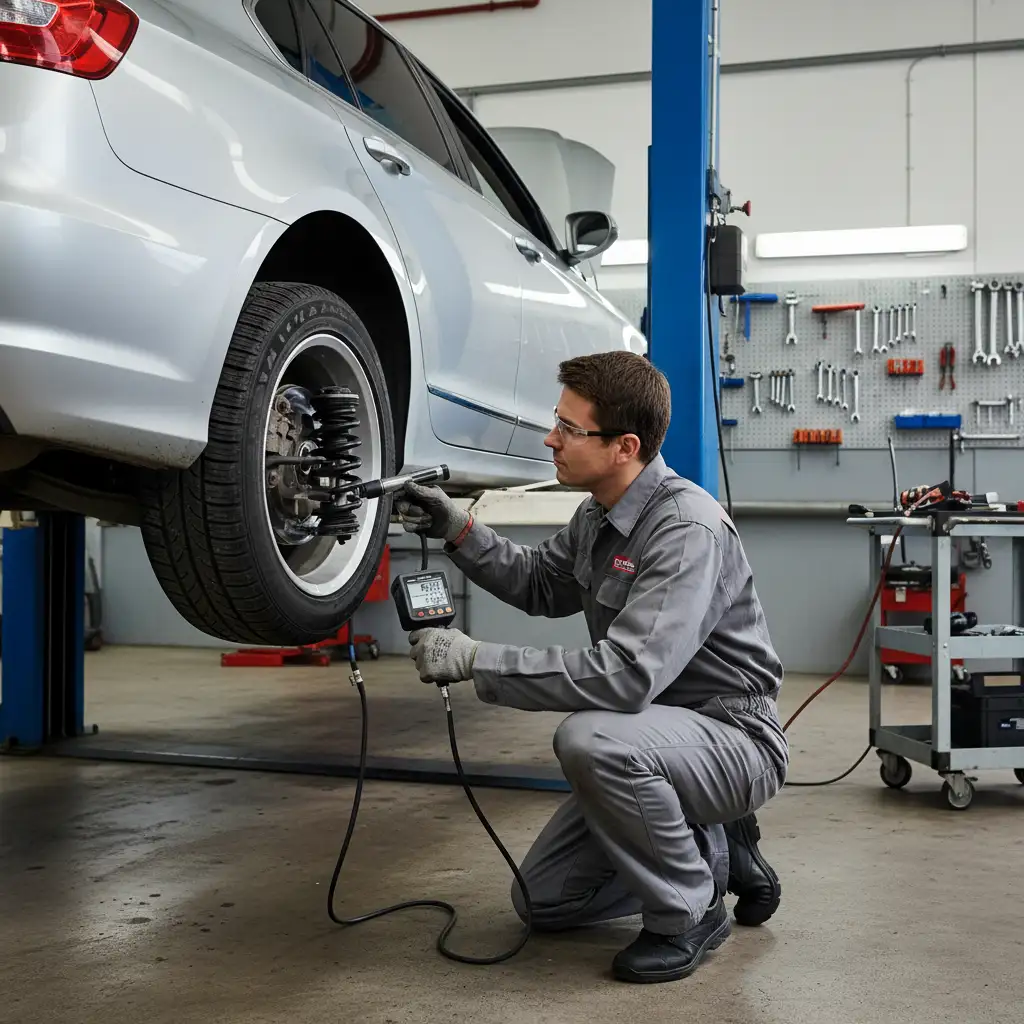
Physical play or looseness is a critical sign of wear. Mechanics diagnose this by raising the vehicle and performing a “shake test.” By gripping the tyre at the 12 o’clock and 6 o’clock positions and attempting to rock it back and forth, they can feel if there is movement within the hub. Any perceptible play indicates that the internal races or balls/rollers have worn down significantly, creating a gap that compromises wheel stability.
ABS Warning Lights
Modern vehicles use the wheel hub to house the Anti-lock Braking System (ABS) speed sensor or tone ring. If a bearing becomes loose, the tone ring may wobble, causing the sensor to read erratically. This often triggers the ABS, Traction Control, or Stability Control warning lights on your dashboard before you even hear a noise.
Hub Assembly vs. Press-In Bearings
The variation in wheel bearing replacement cost NZ is largely dictated by the technology used in your specific vehicle. There are two primary types of bearing designs: the Press-In Bearing and the Bolt-On Hub Assembly.
Press-In Bearings
This is the traditional style found in many older vehicles and some modern front-wheel-drive cars. The bearing is a separate component from the hub.
Pros: The part itself is inexpensive (often $60-$120 NZD).
Cons: The labour is intensive. The mechanic must remove the entire steering knuckle from the car, use a hydraulic press to force the old bearing out, and carefully press the new one in. If not done perfectly, the new bearing can be damaged during installation.
Bolt-On Hub Assemblies
Most modern vehicles, particularly those from European and American manufacturers, use a hub assembly. This is a sealed unit containing the flange, the bearing, the ABS sensor, and the mounting bolts.
Pros: Installation is faster and less prone to error, as it simply bolts onto the suspension upright.
Cons: The unit is significantly more expensive to manufacture, leading to higher part prices ($250-$600+ NZD per unit).
The Replacement Process Explained
Understanding the labour involved helps justify the cost. Replacing a wheel bearing is a mechanical task that requires precision, heavy-duty tools, and safety protocols. Here is a general overview of what a mechanic does during this service.
Step 1: Access and Removal
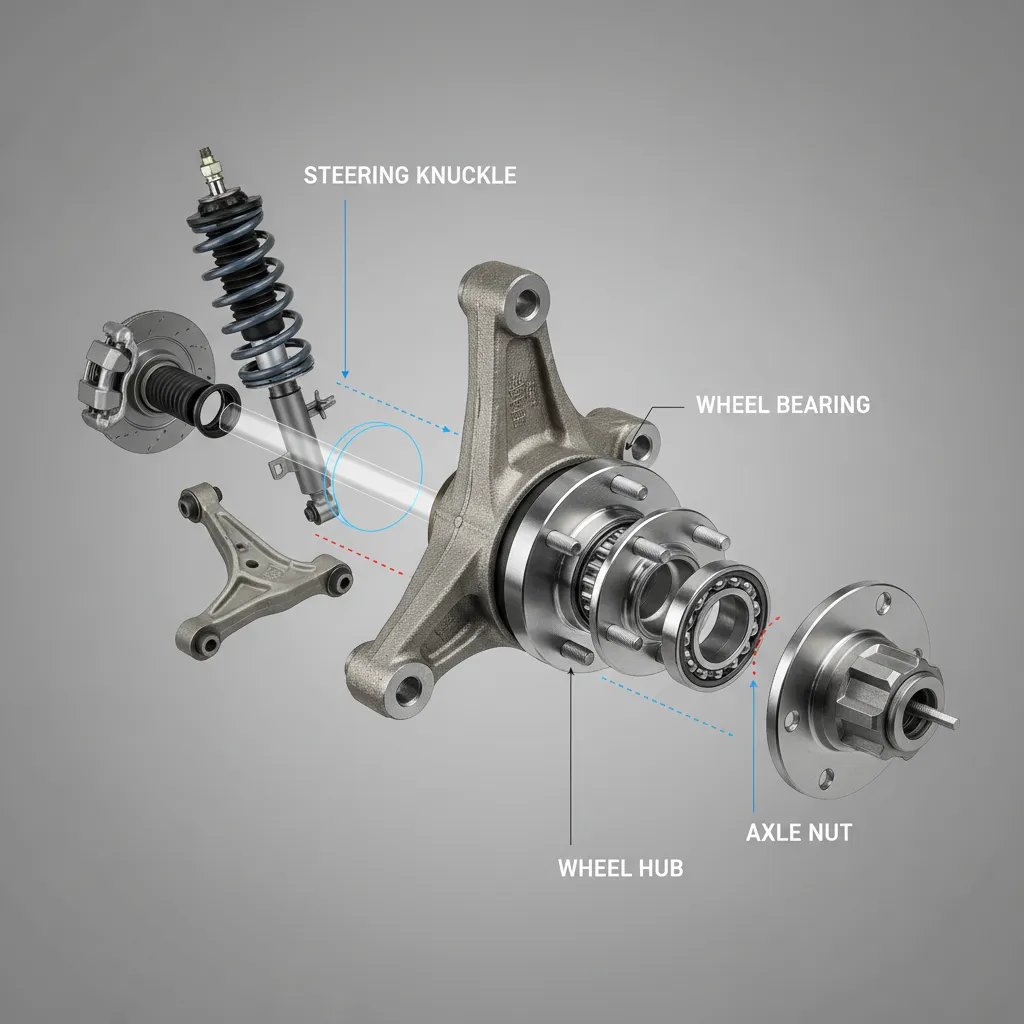
The vehicle is lifted, and the wheel is removed. The mechanic must then remove the brake caliper and the brake rotor (disc). For driven wheels (front wheels on FWD, rear on RWD/AWD), the large axle nut is removed to release the CV axle from the hub.
Step 2: Extraction
If it is a bolt-on hub, the mechanic accesses the bolts behind the steering knuckle. These are often seized due to rust and heat cycles, requiring heat induction or heavy breaker bars to loosen. If it is a press-in bearing, the entire knuckle is removed from the car and taken to a workbench with a 10-20 ton hydraulic press.
Step 3: Surface Preparation
Before installing the new part, the mating surfaces must be cleaned of rust and corrosion. Failure to do this can result in the new bearing sitting slightly unevenly (runout), which leads to premature failure and brake vibration.
Step 4: Installation and Torquing
The new bearing is installed. Crucially, the axle nut must be torqued to a very specific specification (often exceeding 200 Nm). Under-torquing leads to play; over-torquing crushes the internal bearings. This precision is why professional installation is recommended over DIY attempts.
Safety Risks of Ignoring Bad Bearings
Driving with a worn wheel bearing is dangerous. While the noise may start as a nuisance, the mechanical degradation can lead to severe consequences on New Zealand roads.
Wheel Detachment
In the most extreme cases, a disintegrated bearing can cause the wheel hub to separate from the suspension. If this happens at highway speeds (100 km/h), the wheel can detach completely, leading to a total loss of control and a potentially fatal accident.
Steering and Braking Issues
A loose bearing causes the brake rotor to wobble. This pushes the brake pads back further than necessary, resulting in a “soft” brake pedal that requires pumping to engage. Furthermore, the looseness can cause the vehicle to wander or pull to one side, making steering unpredictable.
Warrant of Fitness (WOF) Implications
In New Zealand, maintaining a valid Warrant of Fitness (WOF) is a legal requirement. Wheel bearings are a specific checklist item during a WOF inspection.
Inspectors will jack up the vehicle and perform the shake test mentioned earlier. If there is excessive play, or if the bearing emits a rough noise when spun by hand, the vehicle will fail its WOF immediately. You will not be able to legally drive the vehicle (except for the purpose of repair) until the bearing is replaced and re-inspected.
For more details on vehicle inspection standards, you can refer to the Waka Kotahi NZ Transport Agency guidelines regarding steering and suspension safety.
Extending the Life of Your Wheel Bearings
While wheel bearings are wear items that eventually need replacement, certain driving habits and maintenance routines can extend their lifespan.
Avoid Deep Water and Flooding
Wheel bearings are sealed, but deep water can penetrate the seals. Once water enters the bearing, it emulsifies the grease and causes the steel to rust. Avoid driving through deep puddles or flooded roads whenever possible.
Watch Your Offset
Modifying your vehicle with aftermarket wheels that have an aggressive offset (pushing the wheels further out) changes the suspension geometry. This increases the leverage and load placed on the bearings, accelerating wear significantly. Always try to stay within the manufacturer’s recommended wheel specifications.
Quality Matters
When the time comes for replacement, insist on high-quality parts. While a $50 bearing from an online marketplace might look identical to a $200 SKF bearing, the metallurgy and grease quality are vastly different. Cheap bearings often fail within 10,000 km, leading to double the labour costs in the long run. Reputable sources like SKF provide detailed technical data on why material quality is paramount for bearing longevity.
By understanding the costs, symptoms, and risks associated with wheel bearing replacement in NZ, you can make informed decisions that ensure your vehicle remains safe and road-legal. If you hear that tell-tale hum, book an inspection immediately.
People Also Ask
How much does it cost to replace a wheel bearing in NZ?
In New Zealand, wheel bearing replacement generally costs between $350 and $650 NZD per wheel for standard vehicles. European cars or those requiring full hub assemblies can range from $800 to over $1,200 NZD depending on the labour required.
Is it safe to drive with a noisy wheel bearing?
No, it is not safe. A noisy wheel bearing indicates internal damage. If ignored, the bearing can seize or disintegrate, potentially causing the wheel to lock up or detach from the vehicle while driving, leading to a serious accident.
How do I know if my wheel bearing is bad?
The most common symptoms are a humming or growling noise that gets louder with speed, a loose feeling in the steering, uneven tyre wear, or an ABS warning light on the dashboard. A mechanic can confirm this by checking for play in the wheel.
Can I replace a wheel bearing myself?
Replacing a wheel bearing is a complex task often requiring a hydraulic press, heavy-duty breaker bars, and specific torque settings. Unless you are an experienced home mechanic with the correct tools, it is recommended to have a professional handle the replacement to ensure safety.
Will a bad wheel bearing fail a WOF in NZ?
Yes, a worn or noisy wheel bearing will cause your vehicle to fail its Warrant of Fitness (WOF) inspection. WOF inspectors check for excessive play and roughness in the wheel rotation.
Do I need to replace both wheel bearings at the same time?
It is not strictly necessary to replace both sides at once, but it is often recommended. Since both bearings have traveled the same distance and endured similar road conditions, if one fails, the other is likely nearing the end of its life as well.