
Control arm bush replacement cost typically ranges between $250 and $600 per axle for most standard passenger vehicles. This price includes labor, which usually accounts for $150 to $400 of the total, and parts, which range from $20 to $150 per bushing. However, if the entire control arm assembly requires replacement due to integrated ball joint wear, costs can escalate to $800 or more for luxury or heavy-duty vehicles.
Control Arm Bush Replacement Cost Breakdown
When budgeting for suspension repairs, it is essential to understand that the final bill is heavily influenced by the make and model of your vehicle, the local labor rates, and the specific repair method chosen. Suspension work is labor-intensive, often requiring specialized hydraulic presses and heavy-duty tools.
Parts vs. Labor Costs
The bushing itself is often an inexpensive rubber or polyurethane component. For many economy cars, a single control arm bushing might cost as little as $15 to $30. However, the labor required to remove the control arm, press out the old bushing, and press in the new one is significant.
- Economy Vehicles: Total cost approx. $200 – $400. Parts are cheap, and access is generally straightforward.
- SUVs and Trucks: Total cost approx. $350 – $700. Heavier components require more labor time and more expensive heavy-duty bushings.
- Luxury & Performance Cars: Total cost approx. $600 – $1,200+. These vehicles often use complex multi-link suspension systems where bushings are not sold separately, necessitating a full control arm replacement.
The Hidden Variable: Rust and Corrosion
In regions where road salt is used (the “Rust Belt”), suspension bolts often seize. A mechanic may quote two hours of labor, but if a bolt snaps or requires torching to remove, the labor cost can double. Always factor in a contingency budget for older vehicles with visible undercarriage rust.
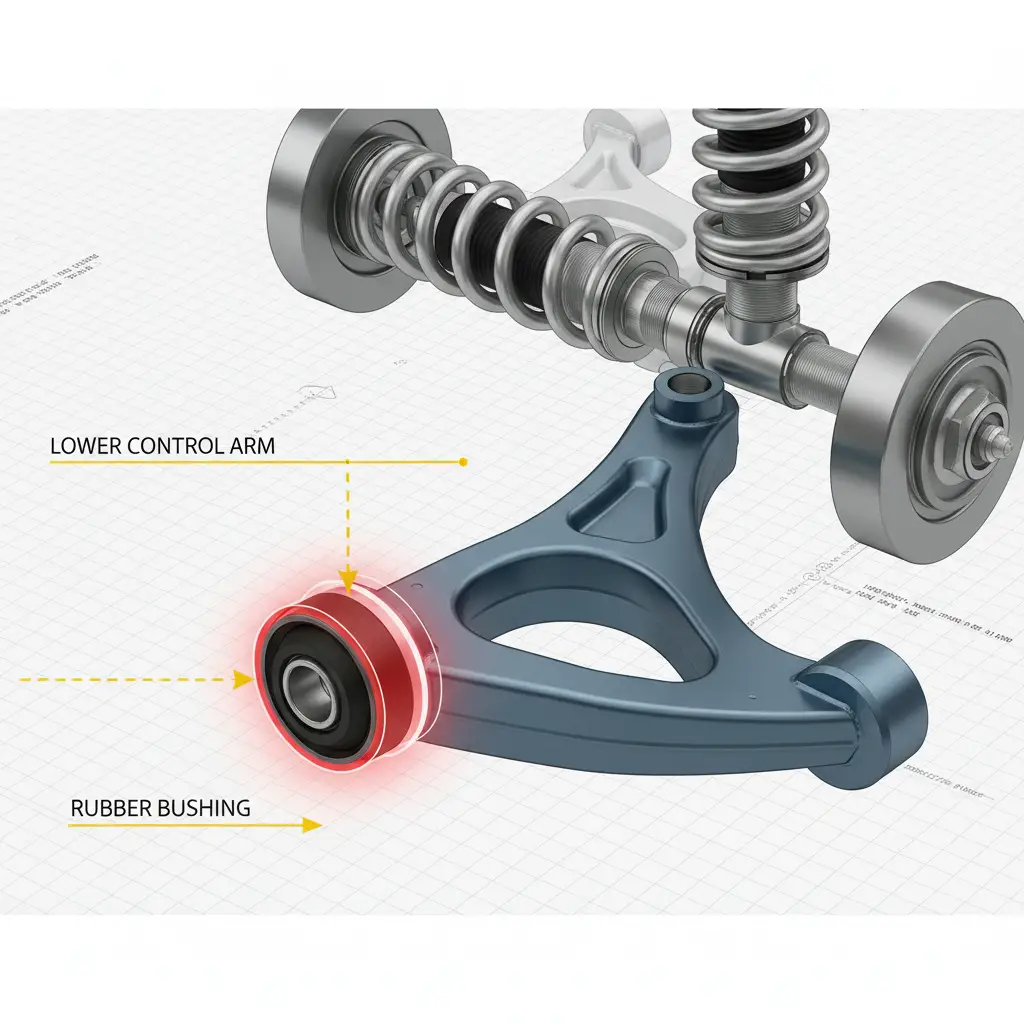
Understanding Control Arm Bushes & Suspension Geometry
To understand why this repair is necessary, one must grasp the function of the control arm. In automotive suspension, the control arm (often called an A-arm or wishbone) connects the wheel hub to the vehicle’s frame. It allows the wheel to move up and down over bumps while keeping it aligned with the road.
The control arm bush acts as a cushion between the metal arm and the vehicle’s frame. It is typically made of rubber bonded to metal sleeves. Its primary function is to dampen vibrations and reduce noise (NVH – Noise, Vibration, and Harshness) while allowing a limited range of movement. Over time, the rubber dries out, cracks, and eventually separates from the metal sleeve.
According to Wikipedia, the control arm is a critical component of the suspension system, and failure of the bushings can lead to dangerous handling characteristics. When a bushing fails, the precise geometry of the suspension is lost, leading to the metal-on-metal contact that drivers often describe as a “clunk.”
Critical Symptoms: Clunking Noises & Steering Issues
Identifying worn control arm bushes early can save you money on tires and other suspension components. The symptoms are usually progressive, starting as mild annoyances and evolving into safety hazards.
1. Clunking Noises Over Bumps
The most common indicator is a distinct clunking or rattling noise coming from near the wheels, particularly when driving over speed bumps, potholes, or rough terrain. This sound is the metal control arm banging against the mounting bracket because the rubber buffer has disintegrated.
2. Steering Alignment Symptoms & Wandering
Worn bushings allow the control arm to shift excessively. This movement alters the wheel alignment angles (camber, caster, and toe) dynamically while you drive. You may experience:
- Steering Wander: The vehicle pulls to the left or right, requiring constant correction to stay in a straight line.
- Loose Steering: The steering wheel feels “sloppy” or unresponsive near the center position.
- Braking Instability: The steering wheel may shake or the car may dive sharply to one side when brakes are applied. Regular Brake Caliper Service can help prevent related braking issues.
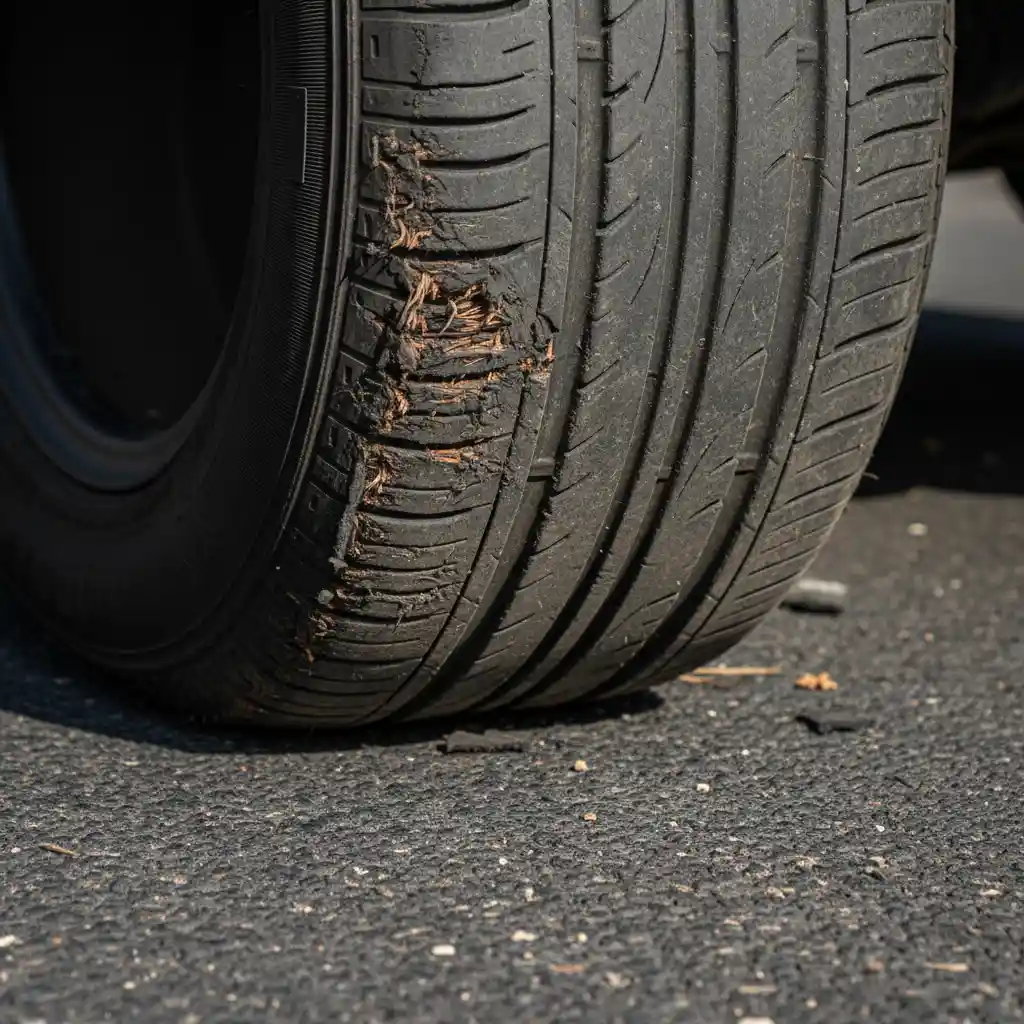
3. Uneven Tire Wear
Because the alignment is compromised, the tires will not make consistent contact with the road. You might notice the inner or outer edges of the front tires wearing down much faster than the rest of the tread. This is a classic sign of camber or toe misalignment caused by suspension play.
Repair Options: Pressing Bushes vs. Full Arm Replacement
When you receive a quote for “control arm bush replacement cost,” you are effectively choosing between two repair paths. Understanding the difference is key to making an informed decision.
Option A: Replacing Only the Bushing
This method involves removing the control arm, using a hydraulic press to force the old bushing out, and pressing a new one in.
Pros: The part cost is very low ($20-$50).
Cons: Labor cost is high. It takes time and specialized tools to press bushings without bending the arm. Furthermore, if the control arm is rusty or the ball joint is also worn, this labor is wasted.
Option B: Replacing the Entire Control Arm Assembly
Most modern mechanics recommend this route. You replace the metal arm, which comes pre-loaded with new bushings and usually a new ball joint.
Pros: Faster installation (lower labor cost), new ball joint included, new metal arm (no rust fatigue), and factory-pressed bushings ensure longevity.
Cons: Higher upfront part cost ($100-$300 per arm).
Verdict: In most scenarios, replacing the full assembly is more cost-effective in the long run because it refreshes the entire corner of the suspension at once.
Ball Joint Inspection & Mandatory Alignment
Any discussion about control arm bushes must include the ball joint. The ball joint connects the control arm to the steering knuckle. If your bushings are shot, there is a high probability your ball joints are also near the end of their service life.
The Ball Joint Connection
On many vehicles, the ball joint is integrated into the control arm and cannot be replaced separately. If you pay to have new bushings pressed into an old arm with a weak ball joint, you will likely be back in the shop within 6 months to replace the whole arm anyway. Always ask your mechanic to perform a rigorous ball joint inspection before deciding to replace just the bushings.
Why Wheel Alignment is Non-Negotiable
Once the control arms are removed or manipulated, the vehicle’s suspension geometry is disturbed. Even a millimeter of difference in the new bushing position can throw off the alignment significantly.
You must perform a 4-wheel alignment after this repair. Skipping this step will result in:
- Rapid destruction of your tires (within 2,000 miles).
- Poor fuel economy due to increased rolling resistance.
- Dangerous handling (pulling or drifting).
Expect to add $80 to $150 to your total bill for a professional alignment.
DIY vs. Professional Mechanic: Is It Worth It?
Can you replace control arm bushings yourself to save on the “control arm bush replacement cost”? While possible for experienced home mechanics, it is fraught with difficulties.
The Challenges of DIY
- Specialized Tools: You need a ball joint separator, a torque wrench, and potentially a hydraulic shop press if you are doing just the bushings. Without a press, replacing bushings is nearly impossible.
- Safety Risks: Suspension springs are under immense tension. Disassembling suspension components without proper knowledge can result in the spring releasing with lethal force.
- Seized Bolts: Without an acetylene torch or high-powered impact wrench, removing rusted suspension bolts on jack stands is incredibly difficult and physically exhausting.
For reputable advice on vehicle maintenance and deciding between DIY and professional help, sources like Kelley Blue Book offer excellent guides on repair difficulty levels.
Recommendation: Unless you are replacing the entire control arm assembly (which is easier than pressing bushings) and have safe lifting equipment, this job is best left to professionals.
For those in need of convenient on-site assistance, a Mobile Mechanic North Shore might be an ideal solution.
Professionals can also handle other complex tasks, such as Starter Motor Problems Diagnosis & Repair Auckland.
People Also Ask (FAQs)
How do I know if my control arm bushings are bad?
You will typically hear clunking or rattling noises when driving over bumps, experience steering wander (the car pulling to one side), or notice uneven tire wear. In severe cases, you may feel a “clunk” when braking or accelerating.
Is it safe to drive with worn control arm bushings?
It is not recommended. While you can drive for a short period, worn bushings compromise steering precision and braking stability. If a bushing fails completely, the control arm can detach, causing a loss of vehicle control.
Should I replace just the bushings or the whole control arm?
In most cases, replacing the entire control arm assembly is better. While the part is more expensive, the labor cost is lower, and you get a new ball joint and rust-free metal arm, offering better long-term value.
How long does it take to replace control arm bushings?
A professional mechanic typically takes 1 to 2 hours per side to replace a control arm assembly. If they are pressing out old bushings and installing new ones, it may take 2 to 3 hours per side due to the extra labor involved.
Do I need an alignment after replacing control arms?
Yes, absolutely. Replacing control arms or bushings changes the suspension geometry. Without an alignment, your tires will wear out unevenly and rapidly, and the vehicle may not drive straight.
How much does a control arm repair cost on average?
The average cost is between $500 and $800 for both front control arms on a standard vehicle. Luxury vehicles or trucks with heavy-duty suspension can cost significantly more, sometimes exceeding $1,200.