
Mobile spark plug replacement is a specialized automotive maintenance service where a certified technician travels to your location to remove worn ignition components and install new spark plugs and ignition coils. This on-site solution restores optimal engine combustion, eliminates cylinder misfires, and significantly improves fuel efficiency without the logistical hassle of visiting a traditional repair shop.
The Evolution of Ignition Service
The modern internal combustion engine is a marvel of engineering, relying on precise timing and controlled explosions to generate power. At the heart of this process lies the ignition system. For decades, vehicle owners were forced to schedule appointments, arrange tow trucks, or wait in lobby chairs for simple maintenance tasks. Today, the paradigm has shifted. Mobile spark plug replacement has emerged as the preferred method for maintaining vehicle health, offering a blend of convenience and technical expertise that traditional shops struggle to match.
When you book a mobile ignition service, you are not just paying for parts; you are paying for a diagnostic expert to assess the health of your engine right in your driveway. This is particularly crucial for ignition systems because removing spark plugs from a hot engine—common when driving to a shop—can damage the threads in aluminum cylinder heads. A mobile mechanic arriving at your home allows the engine to cool down naturally, ensuring a safer and more precise repair.

Diagnosing the Problem: Misfires and Rough Idling
Ignition system failure rarely happens overnight. It is usually a gradual degradation that manifests in specific symptoms. Recognizing these early signs can save you thousands of dollars in catalytic converter repairs and engine damage.
The Cylinder Misfire
The most common indicator of a bad spark plug or ignition coil is a misfire. This occurs when the air-fuel mixture in the combustion chamber fails to ignite or ignites partially. You will feel this as a distinct “stumble” or “jerk” while accelerating. In modern vehicles, this triggers the Check Engine Light (CEL), often throwing codes ranging from P0300 (Random/Multiple Cylinder Misfire) to P0301 through P0308 (specific cylinder faults).
Rough Idling
When you come to a stop light, does your car feel like it is vibrating excessively or like the engine is struggling to stay alive? This is known as rough idling. Worn spark plugs require higher voltage to bridge the gap between the electrodes. If the gap has widened due to erosion, the spark may be too weak to maintain a smooth idle speed, causing the engine to shake.
Hard Starting
If your battery is fully charged but the engine cranks for a long time before turning over, your ignition system may be to blame. Worn plugs struggle to ignite the cold fuel mixture, especially in lower temperatures. Ignoring this symptom places unnecessary strain on your starter motor and battery.
Understanding Spark Plug Technology: Platinum vs. Iridium
Not all spark plugs are created equal. The longevity and performance of your ignition system depend heavily on the materials used in the center and ground electrodes. When requesting a mobile spark plug replacement, it is vital to understand what is being installed in your engine.
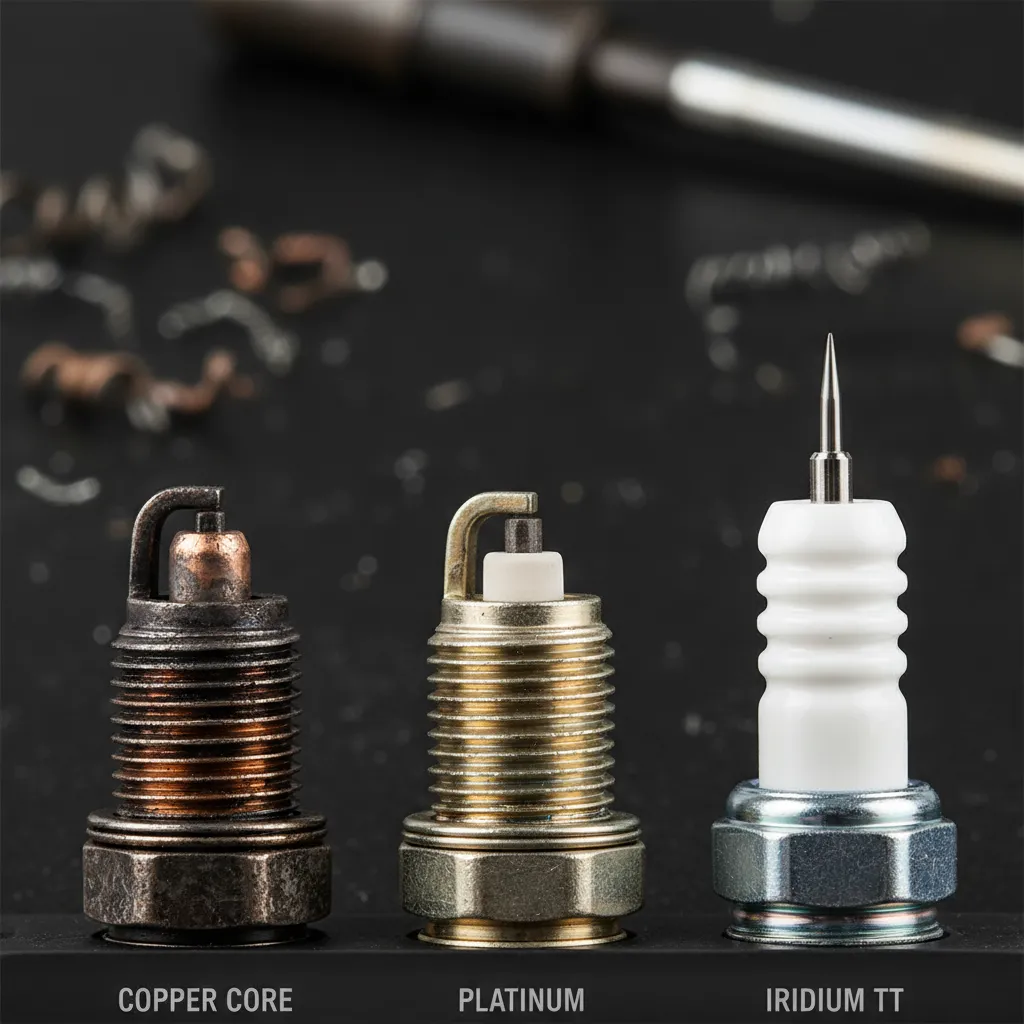
Copper Core (Standard)
Copper plugs are the oldest technology. While copper is an excellent conductor, these plugs have soft nickel-alloy electrodes that wear out quickly. They typically require replacement every 20,000 to 30,000 miles. They are rarely used in modern vehicles except for specific high-performance applications where conductivity is prioritized over longevity.
Platinum Spark Plugs
Platinum plugs feature a platinum disc welded to the center electrode. Platinum is harder than nickel alloy, which allows the plug to hold its sharp edge for longer (up to 60,000 miles). These plugs run hotter, which helps burn off deposits and prevents fouling.
Iridium Spark Plugs
Iridium is the gold standard for modern ignition systems. According to Wikipedia, iridium is six times harder and eight times stronger than platinum, with a melting point over 4,000°F. This allows manufacturers to create an ultra-fine center electrode (often 0.4mm to 0.6mm) that requires less voltage to generate a spark. Iridium plugs can last upwards of 100,000 miles and provide the most consistent combustion.
Pro Tip: Never downgrade your spark plugs. If your vehicle came from the factory with Laser Iridium plugs, installing Copper or Single Platinum plugs will result in reduced performance and shorter service intervals.
Ignition Coil Packs: The Hidden Culprit
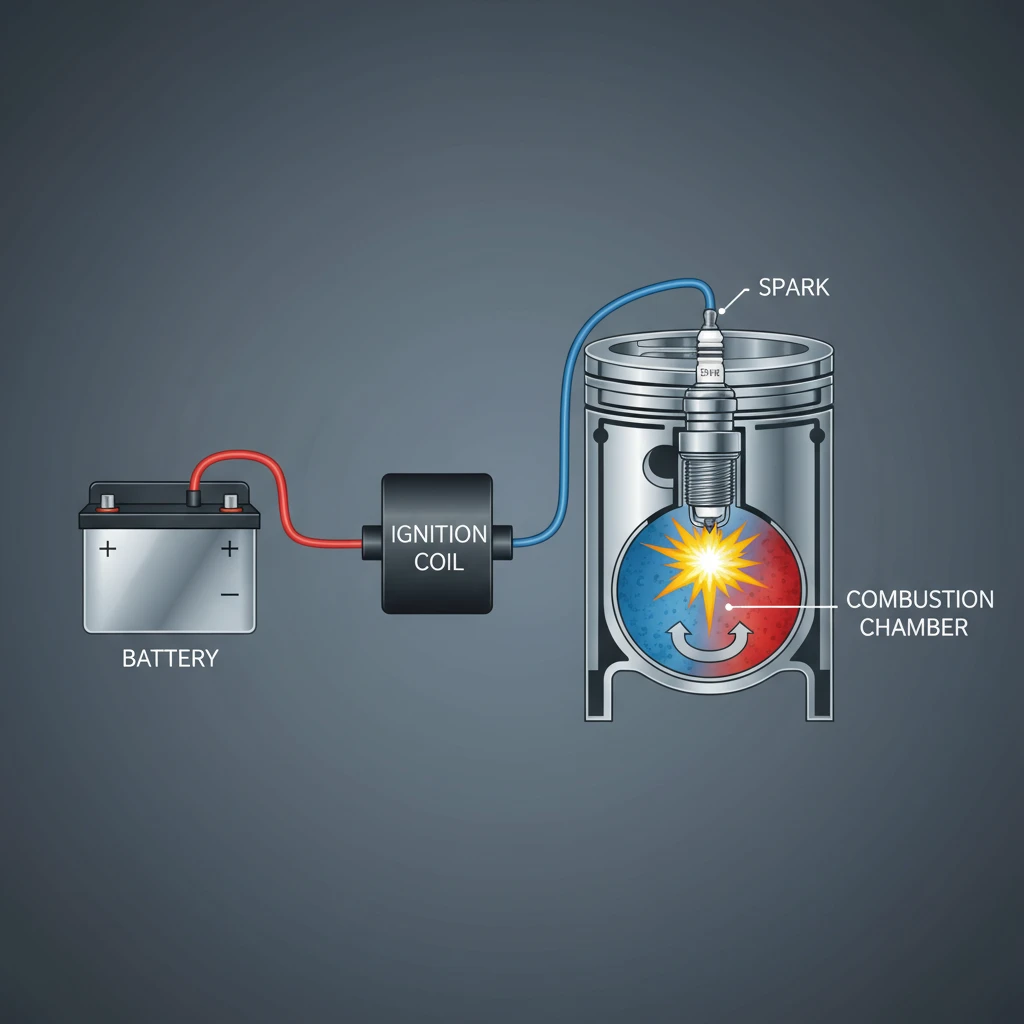
While spark plugs get the most attention, the ignition coil is the muscle behind the operation. The coil is essentially a high-voltage transformer that converts the battery’s 12 volts into the 20,000 to 40,000 volts required to jump the spark plug gap.
Coil-on-Plug (COP) Systems
Most modern vehicles utilize a Coil-on-Plug system, where each cylinder has its own dedicated ignition coil sitting directly on top of the spark plug. This eliminates the need for high-tension spark plug wires and a distributor, resulting in more reliable timing and stronger sparks.
Testing and Replacement
During a mobile service, a technician can test ignition coils using a multimeter or an OBD-II scanner to look for “misfire counts.” If a spark plug is replaced but the coil is weak, the new plug will foul quickly. A common diagnostic trick used by mechanics is “swapping coils.” If cylinder #1 is misfiring, the mechanic moves the coil to cylinder #2. If the misfire follows the coil to cylinder #2, the coil is defective. If the misfire stays at cylinder #1, the issue is likely the spark plug or fuel injector.
Restoring Efficiency and Fuel Economy
One of the most immediate benefits of a tune-up is the improvement in gas mileage. When a spark plug is worn, the gap between electrodes widens. This forces the ignition coil to work harder and can lead to incomplete combustion. Incomplete combustion means that a portion of the fuel you paid for is being pushed out of the exhaust valve unburned, rather than being used to drive the pistons.
According to data from the U.S. Department of Energy, fixing a serious maintenance problem, such as a faulty oxygen sensor or a misfiring engine, can improve your mileage by as much as 40%. Even replacing plugs that are just “old” but not yet failing can yield a noticeable bump in MPG.
Furthermore, unburned fuel ruins catalytic converters. The raw fuel enters the hot exhaust system and ignites inside the converter, causing the substrate to melt. Replacing a catalytic converter can cost upwards of $1,500, making the cost of a mobile spark plug replacement negligible by comparison.
Why Choose Mobile Mechanics for Ignition Service?
The transactional nature of automotive repair is changing. Mobile mechanics offer distinct advantages for ignition services specifically:
- Engine Temperature Control: As mentioned earlier, removing plugs from an aluminum head while hot is risky. Mobile mechanics work on your car after it has been sitting, reducing the risk of stripped threads.
- Visual Transparency: You can watch the mechanic work. You can see the condition of the old plugs coming out, which tells a story about your engine’s health (e.g., oil on plugs indicates leaking valve cover gaskets; white deposits indicate running lean).
- Cost Efficiency: Without the overhead of a physical shop location, mobile services are often competitively priced, offering premium parts (like NGK or Denso) for the same price a dealership charges for standard service.
- Convenience: The service happens while you work or relax at home, eliminating the need for shuttle services or rental cars.
Recommended Service Intervals
Knowing when to book your mobile spark plug replacement is key to vehicle longevity. While you should always consult your owner’s manual, here are the general industry standards:
- Standard Copper Plugs: Every 30,000 miles.
- Platinum Plugs: Every 60,000 miles.
- Iridium/Double Platinum: Every 100,000 miles.
- Ignition Coils: generally do not have a set interval but are often replaced proactively between 100,000 and 120,000 miles, or at the first sign of failure.
If you drive a turbocharged engine, these intervals may need to be shortened. Turbocharged engines produce higher cylinder pressures and heat, which accelerates spark plug wear. A tighter gap and more frequent changes are often required to prevent “spark blowout” under boost.
People Also Ask
How much does mobile spark plug replacement cost?
The cost varies based on the vehicle make and model (4-cylinder vs. V8) and the type of plugs used. generally, you can expect to pay between $150 and $400. Luxury vehicles or engines where the intake manifold must be removed to access the rear plugs will cost more due to the increased labor time.
Can I drive my car with bad spark plugs?
While the car may technically run, it is not recommended. Driving with bad spark plugs can cause unburned fuel to damage the catalytic converter, lead to stalling in traffic, and significantly reduce fuel economy. It is best to replace them as soon as symptoms appear.
Do ignition coils need to be replaced with spark plugs?
Not necessarily. Ignition coils are durable and only need replacement if they fail or show signs of weakness. However, for high-mileage vehicles (over 100k miles), many mechanics recommend replacing coils alongside plugs as preventative maintenance to ensure peak performance.
How long does a spark plug replacement take?
For most 4-cylinder engines, the service takes about 45 to 60 minutes. For V6 or V8 engines, especially those with transverse mounting where rear plugs are obstructed, it can take 2 to 3 hours.
Will changing spark plugs improve horsepower?
Yes, but only if your current plugs are worn or fouled. New plugs restore the engine to its factory power potential by ensuring a complete burn of the fuel mixture. They do not add “extra” horsepower beyond the engine’s original design, but they recover lost power.
What is the difference between hot and cold spark plugs?
The heat range refers to how fast a spark plug can transfer heat from the firing tip to the cylinder head. A “cold” plug transfers heat faster and is used in high-performance or turbocharged engines to prevent pre-ignition. A “hot” plug holds heat longer to burn off deposits in standard commuter engines.