
Road User Charges (RUC) are a distance-based tax in New Zealand levied on all diesel vehicles, heavy vehicles over 3.5 tonnes, and electric or plug-in hybrid vehicles. Unlike petrol excise duty which is collected at the pump, RUC must be prepaid in units of 1,000 kilometers to fund the National Land Transport Fund for road maintenance and improvements.
For vehicle owners in New Zealand’s largest city, understanding the nuances of Road User Charges (RUC) is critical to avoiding hefty fines and maintaining legal compliance. Auckland’s sprawling geography often necessitates higher mileage for commuters compared to other regions, making the management of RUC a significant part of the annual vehicle operating budget. Whether you are driving a diesel ute for work, a heavy truck for logistics, or a newly taxed electric vehicle (EV), navigating the RUC system is mandatory.
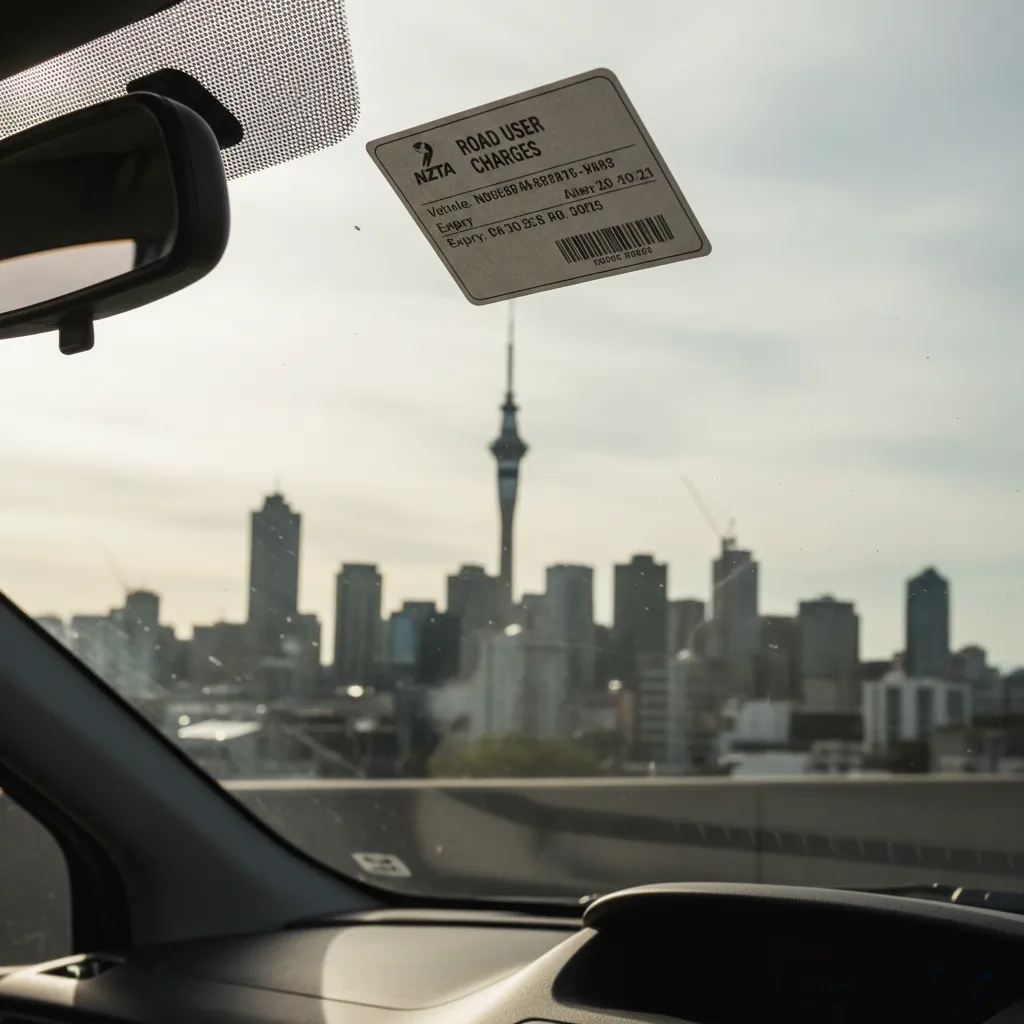
What Are Road User Charges (RUC)?
In New Zealand, the government operates on a “user-pays” principle regarding road infrastructure. The logic is straightforward: the more you use the roads, and the heavier your vehicle (causing more wear and tear), the more you should contribute to their upkeep. This funding goes directly into the National Land Transport Fund (NLTF), administered by Waka Kotahi (NZ Transport Agency).
For most petrol vehicles, this tax is invisible to the driver on a daily basis because it is collected as “Fuel Excise Duty” (FED) included in the price per liter at the petrol pump. However, diesel is not taxed the same way at the pump because it is widely used for off-road purposes (like farming, industrial machinery, and marine engines) where road tax should not apply.
To capture the road tax from diesel vehicles—and now electric vehicles that do not use fuel at all—the government utilizes the Road User Charges system. This system requires drivers to purchase a licence based on the distance they intend to travel. It is a prepaid system, meaning you must buy the kilometres before you drive them.
Who Must Pay RUC in New Zealand?
The criteria for who must pay RUC are strictly defined by vehicle weight and fuel type. If you are driving in Auckland, you are liable for RUC if your vehicle falls into one of the following categories:
1. All Diesel Vehicles
This is the most common category. If your car, SUV, ute, or van runs on diesel, you must pay RUC regardless of the vehicle’s weight. This includes popular Auckland commuter vehicles like the Ford Ranger, Toyota Hilux, and diesel European SUVs.
2. Heavy Vehicles (Over 3.5 Tonnes)
Any vehicle with a gross vehicle mass (GVM) exceeding 3.5 tonnes is subject to RUC, regardless of the fuel it uses. This primarily affects the transport and logistics sector, including trucks, buses, and heavy campervans. However, there is an exemption for heavy electric vehicles until 31 December 2025.
3. Light Electric Vehicles (EVs)
As of April 1, 2024, light electric vehicles (gross laden weight of 3.5 tonnes or less) are no longer exempt from RUC. This change was implemented to ensure EV owners contribute fairly to road maintenance as the national fleet transitions away from fossil fuels.
4. Plug-in Hybrid Electric Vehicles (PHEVs)
PHEVs, which can run on both electricity and petrol, are also subject to RUC as of April 2024. However, because PHEV owners already pay some tax via petrol excise duty when they fill up, they are charged a reduced RUC rate to avoid double taxation.
The 2024 Electric Vehicle RUC Update
For years, electric vehicle owners enjoyed an exemption from RUC as an incentive to encourage uptake. However, with the increasing number of EVs on Auckland roads, the government ended this exemption on April 1, 2024. This has been a significant adjustment for many Auckland EV drivers who were accustomed to very low running costs.
The Current Rates for EVs and PHEVs:
- Standard Electric Vehicles: The rate is set at $76 per 1,000km. This applies to battery electric vehicles (BEVs) like the Tesla Model 3, Nissan Leaf, and BYD Atto 3.
- Plug-in Hybrid Electric Vehicles (PHEVs): The rate is set at $38 per 1,000km. This lower rate acknowledges that PHEV drivers also pay tax at the petrol pump.
It is crucial for EV owners to note that failing to display a valid RUC licence is an offence. Waka Kotahi has provided a transition period, but enforcement is becoming stricter. For more detailed legislative information, you can refer to the NZ Transport Agency (Waka Kotahi) RUC page.
How RUC Rates Are Calculated
RUC rates are not arbitrary; they are calculated based on the damage a vehicle is likely to cause to the road surface. The calculation relies on three main factors:
1. Vehicle Type and Weight
Vehicles are categorized by “RUC Vehicle Type.” For most private passenger cars (light diesel and EVs), this is Type 1 (a powered vehicle with two axles and a gross vehicle mass of 3.5 tonnes or less). As the weight and number of axles increase, the complexity of the calculation changes. Heavy trucks have significantly higher rates due to the exponential stress they place on pavement structures.
2. Number of Axles and Tyres
For heavy vehicles, the number of axles and the number of tyres per axle impact the rate. More axles spread the weight more evenly, potentially lowering the RUC rate compared to a vehicle of the same weight with fewer axles.
3. Distance Travelled
RUC is sold in units of 1,000 kilometers. You cannot buy partial units. When you purchase a licence, you are paying for the right to drive that specific distance.
Current Standard Rates (subject to change):
- Light Diesel Vehicles (Type 1): Approximately $76 per 1,000km.
- Light Electric Vehicles: $76 per 1,000km.
- Plug-in Hybrids: $38 per 1,000km.
Note: These rates include GST but exclude administrative fees associated with the purchase method.

Purchasing and Managing Your RUC Licence
For Auckland drivers, purchasing RUC is designed to be convenient. You can purchase your licence through several channels, though administrative fees vary slightly between them.
Where to Buy
- Online: The most convenient method is via the Waka Kotahi website. The admin fee is generally lower for online transactions.
- In-Person Agents: You can purchase RUC over the counter at NZ Post shops, VTNZ (Vehicle Testing New Zealand), AA (Automobile Association) centres, and some independent agents.
The Purchasing Process
To buy a licence, you will need your vehicle’s plate number and the current odometer reading. You must ensure the new licence starts exactly where the previous one ended (or at your current odometer reading if it is your first licence).
Once purchased, you will receive a label (similar to a registration label). This label must be displayed on the inside of the windscreen on the passenger side (left side). It must be clearly visible from the outside of the vehicle.
Electronic RUC (eRUC)
For heavy vehicle fleets and some commercial light fleets, eRUC providers offer automated solutions. These systems use GPS technology to track distance and automatically purchase licences when the current one is nearing expiry. This is highly recommended for Auckland logistics companies to ensure compliance without administrative burden.
RUC vs. Petrol Excise: Why the Difference?
A common question from Auckland motorists is why the system is split. Why not just tax diesel at the pump like petrol?
The primary reason is equity for off-road users. A significant portion of diesel consumed in New Zealand is used by the agricultural, forestry, and marine sectors. A farmer using a tractor on private land or a commercial fishing boat using diesel engines does not utilize the public road network. Taxing diesel at the pump would unfairly penalize these industries.
Conversely, petrol is overwhelmingly used for road vehicles. The small amount used for lawnmowers or chainsaws is considered negligible enough that a refund system isn’t necessary for the general public, though some commercial users can claim petrol rebates.
For further reading on the history and policy of transport funding, Wikipedia provides a comprehensive overview of Road User Charges in New Zealand.
Common RUC Mistakes and Penalties
Non-compliance with RUC regulations can be expensive. In Auckland, where police presence and compliance stops are frequent, avoiding these mistakes is vital.
1. Overdue RUC
If your vehicle’s odometer reading exceeds the distance covered by your RUC licence, you are driving illegally. If stopped by the Police or checked during a Warrant of Fitness (WoF), you can be issued an infringement notice. Furthermore, you will be required to pay for the unpaid distance.
2. Broken Odometer
If your odometer stops working, you must repair it immediately. While it is broken, you cannot accurately track your RUC liability. You may need to obtain a temporary permit or have the odometer certified by a mechanic once repaired.
3. Incorrect Weight Declaration
For heavy vehicles, under-declaring the weight to secure a cheaper RUC rate is a serious offense involving heavy fines. Roadside weigh stations in the Auckland region frequently check for this.
4. False Displays
Displaying an old label, or a label that is obscured, is an offence. Always replace the label immediately upon receiving the new one.
The Mobile Mechanic’s Role in RUC Compliance
As a vehicle owner, maintaining your vehicle is about more than just oil changes; it is about legal compliance. This is where a trusted Auckland mobile mechanic becomes a valuable partner.
Odometer Verification: During a routine service or a pre-purchase inspection, a mechanic will record your odometer reading. This service history provides a crucial paper trail if there is ever a dispute regarding your RUC usage or if your odometer has been replaced.
WoF Checks: A Warrant of Fitness inspection includes a check of your RUC label. If your odometer reading exceeds the RUC limit, the vehicle generally cannot fail the WoF solely for this reason (legislation varies slightly on enforcement vs. safety), but the inspector is obligated to note it, and it flags you in the system. Many reputable mechanics will warn you beforehand so you can purchase a top-up online immediately.
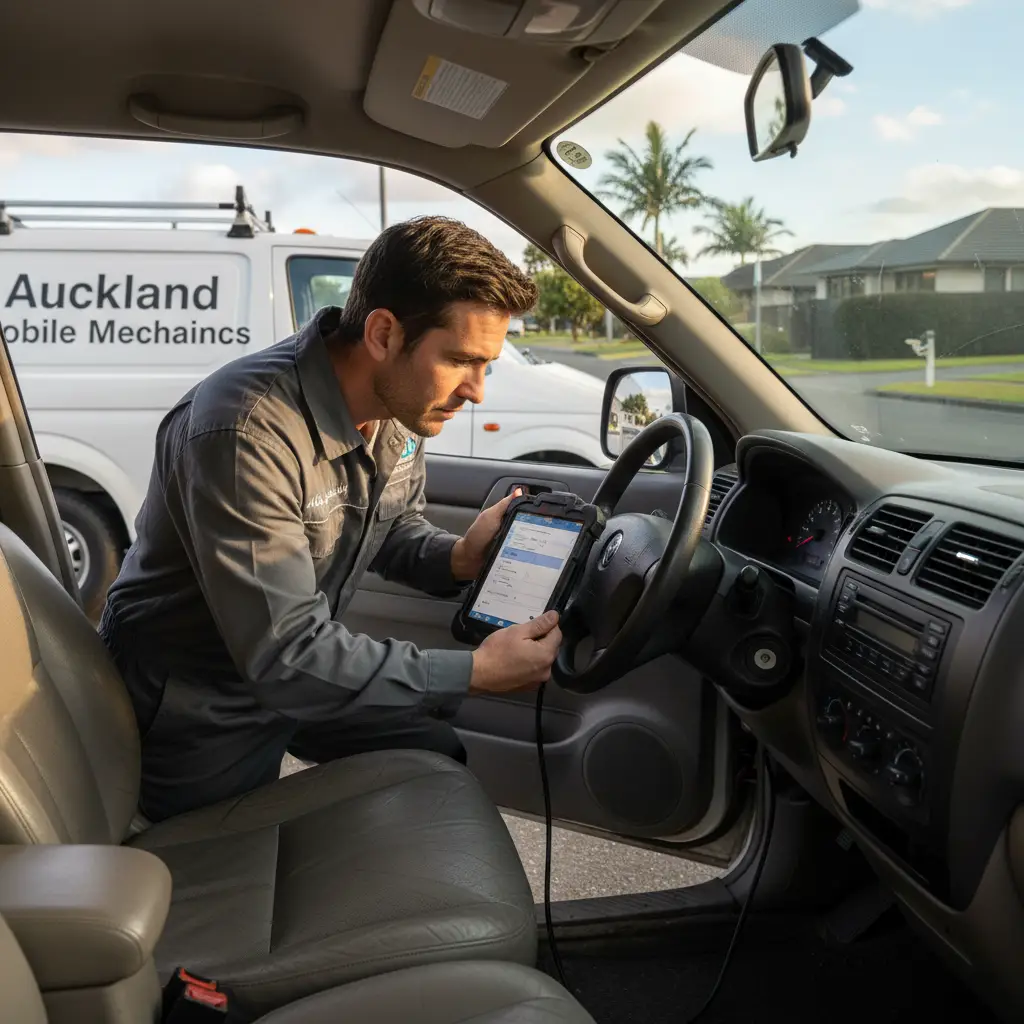
Speedometer/Odometer Repair: If your distance recording equipment fails, a mobile mechanic can often diagnose the sensor issue or instrument cluster fault on-site, getting you back to legal status faster than waiting for a workshop appointment.
Frequently Asked Questions (PAA)
Do hybrids pay Road User Charges in NZ?
It depends on the type of hybrid. Standard hybrids (like the older Toyota Prius) that cannot be plugged in do not pay RUC; they pay tax via petrol at the pump. However, Plug-in Hybrid Electric Vehicles (PHEVs) that can be charged from an external power source must pay RUC, currently at a reduced rate of $38 per 1,000km.
How much is the fine for overdue RUC?
If you are caught driving with an overdue RUC licence (where the odometer exceeds the licensed distance), you can be fined. Infringement fees typically start significantly lower than court fines but can escalate. Additionally, you will be invoiced for the unpaid distance owed.
Can I buy RUC online?
Yes, purchasing RUC online via the Waka Kotahi (NZTA) website is the most efficient method. It attracts a lower administrative fee than buying over the counter at an agent. You will need your credit card or internet banking details, plate number, and current odometer reading.
What happens if I sell a car with RUC credit?
RUC stays with the vehicle, not the owner. If you sell a car that has 5,000km of unused RUC, that credit transfers to the new owner. It is common practice to factor this value into the selling price of the vehicle.
Do petrol cars pay Road User Charges?
Generally, no. Standard petrol vehicles pay for road use through the Fuel Excise Duty included in the price of petrol at the service station. RUC applies to diesel vehicles, heavy vehicles, and electric/plug-in hybrid vehicles.
Is there a grace period for RUC?
Strictly speaking, there is no grace period for driving without a valid RUC licence. You are expected to buy a new licence before the current one expires. However, when new changes are introduced (like the EV RUC in 2024), the government may offer a short transition window for compliance, but relying on this is risky.