
A pre purchase car inspection Auckland is a professional, independent assessment conducted by a qualified automotive technician to verify the true condition of a used vehicle before you buy it. This detailed examination covers mechanical components, safety systems, and structural integrity, providing a written report that highlights existing faults, potential future repairs, and hidden accident history.
Buying a used vehicle is often the second largest financial investment an individual will make, surpassed only by purchasing a home. In the bustling automotive market of Auckland, thousands of vehicles change hands every week, ranging from Japanese imports to European luxury sedans. However, the glossy exterior of a freshly detailed car can often mask serious mechanical deficiencies or structural compromises. Without a professional assessment, buyers risk inheriting a previous owner’s deferred maintenance or, worse, a vehicle that is unsafe for the road.
What is a Pre-Purchase Car Inspection?
A pre-purchase inspection is a risk management tool. It involves a third-party mechanic spending between one to three hours thoroughly examining a vehicle. Unlike a standard Warrant of Fitness (WoF), which is a regulatory check to ensure a car meets minimum safety standards at a specific moment in time, a pre-purchase inspection is a comprehensive health check. It looks at the longevity of parts, the quality of previous repairs, and the overall mechanical soundness of the engine and transmission.
Why Auckland Buyers Cannot Rely on a WoF Alone
One of the most common misconceptions among Kiwi car buyers is that a fresh Warrant of Fitness guarantees a car is in good condition. This is factually incorrect. A WoF is a safety check mandated by the NZ Transport Agency (Waka Kotahi) that ensures the car is safe to drive today. It checks tire tread depth, brake balance, lights, and seatbelts.
However, a WoF inspector will not check the condition of the internal engine components, the transmission fluid quality, the health of the air conditioning system, or whether the timing belt is due for replacement. A car can pass a WoF with a dying engine or a slipping transmission. Therefore, relying solely on a WoF when purchasing a vehicle in Auckland is a gamble that can lead to significant financial loss.
The Comprehensive Multi-Point Checklist
A high-quality pre-purchase car inspection in Auckland should follow a rigorous multi-point checklist. This checklist generally covers over 100 specific items, categorized into major systems. Below is a breakdown of what a top-tier inspection includes.
1. Engine Health and Performance
The heart of the vehicle requires the most scrutiny. Inspectors look for:
- Fluid Leaks: Tracing oil, coolant, and transmission fluid leaks to their source.
- Belts and Hoses: Checking for cracks, brittleness, or signs of imminent failure in the serpentine belt and radiator hoses.
- Noise and Vibration: Listening for knocking, ticking, or hissing sounds that indicate internal wear, vacuum leaks, or exhaust manifold issues.
- Exhaust Smoke: Analyzing tailpipe emissions. Blue smoke indicates burning oil, white smoke suggests coolant leaks (head gasket failure), and black smoke points to fuel system issues.
2. Transmission and Drivetrain
Whether automatic, manual, or CVT, the transmission is expensive to repair. The inspection includes:
- Engagement Delay: Checking for hesitation when shifting from Park to Drive or Reverse.
- Shift Quality: Ensuring shifts are smooth and timely during a test drive.
- Clutch Operation: For manuals, testing the biting point and checking for slippage.
- CV Joints and Boots: Inspecting the drive axles for torn rubber boots which can lead to joint failure.
3. Suspension and Steering
Auckland’s roads can vary in quality, and suspension wear is common. The assessment covers:
- Shock Absorbers and Struts: Checking for leaks and bounce recovery.
- Bushings and Ball Joints: Looking for play or deterioration that affects handling.
- Power Steering: Checking fluid levels, pump operation, and steering rack condition.
Identifying Hidden Accident Damage
In the used car market, “accident-free” is a claim that must be verified, not trusted blindly. Modern cosmetic repairs can be incredibly convincing, hiding significant structural damage underneath. A skilled inspector uses specific techniques to uncover a vehicle’s history.
Paint and Bodywork Analysis
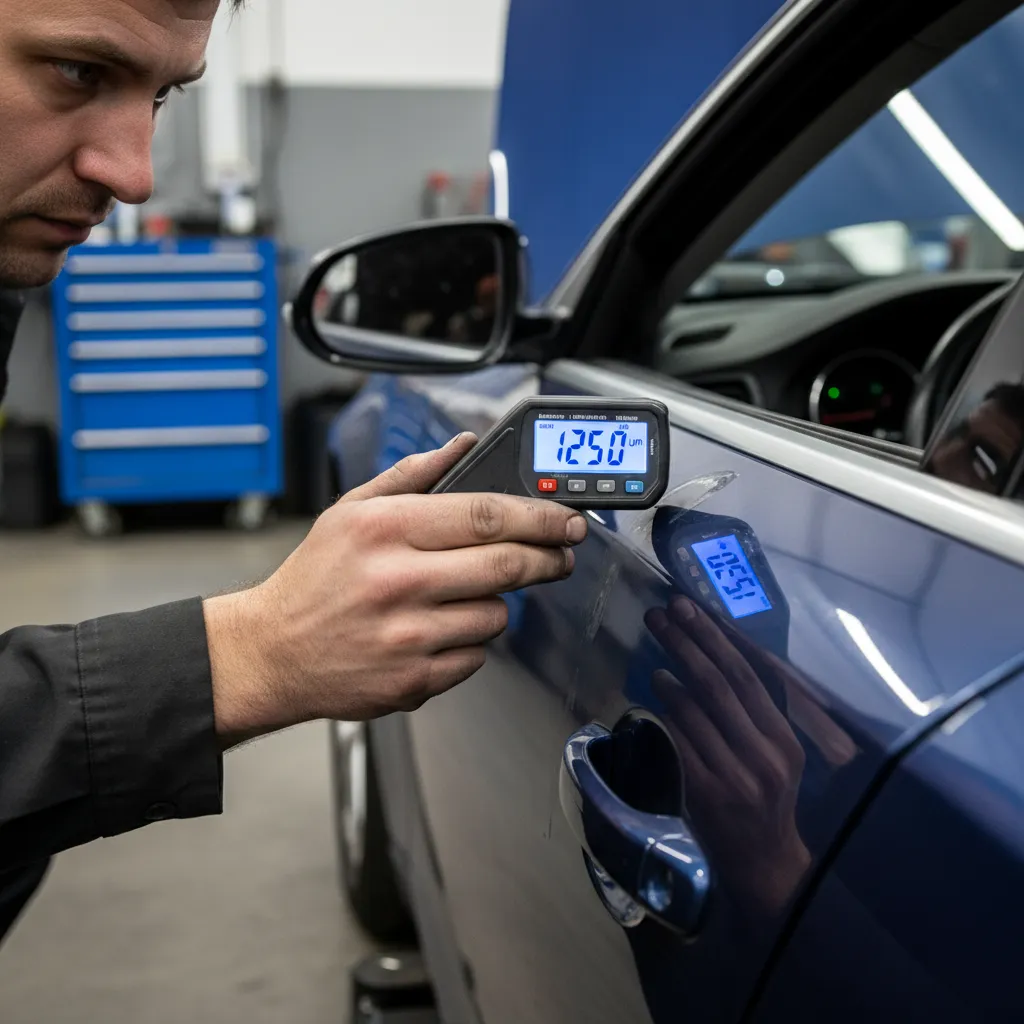
Inspectors look for inconsistencies in paint texture (orange peel), slight color mismatches between panels, and overspray on rubber seals or wheel arch liners. These are tell-tale signs of respraying following a collision. They also use digital paint depth gauges to measure the thickness of the paint; unusually thick readings often indicate body filler (putty) has been used to hide dents.
Structural Integrity and Chassis
More critical than cosmetic damage is structural damage. The inspection involves examining the chassis rails and pillars for kinking, welding marks, or clamp marks from a frame straightening machine. If a vehicle’s crumple zones have been compromised and repaired poorly, the car may not protect occupants effectively in a future crash.
Deep Dive: Mechanical and Electrical Assessment
Modern vehicles are computers on wheels. A visual inspection is no longer sufficient; a digital assessment is required. This phase of the inspection bridges the gap between mechanical engineering and software diagnostics.
OBD2 Diagnostic Scanning
Inspectors connect a professional-grade diagnostic scanner to the vehicle’s On-Board Diagnostics (OBD2) port. This communicates with the car’s Engine Control Unit (ECU) to read current and historic fault codes. It can reveal issues that haven’t yet triggered a “Check Engine” light, such as intermittent sensor failures, airbag system faults, or emissions irregularities.
Battery and Charging System
A load test is performed on the battery to determine its remaining life and cold cranking amps (CCA). Simultaneously, the alternator is tested to ensure it is charging the battery correctly under load (with lights and AC on) and not overcharging, which can damage sensitive electronics.
Interior Electronics
Every button and switch is tested. This includes windows, central locking, air conditioning (temperature and airflow), infotainment systems, reversing cameras, and driver-assist features like lane departure warning and adaptive cruise control.
Understanding the Written Report and Photos
The deliverable of a pre-purchase car inspection in Auckland is the written report. This document is your roadmap to the vehicle’s condition. A high-quality report is not just a checklist; it is a narrative supported by evidence.
The report should be broken down into sections (e.g., Interior, Exterior, Engine, Underbody) and use a traffic light system:
- Green: The component is in good condition and functioning as expected.
- Amber: The component is showing signs of wear or requires attention in the near future (e.g., brake pads at 40%, tires nearing replacement age).
- Red: Immediate attention required. The component is broken, unsafe, or illegal (e.g., bald tires, major oil leak, structural rust).
Crucially, the report must include high-resolution photos. These photos should document the defects found. If the report states there is an oil leak, there should be a photo showing the wet area on the engine block. If there is scratch damage, a close-up photo should be provided. This photographic evidence is vital for the next step: negotiation.
Mobile vs. Workshop Inspections in Auckland
Buyers in Auckland typically have two choices: a mobile inspection service that travels to the seller, or taking the car to a workshop. Both have merits.
Mobile Inspections
Pros: Extremely convenient. The inspector goes to the dealer or private seller’s home. It saves time and logistics.
Cons: Limited access to the underbody. While mobile mechanics carry jacks and stands, they cannot get the same view as a workshop hoist. Lighting conditions can also vary depending on the weather.
Workshop Inspections
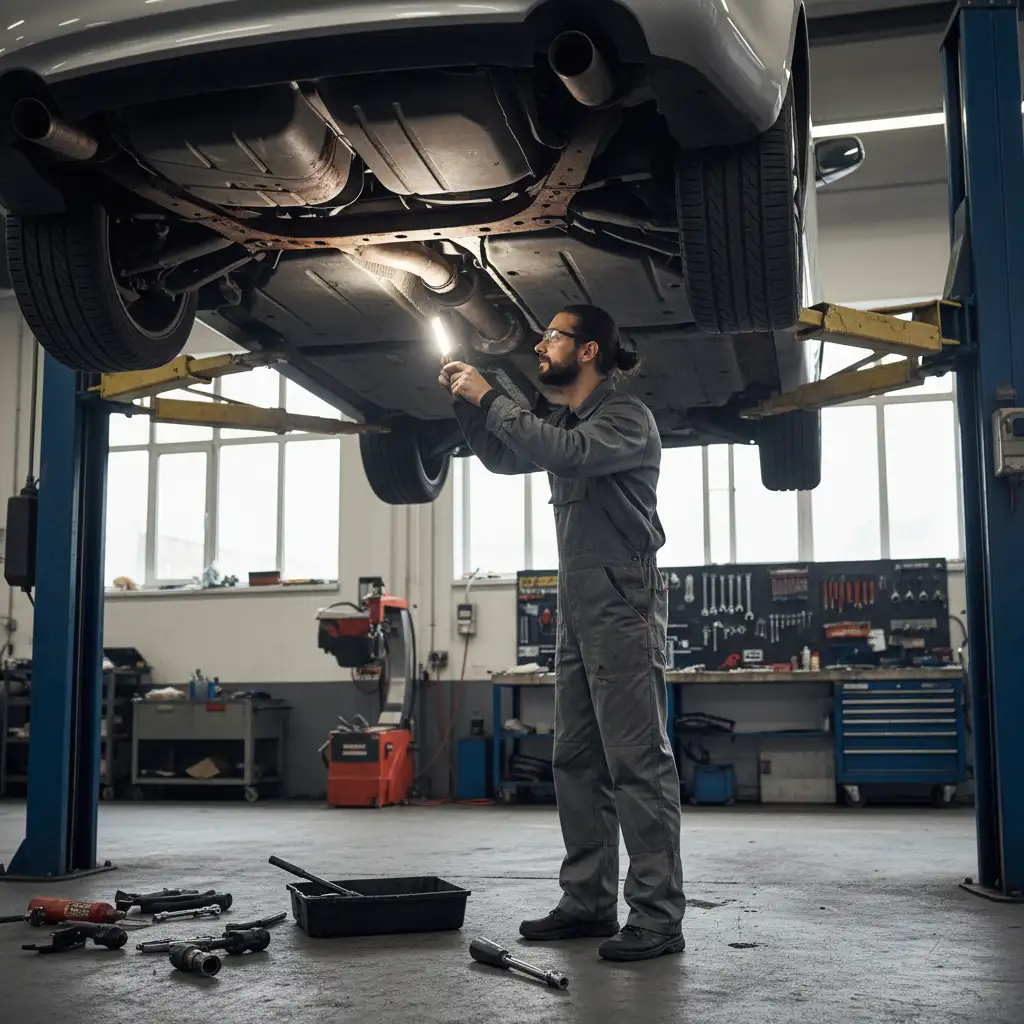
Pros: The vehicle is lifted on a hoist, allowing a thorough inspection of the suspension, exhaust, and chassis rails. Lighting is controlled, and heavy-duty tools are on hand for compression testing if needed.
Cons: Requires logistics. You must arrange for the seller to drop the car off or take it there yourself.
For high-value performance cars or older vehicles where rust is a concern, a workshop inspection is generally recommended due to the superior underbody access.
Using the Inspection for Negotiation
The cost of a pre-purchase inspection (typically between $180 and $350 NZD) often pays for itself immediately during the negotiation phase. If the report reveals $1,000 worth of upcoming repairs—such as worn brake rotors and a leaking valve cover gasket—you have objective leverage to lower the asking price.
You can present the report to the seller and ask them to either deduct the cost of repairs from the sale price or have the repairs completed by a professional before settlement. Without the report, you are negotiating based on opinion; with the report, you are negotiating based on fact.

Frequently Asked Questions
How much does a pre-purchase car inspection cost in Auckland?
In Auckland, a standard pre-purchase car inspection typically costs between $180 and $300 NZD. The price varies depending on the type of vehicle (European cars often cost more), the location (mobile vs. workshop), and the depth of the inspection (basic mechanical vs. comprehensive diagnostic).
Can a mobile mechanic do a thorough inspection?
Yes, mobile mechanics can perform very thorough inspections. They carry diagnostic scanners, paint depth gauges, and lifting equipment. However, for a detailed check of the chassis and deep underbody components, a workshop with a hydraulic hoist offers better visibility.
Does a pre-purchase inspection include a compression test?
Standard inspections usually do not include a compression test as it requires removing spark plugs and is more intrusive. However, if the inspector suspects engine issues (due to smoke or misfires), they may recommend a compression test as an additional service.
Is a pre-purchase inspection the same as a WoF?
No. A Warrant of Fitness (WoF) is a mandatory safety check required by NZ law. A pre-purchase inspection is a voluntary, comprehensive assessment of the vehicle’s mechanical condition, reliability, and upcoming maintenance requirements.
Who pays for the pre-purchase inspection?
The potential buyer is responsible for paying for the pre-purchase inspection. It is part of the buyer’s due diligence to ensure the vehicle is worth the asking price and to avoid buying a car with hidden faults.
Can I inspect a car that is not registered?
Yes, you can inspect a car that is not registered, but the inspector may not be able to perform a road test on public roads. In this case, the inspection will be limited to static checks and engine running tests within the seller’s property.