
A mobile petrol car service is a professional automotive maintenance solution where qualified mechanics travel to your home or workplace to perform essential upkeep on gasoline-powered vehicles. This service typically includes engine oil replacement, filter changes, spark plug inspections, and comprehensive safety diagnostics, offering dealership-quality care with maximum convenience.
In the modern automotive landscape, the demand for convenience has revolutionized how we approach vehicle maintenance. Gone are the days of losing an entire morning waiting in a dealership lounge. A mobile petrol car service brings the workshop to your driveway, ensuring your vehicle operates at peak efficiency without disrupting your schedule. While electric and diesel vehicles have their own specific requirements, petrol engines demand a unique set of maintenance protocols to maintain power delivery, fuel economy, and longevity. This guide explores the critical aspects of servicing a petrol engine, from viscosity grades to ignition systems.
The Comprehensive Standard Petrol Engine Checklist
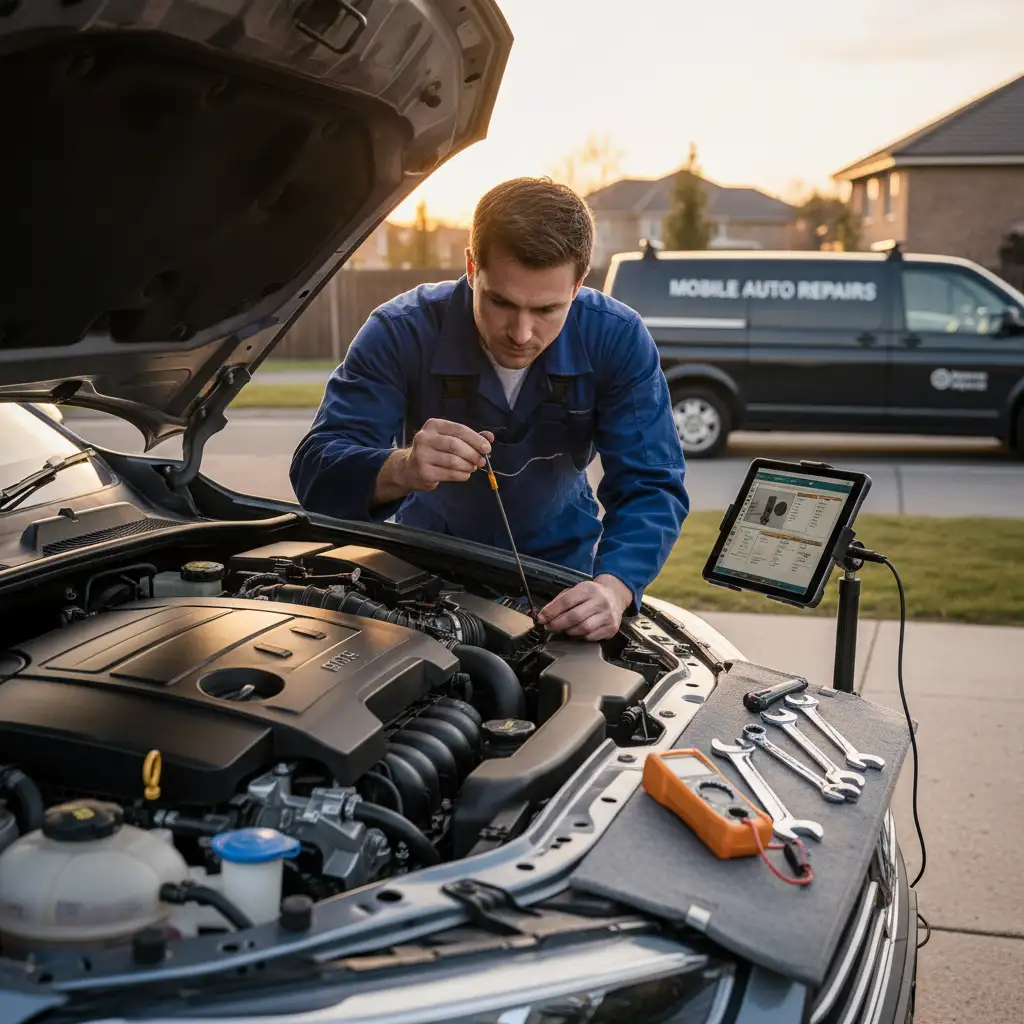
When booking a mobile petrol car service, it is vital to understand that the scope of work goes far beyond a simple oil change. Petrol engines rely on a precise mixture of air, fuel, and spark to generate power. If any one of these elements is compromised, the vehicle’s performance will suffer. A high-quality mobile mechanic will adhere to a rigorous checklist designed to uncover potential issues before they become expensive repairs.
Ignition System Inspection
Unlike diesel engines, which rely on compression ignition, petrol engines require a spark to ignite the fuel-air mixture. Therefore, the health of the ignition system is paramount. During a standard service, the mechanic should inspect the spark plugs. Worn plugs can lead to misfires, poor fuel economy, and difficult starting. The service should also include checking the ignition coils and high-tension leads (if applicable) for signs of wear, corrosion, or insulation breakdown.
Fluid Analysis and Top-Ups
- Brake Fluid: Checking for moisture content (hygroscopic nature) which can lead to brake fade.
- Coolant/Antifreeze: Ensuring the freezing point and boiling point are within specification to prevent overheating.
- Power Steering Fluid: Checking for levels and burnt smells indicating pump wear.
- Transmission Fluid: Checking levels and color to ensure smooth gear shifts.
Belts and Hoses
Rubber components degrade over time due to the heat cycles inherent in a petrol engine. A mobile service includes a visual inspection of the serpentine belt (drive belt) for cracks, fraying, or glazing. Furthermore, coolant hoses are checked for softness or brittleness, which are precursors to leaks and potential engine failure.
Mastering Oil Viscosity Selection for Petrol Engines
One of the most technical aspects of a mobile petrol car service is selecting the correct engine oil. Oil is the lifeblood of the engine, lubricating moving parts, reducing friction, and carrying heat away from the combustion chamber. However, not all oils are created equal, and using the wrong viscosity can be catastrophic.
Understanding Viscosity Grades
Viscosity refers to the oil’s resistance to flow. You will typically see numbers like 5W-30 or 0W-20. The first number (followed by a ‘W’ for Winter) indicates how the oil flows at cold temperatures, while the second number indicates how it flows at operating temperatures. Modern petrol engines often require thinner oils (low viscosity) to reduce internal drag and improve fuel economy, but older performance engines may require thicker oil to maintain film strength under high loads.
Synthetic vs. Mineral Oil
For the vast majority of modern petrol vehicles, fully synthetic oil is the standard. Synthetic oils offer superior chemical stability, better resistance to thermal breakdown, and enhanced protection against sludge formation compared to mineral oils. According to the American Petroleum Institute (API), utilizing high-quality motor oil that meets current standards is essential for maintaining engine warranties and maximizing engine life.
Your mobile mechanic should consult manufacturer specifications to choose the exact oil grade required. Using a 10W-40 mineral oil in an engine designed for 0W-20 synthetic can damage variable valve timing (VVT) solenoids and starve the engine of lubrication during cold starts.
Fuel System Cleaning and Injector Maintenance
Petrol engines are highly sensitive to fuel quality. Over time, carbon deposits can build up on the intake valves and fuel injectors, disrupting the spray pattern of the fuel. This results in an inefficient burn, reduced power, and increased emissions. A premium mobile petrol car service often includes options for fuel system maintenance.
The Role of Fuel Injectors
Modern engines use direct injection (GDI) or multi-point injection. In GDI engines, the injector is located directly in the combustion chamber, exposing it to extreme heat and pressure. If the injector tip becomes clogged, fuel is not atomized correctly. This can cause “hot spots” in the cylinder, leading to pre-ignition or knocking, which is damaging to the engine.
Chemical Cleaning vs. Ultrasonic Cleaning
Mobile servicing typically utilizes high-grade chemical additives added to the fuel tank or inducted through the intake manifold to clean these deposits. These detergents break down carbon buildup on valves and injector nozzles. For severe cases, off-vehicle ultrasonic cleaning might be recommended, though this usually requires a workshop visit. Regular maintenance during your mobile service prevents the need for these drastic measures.
Air Filtration: Engine and Cabin Filter Checks
Filters are the unsung heroes of vehicle longevity and passenger comfort. They act as the primary defense against contaminants entering the engine and the cabin.
Engine Air Filters
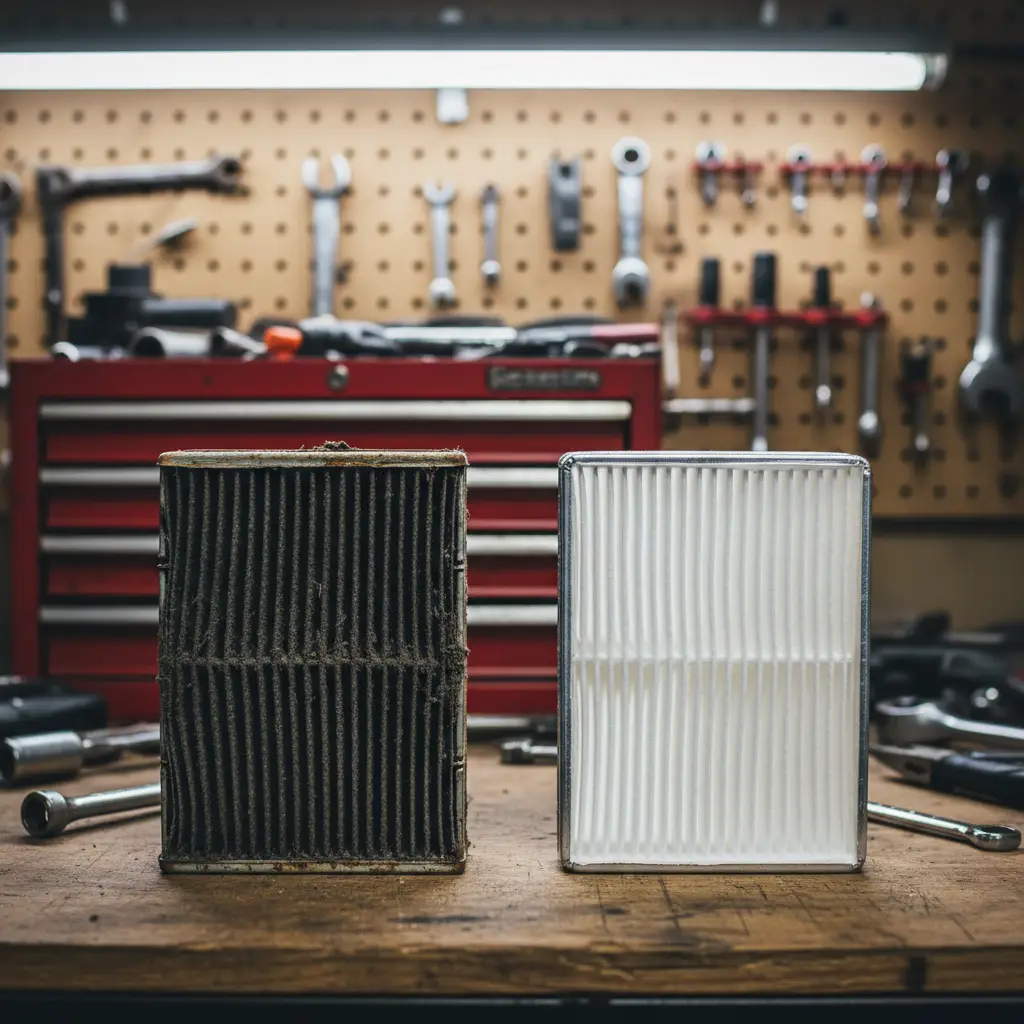
A petrol engine consumes roughly 14.7 parts of air for every 1 part of fuel (stoichiometric ratio). To achieve this, it needs to breathe freely. A clogged air filter restricts airflow, forcing the engine to work harder to draw air in. This “pumping loss” reduces efficiency and can confuse the Mass Air Flow (MAF) sensor, leading to a rich fuel mixture and poor economy. During a mobile service, the mechanic will remove the filter, inspect it against a light source, and replace it if airflow is compromised.
Cabin Air Filters
While the engine air filter protects the car, the cabin air filter protects the passengers. It filters out dust, pollen, exhaust fumes, and other particulates from the air entering through the HVAC system. A clogged cabin filter can restrict air conditioning performance and lead to unpleasant odors inside the car. Regular replacement is crucial for allergy sufferers and ensures the climate control system operates efficiently.
The Mobile Advantage: Convenience Meets Quality
Opting for a mobile petrol car service offers distinct advantages over traditional garage visits. The most obvious is time savings, but the benefits extend to transparency and cost-effectiveness.
Transparency: When a mechanic works on your driveway, you can watch the process. You can see the oil being drained, the new parts being unboxed, and the old parts being removed. This eliminates the anxiety of “phantom repairs” where customers are charged for work not performed.
Direct Communication: You speak directly to the technician working on your car, not a service receptionist. This allows for immediate answers to questions regarding your petrol engine’s specific needs, such as the condition of the timing belt or the state of the brake pads.
Signs Your Petrol Vehicle Requires Immediate Attention
Regular scheduled servicing is vital, but certain symptoms indicate your petrol car needs a mobile mechanic immediately, regardless of the service interval.
- Rough Idling: If the car vibrates excessively while stopped, it could indicate spark plug failure or a vacuum leak.
- Check Engine Light: This warning light is often triggered by emissions system faults, such as a failing oxygen sensor or catalytic converter issues common in petrol cars.
- Blue Smoke: This indicates oil is burning in the combustion chamber, suggesting worn piston rings or valve stem seals.
- Increased Fuel Consumption: A sudden drop in MPG often points to air filtration issues, tire pressure problems, or fuel system inefficiencies.
For more information on vehicle safety and emissions standards, refer to the U.S. Environmental Protection Agency (EPA) or your local transport authority guidelines.
Frequently Asked Questions
Is a mobile petrol car service more expensive than a garage?
Generally, mobile services are price-competitive and often cheaper than dealerships. Because mobile mechanics do not have the high overheads of a physical workshop (rent, utilities), they can pass these savings on to the customer while providing the same quality parts and fluids.
Will using a mobile mechanic void my car’s warranty?
No, as long as the mechanic is a certified professional and uses parts and fluids that meet or exceed the manufacturer’s original equipment (OEM) specifications. Always ensure your service book is stamped or a digital record is updated to maintain warranty validity.
What happens if it rains during my appointment?
Most mobile mechanics are equipped to work in light rain or have portable gazebos. However, for heavy downpours or safety reasons, they may request to move the vehicle to a covered area or reschedule. It is helpful to have a garage or carport available if possible.
How do mobile mechanics dispose of the old oil?
Professional mobile mechanics are required by law to dispose of hazardous waste responsibly. They carry waste oil tanks in their vans and transport the used oil and filters to certified recycling centers. You should never see oil left behind on your property.
How often should I service my petrol car?
Most manufacturers recommend servicing a petrol vehicle every 12 months or every 10,000 to 12,000 miles, whichever comes first. However, if you frequently drive short distances (stop-start city driving), more frequent oil changes may be beneficial to prevent sludge buildup.
Can a mobile mechanic perform major repairs like timing belts?
Yes, many experienced mobile mechanics can perform complex repairs such as timing belt replacements, alternator changes, and brake overhauls on-site. However, jobs requiring a vehicle lift (like a clutch replacement or engine swap) may still require a workshop environment.