
NZ car ownership regulations refer to the statutory obligations mandated by the Land Transport Act 1998 and enforced by Waka Kotahi NZ Transport Agency. To remain compliant, vehicle owners must maintain a valid Warrant of Fitness (WoF), keep vehicle licensing (Rego) current, pay applicable Road User Charges (RUC), and ensure ownership details are updated within seven days of any transfer.
Owning a vehicle in New Zealand involves more than just purchasing a car and driving off the lot. The regulatory framework is designed to ensure safety on our roads, environmental accountability, and accurate record-keeping. Whether you are a first-time buyer in Auckland or a seasoned motorist, navigating the specific legalities of the New Zealand transport system is essential to avoid hefty fines and legal complications. This comprehensive guide covers everything from the initial registration to the final scrapping of a vehicle.
Understanding the Core Pillars of NZ Vehicle Compliance
The New Zealand transport system is built on a framework of “continuous licensing.” This means that unless a vehicle is formally exempted, it must remain licensed at all times. The responsibility falls squarely on the “registered person.” It is crucial to distinguish between the registered person and the legal owner, although they are often the same individual.
The registered person is the entity responsible for the vehicle’s compliance, including paying fines, licensing fees, and ensuring the vehicle is safe to drive. The legal owner is the person with property rights over the asset. In the eyes of Waka Kotahi (NZ Transport Agency), the registered person is the point of contact for all enforcement activities.
The Vehicle Registration and Licensing Process
Many motorists confuse “registration” with “licensing.” While the terms are used interchangeably in casual conversation (often referred to collectively as “Rego”), they are distinct legal concepts under NZ car ownership regulations.
Vehicle Registration
Registration is a one-off process that takes place when a vehicle is first used on New Zealand roads. This usually happens when a car is imported or manufactured. During registration, the vehicle is added to the Motor Vehicle Register, issued number plates, and assigned a unique VIN (Vehicle Identification Number) if it doesn’t already have one.
Vehicle Licensing (Rego)
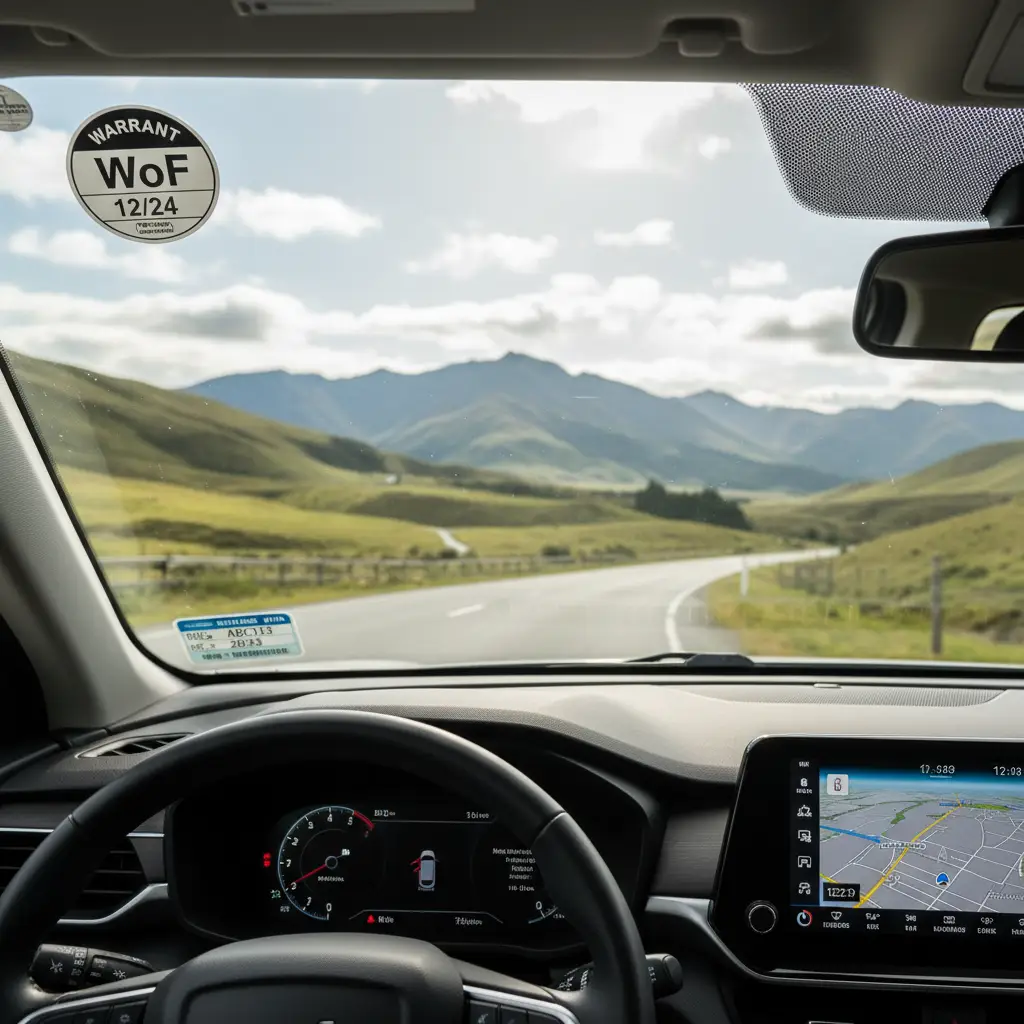
Licensing is the ongoing fee you pay to use the vehicle on public roads. You will receive a label to display on your windscreen (usually on the passenger side). To obtain a vehicle license, your car must have a current Warrant of Fitness (WoF) or Certificate of Fitness (CoF).
Key Compliance Rules:
- Continuous Licensing: Your vehicle must be licensed continuously. If you do not pay your Rego, the fees will accrue.
- Exemptions: If you do not plan to use your vehicle on the road for at least three months, you must apply for an exemption before the license expires. You cannot drive a vehicle with an exemption on public roads.
- 12-Month Rule: If a vehicle remains unlicensed for 12 months, it will be automatically deregistered. Re-registering a vehicle is a costly and complex process involving rigorous inspections.
Transferring Ownership: Buying and Selling Protocols
One of the most critical aspects of NZ car ownership regulations is the transfer of ownership. Failing to complete this process correctly is a common source of disputes and unintended fines.
For the Seller
When you sell a vehicle, you are legally required to notify Waka Kotahi immediately. You can do this online using the “Sold your vehicle” service. You will need the buyer’s full name and address.
Warning: Until you notify the agency, you remain liable for any speeding tickets, parking fines, or toll offenses committed by the new driver. Do not rely on the buyer to complete the paperwork alone.
For the Buyer
As the buyer, you must notify Waka Kotahi that you have acquired the vehicle. This is known as the “Change of registered person – buyer” transaction. This should be done online or at an agent (like AA or VTNZ) immediately after the purchase.
The 7-Day Rule: While immediate notification is recommended, the law allows a maximum of seven days to complete this notification. However, driving the vehicle before the transfer is processed carries risks regarding insurance coverage.

Warrant of Fitness (WoF): Safety Standards
A Warrant of Fitness (WoF) is a periodic safety inspection that ensures your vehicle meets the required safety standards to be driven on New Zealand roads. It is illegal to drive a vehicle without a current WoF, except when driving solely for the purpose of obtaining a WoF (provided the vehicle is safe to be moved).
Inspection Frequency
- Vehicles first registered anywhere before 1 January 2000: Must be inspected every 6 months.
- Vehicles first registered on or after 1 January 2000: Must be inspected every 12 months.
- New vehicles: Typically do not require a WoF until they are three years old.
What is Checked?
A WoF inspector will check critical safety systems, including:
- Tyre condition: Tread depth must be at least 1.5mm across 75% of the tyre width.
- Braking system: Efficiency and balance.
- Structural condition: Rust or damage to the chassis.
- Lights: Headlights, indicators, and brake lights must function correctly.
- Glazing: Windscreen chips or cracks in the driver’s line of sight.
- Safety belts: Must be in good condition and function properly.
For detailed information on vehicle standards, you can refer to the official Waka Kotahi WoF guide.
Road User Charges (RUC) and Fuel Taxes
New Zealand funds its roading infrastructure through two primary methods: fuel excise duty (included in the price of petrol) and Road User Charges (RUC).
Who Must Pay RUC?
You must pay RUC if:
- Your vehicle is powered by diesel.
- Your vehicle is powered by a fuel not taxed at the source (e.g., specific heavy vehicles).
- Your vehicle weighs over 3.5 tonnes (heavy vehicle).
- New Regulation (April 2024): Plug-in Hybrid Electric Vehicles (PHEVs) and full Electric Vehicles (EVs) are now subject to RUC to ensure fair contribution to road maintenance as they do not pay petrol tax.
RUC is purchased in blocks of 1,000 kilometers. You must buy a RUC license and display it on your windscreen. It is an offense to drive if your odometer reading exceeds the distance covered by your RUC license.
Number Plate and Display Requirements
Your number plates are the primary means of identifying your vehicle for enforcement and registration purposes. NZ car ownership regulations are strict regarding how these must be displayed.
Visibility Rules
Plates must be clearly visible and legible from a distance of 20 meters. They must be upright and not obscured by tow balls, bike racks, or dirt. If you use a bike rack that obscures the rear plate, you must obtain a supplementary plate to attach to the rack.
Personalized Plates
New Zealand allows for personalized plates, which are purchased through authorized agents like KiwiPlates. While the plate combination is your property, the physical plates must still meet the reflective and dimensional standards set by the government. You cannot use homemade plates or alter existing plates.
Scrapping and Deregistering a Vehicle Legally
When a vehicle reaches the end of its life, simply abandoning it or leaving it to rust in a paddock can lead to ongoing financial liability. Because of the continuous licensing requirement, fees will accumulate until the vehicle is formally deregistered.
The Deregistration Process
To scrap a vehicle legally:
- Cancel the Registration: You must apply to cancel the registration with Waka Kotahi. This stops the clock on licensing fees.
- Return the Plates: You are generally required to return the number plates to a Waka Kotahi agent.
- Disposal: Take the vehicle to an authorized wrecker or scrap metal dealer.
If your vehicle has been written off by an insurer, they will often handle the deregistration process for you, but it is your responsibility to confirm this has happened.

The Role of Mobile Mechanics in Compliance
Maintaining compliance with NZ car ownership regulations often requires professional assistance. For Auckland residents, utilizing a mobile mechanic can streamline the process of staying legal.
Pre-Purchase Inspections: Before transferring ownership, a mobile mechanic can perform a comprehensive check to ensure you aren’t buying a vehicle with hidden WoF failures or structural damage.
WoF Repairs: If your vehicle fails a WoF, a mobile mechanic can come to your home or workplace to perform the necessary repairs—such as replacing brake pads, fixing lights, or sorting out suspension issues—allowing you to get your vehicle back on the road faster.
By understanding and adhering to these regulations, you ensure the safety of yourself and others while avoiding the stress of legal penalties. Responsible car ownership is a key part of keeping New Zealand roads safe and efficient.
People Also Ask
What is the difference between registration and licensing in NZ?
Registration is the one-time process of adding a vehicle to the NZ Motor Vehicle Register (usually when imported). Licensing (often called “Rego”) is the ongoing fee you pay (typically annually or monthly) to use the vehicle on public roads.
How long do I have to change ownership of a car in NZ?
Both the buyer and seller must notify Waka Kotahi (NZTA) of the ownership transfer. While it should be done immediately, legally you have up to 7 days to complete this notification after the sale occurs.
Can I sell a car without a WOF in NZ?
Yes, you can sell a car without a current Warrant of Fitness, but you must strictly follow the “as is, where is” rule. You must obtain a written undertaking from the buyer confirming they know the WoF is not current and that they will not drive it solely for transport until a new WoF is obtained.
What happens if my Rego expires?
If your vehicle licensing (Rego) expires, you cannot legally drive the car on the road. If it remains unlicensed for 12 months, the vehicle will be automatically deregistered, meaning it cannot be driven until it goes through a costly re-registration process.
Do electric vehicles pay Road User Charges in NZ?
As of April 1, 2024, owners of light electric vehicles (EVs) and plug-in hybrid electric vehicles (PHEVs) are required to purchase Road User Charges (RUC) licenses to contribute to road maintenance costs.
How do I deregister a car in New Zealand?
To deregister a vehicle, you must visit an authorized agent (like AA or VTNZ), fill out an application to cancel registration (MR15 form), and return the number plates. This stops the accumulation of licensing fees.