
Nissan service Auckland refers to the specialized automotive maintenance and repair required to keep Nissan vehicles—ranging from the compact Note to the rugged Navara—operating at peak performance. This process involves manufacturer-compliant logbook servicing, specific diagnostics for Xtronic CVT transmissions, and expert attention to VQ series engines, often delivered conveniently through mobile mechanics who bring workshop-grade solutions directly to your location.
Comprehensive Nissan Care in Auckland
Owning a Nissan in Auckland brings with it a specific set of maintenance requirements dictated by both the vehicle’s engineering and the local driving environment. From the stop-start traffic on the Southern Motorway to the winding coastal roads of the Waitakere Ranges, your vehicle undergoes significant stress. Proper care goes beyond a simple oil change; it requires a deep understanding of Nissan’s proprietary technologies and common wear points.
Nissan has established itself as a dominant force in the New Zealand market, offering vehicles that balance reliability with innovation. However, models such as the Tiida, X-Trail, and Skyline utilize complex systems that generalist mechanics often overlook. A dedicated Nissan service strategy ensures that critical components, particularly the drivetrain and electronics, are monitored and maintained according to factory specifications.
Whether you drive a daily commuter or a high-performance Z-car, the goal of specialized maintenance is to prevent costly failures before they occur. By utilizing a service provider who understands the nuances of the brand, you protect your investment and ensure safety on Auckland roads. This guide explores the critical aspects of Nissan ownership and how to navigate repairs and servicing effectively.

Mastering CVT Transmission Maintenance
One of the most defining features of modern Nissan vehicles is the Xtronic Continuously Variable Transmission (CVT). While this technology offers superior fuel economy and smooth acceleration, it is also the most common source of mechanical anxiety for owners. Unlike traditional automatic transmissions that use gears, the CVT uses a system of pulleys and a steel belt to provide an infinite range of gear ratios.
The Importance of Fluid Integrity
The lifeblood of your Nissan’s transmission is the CVT fluid. It is imperative to use the correct specification—typically NS-2 or NS-3, depending on the model year. Using generic universal transmission fluid can lead to catastrophic failure. In Auckland’s heavy traffic, the transmission fluid can overheat, degrading its ability to lubricate and cool the internal components.
We recommend a shorter service interval for CVTs than the factory manual suggests, especially for vehicles driven primarily in the city. Changing the fluid and the external canister filter every 40,000 to 60,000 kilometers significantly reduces the risk of the dreaded “CVT shudder” or hesitation during acceleration.
Recognizing CVT Warning Signs
Early detection is key to saving a transmission. Common symptoms that require immediate attention include:
- Whining Noises: A high-pitched whine during acceleration often indicates pump wear or low fluid pressure.
- Delayed Engagement: A pause of more than a second when shifting from Park to Drive.
- Overheating Protection: If the vehicle enters “limp mode” (reduced power) during long drives or hill climbs, the transmission is overheating.
For detailed technical specifications on how these transmissions operate, you can refer to JATCO, the subsidiary that manufactures the majority of Nissan’s transmission units. Understanding the source of the technology underscores why specialized care is non-negotiable.
Diagnosing Common Electrical Faults
Modern Nissans are heavily reliant on complex electrical architectures. While generally robust, certain models are prone to specific electrical gremlins that can be frustrating to diagnose without the correct scan tools and experience.
IPDM (Intelligent Power Distribution Module) Failure
The IPDM is essentially the brain of the vehicle’s electrical relay system. In models like the Nissan Navara and Pathfinder, the IPDM relay can fail, preventing the vehicle from starting or causing it to stall unexpectedly. A specialized Nissan mechanic in Auckland will know to check this module first when presented with a “crank, no start” condition, rather than wasting time replacing the starter motor or battery unnecessarily.
Camshaft and Crankshaft Position Sensors
The VQ and QR series engines are known for sensor sensitivities. If your Nissan suddenly stalls at traffic lights or struggles to start while the engine is hot, it is frequently due to a failing Camshaft or Crankshaft Position Sensor. These sensors send timing data to the ECU. When they fail, the computer cannot determine when to fire the spark plugs. Replacing these sensors is a standard procedure for mobile mechanics and can usually be done on-site.
Key Fob and Immobilizer Issues
Nissan’s Intelligent Key system is convenient but can suffer from de-synchronization. If your dashboard displays a “Key ID Incorrect” warning despite having a fresh battery in the fob, the Body Control Module (BCM) may need reprogramming. This requires proprietary software that not all generalist garages possess.
Expert Servicing for VQ Series Engines
The VQ engine family is legendary, powering vehicles from the Nissan Maxima and Murano to the 350Z and 370Z. These V6 engines are renowned for their smoothness and power, but they require diligent maintenance to reach high mileages.
Oil Gallery Gasket Issues: On earlier VQ35HR and VQ37VHR engines, the paper gaskets used on the rear timing cover oil gallery can blow out. This leads to low oil pressure, which can trigger variable valve timing codes (P0011/P0021) and potentially cause catastrophic engine damage if ignored. During a major service, checking oil pressure manually is a wise precaution for these models.
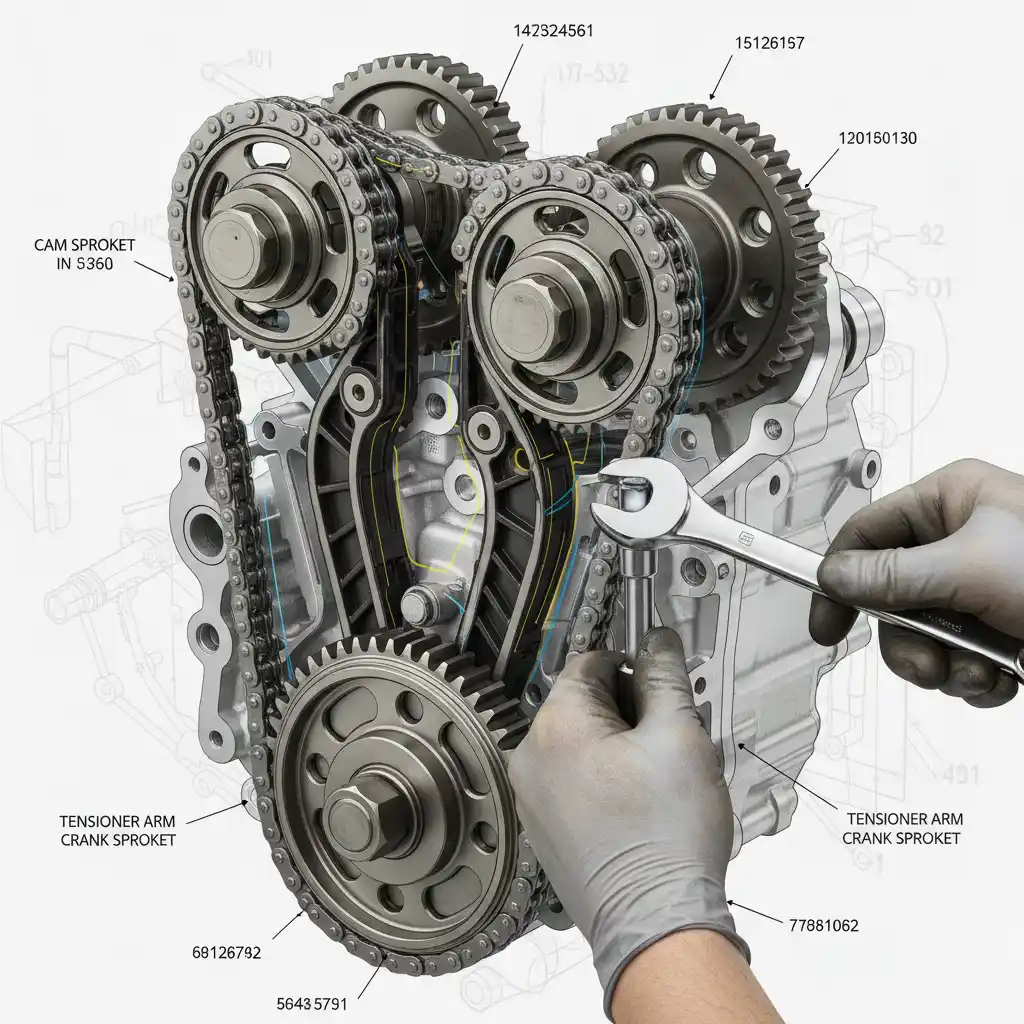
Timing Chain Tensioners: While timing chains are designed to last the life of the engine, the tensioners and guides can wear out. A distinct rattling noise on a cold start is the primary indicator. Addressing this early prevents the chain from jumping a tooth and causing valve-to-piston contact.
The Advantage of Mobile Nissan Mechanics
The automotive service landscape in Auckland has shifted dramatically towards mobile mechanics. For Nissan owners, this offers a distinct advantage. Mobile technicians carry diagnostic equipment equivalent to dealership workshops but operate with lower overheads and higher convenience.
Convenience Across Auckland
Whether you are located in the North Shore, West Auckland, or Manukau, a mobile mechanic comes to you. This eliminates the logistical nightmare of dropping a car off at a garage before work and arranging alternative transport. For diagnostics, battery replacements, alternator repairs, and standard logbook servicing, a mobile service is often the most efficient choice.
Transparency and Direct Communication
When you use a mobile Nissan service, you speak directly to the technician working on your car, not a service advisor at a front desk. This allows for a clearer explanation of the issues. You can see the old parts, observe the fluid quality, and discuss the urgency of various repairs face-to-face.
Scheduled Maintenance & Warrant of Fitness
Routine maintenance is the barrier between a reliable car and a money pit. In New Zealand, adhering to the recommended service schedule is also crucial for passing your Warrant of Fitness (WOF) without surprises.
Brake System Maintenance
Nissans, particularly the heavier SUVs like the Pathfinder and X-Trail, can be hard on brake pads and rotors. Auckland’s hilly terrain accelerates this wear. Regular inspections ensure that pad thickness is sufficient and that rotors are not warped—a common cause of steering wheel vibration during braking.
Suspension and Steering
The Nissan Tiida and Note are popular in Auckland but frequently suffer from worn control arm bushings and top strut mounts. These components are scrutinized during a WOF inspection. A proactive service will identify split bushes or leaking shocks before they result in a failed inspection. For more information on vehicle inspection standards, the NZ Transport Agency provides comprehensive guidelines on what is checked during a WOF.
People Also Ask
How often should I service my Nissan CVT transmission?
While some factory schedules suggest longer intervals, reputable mechanics in Auckland recommend changing Nissan CVT fluid every 40,000 to 60,000 kilometers (or every 24 months) to prevent overheating and premature failure, especially given the stop-start nature of city driving.
Can a mobile mechanic perform a full logbook service on my Nissan?
Yes, a qualified mobile mechanic can perform a full logbook service that maintains your statutory warranty. They use approved parts and fluids and follow the manufacturer’s checklist, stamping your logbook upon completion.
What are the most common problems with the Nissan Tiida?
Common issues with the Nissan Tiida include CVT transmission shudder, worn suspension control arm bushings, and ignition coil failures. Regular servicing can identify these issues early before they become expensive repairs.
Why is my Nissan check engine light on?
A check engine light can indicate hundreds of issues, but in Nissans, it is frequently caused by a loose gas cap, failing O2 sensors, mass airflow sensor (MAF) issues, or camshaft position sensor faults. A diagnostic scan is required to pinpoint the exact code.
Is it expensive to repair a Nissan in Auckland?
Nissan repairs are generally affordable compared to European brands. Parts are widely available in Auckland. However, CVT transmission replacements can be costly, which is why preventative fluid maintenance is highly recommended.
What is the difference between a minor and major Nissan service?
A minor service typically includes an oil and filter change and a general safety inspection. A major service is more comprehensive, involving the replacement of spark plugs, air filters, cabin filters, brake fluid, and a detailed check of the transmission and cooling systems.