
A mobile battery jumpstart in Auckland is an emergency roadside service where a qualified technician travels to your specific location to restart a vehicle with a discharged battery. This service typically includes professional diagnostics to check alternator health and, if necessary, immediate on-site battery replacement to ensure you can resume driving safely.
There is nothing quite as frustrating as turning your key or pushing the start button, only to be met with silence or a dreaded clicking sound. For drivers in Auckland, traversing from the North Shore to Manukau, a flat battery can disrupt an entire day’s schedule. Whether you are stuck in a CBD parking building or stranded in your driveway, understanding the intricacies of mobile battery services is essential for modern vehicle ownership.
This guide serves as the definitive resource for navigating battery failures. We will explore when a simple jumpstart suffices, how to recognize the symptoms of a dying battery before it leaves you stranded, and the technical advantages of professional mobile replacement services over DIY attempts.
When to Call for a Mobile Jumpstart in Auckland
Not every non-starting car requires a new battery. Often, the issue is a temporary discharge caused by human error or environmental factors. A mobile jumpstart is the most cost-effective and immediate solution when the battery is sound but simply drained of its charge.
Common Scenarios for Battery Drain
Modern vehicles are equipped with sophisticated electronics that demand constant power. The most common reasons for a sudden flat battery include:
- Parasitic Drain: Leaving headlights, interior dome lights, or the radio on while the engine is off.
- Extended Inactivity: If you haven’t driven your car for several weeks, the natural self-discharge rate of lead-acid batteries, combined with the vehicle’s alarm system and memory keep-alive functions, can drain the voltage below cranking requirements.
- Extreme Temperatures: Auckland’s humid winters can retard the chemical reaction inside the battery, reducing its Cold Cranking Amps (CCA) capacity just when the engine requires more power to turn over.
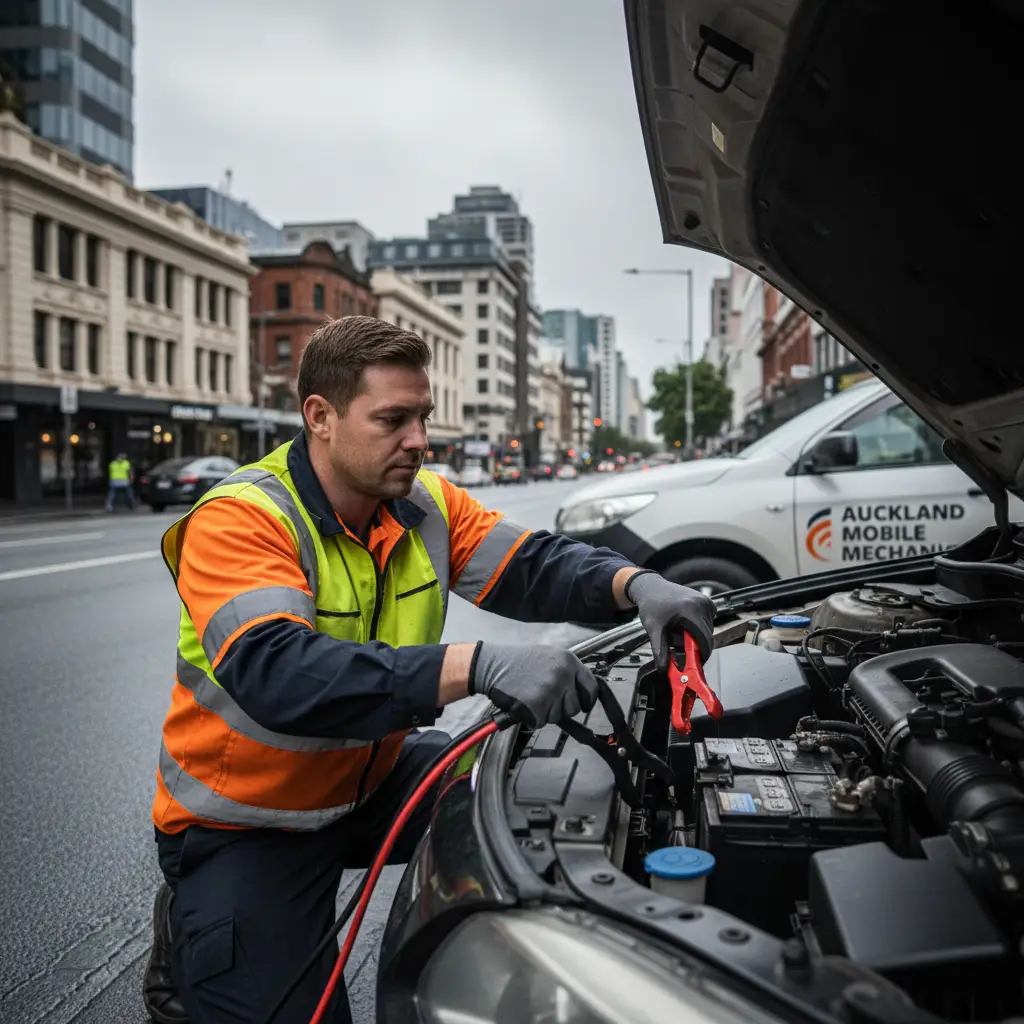
Safety First: When NOT to Jumpstart
While jumpstarting is a standard procedure, it is not without risks. You should never attempt to jumpstart a battery if it shows signs of physical damage. If the battery case is cracked, leaking fluid, or swollen (bloated), applying a high current could cause an explosion. Furthermore, if the battery is frozen—a rarity in Auckland but possible in extreme conditions—jumpstarting is dangerous. In these cases, a full replacement is the only safe option.
Critical Signs of a Failing Car Battery
Batteries rarely fail without warning. By paying attention to your vehicle’s behavior, you can often predict a failure before it becomes an emergency. Most standard flooded lead-acid batteries last between 3 to 5 years. If yours is approaching this age, vigilance is key.
The Slow Crank
The most distinctive sign of a weak battery is a sluggish engine turnover. When you turn the key, the engine may sound like it is “groaning” or turning slower than usual before it catches. This indicates that the battery can no longer deliver the necessary amperage to the starter motor effectively.
Dimming Electronics
If your headlights appear dimmer than usual when idling but brighten when you rev the engine, your battery is struggling to maintain voltage. Similarly, slow-moving power windows or a flickering dashboard display are tell-tale signs of an unstable electrical supply.
The Sulphur Smell
A damaged or overcharged battery can vent gas. If you smell something resembling rotten eggs (sulphur) when you pop the hood, this indicates a battery leak. The sulfuric acid inside is escaping, which not only ruins the battery but can corrode engine components. This requires immediate professional attention.
Mobile Battery Testing: Diagnosing the Real Issue
One of the primary benefits of hiring a professional mobile mechanic in Auckland rather than relying on a friend’s jumper cables is the diagnostic capability. A car that won’t start is not always a battery problem; it could be the alternator or the starter motor.
Load Testing and Health Checks
Professional technicians use digital battery analyzers that go beyond simply measuring voltage. A fully charged battery should read around 12.6 volts, but voltage is only half the story. The technician will perform a Load Test, which simulates the electrical draw of starting the engine. This measures the battery’s CCA (Cold Cranking Amps) against its rated capacity.
If a battery is rated for 600 CCA but tests at only 300 CCA, it has degraded significantly and will likely fail again soon, even if jumpstarted. According to Wikipedia’s overview of automotive batteries, the internal resistance increases as the battery ages, making it less efficient at delivering sudden bursts of power.
Alternator Verification
Once the car is running, the technician will test the charging system. The alternator should output between 13.5 and 14.5 volts to recharge the battery while driving. If the output is too low, a new battery will simply die within a few hours. If the output is too high, it can “cook” the battery. Mobile testing ensures you aren’t replacing a battery when the alternator is actually the culprit.
Comprehensive Battery Replacement Service
When testing confirms the battery is dead or end-of-life, mobile replacement is the logical next step. This service brings the battery shop to your location, saving you the cost and hassle of a tow truck.
Choosing the Right Battery Technology
Not all batteries are created equal. Your mobile mechanic will supply the correct specification for your vehicle. This is critical for modern cars equipped with Start-Stop technology.
- Standard Flooded Lead-Acid: The most common type for older vehicles. Reliable and cost-effective.
- EFB (Enhanced Flooded Battery): Designed for entry-level start-stop vehicles. They have better durability and charge acceptance than standard batteries.
- AGM (Absorbent Glass Mat): Required for advanced vehicles with heavy electrical loads and regenerative braking. AGM batteries are spill-proof and vibration resistant.
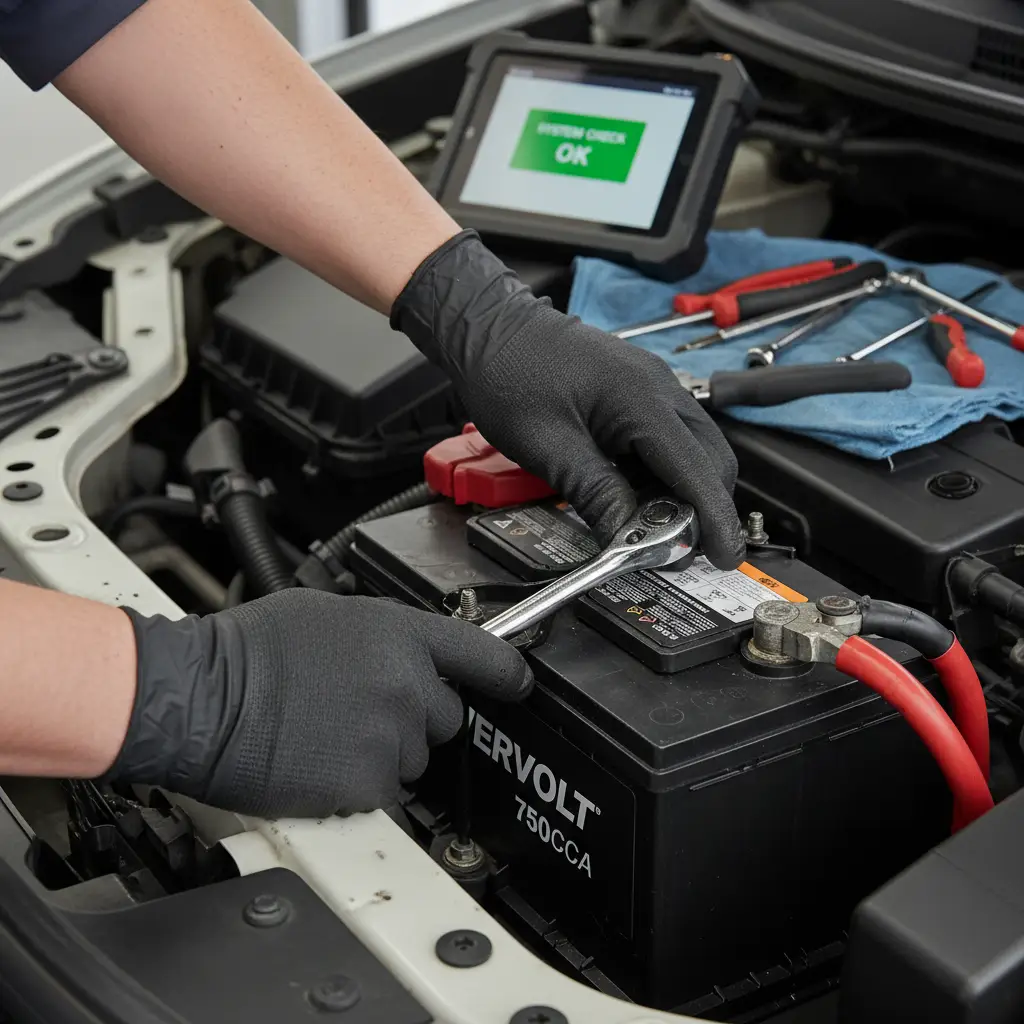
ECU Memory Preservation
Replacing a battery in a modern car isn’t as simple as swapping the old for the new. Disconnecting power can wipe the vehicle’s ECU (Engine Control Unit) memory, resetting radio codes, seat positions, and even engine idle parameters. Professional mobile mechanics use a “memory saver” device that plugs into the OBDII port to maintain power to the onboard computer while the physical battery is swapped. This ensures your car retains all its settings.
Environmentally Responsible Disposal
Car batteries contain lead and sulfuric acid, making them hazardous waste. A reputable mobile battery service includes the removal and recycling of your old battery. This ensures the toxic materials are processed correctly, preventing environmental contamination.
Why Choose a Local Auckland Mobile Mechanic?
Auckland’s unique geography and traffic conditions make mobile services particularly valuable. Whether you are stuck on the North Shore, out West in Henderson, or navigating the industrial hubs of Penrose, a mobile technician comes to you.
Speed and Convenience: Towing a vehicle to a workshop usually involves a wait time for the tow truck, followed by a wait time at the garage. A mobile battery jumpstart service in Auckland typically aims for a rapid response time (often under 60 minutes), getting you back on the road immediately after the service is performed.
Cost-Effectiveness: When you factor in the cost of a tow and the potential downtime (taking time off work), mobile replacement is often more economical. You pay for the battery and the labor, without the logistical overhead of moving a non-functional vehicle.
Maintenance Tips to Extend Battery Life
Once you have your battery jumpstarted or replaced, proper maintenance can extend its lifespan significantly. Regular driving is the best medicine for a battery; short trips (under 15 minutes) often don’t allow the alternator enough time to recharge the energy used to start the engine.
Periodically check your battery terminals for corrosion—a white or blue powdery substance. This can be cleaned with a mixture of baking soda and water and a wire brush. Keeping the terminals clean ensures a strong electrical connection. For more detailed safety guidelines on handling vehicle chemicals, you can refer to resources like the EPA’s guide on battery management or local council recycling guides.
Finally, ensure your battery is securely fastened. Vibration can damage the internal plates of the battery, leading to premature failure. A quick check of the hold-down bracket during your regular oil changes can prevent this issue.
Frequently Asked Questions
Below are common questions regarding mobile battery services in the Auckland region.
How much does a mobile battery jumpstart cost in Auckland?
The cost for a mobile jumpstart in Auckland typically ranges between $80 and $150 NZD, depending on your location, the time of day (after-hours services may cost more), and the service provider. This fee generally includes the call-out and the jumpstart service.
How long does it take for a mobile mechanic to arrive?
Response times vary based on traffic and technician availability, but most reputable mobile mechanics in Auckland aim to arrive within 45 to 60 minutes of your call. Priority is often given to dangerous locations or vulnerable drivers.
Can you jumpstart a hybrid or electric vehicle?
Yes, most hybrid and electric vehicles have a standard 12-volt auxiliary battery that powers the electronics and engages the high-voltage system. This 12V battery can be jumpstarted. However, you should never attempt to jumpstart the high-voltage lithium-ion battery pack itself.
Do I need a new battery or just a recharge?
If your battery was drained due to leaving lights on, a jumpstart and a long drive (30+ minutes) may be enough to recharge it. However, if the battery is over 3-5 years old or fails a load test, it will likely need replacement as it can no longer hold a charge effectively.
Does car insurance cover battery jumpstarts?
Many comprehensive car insurance policies in New Zealand include roadside assistance, which covers jumpstarts. Check your policy wording or call your provider. If you do not have this cover, you will need to pay a private mobile mechanic directly.
What happens if the battery dies on the Auckland Motorway?
If you break down on the motorway, safety is the priority. Pull over to the shoulder, turn on hazard lights, and stay in the vehicle if safe. Mobile mechanics can service vehicles on the roadside, but in high-risk zones, a tow truck or police assistance may be required to secure the area first.