
The 100,000 km service cost in New Zealand typically ranges between $800 and $1,600 NZD for vehicles requiring a cambelt replacement, while chain-driven engines may cost between $400 and $800 NZD. This major milestone service includes critical tasks such as timing belt and water pump replacement, spark plugs, transmission flushes, and comprehensive safety checks to prevent catastrophic engine failure.
Reaching the 100,000 km mark is a significant milestone in the lifecycle of any vehicle. In the automotive industry, this is often referred to as the “major service interval” because it marks the transition from a relatively new vehicle to one that requires preventative maintenance to ensure longevity. Unlike standard oil changes or intermediate services, the 100k service is designed to replace components that have a finite lifespan before they fail and cause expensive damage.
For New Zealand drivers, navigating the costs and requirements of this service is essential. NZ roads, characterized by winding hill country and variable weather conditions, place unique stress on engine components. Ignoring this service interval is not merely a maintenance oversight; it is a gamble with the engine’s structural integrity.
Understanding 100,000 km Service Costs in NZ
When researching the 100000 km service cost nz, it is vital to understand that there is no single fixed price. The final invoice depends heavily on the make and model of your vehicle, specifically whether your engine utilizes a rubber timing belt or a metal timing chain.
For vehicles with a timing chain (common in many modern Toyotas and Nissans), the cost is significantly lower as the chain generally does not require replacement at this interval. However, for vehicles with a timing belt (such as many Subarus, older Hondas, and various European models), the labour intensity drives the price up.
Estimated Price Ranges (NZD)
- Standard Japanese Hatch/Sedan (Chain Driven): $450 – $750. Includes fluids, filters, spark plugs, and inspection.
- Japanese/Korean SUV or Sedan (Belt Driven): $900 – $1,500. Includes cambelt kit, water pump, tensioners, and full service.
- European Vehicles (VW, Audi, BMW): $1,400 – $2,500+. These vehicles often require specialized tooling and premium parts, and the labor time to access the timing components is higher.
- Light Commercial/Utes (Diesel): $1,000 – $1,800. Diesel engines often require fuel filter replacements and heavy-duty fluid changes alongside belt maintenance.
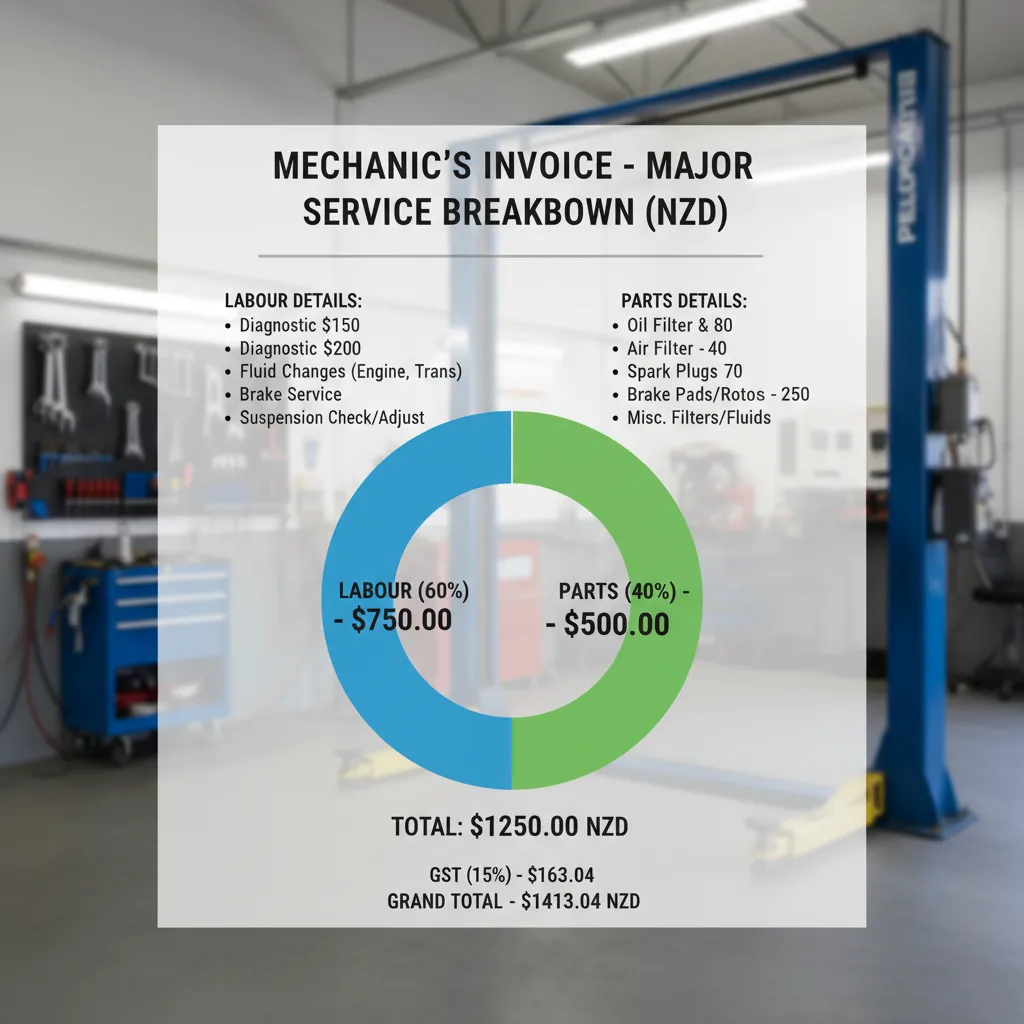
It is important to budget for this service well in advance. While the upfront cost may seem high, it pales in comparison to the cost of an engine rebuild, which can easily exceed $5,000 NZD if a timing belt snaps.
The Cambelt Priority: Timing Belt Replacement
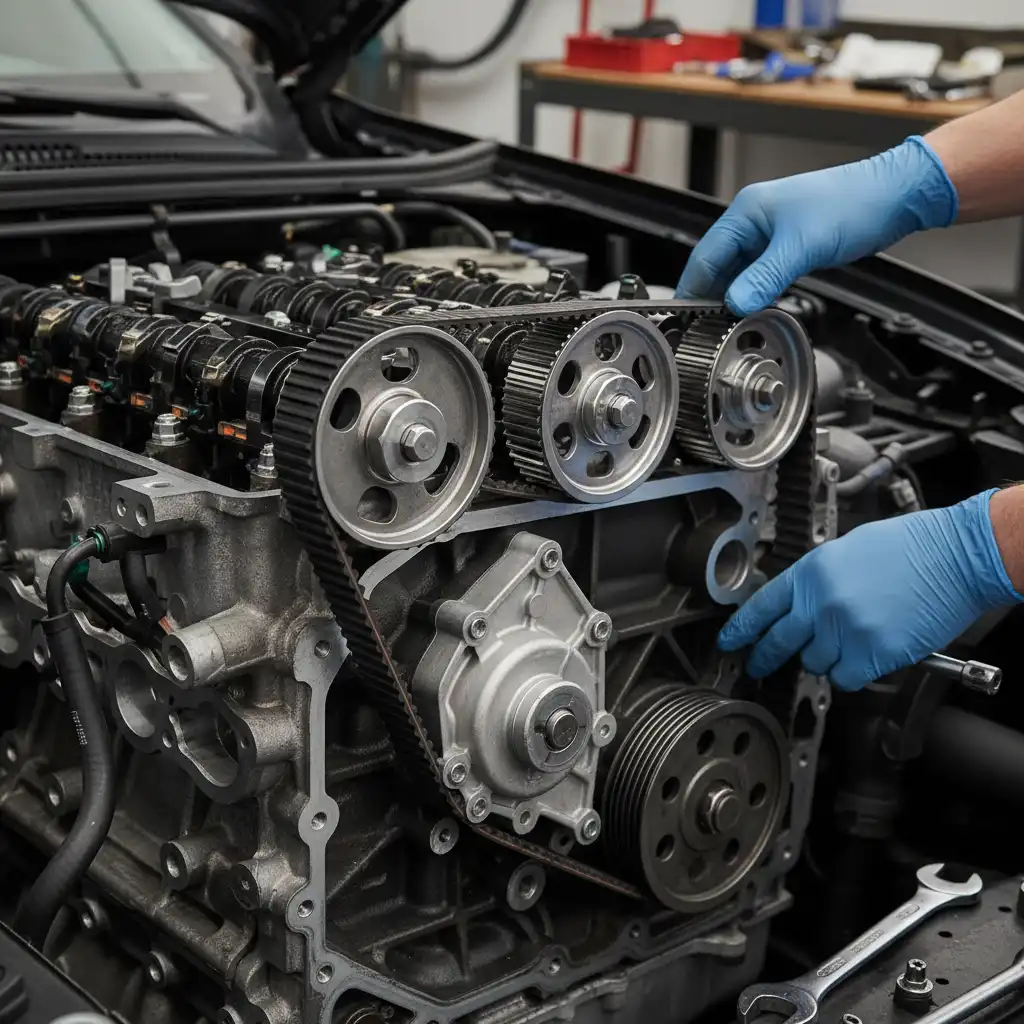
The absolute priority of the 100,000 km service for many vehicles is the cambelt (timing belt). This toothed rubber belt synchronizes the rotation of the crankshaft and the camshaft(s), ensuring that the engine’s valves open and close at the exact right times during each cylinder’s intake and exhaust strokes.
The Risk of Interference Engines
Most modern vehicles feature “interference engines.” In these designs, the stroke of the piston and the opening of the valves occupy the same space within the cylinder, just at different times. If the timing belt snaps while the engine is running, the pistons will smash into the open valves. This catastrophic failure bends valves, damages pistons, and often destroys the cylinder head.
Manufacturers set the replacement interval at 100,000 km (or sometimes 105,000 km / 7 years) because rubber degrades over time due to heat and tension. Even if the belt looks fine visually, internal micro-cracks can lead to sudden failure. In the context of the 100000 km service cost nz, the cambelt kit (which includes the belt, tensioners, and idler pulleys) usually accounts for 40-60% of the total bill.
Water Pump Replacement Strategy
You will often see mechanics recommend replacing the water pump during the 100k service. This might seem like an upsell, but it is actually a prudent financial decision rooted in mechanical efficiency.
In many engine configurations, the water pump is driven by the timing belt and is buried deep behind the timing cover. To access the water pump later, a mechanic would have to perform the exact same labor required to change the cambelt—stripping down the front of the engine, removing drive belts, covers, and pulleys.
If you pay for a cambelt change now but skip the water pump, and the pump begins to leak or seize 10,000 km later, you will have to pay the full labor cost (often 4-6 hours) all over again. Furthermore, a seized water pump can shred a brand-new timing belt, leading to the engine failure described above. Replacing the water pump “while you are in there” typically adds only the cost of the part and minimal extra labor.
Transmission Fluid Flush and Drivetrain Care
By 100,000 km, the transmission fluid in your vehicle has been subjected to immense heat and shearing forces. Old fluid loses its viscosity and ability to protect delicate gears and clutch packs. This is particularly relevant for New Zealand’s fleet of Japanese imports, many of which utilize Continuously Variable Transmissions (CVT).
CVT vs. Automatic vs. Manual
- CVT: Extremely sensitive to fluid quality. Degraded fluid can cause “shuddering” on acceleration and eventual belt slippage. A flush and filter change is mandatory at this mileage.
- Automatic (Torque Converter): Old fluid turns dark and smells burnt. A flush ensures smooth shifting and extends the life of the torque converter.
- Manual: Gear oil can become contaminated with metal shavings from synchronizer wear. draining and refilling is a cost-effective way to ensure smooth gear changes.
Included in drivetrain maintenance should be the differential oils (front and rear for AWD/4WD vehicles). Neglecting these can lead to noisy bearings and expensive differential repairs.
Spark Plugs and Ignition System Overhaul
Modern vehicles typically use platinum or iridium-tipped spark plugs. Unlike older copper plugs that needed changing every 30,000 km, these long-life plugs are designed to last exactly up to the 100,000 km interval. Beyond this mileage, the electrode gap widens due to erosion.
A widened gap forces the ignition coils to work harder to bridge the spark, which can lead to coil pack failure—a common issue in brands like Audi and Nissan. Symptoms of worn plugs include rough idling, hesitation under acceleration, and reduced fuel economy.
Replacing spark plugs on some modern V6 or Boxer engines (like Subaru) can be labor-intensive due to limited access, which is why this task is bundled into the major service. It ensures the engine runs at peak efficiency and passes emissions standards.
Comprehensive Safety Inspection Checklist
Beyond the engine, the 100k service acts as a comprehensive health check for the entire chassis. At this age and mileage, rubber bushings and suspension components begin to show significant wear. A thorough inspection should cover:
- Brake Fluid: Brake fluid is hygroscopic, meaning it absorbs moisture from the air. By 100,000 km, the fluid likely has a high water content, which lowers its boiling point and can corrode caliper pistons. A full flush is standard.
- Coolant/Antifreeze: Engine coolant becomes acidic over time. Flushing the radiator and engine block prevents internal corrosion and protects the new water pump.
- Suspension Bushes: Control arm bushings and sway bar links often split or crack, leading to knocking noises and poor handling.
- Drive Belts (Serpentine Belts): These power the alternator, A/C, and power steering. If they haven’t been changed, they are likely cracked and due for replacement.
For authoritative information on vehicle safety standards in New Zealand, you can refer to the Waka Kotahi NZ Transport Agency guidelines on WOF requirements, which align closely with these maintenance checks. Additionally, being prepared for unexpected events is key; review 10 Tips for Staying Safe While Waiting for Roadside Assistance.
Dealership vs. Independent Mechanics in NZ
When booking your 100,000 km service, you face the choice between a franchise dealership and an independent workshop. This decision significantly impacts the 100000 km service cost nz.
Franchise Dealerships
Dealerships offer specialized knowledge and genuine factory parts. Their software updates are specific to your VIN. However, their hourly labor rates are generally higher (often $150–$200+ NZD per hour). For newer cars still under an extended warranty, dealer servicing may be required to maintain warranty coverage.
Independent Workshops
Reputable independent mechanics, particularly those who are members of the Motor Trade Association (MTA), often provide excellent service at a lower cost. They may use high-quality aftermarket parts (like Gates or Dayco belts) which meet OEM specifications but cost less. For a 100k service on a standard Japanese import, a trusted local mechanic is often the most cost-effective choice without sacrificing quality.
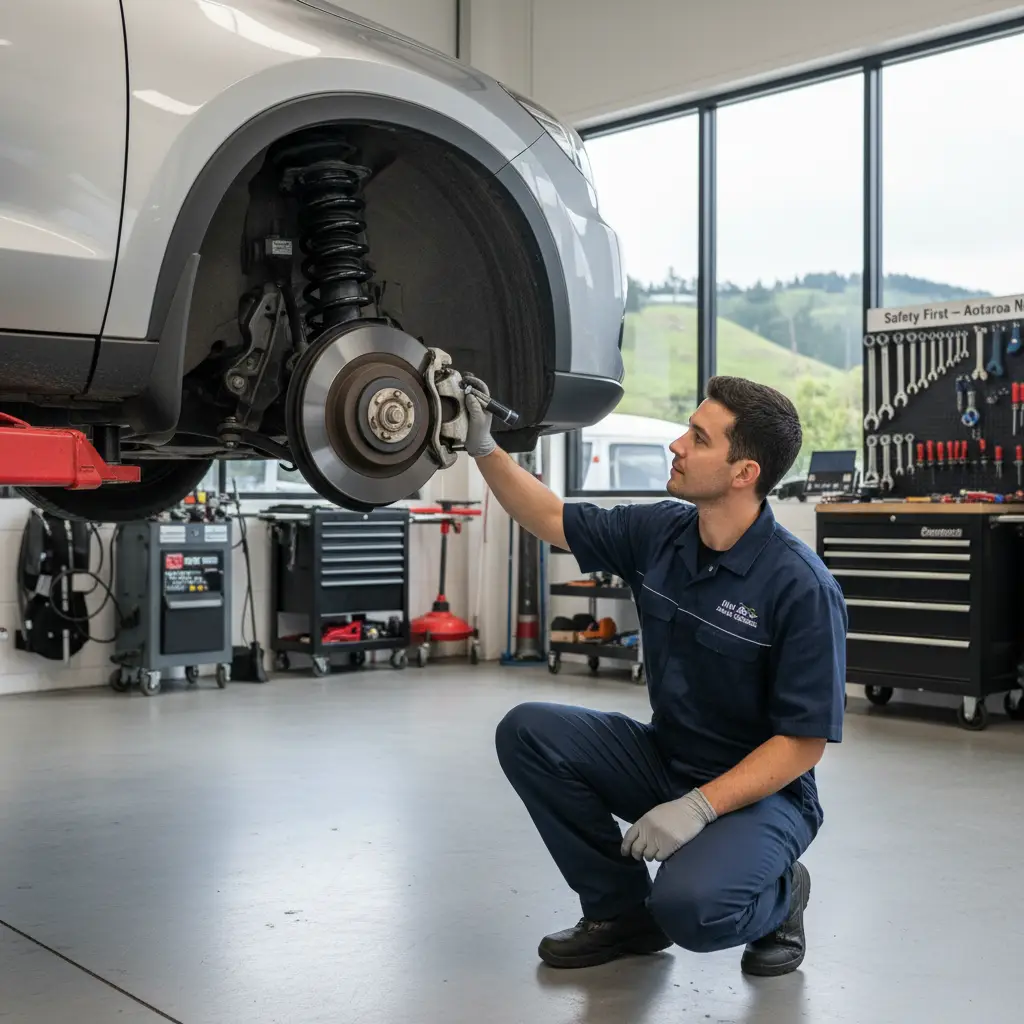
Ultimately, the 100,000 km service is an investment in the future of your vehicle. While the bill may be substantial, it resets the clock on your car’s critical systems, ensuring it remains reliable for the next 100,000 kilometers of Kiwi adventures.
People Also Ask
Is the 100,000 km service mandatory?
Yes, it is highly recommended. While not legally mandatory like a WOF, skipping the 100,000 km service significantly increases the risk of engine failure, particularly regarding the timing belt. Failure to replace the belt can lead to catastrophic engine damage that costs far more than the service itself.
How long does a 100,000 km service take?
A comprehensive 100,000 km service usually takes a full day (6 to 8 hours). This allows time for the engine to cool down for spark plug removal, the intricate labor of replacing the timing belt and water pump, and a thorough safety inspection of the vehicle.
Does the 100k service include new tyres?
No, the standard 100k service price does not include the cost of new tyres. However, the mechanic will inspect your tyre tread depth and condition. If replacement is needed, it will be an additional cost on top of the service estimate.
Can I just change the oil instead of the full service?
No. An oil change does not address the critical wear items that expire around 100,000 km, such as the timing belt, spark plugs, and transmission fluid. Relying only on oil changes at this mileage is a recipe for mechanical breakdown.
How much is a cambelt replacement in NZ?
A standalone cambelt replacement in NZ typically costs between $600 and $1,200 NZD depending on the vehicle. When combined with a water pump and full service (the 100k service), the total package often falls between $900 and $1,600 NZD.
Do all cars need a cambelt change at 100,000 km?
No. Vehicles with a timing chain generally do not require replacement at 100,000 km unless the chain has stretched or is noisy. However, even chain-driven cars still require the other elements of the major service, such as spark plugs, fluids, and filters.