
Hyundai service Auckland refers to the professional maintenance and repair of Hyundai vehicles, including models like the Tucson, Santa Fe, and i30, performed by qualified technicians within the Auckland region. To ensure longevity and warranty compliance, owners must adhere to manufacturer-scheduled intervals for oil changes, GDI engine cleaning, and electronic diagnostics, whether utilizing a dealership or a certified mobile mechanic.
The Importance of Comprehensive Hyundai Maintenance
Owning a Hyundai in Auckland comes with a unique set of driving conditions. From the stop-start traffic on the Southern Motorway to the humid, salt-laden air of the North Shore, your vehicle is constantly subjected to environmental stressors that can accelerate wear and tear. Whether you drive a rugged Santa Fe for family road trips or a compact i30 for city commuting, regular servicing is not just a recommendation—it is a necessity for safety and performance.
Comprehensive maintenance goes beyond a simple oil change. Modern Hyundai vehicles are sophisticated machines equipped with advanced electronics, Gasoline Direct Injection (GDI) engines, and complex safety systems. Neglecting these components can lead to diminished fuel economy, sluggish performance, and costly repairs down the line. For Auckland owners, finding a reliable service provider who understands the intricacies of Korean engineering is the first step toward vehicle longevity.
Furthermore, regular servicing ensures that your vehicle remains compliant with New Zealand Transport Agency (NZTA) standards. A well-maintained vehicle is far more likely to pass its Warrant of Fitness (WoF) on the first attempt, saving you time and stress. By prioritizing preventative maintenance, you are protecting your investment and ensuring that your Hyundai remains a reliable partner for your daily travels.

Hyundai Warranty Considerations for NZ Owners
One of the most common misconceptions among car owners in New Zealand is that you must service your vehicle at a branded dealership to maintain the manufacturer’s warranty. This is not necessarily the case, and understanding your rights can save you significant money without compromising your coverage.
Under New Zealand consumer law, you have the right to choose who services your vehicle. However, there are strict stipulations that must be followed to ensure your Hyundai warranty remains intact:
- Adherence to Schedule: You must follow the service intervals specified in your owner’s manual strictly. Missing a scheduled service by time or mileage can give the manufacturer grounds to deny a warranty claim.
- Quality Parts and Fluids: Any independent or mobile mechanic you hire must use parts and fluids that meet or exceed the Original Equipment Manufacturer (OEM) specifications. Using inferior oil or aftermarket filters that fail can void warranty coverage for related engine damage.
- Qualified Technicians: The work must be carried out by a skilled professional. In the context of the Auckland market, hiring a reputable mobile mechanic who is MTA Assured or similarly qualified ensures that the workmanship meets the required standards.
It is crucial to keep detailed records of all maintenance work. A professional mobile mechanic will provide a digital or physical invoice detailing the work performed, the parts used, and the mileage. This documentation serves as proof that you have upheld your end of the warranty agreement. For more details on your rights regarding vehicle repairs and warranties, you can refer to Consumer Protection NZ, which outlines the guarantees provided under the Consumer Guarantees Act.
Common Hyundai Sensor Issues & Electrical Faults
While Hyundai vehicles are generally renowned for their reliability, like all modern cars, they rely heavily on a network of sensors to manage engine performance, emissions, and safety systems. Over time, these sensors can degrade or fail, leading to dashboard warning lights and performance issues. Auckland owners should be aware of the following common sensor issues:
Crankshaft and Camshaft Position Sensors
These sensors communicate the precise position of the engine’s internal components to the Electronic Control Unit (ECU). If these fail, your Hyundai may experience difficulty starting, rough idling, or stalling while driving—a dangerous scenario on Auckland’s busy Harbour Bridge. Symptoms often include the “Check Engine” light and error codes such as P0335.
Oxygen (O2) Sensors
Located in the exhaust system, O2 sensors monitor the amount of unburned oxygen in the exhaust gases. This data helps the engine manage the fuel-to-air ratio. A faulty O2 sensor can cause a significant drop in fuel efficiency and may cause your vehicle to fail emissions tests. Given Auckland’s fuel prices, ensuring your O2 sensors are functioning correctly is economically vital.
ABS Wheel Speed Sensors
The Anti-lock Braking System (ABS) relies on sensors at each wheel to detect rotational speed. Road debris, brake dust, and moisture—common in Auckland winters—can contaminate or damage these sensors. A failure here disables the ABS and stability control systems, compromising safety during wet weather braking.
Addressing these electrical faults requires precise diagnostics. Ignoring a sensor warning can lead to a cascade of failures, potentially damaging the catalytic converter or the engine itself.
Mobile Diagnostics for Hyundai: The Auckland Advantage
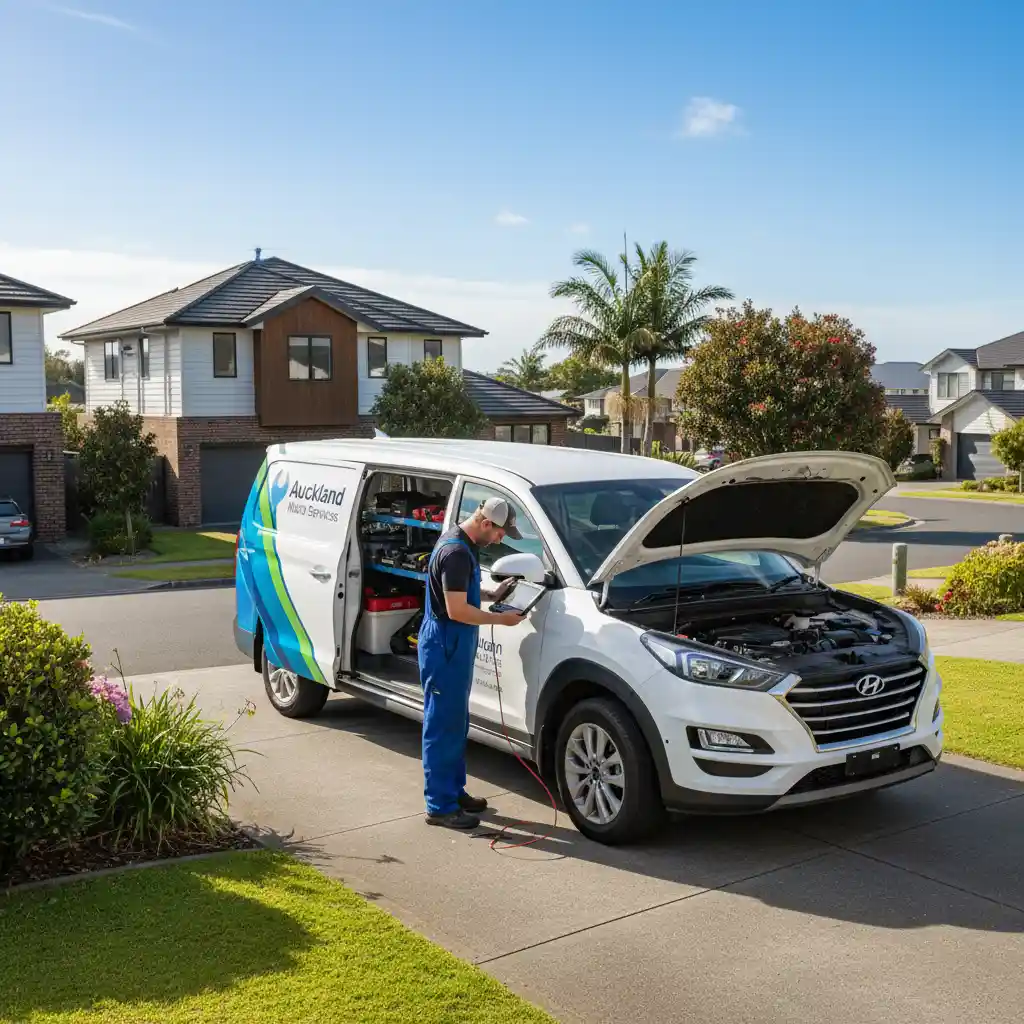
Gone are the days when you had to tow your vehicle to a workshop to interpret a warning light. The rise of the Auckland mobile mechanic has revolutionized how Hyundai owners approach vehicle diagnostics. Modern mobile service units are equipped with professional-grade OBD-II scanners and diagnostic software specifically updated for Asian manufacturers like Hyundai.
When a mobile mechanic arrives at your home or workplace, they plug directly into your car’s ECU. This allows them to:
- Read and Clear Fault Codes: Instantly identify why a warning light is on.
- Live Data Streaming: Monitor engine parameters in real-time while the car is running to catch intermittent faults that static tests might miss.
- Actuation Tests: Manually trigger components (like cooling fans or fuel pumps) to verify they are working correctly.
For Aucklanders living in suburbs like Remuera, Albany, or Manukau, the convenience is unmatched. Instead of sitting in traffic to get to a garage, the diagnostic lab comes to you. This is particularly valuable for “non-start” situations where towing would be an added expense. A mobile mechanic can often diagnose a dead battery, starter motor failure, or immobilizer issue on the spot and perform the necessary repairs immediately.
Servicing the Hyundai GDI Engine: Critical Care
Many modern Hyundai models, including the Tucson and Santa Fe, utilize Gasoline Direct Injection (GDI) technology. GDI engines inject fuel directly into the combustion chamber at high pressure, rather than into the intake tract. This results in better power and fuel efficiency but introduces a specific maintenance challenge: carbon buildup.
The Carbon Buildup Issue
In traditional port-injection engines, fuel washes over the intake valves, keeping them clean. In GDI engines, fuel never touches the intake valves. Over time, oil vapors from the Positive Crankcase Ventilation (PCV) system can deposit on these valves, baking into hard carbon deposits. This can restrict airflow, leading to:
- Rough idling
- Loss of power and acceleration
- Decreased fuel economy
- Engine misfires
Maintenance Strategies for GDI Engines
To maintain a Hyundai GDI engine in Auckland, specific service protocols are required:
- High-Quality Synthetic Oil: Using low-volatility synthetic oil reduces the amount of oil vapor entering the PCV system, thereby slowing carbon accumulation.
- Induction Cleaning Service: Every 30,000 to 50,000 kilometers, it is advisable to perform an induction service. This involves a mechanic introducing a specialized cleaning chemical into the intake manifold to soften and burn off carbon deposits.
- Top-Tier Fuel: While fuel doesn’t clean the valves in a GDI engine, high-quality fuel keeps the injectors themselves clean, ensuring the spray pattern remains optimal for combustion.
A knowledgeable mobile mechanic will be aware of these GDI-specific requirements and can perform chemical intake cleaning at your location, ensuring your engine breathes freely.
Why Choose an Auckland Mobile Mechanic?
When searching for “Hyundai service Auckland,” owners are often torn between the perceived authority of a dealership and the convenience of an independent mechanic. However, the mobile mechanic model offers a compelling middle ground that maximizes value and convenience.
1. Overhead Savings Passed to You
Dealerships have massive overheads—showrooms, large staff, and prime real estate. Mobile mechanics operate with lower overheads, allowing them to offer competitive pricing on labor and parts without sacrificing quality. You are paying for the expertise, not the waiting room coffee machine.
2. Transparency and Communication
When you use a mobile service, you speak directly to the technician working on your car, not a service advisor. You can watch the work being done, ask questions, and see the old parts being removed. This level of transparency builds trust and ensures you aren’t being sold unnecessary services.
3. unparalleled Convenience
Auckland traffic is notorious. Taking a car to a garage often involves arranging a ride, taking time off work, or paying for a loaner car. A mobile mechanic services your Hyundai while you work from home, attend a meeting, or relax. Whether you are in West Auckland, the CBD, or the Eastern Suburbs, the service revolves around your schedule.
For reputable industry standards, look for mechanics associated with the Motor Trade Association (MTA), which assures a code of ethics and warranty on workmanship.
Your Hyundai Maintenance Checklist
To keep your vehicle in peak condition between professional services, follow this simple checklist tailored for Auckland conditions:
- Monthly: Check tire pressure and tread depth. Auckland’s variable weather requires good grip for wet roads.
- Monthly: Check fluid levels (coolant, brake fluid, and oil). Top up if necessary using OEM-specified fluids.
- Quarterly: Inspect wiper blades. Replaces them if they streak; clear vision is essential during NZ downpours.
- Every 6 Months: Check battery health. Mobile mechanics can test cold cranking amps (CCA) to ensure you aren’t left stranded on a cold morning.
- Yearly/10,000km: Full professional service including oil change, filter replacement, and diagnostic scan.
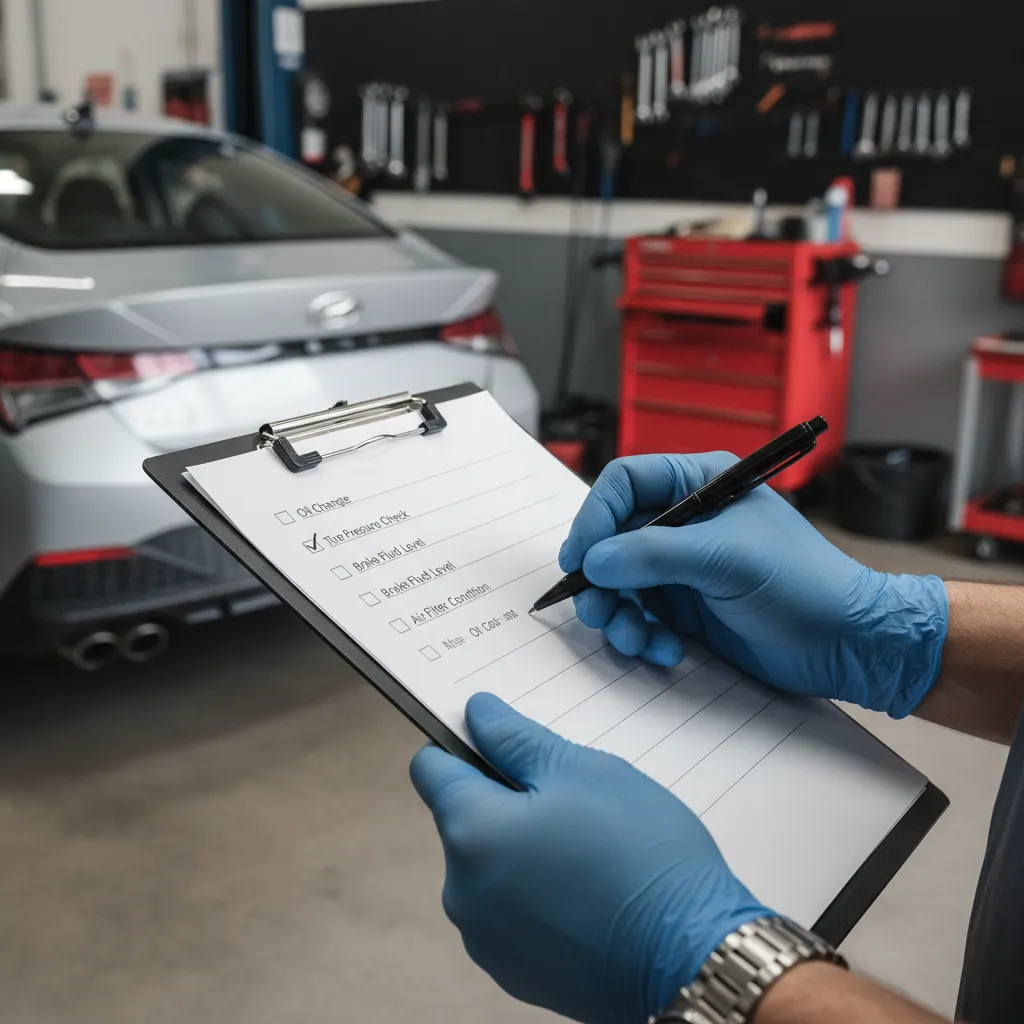
By combining diligent owner checks with the expertise of a professional mobile mechanic, your Hyundai will remain a safe, efficient, and reliable mode of transport for years to come.
People Also Ask
Can a mobile mechanic service my Hyundai without voiding the warranty?
Yes, a mobile mechanic can service your Hyundai without voiding the warranty, provided they use parts and fluids that meet the manufacturer’s specifications and follow the recommended service schedule. Always ensure you receive a detailed invoice as proof of maintenance.
How often should I service my Hyundai in Auckland?
Most Hyundai models require servicing every 10,000 to 15,000 kilometers or every 12 months, whichever comes first. However, due to Auckland’s stop-start traffic, more frequent checks on oil and brakes may be beneficial.
What is included in a standard Hyundai mobile service?
A standard mobile service typically includes an engine oil and filter change, fluid level checks and top-ups, brake inspection, tire pressure check, battery test, and a full safety inspection. Many also include a diagnostic scan to check for fault codes.
Why is my Hyundai GDI engine idling roughly?
Rough idling in Hyundai GDI engines is often caused by carbon buildup on the intake valves. Because fuel is injected directly into the cylinder, it doesn’t clean the valves, leading to deposits that restrict airflow. An induction cleaning service can resolve this.
How much does a Hyundai service cost in Auckland?
The cost varies depending on the model and the type of service (minor vs. major). Generally, a basic service ranges from $180 to $300 NZD, while major services can cost between $400 and $700 NZD. Mobile mechanics often offer more competitive rates due to lower overheads.
Do mobile mechanics in Auckland carry Hyundai diagnostic tools?
Yes, reputable mobile mechanics in Auckland carry advanced OBD-II diagnostic scanners and software capable of reading specific Hyundai fault codes, allowing them to diagnose engine, transmission, and ABS issues on-site.