
A car bulb replacement service provides professional installation of vehicle lighting components, including headlights, tail lights, and indicators, to ensure maximum visibility and safety. Expert technicians utilize specialized tools to access hard-to-reach bulbs, diagnose underlying electrical faults, and ensure all lighting systems meet strict legal standards and Warrant of Fitness (WOF) compliance requirements.
The Critical Importance of Professional Lighting Services
Vehicle lighting is arguably the most significant active safety feature on any automobile. While the engine drives the car and the brakes stop it, the lighting system communicates your intentions to other drivers and illuminates hazards before they become unavoidable accidents. In the realm of automotive maintenance, lighting often gets overlooked until a bulb completely fails. However, dimming bulbs, misaligned beams, and oxidized lenses can be just as dangerous as a total blackout.
Opting for a professional car bulb replacement service is not merely about convenience; it is about ensuring the structural integrity of your vehicle’s electrical system and guaranteeing road safety. Modern vehicles are designed with complex electrical architectures. The days of simply popping the hood and twisting a bulb out are largely gone. Today, replacing a headlight often involves removing bumper bars, navigating through wheel arch liners, or dealing with high-voltage discharge systems that pose safety risks to the untrained.
Furthermore, professional services ensure that the replacement bulbs match the manufacturer’s specifications. Installing a bulb with the wrong wattage can melt wiring harnesses or damage the headlight housing, leading to expensive repairs down the line. A dedicated service ensures that your vehicle retains its value and operates safely under all driving conditions, from pitch-black rural roads to heavy motorway traffic.
Comprehensive Bulb Replacement: Headlights, Tail Lights, and Indicators
A complete car bulb replacement service covers the entire spectrum of vehicle lighting. Different positions on the vehicle require specific bulb technologies and installation techniques. Understanding the nuances of each is vital for maintaining a roadworthy vehicle.
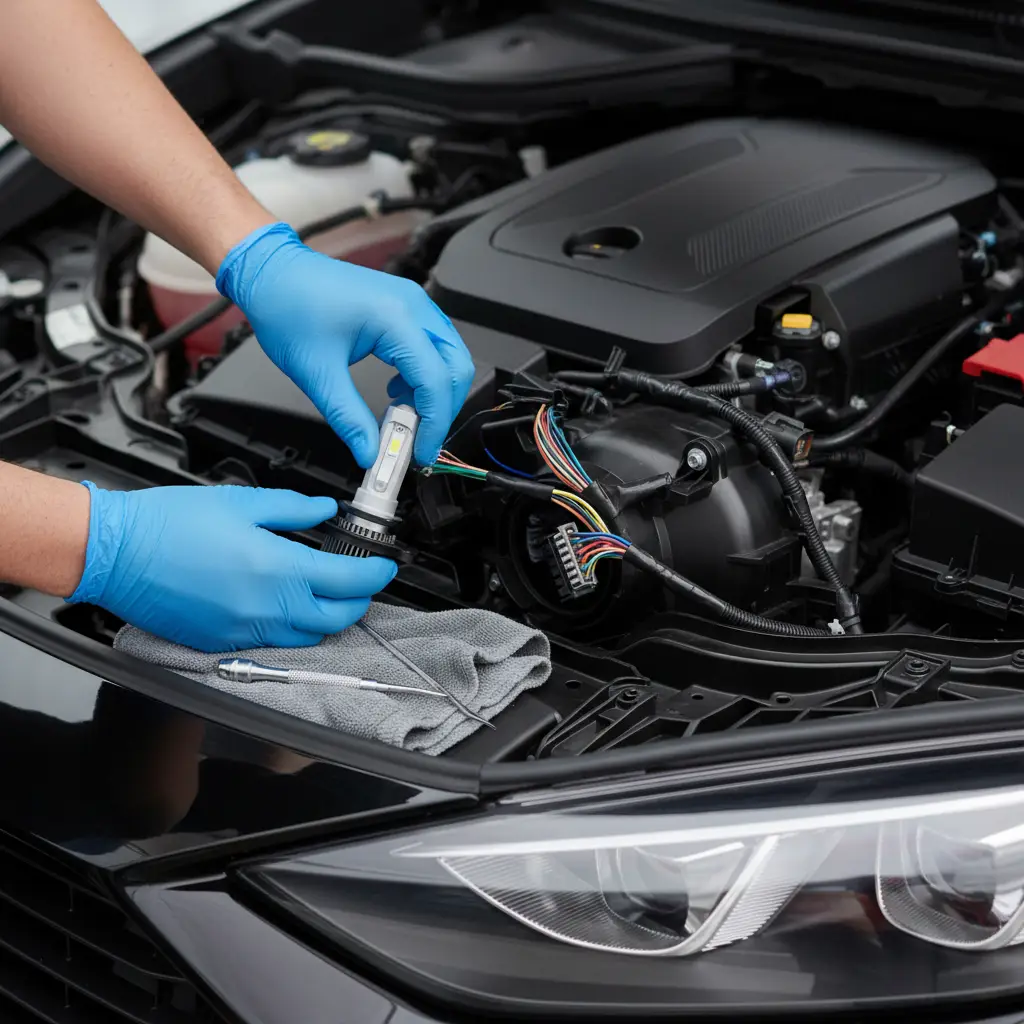
Headlight Technologies: Halogen, HID, and LED
Headlights are your primary source of vision. The automotive industry currently utilizes three main types of technology, each requiring different handling procedures:
- Halogen Bulbs: These are the most common in older vehicles. They use a tungsten filament and halogen gas. When replacing these, it is critical never to touch the glass with bare skin. The oils from your fingers can create hot spots on the glass, causing the bulb to shatter prematurely.
- High-Intensity Discharge (HID) / Xenon: These bulbs produce a brighter, whiter light by creating an electrical arc between two electrodes. They operate at extremely high voltages. Professional replacement is mandatory here due to the risk of severe electrical shock.
- Light Emitting Diodes (LED): Modern vehicles often use LEDs for their longevity and efficiency. While they last longer, when they fail, it often requires replacing a specific module or the entire unit rather than a simple bulb. Retrofitting LEDs into housing designed for halogens is a complex task that requires ensuring the beam pattern remains legal and does not blind oncoming traffic.
Tail Lights and Brake Lights
While headlights help you see, tail lights and brake lights help you be seen. A burnt-out brake light significantly increases the risk of being rear-ended. Professional services check dual-filament bulbs (which handle both tail light and brake light functions) to ensure both circuits are operational. Replacing these often involves removing interior trunk liners or entire light clusters, requiring care to avoid snapping plastic retaining clips.
Indicators and Signal Bulbs
Fast-blinking turn signals usually indicate a burnt-out bulb on one side of the vehicle. This happens because the resistance in the circuit drops, causing the relay to cycle faster. Replacing indicator bulbs restores the correct flash rate and ensures your intentions are clear to other road users. This includes side repeaters often found on fenders or side mirrors, which can be difficult to access without specialized pry tools.
Diagnosing and Fixing Electrical Connection Issues
One of the most frustrating scenarios for a car owner is replacing a bulb, only to find it still doesn’t work. This indicates that the issue lies not with the filament, but with the electrical supply. A premium car bulb replacement service goes beyond swapping parts; it involves diagnostic troubleshooting.
Common Electrical Faults Include:
- Corroded Sockets: Moisture ingress can cause rust and corrosion within the bulb socket, preventing a solid electrical connection. Technicians use contact cleaners and abrasive tools to restore the connection or replace the pigtail connector entirely.
- Blown Fuses: A sudden power surge can blow a fuse. Identifying why the fuse blew is as important as replacing it. Simply swapping the fuse without finding the short circuit will result in another blown fuse immediately.
- Grounding Issues: If a light appears dim or flickers, it is often due to a poor ground connection. This requires tracing the wiring back to the chassis ground point to ensure it is clean and tight.
- Wiring Harness Damage: Vibrations and heat can cause wire insulation to crack, leading to short circuits. Professional repair involves soldering and heat-shrinking damaged wires to restore the integrity of the harness.
According to the National Highway Traffic Safety Administration (NHTSA), proper lighting maintenance extends beyond just the bulb, encompassing the entire electrical pathway to ensure reliability.
Headlight Restoration: Polishing Foggy Lenses
Have you noticed your headlights looking yellow, cloudy, or hazy? This is a common phenomenon known as oxidation. Most modern headlight lenses are made of polycarbonate plastic. While durable, this material is susceptible to ultraviolet (UV) radiation from the sun. Over time, the factory-applied UV coating degrades, causing the plastic to oxidize and turn yellow. This haze acts as a diffuser, scattering the light beam and significantly reducing night-time visibility.
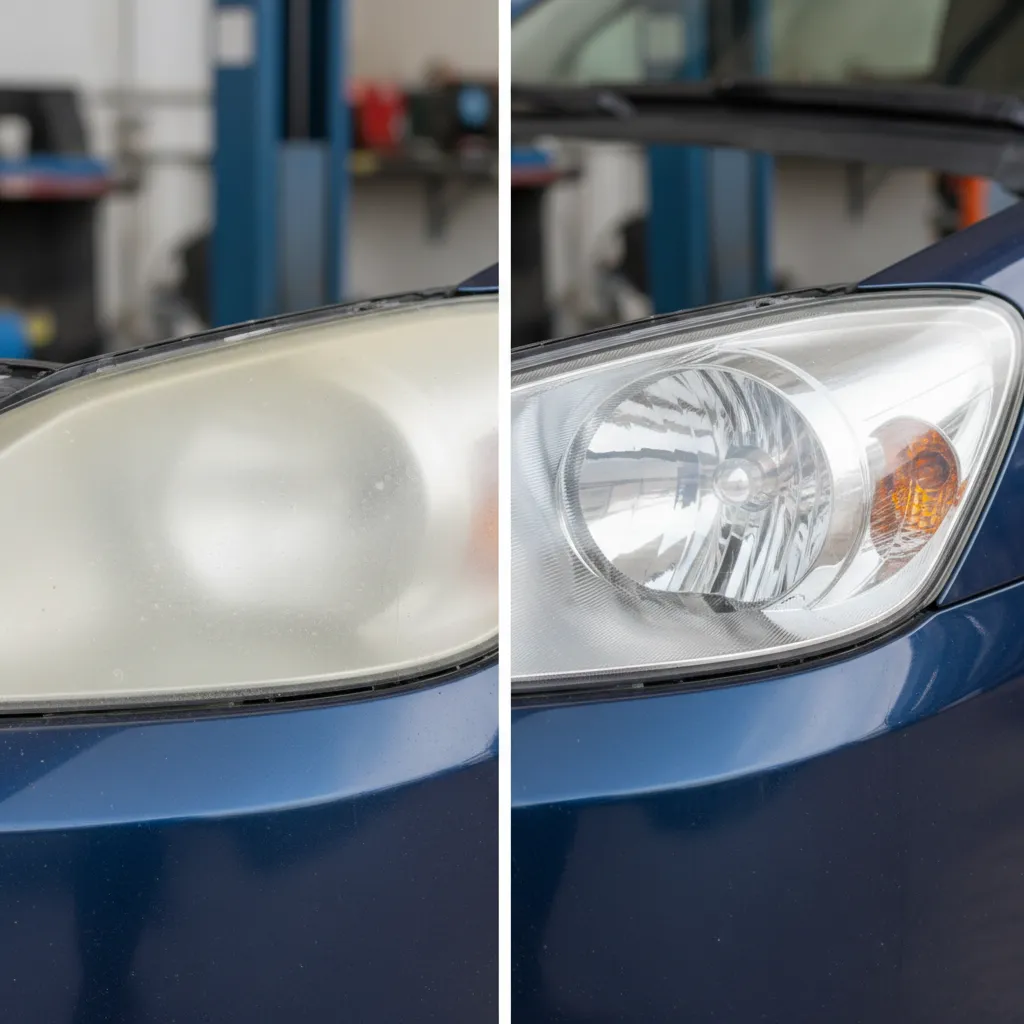
The Restoration Process:
A simple bulb replacement will not fix a foggy lens. The lens itself must be restored. Professional headlight restoration involves a multi-step process:
- Sanding: Using progressively finer grits of sandpaper (wet sanding) to remove the layer of oxidized plastic.
- Compounding and Polishing: Using machine polishers and specialized compounds to buff the sanded surface back to optical clarity.
- Sealing: This is the most critical step. Once the lens is clear, a new UV-resistant clear coat or ceramic coating must be applied. Without this sealant, the headlights will turn yellow again within a few weeks.
Restoring headlights can increase light output by up to 300% compared to a cloudy lens, making it a vital service for older vehicles.
Ensuring WOF Compliance and Road Legality
In many jurisdictions, such as New Zealand and parts of Europe, vehicles must pass a periodic inspection to be road legal—often called a Warrant of Fitness (WOF) or MOT. Lighting is one of the most common reasons for inspection failure.
WOF/Inspection Criteria for Lighting:
- Functionality: All lights must illuminate. This includes registration plate lights and high-mounted stop lights.
- Condition: Lenses must not be cracked or have holes that allow moisture to enter. Moisture inside the lens diffuses the beam and can cause dazzle.
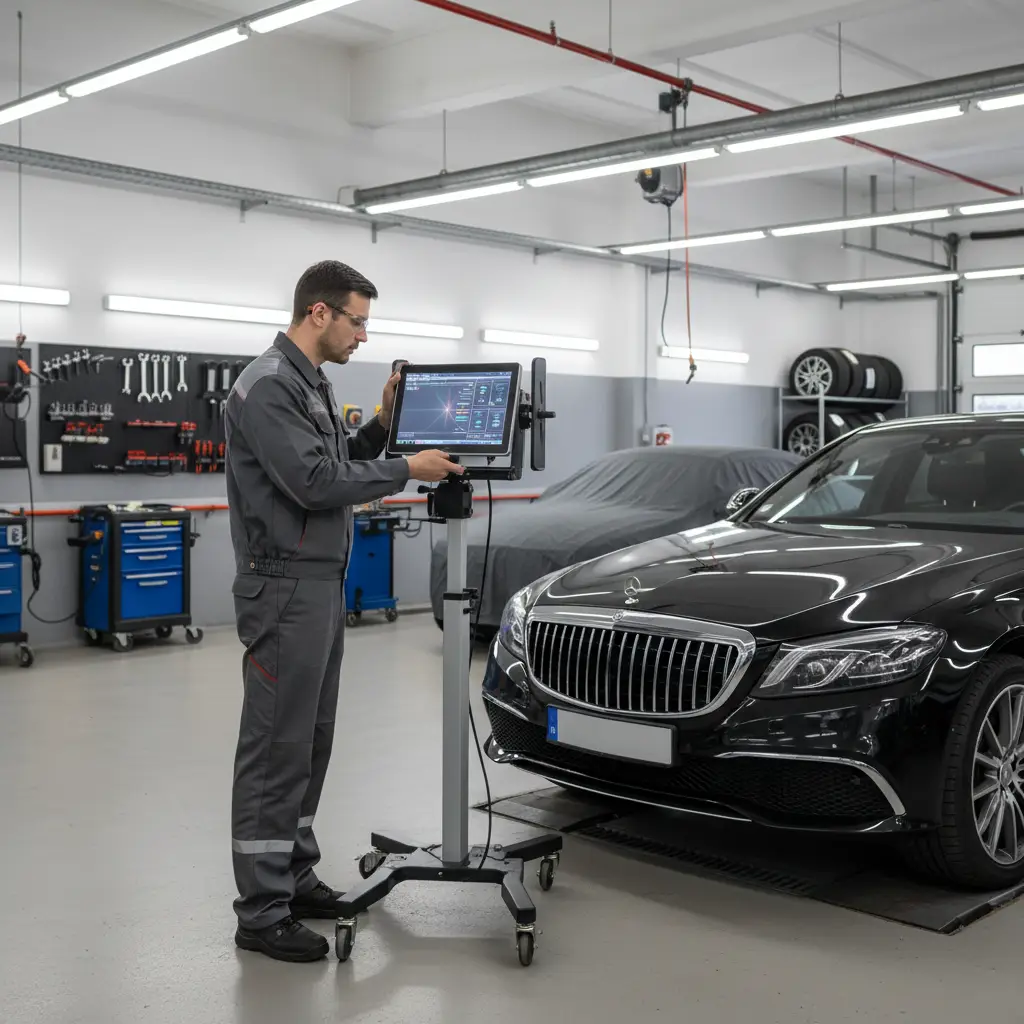
- Beam Pattern and Alignment: Headlights must be aimed correctly. If they are too high, they blind oncoming drivers; too low, and your visibility is reduced. Professional services use beam setters to align headlights to the precise degree required by law.
- Light Color: Regulations specify the color of lights (e.g., white or yellow for front, red for rear). Installing aftermarket blue or purple bulbs often results in an immediate failure.
By utilizing a professional service, you ensure that your vehicle is pre-checked against these rigorous standards, saving you the time and expense of a failed inspection and a re-test.
DIY vs. Professional Service: Why Expertise Matters
With the availability of YouTube tutorials, many car owners consider replacing bulbs themselves. While feasible for older cars, the complexity of modern automotive design makes DIY risky.
Access Difficulties:
Engine bays are increasingly cramped. Manufacturers often place air filter boxes, batteries, or fuse boxes directly behind the headlight assembly. Accessing the bulb may require removing these components or jacking up the car to remove the wheel and inner fender liner. A Mobile Mechanic Central Auckland has the lifts and tools to do this efficiently without damaging clips or fasteners.
System Resets:
On luxury vehicles (such as BMW, Audi, or Mercedes), the lighting system is controlled by a computer module (ECU). When a bulb is replaced, the system may need to be reset or “coded” to recognize the new component. Without this digital handshake, the light may not function, or the dashboard will continue to display an error message.
Safety:
As mentioned regarding HID systems, the voltage used to ignite the arc can be upwards of 20,000 volts. Mishandling these components can result in severe injury. Additionally, improperly seated bulbs can melt the housing, leading to repairs costing hundreds of dollars.
For reliable information on vehicle safety ratings and the impact of headlight quality, resources like the Insurance Institute for Highway Safety (IIHS) provide extensive data proving that quality lighting maintenance prevents crashes.
Frequently Asked Questions
How much does a car bulb replacement service cost?
The cost varies significantly depending on the vehicle make and the type of bulb. A standard halogen bulb replacement might cost between $20 and $50. However, replacing HID or LED components on luxury vehicles can range from $100 to over $300 due to the cost of parts and the labor required to access the housing.
Can I replace halogen bulbs with LED bulbs?
Technically, yes, but it is complex. Retrofitting LEDs into halogen housings can cause light scattering and blind other drivers. In many regions, this is illegal for road use unless the entire headlight assembly is replaced with one designed for LEDs. Always check local regulations and WOF requirements before upgrading.
How do I know if my headlights need polishing?
If your headlights look yellow, cloudy, or have a rough texture when you run your hand over them, they need restoration. Visually, if you can’t clearly see the bulb inside the housing, or if your night vision seems dimmer than usual, oxidation is likely the cause.
How often should I replace my car bulbs?
Halogen bulbs typically last between 500 and 1,000 hours. It is recommended to replace them in pairs every 2 years or as soon as you notice dimming. HID bulbs last longer (2,000+ hours), and LEDs can last the lifetime of the vehicle, though they can still fail prematurely.
Why do my headlight bulbs keep burning out?
Frequent burnout is usually a sign of an electrical issue. Common causes include a faulty alternator causing voltage spikes, a loose connection creating heat, moisture inside the headlight assembly, or touching the glass of a halogen bulb with bare fingers during installation.
Does a WOF check cover all lights?
Yes, a Warrant of Fitness (WOF) inspection checks all mandatory external lights. This includes headlights (high and low beam), indicators, brake lights, tail lights, reversing lights, and registration plate lights. Any failure in these will result in a failed inspection.