
A mobile European car mechanic in Auckland is a specialized automotive technician who brings dealer-level diagnostics, tools, and expertise directly to your location to service brands like Audi, BMW, Volkswagen, and Mercedes-Benz. Unlike generalist mechanics, these specialists utilize manufacturer-specific software and Low SAPS oils to ensure warranty compliance and proper engine function without the logistical hassle of a traditional workshop visit.
The Evolution of Mobile European Car Service
For decades, owning a European vehicle in New Zealand meant being tethered to the dealership network. The perception was that only the main dealer possessed the requisite knowledge and equipment to handle the complex engineering of German, British, and Italian automobiles. However, the automotive landscape has shifted dramatically. The rise of the mobile European car mechanic in Auckland represents a paradigm shift in how luxury and performance vehicles are maintained.
European vehicles are renowned for their precision engineering, advanced safety features, and sophisticated electronics. Maintaining these vehicles requires a philosophy of preventative care rather than reactive repair. A mobile service brings this philosophy to your driveway. By removing the overheads of a physical showroom and waiting lounge, mobile specialists often invest more heavily in portable, high-end diagnostic equipment and ongoing training.
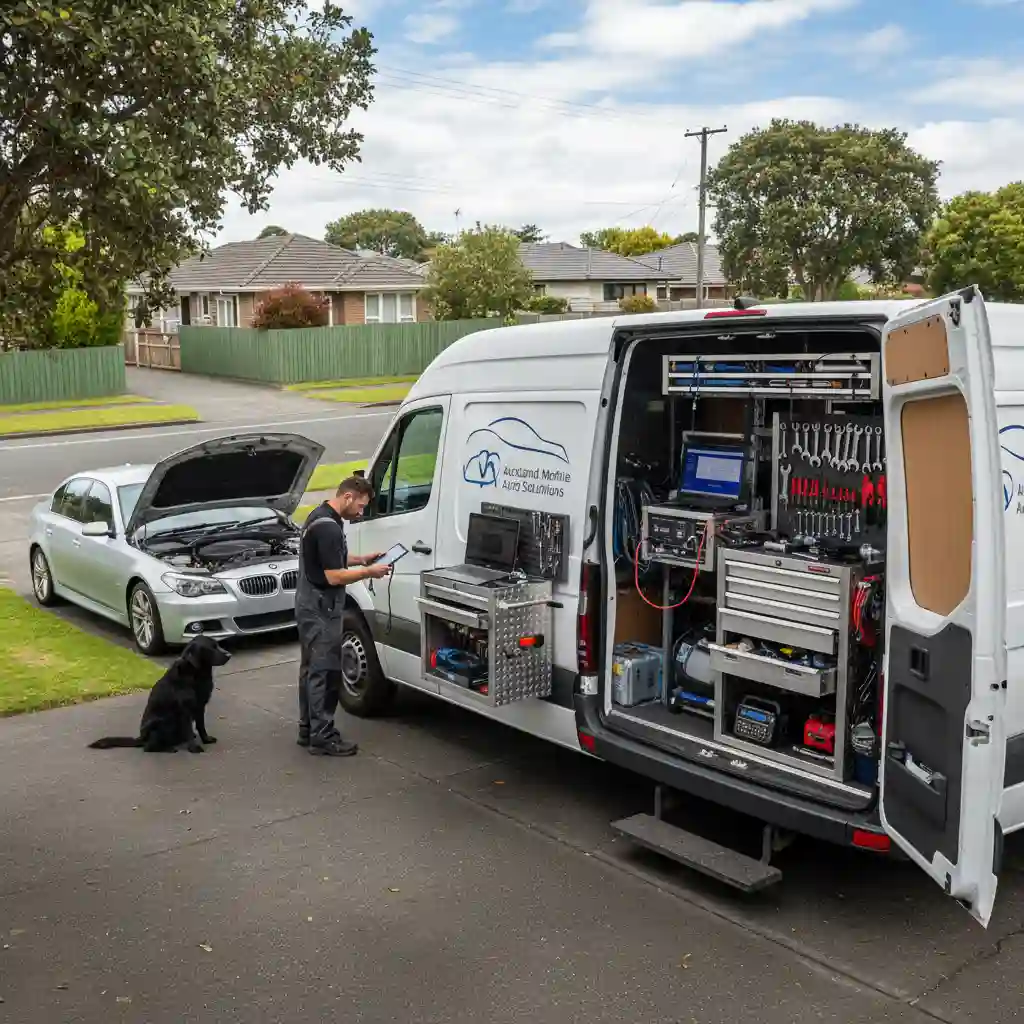
The convenience factor is undeniable, particularly in a sprawling city like Auckland where traffic congestion can turn a simple service drop-off into a half-day ordeal. However, convenience must not come at the expense of quality. The modern mobile workshop is a fully equipped laboratory on wheels, capable of performing everything from complex timing chain diagnostics to routine scheduled maintenance, all while strictly adhering to manufacturer protocols.
Why European Vehicles Require Specialized Tooling
One of the primary differentiators between a generalist mechanic and a true European specialist is their tool inventory. European manufacturers, particularly the “Big Three” German brands (Audi/VW, BMW, Mercedes-Benz), utilize proprietary engineering standards that differ significantly from Japanese or American vehicles.
Proprietary Fasteners and Locking Tools
If you attempt to service a Volkswagen Golf or a BMW 3-Series with a standard imperial or even metric socket set, you will likely strip bolts or fail to remove components entirely. European cars frequently use Torx, E-Torx (External Torx), Triple Square (XZN), and Ribe fasteners. These require specific bits and sockets to engage properly. A mobile European car mechanic in Auckland carries these specific sets as standard equipment, ensuring that every bolt is removed and torqued back to specification without damage.
Timing and Engine Tools
Furthermore, internal engine work on European cars often requires specific locking tools to hold camshafts and crankshafts in perfect synchronization during service. For example, replacing a timing belt on an Audi engine without the specific cam-locking bar is a recipe for catastrophic engine failure. Mobile specialists carry these brand-specific kits in their vans, allowing them to perform major mechanical interventions on-site with the same precision as a factory floor.
The Critical Science of European Oil Specifications
Perhaps the most misunderstood aspect of European car maintenance is engine oil. It is not enough to simply match the viscosity (e.g., 5W-30). European engines operate under tighter tolerances and higher temperatures, often utilizing turbochargers and complex emission control systems like Diesel Particulate Filters (DPF) and Gasoline Particulate Filters (GPF).
Understanding Low SAPS Oils
European manufacturers mandate the use of “Low SAPS” oils. SAPS stands for Sulfated Ash, Phosphorus, and Sulfur. While these chemical elements have traditionally been used as anti-wear additives, they are detrimental to modern emission systems. High levels of SAPS can clog DPFs and poison catalytic converters, leading to repair bills in the thousands of dollars.
According to the European Automobile Manufacturers’ Association (ACEA), oil standards are categorized strictly (e.g., ACEA C3) to ensure compatibility with after-treatment devices. A qualified mobile European mechanic will never use a generic bulk oil. Instead, they will carry specific fluids carrying manufacturer approvals, such as:
- Volkswagen: VW 504.00 / 507.00
- BMW: Longlife-04 (LL-04)
- Mercedes-Benz: MB-Approval 229.51 or 229.52
Using the incorrect oil in a modern Euro engine can void the warranty and cause rapid sludge buildup or turbocharger failure. This is why specialized mobile services carry a diverse range of premium synthetic oils in their inventory.
Advanced Diagnostics: Resetting Service Lights and Coding
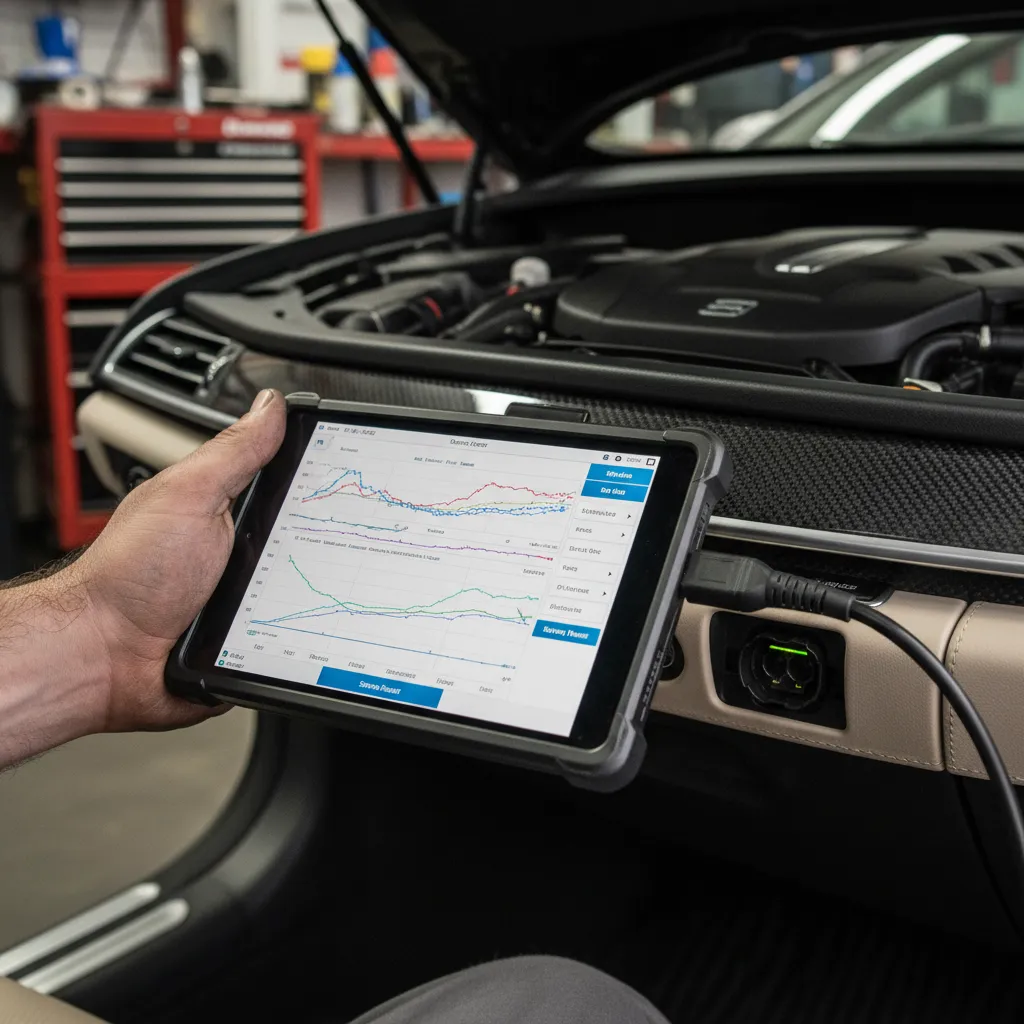
Modern vehicles are essentially computers on wheels, and European cars lead the charge in electronic complexity. When a service light appears on the dashboard of a Mercedes or Audi, it is rarely a simple timer that can be reset by holding a button. These systems interact with the vehicle’s ECU (Engine Control Unit) and require bidirectional communication to reset properly.
Condition Based Servicing (CBS)
BMW and Mini introduce the concept of Condition Based Servicing. Sensors monitor the physical state of parts and fluids—such as brake pad thickness and oil quality—to determine when service is needed. A mobile European car mechanic in Auckland utilizes high-level diagnostic scanners (such as Autel, Snap-on, or OEM-specific software like VCDS for VW/Audi or ISTA for BMW) to read these sensors accurately.
Battery Registration and Coding
A critical example of necessary coding is battery replacement. In many modern European cars, the battery is managed by an Intelligent Battery Sensor (IBS). When a battery is replaced, the car’s computer must be “told” that a new battery has been installed via a process called Battery Registration. If this step is skipped—as it often is by non-specialists—the alternator will continue to charge the new battery as if it were the old, degraded one. This leads to overcharging, significantly shortened battery life, and potential damage to the vehicle’s electrical system.
Common European Maintenance Items and Failures
European vehicles have specific maintenance schedules that differ from their Asian counterparts. Being aware of these common items can help owners plan their mobile service appointments effectively.
DSG and Transmission Services
Many Volkswagen, Audi, and Skoda vehicles utilize the Direct Shift Gearbox (DSG). This dual-clutch transmission offers rapid shifting and fuel efficiency but requires strict fluid and filter changes every 60,000 kilometers. Failure to service the DSG can lead to “Mechatronic” unit failure, a costly repair. Mobile specialists are equipped to perform this fluid exchange on-site, provided the vehicle is on level ground.
Brake Wear Sensors
Unlike many older vehicles that rely on a metal “squealer” tab to indicate worn brakes, European cars use electronic wear sensors embedded in the brake pads. Once the pad wears down to a certain level, the sensor circuit is broken, triggering a warning light. When replacing brakes, a mobile mechanic must also replace these sensors to clear the dashboard warning.
Cooling System Components
European cooling systems are pressurized and efficient but often utilize plastic components (water pumps, thermostat housings) that can become brittle over time. A proactive mobile mechanic will inspect these components during routine service to prevent sudden coolant loss, a common issue in aging BMWs and Audis.
The Auckland Advantage: Mobile Convenience vs. Dealerships
Auckland’s unique geography and traffic patterns make mobile mechanics particularly attractive. Navigating the Harbour Bridge or the Southern Motorway during rush hour to get to a dealership in Newmarket or Greenlane is a significant time sink.
Choosing a mobile European car mechanic in Auckland offers several distinct advantages beyond just time savings:
- Transparency: You can watch the mechanic work on your driveway. You see exactly what parts are being installed and can ask questions directly to the technician, fostering a level of trust that is impossible in a closed-workshop environment.
- Lower Overheads, Better Value: Without the massive real estate costs of a premium dealership showroom, mobile operators can often offer competitive pricing while still using premium OEM (Original Equipment Manufacturer) parts.
- Personalized Service: You are dealing with the business owner or a senior technician directly, not a service advisor who acts as a middleman.
How to Qualify a Mobile Euro Specialist
Not all mobile mechanics are created equal. To ensure your European vehicle receives the care it deserves, you should verify the following before booking:
- Specialized Experience: Ask specifically about their experience with your brand. A mechanic who specializes in Japanese imports may not be familiar with the intricacies of a Land Rover air suspension system.
- Diagnostic Capability: Confirm they have the scanner capabilities to reset service intervals and release electronic parking brakes (required for rear brake changes on most modern Euros).
- Insurance and Warranty: Ensure they carry public liability insurance and offer a warranty on both parts and labor. In New Zealand, reputable mechanics often align with industry standards promoted by organizations like the Motor Trade Association (MTA), though membership is voluntary.
By selecting a qualified mobile European car mechanic in Auckland, you bridge the gap between premium vehicle ownership and modern convenience. You ensure your vehicle remains safe, efficient, and valuable, all without leaving the comfort of your home.
People Also Ask
Is a mobile mechanic cheaper than a dealership for European cars?
Generally, yes. Mobile mechanics have significantly lower overhead costs compared to dealerships, allowing them to offer competitive labor rates. However, for European cars, the cost of high-quality OEM parts remains the same, so the savings come primarily from labor and the elimination of towing or travel costs.
Can a mobile mechanic reset the service light on my BMW or Audi?
Yes, provided they are a European specialist. They will carry advanced diagnostic tools (scan tools) capable of communicating with the vehicle’s ECU to reset service intervals, inspect fault codes, and register new batteries, just like a dealership.
Do mobile mechanics use genuine parts for European cars?
Reputable mobile European specialists will use either Genuine parts (from the dealer) or OEM (Original Equipment Manufacturer) parts from suppliers like Bosch, Mann, Lemförder, and Mahle. Always ask your mechanic to confirm the brand of parts they intend to use.
What is Low SAPS oil and why does my Euro car need it?
Low SAPS oil has low levels of Sulfated Ash, Phosphorus, and Sulfur. It is required for modern European diesel and petrol engines to prevent clogging the Diesel Particulate Filters (DPF) and catalytic converters. Using standard oil can destroy these expensive emission systems.
Can a mobile mechanic perform a pre-purchase inspection on a European car?
Absolutely. A mobile mechanic is ideal for pre-purchase inspections as they can travel to the seller’s location. They can perform a comprehensive check of the electronics, engine health, and suspension to identify potential costly repairs common in European vehicles.
How often should I service my European car in Auckland?
While many manufacturers suggest long-life intervals (e.g., 25,000km), Auckland’s stop-start traffic is considered “severe driving conditions.” Most specialists recommend an oil service every 10,000km or 12 months (whichever comes first) to prevent sludge buildup and premature wear.