
The average oil leak repair cost ranges from $150 to $1,200, depending heavily on the vehicle make and the specific location of the leak. Minor fixes, such as replacing a valve cover gasket, typically fall between $150 and $450, while labor-intensive repairs like a rear main seal replacement can easily exceed $1,000 to $1,500 due to the complexity of accessing the component.
Understanding Oil Leak Repair Costs
Discovering a puddle of dark fluid beneath your vehicle is a moment of dread for any car owner. The immediate concern is almost always financial: how much is this going to cost? However, determining the exact oil leak repair cost is rarely straightforward without a proper diagnosis. Unlike a tire change or a battery replacement, an oil leak is a symptom, not a specific part. The cost is entirely dictacted by the source of the leak.
An engine is a complex assembly of metal components sealed together by gaskets and seals. Over time, heat cycles and age cause these rubber and cork seals to harden, shrink, and eventually fail. A leak could be as simple as a loose drain plug costing $20 to fix, or as complex as a cracked engine block requiring a full replacement. To understand the quote your mechanic gives you, you must first understand the detective work involved in tracing the fluid to its origin.
The First Step: Accurate Leak Detection
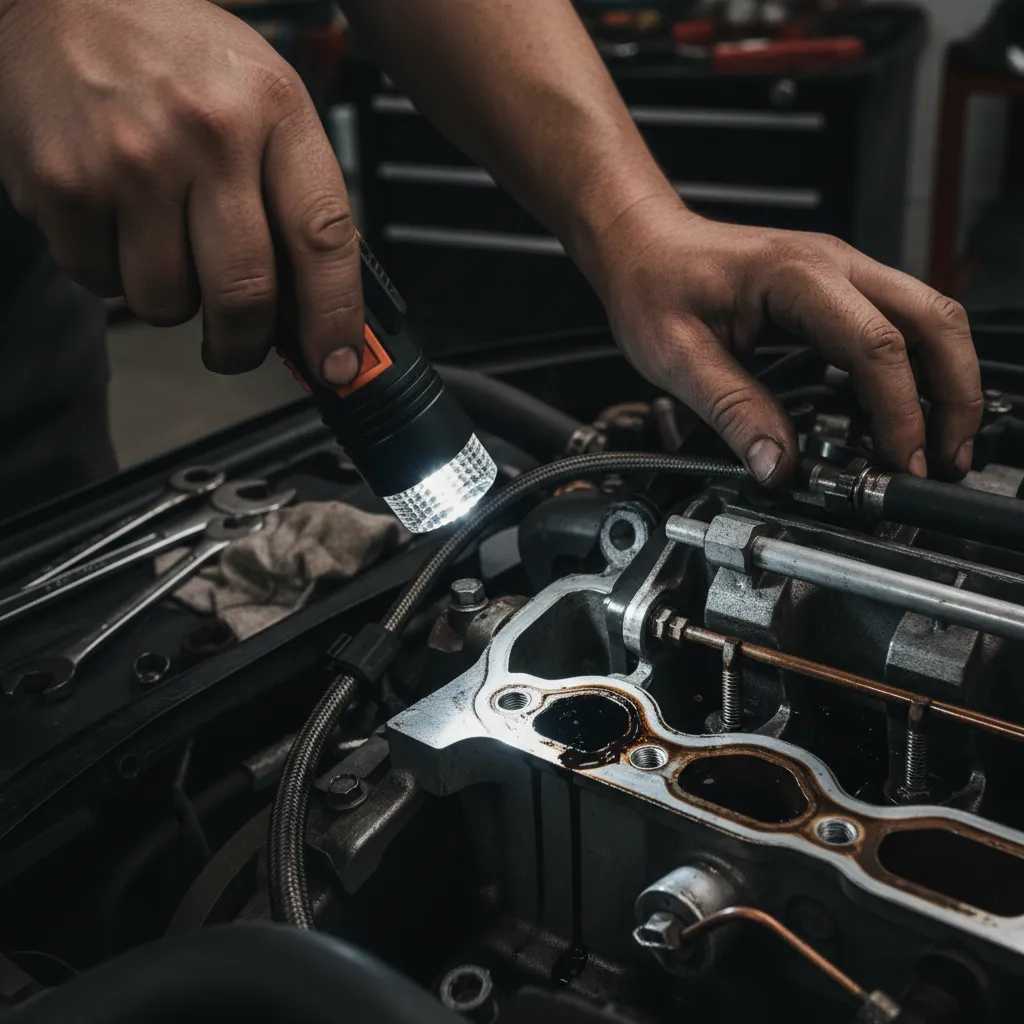
Before a mechanic can provide an accurate estimate for the oil leak repair cost, they must perform a comprehensive inspection. Many car owners mistakenly believe they can simply ask for a quote over the phone. However, without pinpointing the exact seal or gasket that has failed, any price given is merely a guess.
Cleaning Engine Bays for Diagnosis
One of the most overlooked steps in the diagnostic process is cleaning. Over years of driving, engines accumulate a layer of road grime, grease, and old oil. When a fresh leak occurs, it often mixes with this existing sludge, making it nearly impossible to trace the path of the oil to its source. Gravity causes oil to flow downward and backward while driving, meaning oil dripping from the transmission housing might actually be originating from the top of the engine.
Professional technicians will often start by degreasing the engine bay and pressure washing the undercarriage. By removing the history of old leaks, they can run the engine and watch for the emergence of fresh oil. This step is crucial for differentiating between a catastrophic rear main seal leak and a simple valve cover leak that is merely dripping down the back of the block.
Tracing Oil Leaks: Rocker Cover and Sump
Once the engine is clean, the visual inspection begins. Two of the most common culprits are the rocker cover (also known as the valve cover) and the sump (oil pan).
- Rocker Cover (Valve Cover): Located at the very top of the engine, this cover protects the valves and camshafts. Because heat rises, the gasket sealing this cover is subjected to extreme thermal cycling. When it fails, oil seeps out and runs down the sides of the engine. This is often the “best-case scenario” for leaks, as it is accessible and relatively affordable to fix.
- Sump (Oil Pan): Located at the very bottom of the engine, the oil pan holds the oil supply. Leaks here are common due to road debris impact or gasket degradation. While gravity makes these leaks obvious, they can sometimes be confused with oil dripping from higher up. A true sump leak will usually present as wetness around the perimeter of the pan itself, rather than a trail leading from above.
Advanced Diagnostic Methods: UV Dye and Pressure Tests
Sometimes, a visual inspection isn’t enough. Slow leaks, or leaks that only occur when the engine is under load (driving at highway speeds), can be elusive. In these cases, mechanics employ advanced technology to justify the oil leak repair cost and ensure they are fixing the right part.
UV Dye Leak Detection
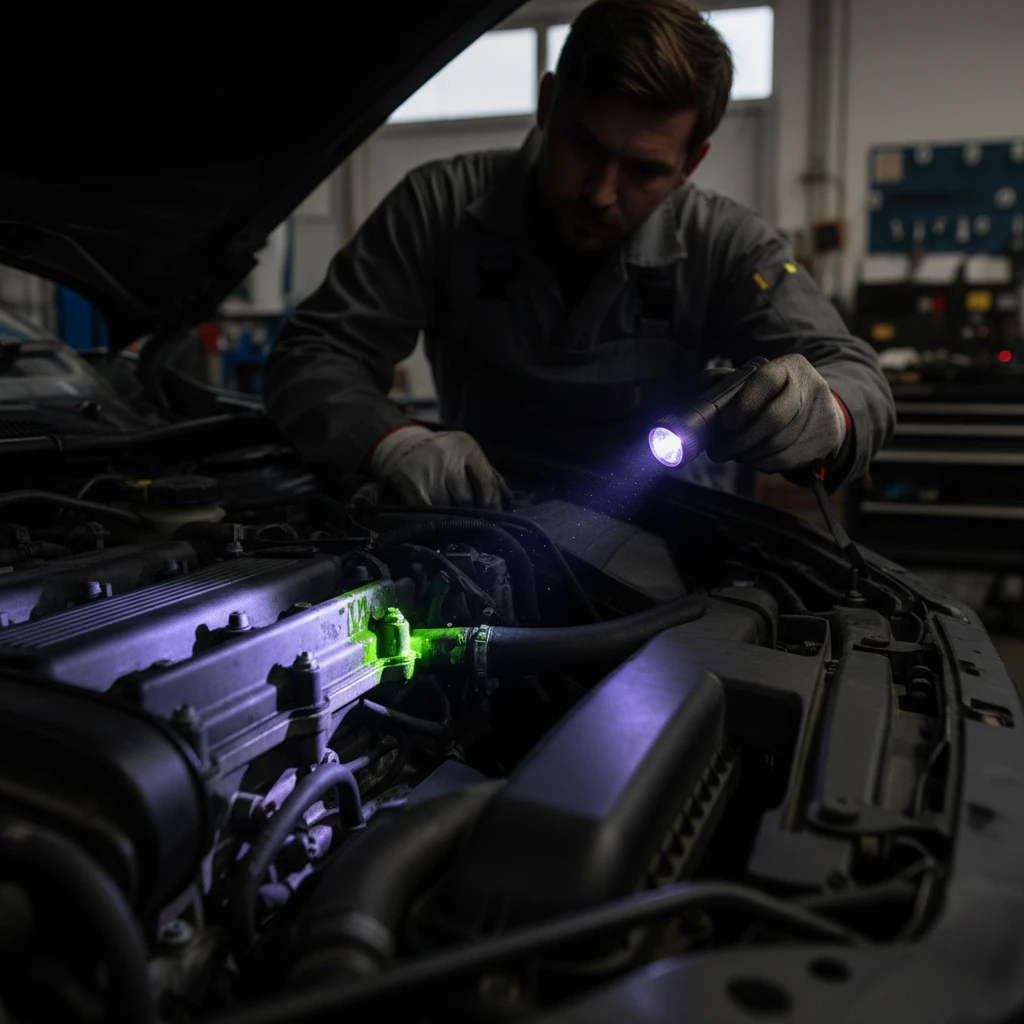
The gold standard for finding tricky leaks is ultraviolet (UV) dye. A technician adds a specific fluorescent dye to the engine oil, power steering fluid, or transmission fluid. The customer is then asked to drive the vehicle for a few days. When they return, the mechanic scans the engine bay with a specialized UV light.
Under the UV light, the escaping oil glows a bright yellow-green. This method is incredibly precise. It can reveal hairline cracks in the engine block or porosity in metal castings that the naked eye would miss. For a deeper understanding of how gaskets function and fail, reputable sources like Wikipedia’s entry on gaskets provide excellent technical context.
Coolant Pressure Testing
While the focus here is oil, fluids can often be confused. A reddish-brown puddle could be dirty oil, transmission fluid, or even rusty coolant. To rule out the cooling system, technicians perform a coolant pressure test. By attaching a pump to the radiator or expansion tank, they pressurize the system to its operating level (usually 14-16 PSI) without running the engine.
If the pressure gauge drops, there is a leak. If no external coolant leak is found, but the oil level is rising and looks milky (like a chocolate milkshake), this indicates a head gasket failure where coolant is mixing with oil—a catastrophic failure that significantly impacts the repair cost.
Common Oil Leak Sources and Pricing Breakdown
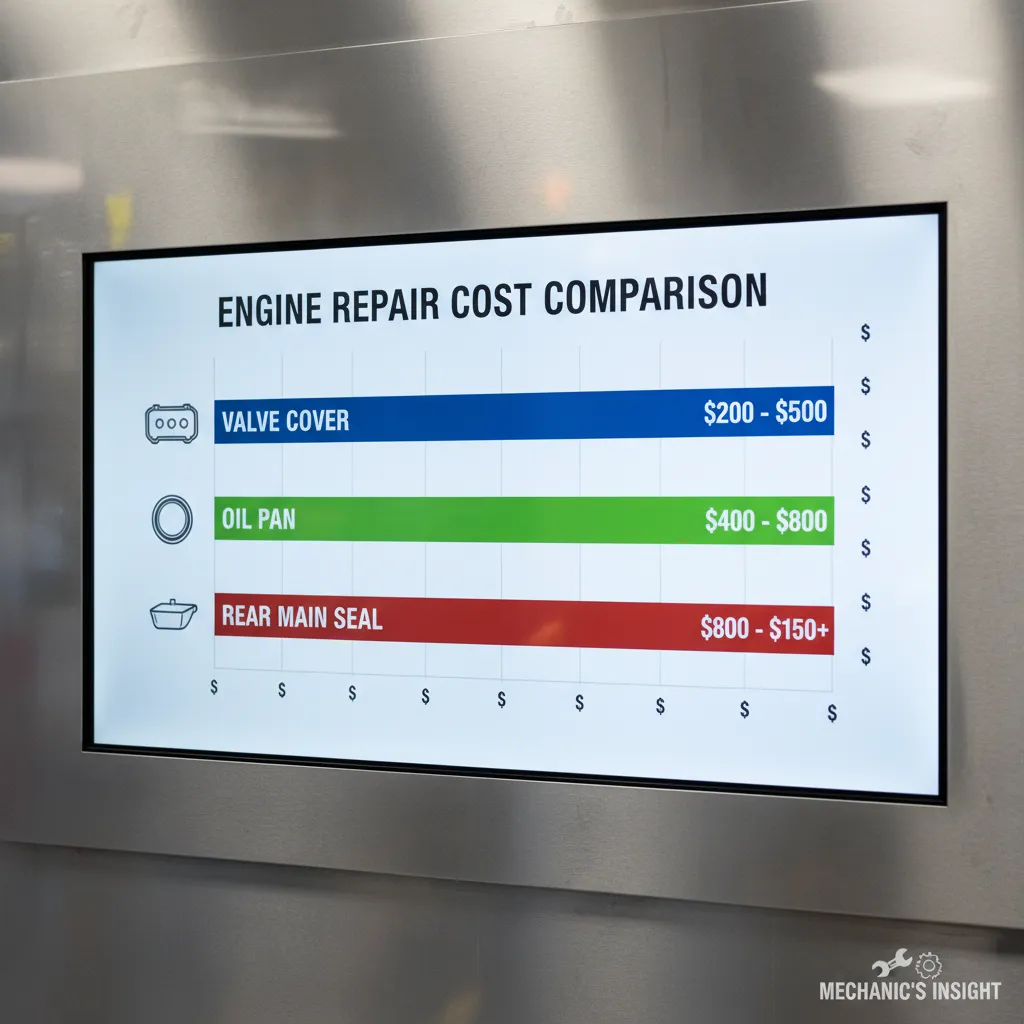
To give you a realistic idea of what to expect, we have broken down the most common leaks and their associated costs. Keep in mind that labor rates vary by region and shop type (dealership vs. independent).
1. Valve Cover Gasket
Estimated Cost: $150 – $450
As mentioned, this is a top-engine leak. The part itself is inexpensive (usually $20–$50), but labor can vary. On a simple 4-cylinder engine, it takes less than an hour. On a V6 or V8 engine where the intake manifold must be removed to access the rear bank of cylinders, the labor cost rises significantly.
2. Oil Pan Gasket
Estimated Cost: $300 – $850
Replacing an oil pan gasket requires draining the oil and removing the pan. On some vehicles, the subframe or suspension components obstruct the oil pan, requiring significant disassembly to remove it. This additional labor drives up the price.
3. Oil Filter Housing Gasket
Estimated Cost: $300 – $700
Modern engines often use a remote oil filter housing bolted to the engine block. The gasket between this housing and the block becomes brittle over time. This is particularly common in European vehicles (like BMW and Audi). The leak often mimics a rear main seal leak because the oil travels down the transmission bell housing.
4. Rear Main Seal
Estimated Cost: $800 – $1,500+
This is the most dreaded diagnosis. The rear main seal sits at the back of the engine, where the crankshaft connects to the transmission. To replace a $30 seal, the mechanic must remove the entire transmission from the vehicle. This is almost entirely a labor charge, often taking 6 to 10 hours to complete.
5. Front Crankshaft Seal
Estimated Cost: $300 – $600
Located behind the main crankshaft pulley (harmonic balancer), this seal often leaks onto the drive belt. If oil gets on your serpentine belt, it can cause the belt to slip or degrade, leading to failure of the alternator or power steering.
Factors Influencing Your Final Repair Bill
Why does one driver pay $200 and another pays $1,000 for an oil leak? Several variables come into play.
Make and Model
Luxury and performance vehicles typically have tighter engine bays and more complex assembly, leading to higher labor times. Furthermore, parts for European brands generally cost more than domestic or Asian counterparts. You can check resources like Kelley Blue Book for fair repair price ranges specific to your vehicle’s year, make, and model.
Severity and Collateral Damage
A small seep might be manageable with top-offs, but a severe leak requires immediate attention. Furthermore, oil leaks can damage other components. Hot oil dripping onto rubber coolant hoses can cause them to swell and burst. Oil on the alternator can short out the electronics. If your oil leak has damaged other parts, the repair bill will increase to cover those replacements.
Labor Rates
Labor is usually the largest portion of the oil leak repair cost. Dealerships typically charge higher hourly rates ($120–$200/hour) compared to independent shops ($80–$140/hour). However, dealerships have specialized training for your specific brand, which can sometimes result in a faster, more accurate diagnosis.
DIY vs. Professional Repair: Is It Worth the Risk?
With the rising cost of automotive services, many car owners consider the DIY route. Is it feasible?
When to DIY: If the leak is accessible, such as a valve cover gasket on a 4-cylinder engine, a competent DIYer with basic hand tools can save hundreds of dollars. You will only pay for the parts and the oil.
When to Call a Pro: If the leak requires lifting the engine, dropping the transmission, or removing timing components (like a cam seal), it is best left to professionals. An improper installation of a seal can result in a worse leak than when you started, or catastrophic engine damage if timing is affected.
Ultimately, ignoring an oil leak is the most expensive choice. Low oil levels lead to increased friction, overheating, and potentially a seized engine—a repair that costs thousands, not hundreds. Early detection via visual inspection or UV dye is the key to keeping the oil leak repair cost manageable.
Frequently Asked Questions
Can I drive my car with an oil leak?
Yes, you can drive with a minor oil leak, provided you check the oil level frequently and top it off as needed. However, you should not ignore it indefinitely. Oil dripping onto hot exhaust parts creates a fire hazard and produces smoke. Furthermore, if the leak worsens suddenly while driving, you risk running the engine dry, which causes permanent damage.
Do oil leak stop-leak additives work?
Stop-leak additives are generally a temporary band-aid, not a cure. They work by causing rubber seals to swell, which can temporarily stop a minor seep. However, they cannot fix cracked metal or large tears in gaskets. Overuse can also clog small oil passages in the engine, potentially causing more harm than good. Mechanical repair is always the preferred solution.
How do I know if it is oil or transmission fluid leaking?
The easiest way to tell is by color and texture. Engine oil is typically brown or black (depending on how old it is) and feels slick. Transmission fluid is usually reddish or pink and has a distinct, slightly sweet chemical smell. If you are unsure, place a piece of white cardboard under the car overnight to catch the drips for easier inspection.
Why is the rear main seal repair so expensive?
The rear main seal part itself is cheap, often under $50. However, the seal is located between the engine and the transmission. To access it, a mechanic must completely disconnect and remove the transmission, and often the flywheel. This labor-intensive process takes many hours, resulting in a high bill despite the low cost of materials.
Does a valve cover gasket leak affect performance?
A valve cover leak usually does not affect engine performance directly unless it is severe enough to lower oil pressure (rare). However, if oil leaks into the spark plug wells, it can foul the spark plugs and cause engine misfires, rough idling, and a check engine light.
Is an oil leak covered under warranty?
If your vehicle is within its powertrain warranty period (typically 5 years/60,000 miles for many manufacturers), oil leaks caused by gasket or seal failure are usually covered. Wear and tear items are not, but gaskets are generally considered part of the powertrain coverage. Always check your specific warranty booklet or consult your dealer.