
Fan belt replacement mobile mechanic services involve a professional automotive technician traveling to your location to diagnose, remove, and install a new accessory drive belt or serpentine belt. This service eliminates the need for towing and provides on-site restoration of critical engine functions, such as the alternator, power steering pump, and air conditioning compressor.
When your vehicle emits a high-pitched squeal or the steering suddenly becomes heavy, it is often a sign that the heart of your engine’s accessory system—the drive belt—is failing. While traditionally known as a “fan belt,” modern vehicles utilize a complex system involving serpentine belts, tensioners, and idler pulleys. Understanding when and how to replace these components is vital for vehicle longevity. In this comprehensive guide, we explore the intricacies of belt maintenance and the distinct advantages of utilizing a mobile mechanic for this critical repair.
Understanding the Drive Belt System
To appreciate the necessity of timely replacement, one must first understand the evolution and function of the belt system. In older vehicles, multiple V-belts were used to drive individual components; the “fan belt” specifically drove the radiator cooling fan. Today, the terminology has shifted, though many drivers still use “fan belt” as a catch-all term.
Most modern internal combustion engines utilize a single, continuous belt known as a serpentine belt. This reinforced rubber belt snakes around various pulleys, transferring rotational energy from the crankshaft to the alternator, power steering pump, water pump, and air conditioning compressor. Because a single belt drives multiple systems, its failure results in a total loss of these auxiliary functions.
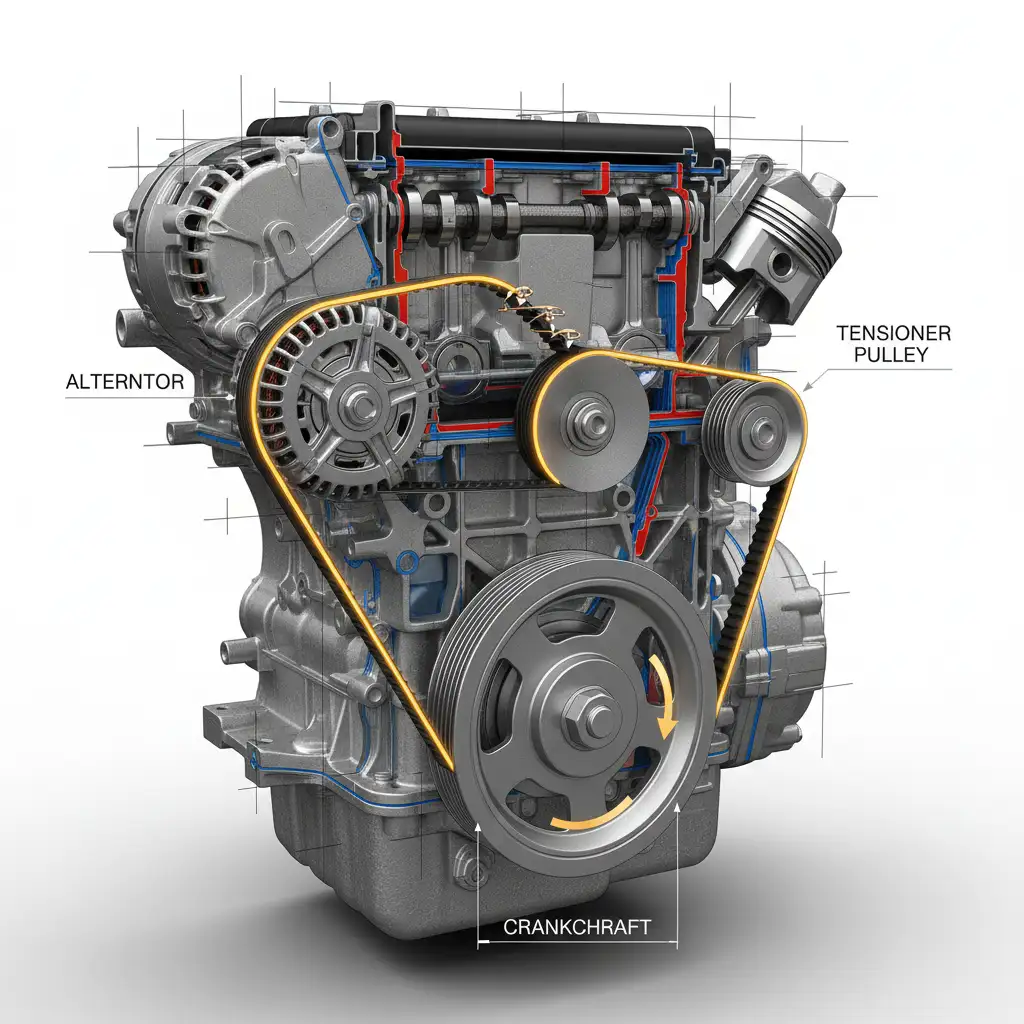
The materials used in these belts have also evolved. Older belts were made of neoprene, which showed visible cracks as they aged. Modern belts are typically constructed from Ethylene Propylene Diene Monomer (EPDM). EPDM is far more durable and heat-resistant, but it does not crack in the same obvious way neoprene did. Instead, EPDM belts wear down like tires, losing material from the ribs until they can no longer grip the pulleys effectively. This makes diagnosis slightly more complex, requiring a keen eye or a specialized depth gauge.
For a deeper dive into the mechanical history of these components, Wikipedia provides an extensive overview of serpentine belts and their configurations across different automotive eras.
Identifying Worn or Cracked Belts
Detecting a failing belt before it snaps is the hallmark of proactive vehicle ownership. A fan belt replacement mobile mechanic will typically look for specific visual and auditory indicators during an inspection. However, you can perform preliminary checks yourself.
Visual Inspection Techniques
Pop the hood and locate the belt. With the engine off and cool, use a flashlight to inspect the belt’s surface. You are looking for:
- Cracking: While less common on EPDM belts, cracks running across the ribs (perpendicular to the belt’s length) indicate severe aging and imminent failure.
- Glazing: If the belt’s surface looks shiny or glazed, it indicates the belt has been slipping. Friction generates heat, which hardens the rubber and reduces its grip, leading to further slippage.
- Fraying: Inspect the edges of the belt. If you see unraveling cords or uneven wear patterns, it suggests the belt is misaligned, likely due to a failing pulley or tensioner.
- Oil Contamination: Oil leaks from the engine can soak into the belt rubber, causing it to swell and degrade rapidly. A swollen belt is a ticking time bomb.
Auditory Warning Signs
Your ears are often the first tool to detect belt issues. A loud, rhythmic squealing noise immediately after starting the engine—especially on cold mornings—is a classic symptom of a loose or worn belt. If the squealing persists or gets louder when you turn the steering wheel or turn on the A/C, the belt is struggling to handle the load.
A chirping sound, on the other hand, often points to a misalignment issue with the pulleys rather than the belt wear itself. Ignoring these sounds can lead to catastrophic failure on the road.
The Critical Role of Tensioners and Pulleys
One of the most common misconceptions in automotive maintenance is that simply swapping the belt solves the problem. In reality, the belt is part of a synchronized system that includes the automatic belt tensioner and idler pulleys. A professional fan belt replacement mobile mechanic knows that changing the belt without checking the tensioner is often a waste of money.
The automatic belt tensioner applies constant, specific pressure to the belt to ensure it maintains grip on the pulleys. Inside the tensioner is a spring and a damping mechanism. Over time, three things can happen to the tensioner:
- Spring Weakness: The internal spring loses its strength, causing the belt to slip.
- Bearing Failure: The pulley on the tensioner spins thousands of times per minute. If the bearing dries out, it can seize, shredding the belt instantly.
- Pivot Seizure: The tensioner arm can freeze in place, unable to absorb engine vibrations or adjust for belt stretch.
When booking a mobile mechanic, ensure they include a “drive belt system inspection” rather than just a “belt swap.” If a new belt is installed on a worn tensioner, the new belt will likely fail prematurely, or the tensioner may collapse entirely.
Risks of Snapping Belts While Driving
What happens if you ignore the signs? The consequences of a snapped serpentine belt are immediate and potentially dangerous. Unlike a slow oil leak, a broken belt causes a sudden loss of multiple critical systems.
Loss of Power Steering
In vehicles with hydraulic power steering, the pump is driven by the belt. If the belt snaps, the steering wheel will instantly become incredibly heavy. While you can still steer, it requires significant physical effort, which can cause panic and loss of control, especially during a turn.
Engine Overheating
The water pump, responsible for circulating coolant through the engine, is often driven by the serpentine belt. Once the belt is gone, coolant circulation stops. Your engine temperature will spike within minutes. Continuing to drive without a water pump can warp the cylinder head or blow the head gasket, turning a $150 repair into a $3,000 engine rebuild.
Electrical Failure
The alternator charges the battery and powers the vehicle’s electrical systems while the engine runs. Without the belt, the alternator stops spinning. The car will run off the remaining battery charge for a short time (perhaps 10-20 minutes) before the engine dies completely, leaving you stranded with no hazard lights.
According to safety organizations like the National Highway Traffic Safety Administration (NHTSA), vehicle maintenance neglect is a contributing factor in thousands of roadside accidents annually. Ensuring your drive belts are intact is a matter of safety, not just convenience.
Why Choose a Fan Belt Replacement Mobile Mechanic?
Given the risks associated with driving a vehicle with a failing belt, the “informational/transactional” search intent often leads drivers to mobile mechanics. There are distinct advantages to this approach compared to a traditional repair shop.
Safety and Convenience
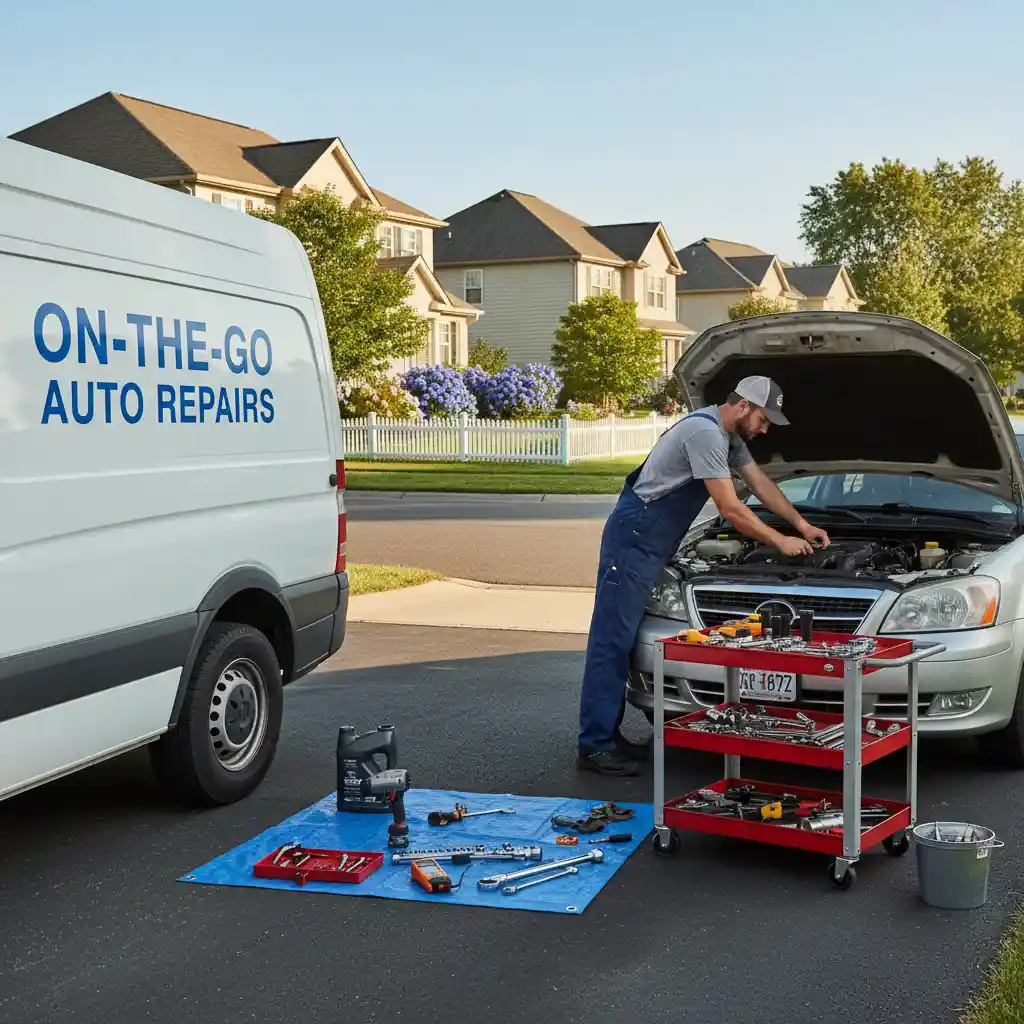
If your belt has already snapped, you cannot drive the car. You would need to pay for a tow truck to transport the vehicle to a garage. A mobile mechanic eliminates the towing fee and the logistical nightmare. They come to your driveway, office parking lot, or the roadside.
Direct Communication
When you hire a mobile mechanic, you are typically speaking directly to the technician working on your car, not a service advisor at a front desk. This allows for better transparency regarding the condition of your pulleys and tensioners. You can physically see the old parts and the new installation.
Speed of Service
Shops often have a backlog of vehicles. Your car might sit in a lot for two days before being touched. Mobile mechanics usually operate on a scheduled appointment basis, meaning your repair is the priority the moment they arrive. A standard fan belt replacement typically takes 30 to 60 minutes, meaning you are back on the road in under an hour.
The Mobile Replacement Process Explained
If you decide to book a fan belt replacement mobile mechanic, knowing what to expect can provide peace of mind. Here is the standard workflow for an on-site replacement:
- Diagnosis: The mechanic arrives and inspects the belt system. They verify if the issue is indeed the belt or a seized component (like a stuck A/C compressor clutch) that caused the belt to burn up.
- Belt Routing Map: Before removing the old belt, the technician checks the routing diagram (usually a sticker under the hood) or takes a photo to ensure the new belt follows the exact path.
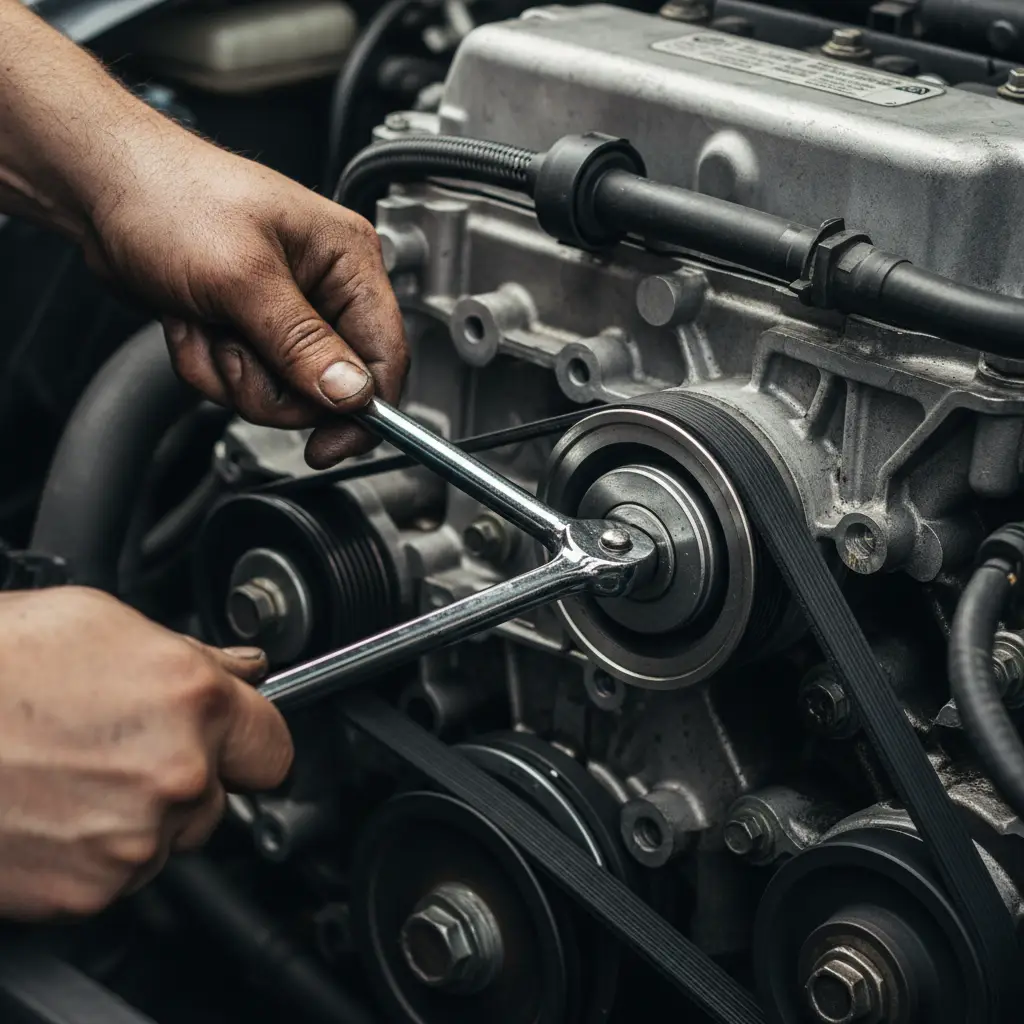
- Releasing Tension: Using a specialized serpentine belt tool or a breaker bar, the mechanic rotates the tensioner to release pressure on the belt.
- Removal and Inspection: The old belt is removed. At this stage, the mechanic spins all the pulleys (alternator, water pump, idler) by hand. They are checking for “play” (wobble) or grinding noises indicating bad bearings.
- Installation: The new belt is threaded around the pulleys. This can be tricky in tight engine bays.
- Tensioning and Verification: The tensioner is released, applying force to the new belt. The mechanic then starts the engine to visually confirm the belt is tracking correctly and not slipping.
By understanding the complexity and importance of the drive belt system, you can make informed decisions about your vehicle’s maintenance. Whether you choose to visit a shop or leverage the convenience of a mobile mechanic, prioritizing this rubber component ensures your journey remains safe and uninterrupted.
Frequently Asked Questions
How much does a mobile mechanic charge for a fan belt replacement?
The cost typically ranges between $100 and $250. This includes the cost of the belt (usually $30-$80) and the labor/call-out fee. The price varies depending on the make and model of the vehicle and the complexity of the engine bay layout.
Can I drive my car if the fan belt snaps?
No, you should not drive. Without the belt, the water pump stops working, leading to rapid engine overheating. Additionally, you will lose power steering and the alternator will stop charging the battery. Driving in this state can cause permanent engine damage.
How long does it take for a mobile mechanic to replace a serpentine belt?
On most vehicles, the replacement takes between 30 to 60 minutes. However, if the tensioner is difficult to access or if other pulleys need replacement, it could take up to two hours.
What is the difference between a fan belt and a serpentine belt?
Historically, fan belts were V-shaped belts that only drove the cooling fan and alternator. Modern cars use a serpentine belt, which is a single, long, flat belt with ribs that drives multiple components simultaneously, including the power steering, A/C, water pump, and alternator.
Do mobile mechanics bring the replacement belt with them?
Yes, when you book the appointment, you will provide your vehicle details (Make, Model, Year, Engine size). The mechanic will purchase the correct belt and bring it to the appointment.
How do I know if the noise is the belt or the tensioner?
A squeal usually indicates the belt is slipping (loose or worn). A grinding, growling, or chirping sound often indicates a bad bearing in the tensioner or an idler pulley. A mechanic can isolate the noise using a stethoscope or by removing the belt to spin the pulleys by hand.