
Dashboard warning lights are your vehicle’s essential communication system, signaling issues ranging from minor inconveniences to critical failures. For Auckland drivers, understanding these indicators and knowing when to seek professional mobile mechanic assistance is vital for maintaining vehicle safety, preventing costly damage, and ensuring peace of mind on our busy roads.
Understanding Dashboard Warning Lights in Auckland
Your vehicle’s dashboard is a sophisticated control panel, equipped with a multitude of lights designed to keep you informed about its operational status. Ignoring these illuminated symbols, particularly in a vibrant city like Auckland, can have significant consequences, from unexpected breakdowns on the Harbour Bridge to expensive repairs that could have been avoided. Each light carries a specific message, categorised primarily by colour: red for immediate danger, yellow or orange for caution or an issue requiring attention soon, and green or blue for informational purposes.
For Auckland motorists, the ability to quickly interpret these signals is paramount. Whether you’re commuting through the CBD, heading out to the North Shore, or exploring the Waitakere Ranges, a sudden warning light can induce panic. However, with the right knowledge, you can often determine the severity of the situation and decide on the appropriate course of action, which frequently involves contacting a reliable mobile mechanic service that can come directly to your location, saving you time and the hassle of towing.
This comprehensive guide will demystify the most common dashboard warning lights you might encounter in your vehicle. We’ll explore their meanings, discuss when urgent action is necessary, and highlight how professional mobile diagnostic services in Auckland offer a convenient and effective solution for accurate problem identification and resolution.
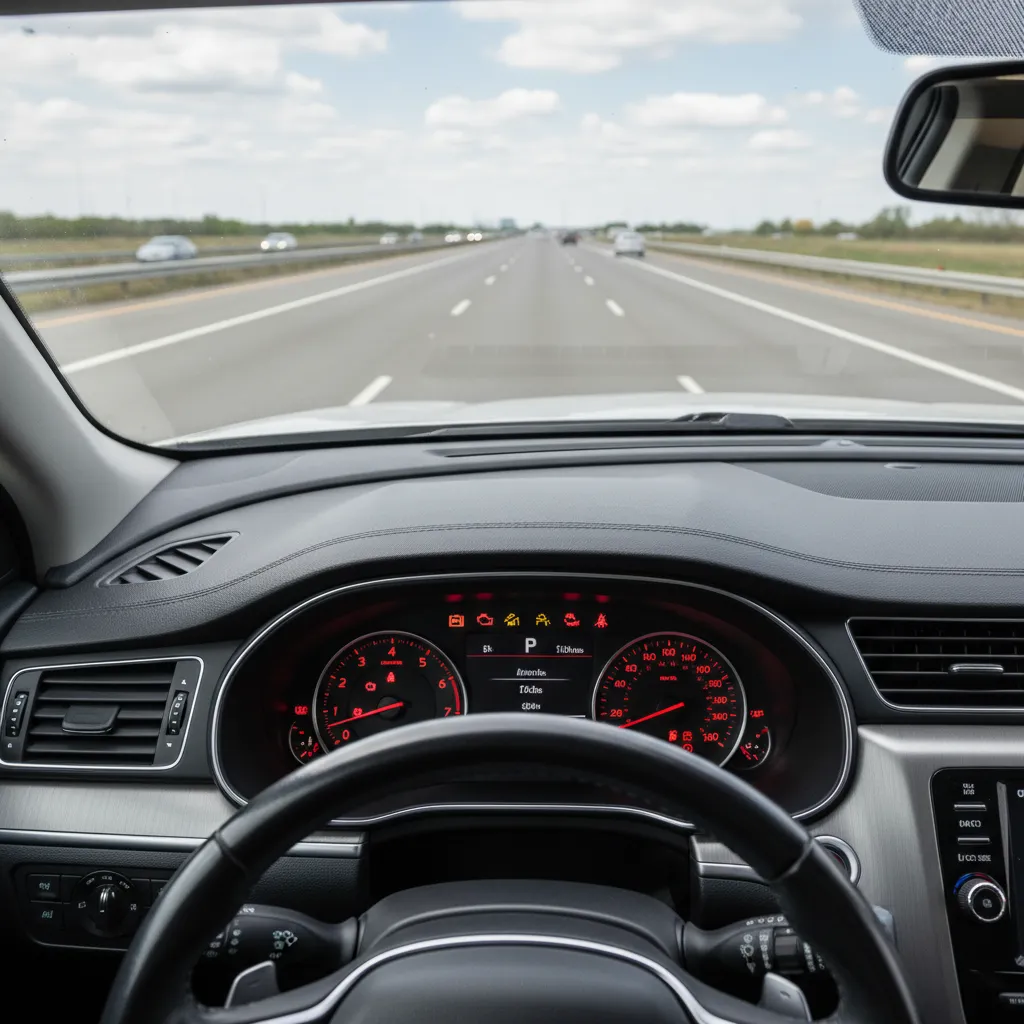
Common Warning Lights & Their Meanings
Understanding the specific message behind each dashboard light is the first step towards responsible vehicle ownership. While some lights are universal, their implications can vary slightly based on the vehicle make and model. Here’s a breakdown of the most frequently encountered warning lights and what they typically signify:
Red Warning Lights: Immediate Danger
Red lights are critical alerts, demanding your immediate attention. They usually indicate a severe problem that could lead to significant vehicle damage or compromise safety if ignored. If a red light illuminates, it’s generally safest to pull over when it’s safe to do so, turn off the engine, and seek professional help.
- Oil Pressure Warning Light (Oil Can Symbol): This is one of the most serious lights. It indicates critically low oil pressure, not necessarily low oil level. Driving with this light on means your engine isn’t getting adequate lubrication, which can cause catastrophic and irreversible engine damage very quickly. Stop immediately.
- Engine Temperature Warning Light (Thermometer with Waves): This light indicates that your engine is overheating. Continuing to drive can cause severe damage, including a blown head gasket or warped engine components. Pull over, turn off the engine, and allow it to cool. Do not open the radiator cap when hot.
- Brake System Warning Light (Circle with Exclamation Mark or ‘P’ in Circle): This light can indicate several issues: low brake fluid, a problem with the ABS system (if combined with ABS light), or the parking brake being engaged. If the parking brake is off and the light is on, it suggests a serious brake system fault. Reduce speed and get it checked immediately.
- Battery/Charging System Warning Light (Battery Symbol): This light signifies a problem with your vehicle’s charging system, often a faulty alternator, battery, or wiring. While your car might run for a short period on battery power alone, it will eventually die. Get it checked without delay.
- Airbag Warning Light (Person with Airbag Deployed): This indicates a fault within the airbag system. While your vehicle may still be drivable, the airbags might not deploy in a crash, or could even deploy unexpectedly. This is a critical safety issue and requires immediate inspection.
- Power Steering Warning Light (Steering Wheel with Exclamation Mark): Modern vehicles often have electric power steering. If this light comes on, it means there’s a fault in the system, making steering much harder and potentially dangerous.
Yellow/Orange Warning Lights: Caution & Check Soon
Yellow or orange lights typically signal a less urgent issue than red lights but still require prompt attention. They suggest a problem that needs to be diagnosed and rectified soon to prevent further damage or maintain optimal performance.
- Check Engine Light (Engine Outline or ‘CHECK ENGINE’): Also known as the Malfunction Indicator Lamp (MIL), this is perhaps the most common and often misunderstood warning light. It indicates that your vehicle’s On-Board Diagnostics (OBD-II) system has detected a fault in an emission-related component. This could be anything from a loose fuel cap to a failing catalytic converter. While your car may seem to drive normally, it’s crucial to get a diagnostic scan to determine the specific issue.
- Anti-lock Braking System (ABS) Warning Light (‘ABS’): This light indicates a fault with your ABS system. Your regular brakes will still work, but the anti-lock feature, which prevents skidding during hard braking, may not. Drive cautiously and get it inspected.
- Traction Control/Stability Control Warning Light (Car Skidding Symbol): When this light is on, it means your vehicle’s traction control system is either active (often flashing) or has a fault (solid). If it’s solid, the system designed to prevent wheelspin and maintain stability may not be working.
- Tyre Pressure Monitoring System (TPMS) Warning Light (Flat Tyre with Exclamation Mark): This light indicates that one or more of your tyres are significantly under-inflated. Low tyre pressure can affect handling, fuel efficiency, and increase the risk of a blowout. Check and adjust your tyre pressures promptly.
- Low Fuel Warning Light (Fuel Pump Symbol): A common and straightforward indicator that your fuel tank is running low. Refuel as soon as possible to avoid running out of petrol and potentially damaging your fuel pump.
- Washer Fluid Low (Windscreen with Spray Symbol): Simply indicates that your windscreen washer fluid reservoir is low and needs refilling. Not critical, but important for visibility.
Green/Blue Indicator Lights: Informational
These lights are typically informational, indicating that a certain system is active or engaged. They are not warning lights.
- High Beam Indicator (Headlight with Horizontal Lines): Shows your high-beam headlights are on.
- Turn Signal Indicator (Arrows): Flashes when your turn signals are active.
- Cruise Control Indicator (Speedometer with Arrow): Indicates that your cruise control system is engaged.
When to Act on a Warning Light: Urgent vs. Caution
The speed at which you respond to a dashboard warning light can significantly impact your safety and the longevity of your vehicle. Distinguishing between a critical alert and a less immediate concern is vital for Auckland drivers.
Immediate Action: Red Lights Demand Attention
If a red warning light illuminates, it signals a potentially dangerous situation or a critical system failure. Your immediate priority should be safety. If possible, safely pull over to the side of the road, turn off your engine, and assess the situation. Continuing to drive with a red light on can lead to catastrophic damage to your vehicle, leaving you stranded, or even posing a safety risk to yourself and others.
For instance, an oil pressure light or engine temperature warning demands an immediate stop. Driving even a few extra kilometres could cause irreversible engine damage that results in an engine replacement – a significantly more costly repair than addressing the initial fault. In such cases, contacting a mobile mechanic for roadside assistance or arranging for a tow is the most responsible course of action. They can perform a diagnostic check on-site, offer advice, or arrange for the vehicle to be transported for further repair if needed.
Prudent Action: Addressing Yellow/Orange Lights
Yellow or orange lights, while not usually requiring an immediate stop, should never be ignored. These lights indicate a problem that needs attention soon to prevent it from escalating into a more serious and expensive issue. For example, a persistent check engine light, even if your car seems to be running fine, could signal a minor sensor fault or a more significant issue impacting fuel economy or emissions.
Driving with a yellow light on for an extended period risks further damage to other components. A fault detected by the check engine light, such as a misfire, could lead to unburnt fuel damaging your catalytic converter over time. Similarly, ignoring a TPMS light could lead to premature tire wear or a dangerous blowout. When these lights appear, it’s prudent to schedule an inspection with a professional mobile mechanic as soon as possible. They can diagnose the issue accurately and recommend necessary repairs before the problem worsens.
Mobile Diagnostic Scans for Accurate Codes in Auckland
When a dashboard warning light illuminates, especially the infamous check engine light, guesswork is not a solution. Modern vehicles are equipped with sophisticated On-Board Diagnostics II (OBD-II) systems that store specific ‘trouble codes’ whenever a fault is detected. Accessing and interpreting these codes is crucial for an accurate diagnosis, and this is where professional mobile diagnostic scans become indispensable for Auckland drivers.
The Power of OBD-II Diagnostics
Every vehicle manufactured after 1996 in New Zealand (and globally for most markets) is fitted with an OBD-II port. When a warning light comes on, the vehicle’s computer (ECU) records a Diagnostic Trouble Code (DTC) that corresponds to the specific fault. These codes, such as a ‘P0420’ for catalytic converter efficiency or ‘P0301’ for a cylinder 1 misfire, provide mechanics with a precise starting point for troubleshooting.
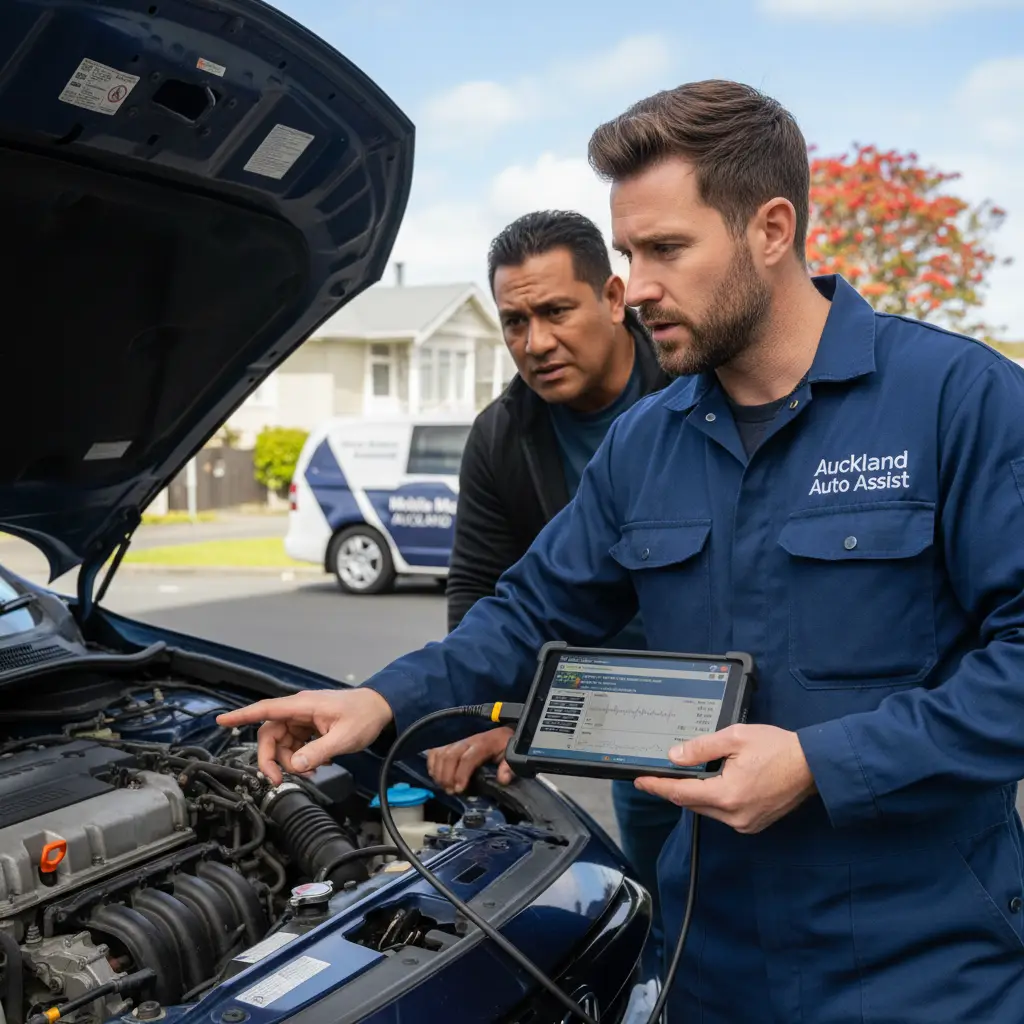
A professional diagnostic scan tool connects to your vehicle’s OBD-II port, retrieves these codes, and provides a wealth of real-time data from various sensors. This data allows experienced technicians to understand the engine’s operational parameters, identify intermittent faults, and pinpoint the root cause of the problem, rather than simply replacing parts based on a hunch. It’s a critical step in effective vehicle repair and maintenance. You can learn more about the history and standards of OBD-II systems on Wikipedia.
Benefits of Mobile Mechanics for Diagnostics in Auckland
For Auckland vehicle owners, the convenience and efficiency of a mobile mechanic for diagnostic scans are unparalleled. Instead of having to drive a potentially compromised vehicle to a workshop, or arranging for a costly tow, a mobile mechanic comes directly to you – whether you’re at home, work, or even roadside if you’ve broken down.
- Convenience: No need to take time off work or rearrange your schedule. The mechanic works around your availability.
- On-Site Expertise: Diagnosis and often minor repairs can be completed right where your vehicle sits. This is particularly beneficial if the vehicle is unsafe to drive.
- Cost-Effective: Eliminates towing fees and can often identify minor issues before they become major problems, saving you money in the long run.
- Transparency: You can be present during the diagnostic process, ask questions, and understand the fault codes and recommended solutions directly from the technician.
A mobile diagnostic scan in Auckland is not just about reading codes; it’s about getting an expert interpretation of what those codes mean for your specific vehicle and receiving clear, actionable advice on the best way forward. It’s a fundamental service that underpins effective vehicle maintenance and repair in today’s complex automotive landscape.
Preventing Further Vehicle Damage: Proactive Steps
While understanding and reacting to dashboard warning lights is crucial, the ultimate goal is prevention. Proactive vehicle maintenance is the most effective strategy for minimising the chances of these warning lights ever illuminating, saving you from inconvenient breakdowns and expensive repairs. For Auckland motorists, integrating preventative measures into your routine is key to long-term vehicle health.
Regular Maintenance: Your First Line of Defense
Adhering to your vehicle’s manufacturer-recommended service schedule is the single most important preventative measure. This includes regular oil changes, filter replacements (air, oil, fuel, cabin), spark plug inspections, and fluid checks (brake fluid, coolant, power steering fluid, transmission fluid). These routine checks help identify potential issues before they escalate into warning light triggers.
A professional mobile mechanic in Auckland can provide comprehensive servicing at your convenience, ensuring all critical components are inspected and maintained according to specifications. They can spot worn belts, leaking hoses, low fluid levels, or deteriorating battery terminals that might otherwise go unnoticed until a warning light appears. This proactive approach not only keeps your vehicle running smoothly but also contributes to better fuel efficiency and a longer lifespan for major components. Consider checking resources like the AA New Zealand’s car maintenance checklist for general guidelines.
Listening to Your Vehicle: Early Warning Signs
Beyond scheduled maintenance, being observant and attentive to your vehicle’s behaviour can provide early warning signs even before a dashboard light comes on. Listen for unusual noises (squeaks, grinding, clunking), feel for changes in handling or braking, notice any strange smells (burning oil, sweet coolant, rotten eggs), or observe changes in exhaust smoke colour. These subtle cues are often precursors to a more significant problem.
For instance, a slight change in engine sound might indicate an impending issue that a diagnostic scan could confirm, preventing a complete breakdown. Similarly, a spongy brake pedal or a burning smell after heavy braking warrants immediate investigation. Developing a habit of regularly checking your tire pressures, fluid levels, and looking for obvious leaks beneath your parked car can also catch problems early. If you notice anything out of the ordinary, contacting a mobile mechanic in Auckland for a quick check-up is a wise investment, preventing a small issue from becoming a major headache.
By combining diligent routine maintenance with attentive observation, Auckland drivers can significantly reduce their reliance on dashboard warning lights as the primary indicator of vehicle health, leading to a safer, more reliable, and ultimately more economical driving experience.
Understanding and acting upon dashboard warning lights is a fundamental aspect of responsible vehicle ownership, particularly for drivers navigating the diverse conditions of Auckland’s roads. From the immediate urgency signalled by a red oil pressure light to the cautionary advice of a yellow check engine light, each symbol on your dashboard provides invaluable information about your vehicle’s health.
Ignoring these warnings can lead to serious safety risks, costly repairs, and inconvenient breakdowns. By familiarising yourself with common indicators, knowing when to stop, and understanding the benefits of timely professional diagnostics, you empower yourself to make informed decisions. Remember, the convenience and expertise of a mobile mechanic in Auckland offer an unparalleled solution for accurate problem identification and efficient resolution, ensuring your vehicle remains safe, reliable, and ready for whatever journey lies ahead.
People Also Ask About Dashboard Warning Lights
What does the check engine light mean in Auckland?
In Auckland, a check engine light (also known as a Malfunction Indicator Lamp or MIL) signals an issue detected by your vehicle’s onboard diagnostic (OBD-II) system. It could be anything from a loose fuel cap to a serious engine problem. It’s crucial to get a professional diagnostic scan to retrieve the specific fault codes and determine the exact cause, which mobile mechanics in Auckland can conveniently provide.
Should I drive with my oil warning light on?
No, driving with your oil warning light on is highly risky and can lead to severe, irreparable engine damage. This red light indicates critically low oil pressure, meaning your engine isn’t getting adequate lubrication. You should pull over safely as soon as possible, turn off the engine, and contact a mobile mechanic for assistance or towing.
How can a mobile mechanic help with dashboard warning lights in Auckland?
A mobile mechanic in Auckland provides exceptional convenience for dashboard warning light diagnostics. Instead of towing your car to a workshop, they come to your location – home, work, or roadside. They use advanced OBD-II scanning tools to read fault codes, accurately diagnose the problem, and often perform immediate repairs or advise on necessary next steps, saving you time and hassle.
Are all dashboard warning lights urgent?
Not all dashboard warning lights are equally urgent, but none should be ignored. Red lights typically indicate immediate danger or a critical system failure requiring you to stop driving safely. Yellow or orange lights signify a problem that needs attention soon, but may allow you to continue driving cautiously. Green or blue lights are usually informational, indicating a system is active (e.g., high beams).
What is a TPMS light, and what should I do if it comes on?
A TPMS (Tire Pressure Monitoring System) light, usually yellow and shaped like a flat tire with an exclamation mark, indicates that one or more of your tires have significantly low pressure. If it comes on, safely check your tire pressures as soon as possible, inflate them to the manufacturer’s recommended levels, and inspect for punctures. If the light persists after adjusting pressure, there might be a sensor issue, which a mobile mechanic can diagnose.
Can a mobile mechanic reset my check engine light?
Yes, a mobile mechanic in Auckland can reset your check engine light, but it’s important to understand why. They will first perform a diagnostic scan to identify the underlying fault code and diagnose the problem. Only after the issue has been correctly addressed and repaired should the light be reset. Resetting it without fixing the root cause will likely lead to the light reappearing and won’t solve the problem.