
Check engine light diagnosis in Auckland involves identifying the root cause of an illuminated check engine light through professional OBD-II scanning and expert analysis. This crucial service pinpoints issues ranging from minor sensor malfunctions to significant engine or transmission problems, ensuring your vehicle remains safe, performs optimally, and complies with New Zealand roadworthiness standards.
Understanding Your Check Engine Light
The check engine light, often referred to as the Malfunction Indicator Lamp (MIL), is a crucial warning signal from your vehicle’s onboard diagnostic (OBD-II) system. When it illuminates, it indicates that the powertrain control module (PCM) has detected an issue with the engine, transmission, or emissions system. For Auckland drivers, ignoring this light is not only risky for your vehicle’s health but can also lead to more expensive repairs down the line or even Warrant of Fitness (WOF) failure. Understanding what triggers this light is the first step towards resolving the underlying problem.
What Does the Light Mean?
A steady check engine light typically signifies a non-critical but persistent problem that requires attention soon. A flashing or blinking check engine light, however, indicates a severe issue, often a misfire, that could be causing significant damage to the catalytic converter or other vital engine components. If your light is flashing, it’s paramount to pull over safely and seek immediate professional assistance. Even a steady light should prompt prompt investigation, especially given Auckland’s varied driving conditions and traffic, which can exacerbate minor issues.
The OBD-II system constantly monitors hundreds of parameters within your vehicle. When a reading falls outside the manufacturer’s specified range, a diagnostic trouble code (DTC) is stored, and the check engine light illuminates. This system is a powerful tool designed to help mechanics quickly identify the area of concern, but it requires skilled interpretation.
Reasons Your Check Engine Light is On in Auckland
While the check engine light can be triggered by a multitude of issues, some are far more common than others. Understanding these prevalent causes can help Auckland motorists better prepare for what a diagnostic scan might reveal.
Common Causes for a Check Engine Light
- Loose or Faulty Gas Cap: Surprisingly, a loose, damaged, or missing gas cap is one of the most frequent culprits. The cap maintains pressure in the fuel tank, and a leak in this system can trigger the light as it affects the evaporative emissions (EVAP) system. This is a simple fix, but often overlooked.
- Oxygen Sensor Failure: Oxygen sensors measure the amount of unburnt oxygen in your exhaust. This data is critical for the PCM to adjust the air-fuel mixture for optimal combustion and emissions. A faulty O2 sensor can lead to increased fuel consumption, higher emissions, and potential damage to the catalytic converter.
- Catalytic Converter Issues: The catalytic converter transforms harmful pollutants into less toxic gases. If it fails – often due to neglected maintenance, persistent misfires, or faulty O2 sensors – your vehicle will fail emissions tests, suffer reduced engine performance, and the check engine light will illuminate. This is often an expensive repair.
- Spark Plug or Ignition Coil Problems: Spark plugs ignite the air-fuel mixture in the cylinders, and ignition coils provide the high voltage. Worn spark plugs or failing coils can lead to misfires, reduced power, poor fuel economy, and a flashing check engine light.
- Mass Airflow (MAF) Sensor Malfunction: The MAF sensor measures the amount of air entering the engine, allowing the PCM to correctly adjust the fuel delivery. A dirty or failing MAF sensor can cause rough idling, stalling, poor acceleration, and increased fuel consumption.
- Vacuum Leaks: Vacuum hoses are essential for various engine systems, including brakes, emissions, and climate control. A crack or disconnect in a vacuum hose can disrupt the air-fuel ratio, leading to rough idling and the check engine light.
- EGR (Exhaust Gas Recirculation) Valve Issues: The EGR valve helps reduce nitrogen oxide emissions by recirculating a portion of exhaust gas back into the engine’s combustion chambers. A clogged or malfunctioning EGR valve can cause rough idling, reduced performance, and increased emissions.
These are just some of the more common reasons. Modern vehicles are complex, and the check engine light can indicate issues with transmission sensors, ABS sensors, EVAP system components, and much more.
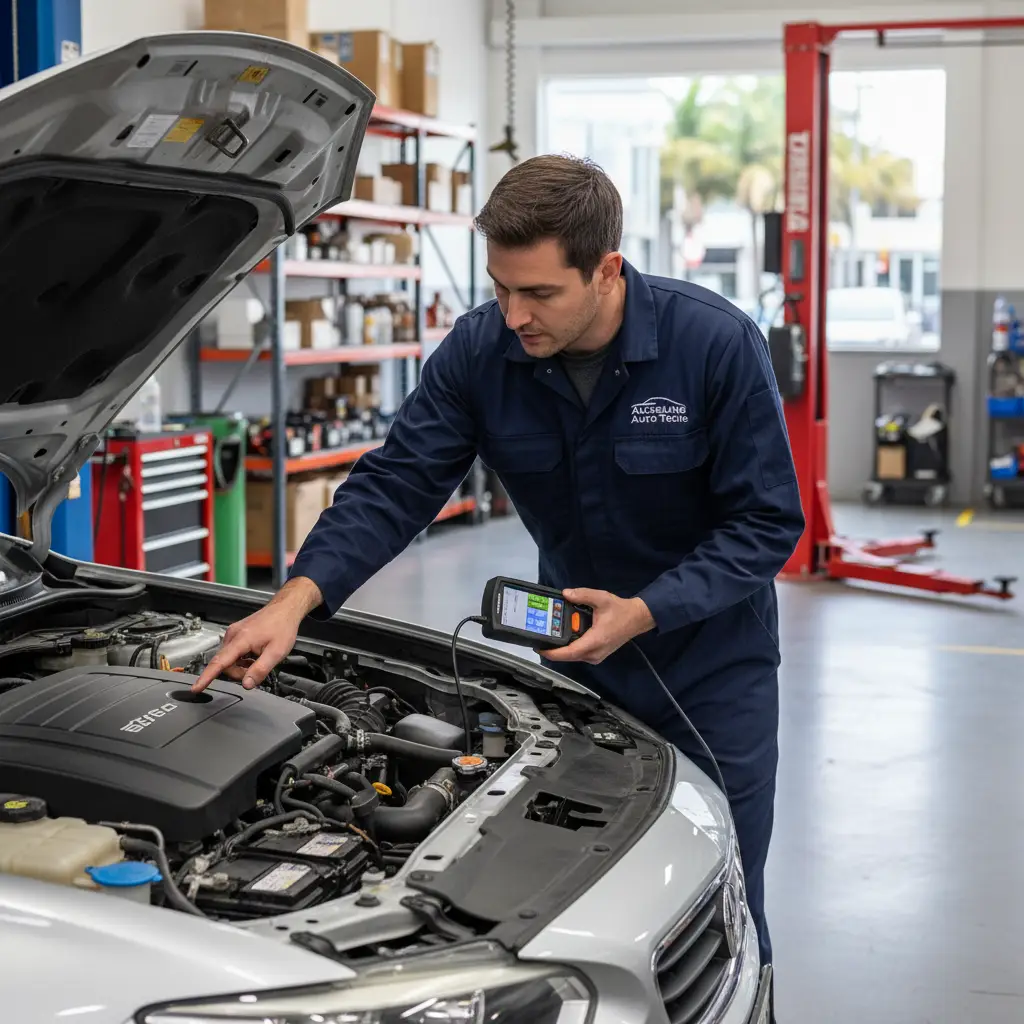
The Critical Importance of Prompt Diagnosis
While it might be tempting to ignore a glowing check engine light, especially if your vehicle seems to be running fine, doing so is a risky gamble. Prompt diagnosis in Auckland is not just about turning off an annoying light; it’s about safeguarding your vehicle, your wallet, and potentially your safety.
Preventing Minor Issues from Becoming Major Problems
Many check engine light triggers start as relatively minor issues. A failing oxygen sensor, for instance, might initially cause only a slight reduction in fuel economy. However, if left unaddressed, the sensor’s incorrect readings can cause the engine to run too rich or too lean, leading to carbon build-up, premature catalytic converter failure, or even engine damage. Addressing the problem early can save you hundreds, if not thousands, in future repair costs.
Ensuring Vehicle Safety and Reliability
Some check engine light issues can directly impact your vehicle’s safety. A misfire, for example, can cause sudden loss of power, which is dangerous when merging onto Auckland’s motorways or navigating busy intersections. Problems with the transmission or braking system (which can sometimes be indicated by the CEL) are even more critical. A professional diagnosis ensures that any safety-critical faults are identified and rectified quickly, giving you peace of mind on Auckland’s roads.
Maintaining Fuel Efficiency and Performance
Modern engines are finely tuned for optimal performance and fuel efficiency. When a component malfunctions, even slightly, it can throw off this balance. You might notice a drop in fuel economy, sluggish acceleration, or rough idling. Prompt diagnosis and repair restore your vehicle to its intended performance levels, saving you money at the pump and providing a smoother driving experience.
Compliance with New Zealand’s Warrant of Fitness (WOF)
In New Zealand, an illuminated check engine light is an automatic failure for a Warrant of Fitness (WOF) inspection. Your vehicle will not pass its WOF until the underlying issue is resolved and the light is off. For Auckland vehicle owners, this means timely diagnosis isn’t just good practice; it’s a legal necessity to keep your vehicle on the road. For more information on WOF requirements, refer to the official Waka Kotahi NZ Transport Agency website.
Mobile OBD-II Scanning & Expert Code Analysis
The cornerstone of accurate check engine light diagnosis is the On-Board Diagnostics, Second Generation (OBD-II) system. This standardised system, mandated in most modern vehicles, provides a universal interface for mechanics to access your vehicle’s computer and retrieve diagnostic trouble codes (DTCs).
What is OBD-II and How Does it Work?
OBD-II is a computerised system that monitors the performance of your vehicle’s major components, including the engine, transmission, and emissions system. When a fault is detected, it stores a specific diagnostic trouble code (DTC) in the vehicle’s computer (PCM) and illuminates the check engine light. These codes, typically starting with a “P” (for Powertrain), “B” (Body), “C” (Chassis), or “U” (Network/Communication), help pinpoint the general area of the problem. A comprehensive overview of OBD-II systems can be found on Wikipedia.
The Advantage of Mobile OBD-II Scanning in Auckland
For Auckland residents, a mobile mechanic offering OBD-II scanning provides unparalleled convenience. Instead of towing your potentially faulty vehicle to a workshop, a skilled technician comes directly to your home or workplace. This on-site service saves you time, hassle, and the risk of driving a compromised vehicle. Mobile mechanics are equipped with professional-grade diagnostic scanners that go beyond basic code readers available to consumers.
Interpreting Diagnostic Trouble Codes (DTCs)
Simply reading a DTC, such as “P0420: Catalyst System Efficiency Below Threshold (Bank 1),” isn’t enough for a complete diagnosis. While the code indicates a problem with the catalytic converter or its efficiency, it doesn’t tell the full story. The catalytic converter itself might be failing, or the issue could stem from a faulty oxygen sensor upstream or downstream, an exhaust leak, or persistent engine misfires that are damaging the converter. Expert analysis involves:
- Contextual Understanding: Knowing how specific codes relate to the vehicle’s make, model, and year.
- Live Data Analysis: Monitoring real-time sensor readings (e.g., O2 sensor voltage, fuel trim, engine temperature) to observe how components are functioning under various operating conditions.
- Service Bulletins and Technical Data: Consulting manufacturer-specific service bulletins and diagnostic procedures for known issues related to particular codes.
- Physical Inspection: Combining scan data with a thorough visual and auditory inspection of relevant components to identify physical damage, loose connections, or leaks.
This multi-faceted approach ensures that the diagnosis is not just accurate but also identifies the root cause, preventing guesswork and unnecessary repairs.
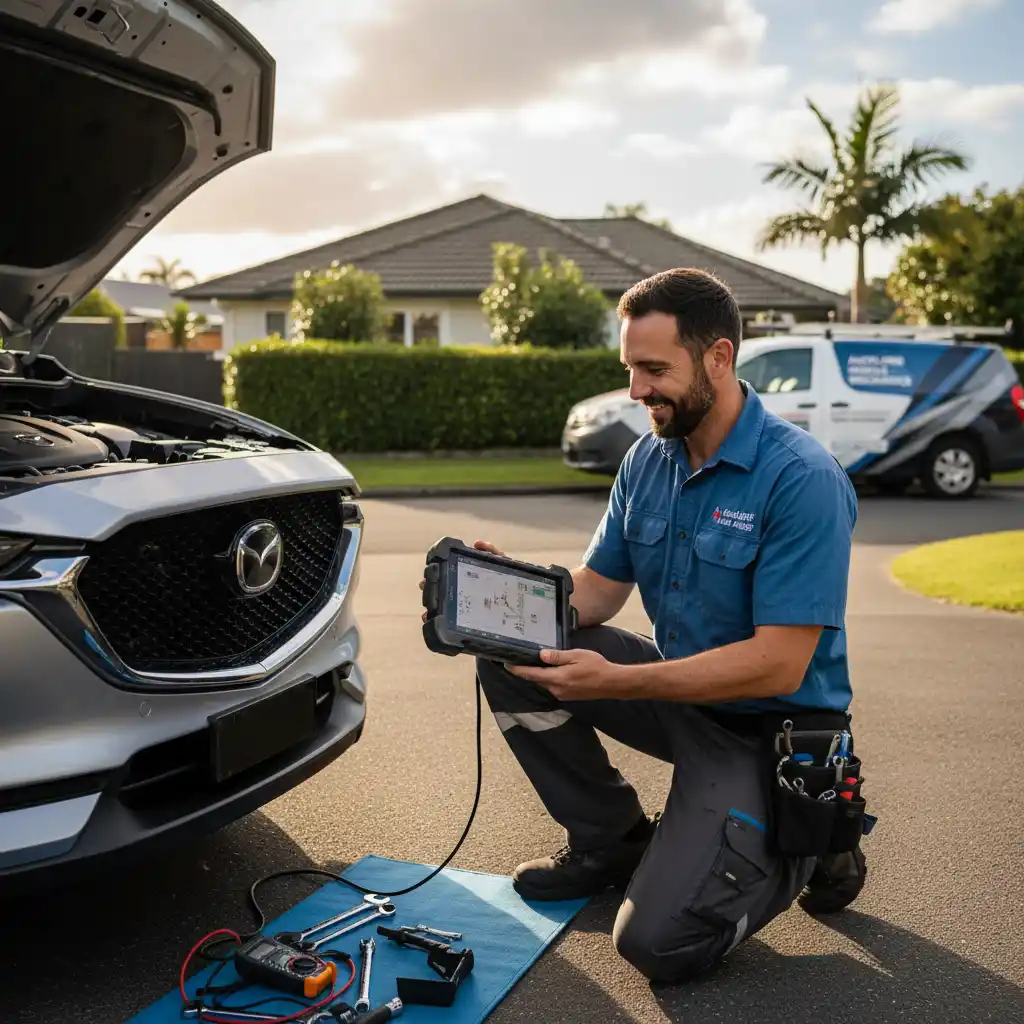
Beyond the Code: Accurate Solutions to Turn Off the Light
Once a thorough diagnosis has been performed, the next step is implementing the correct repair. The goal is not merely to turn off the check engine light temporarily, but to rectify the underlying fault so that it doesn’t return, ensuring your vehicle’s long-term health and reliability.
Addressing Common CEL Triggers with Precision
- Gas Cap: If a loose gas cap was the culprit, simply tightening or replacing it (if damaged) will often resolve the issue after a few driving cycles or a manual reset.
- Oxygen Sensor Replacement: Faulty O2 sensors are replaced with high-quality, OEM-equivalent parts to ensure accurate readings and proper engine management.
- Catalytic Converter Replacement: This is a more significant repair. The mechanic will also identify and fix any underlying issues (like misfires) that led to its failure to prevent recurrence.
- Spark Plugs and Ignition Coils: Replacement of worn spark plugs and/or faulty ignition coils is a common and effective solution for misfire-related codes.
- MAF Sensor Cleaning/Replacement: Often, a MAF sensor can be cleaned, but if it’s failed internally, replacement is necessary.
- Vacuum Leak Repair: Identifying and sealing vacuum leaks through hose replacement or repairing intake manifold gaskets.
The Importance of Quality Parts and Workmanship
Any repair, especially those related to engine management and emissions, should use quality parts. Substandard components can lead to premature failure, incorrect readings, and the check engine light returning. Furthermore, expert workmanship is vital. Correct installation, proper torque settings, and attention to detail ensure the repair is effective and durable.
Resetting the Check Engine Light
After the repair is completed, the check engine light can be reset. This is usually done with the diagnostic scanner. However, it’s important to note that simply resetting the light without addressing the underlying problem will only result in it reappearing, often sooner rather than later. A reputable mechanic will perform a test drive and re-scan to ensure the repair has successfully resolved the issue and the vehicle’s systems are ready.
The Dangers of Ignoring a Check Engine Light
Ignoring a persistent check engine light is akin to ignoring a pain in your body – it might not feel critical immediately, but the underlying issue will likely worsen, leading to more severe consequences. For Auckland drivers, the implications can range from inconvenience to serious financial burden and safety risks.
Increased Fuel Consumption and Reduced Performance
Many issues that trigger the check engine light directly impact your vehicle’s fuel economy. Faulty oxygen sensors, mass airflow sensors, or misfiring cylinders can cause your engine to run inefficiently, burning more fuel than necessary. Over time, this adds up significantly, costing you more at Auckland’s petrol stations. Furthermore, engine performance can degrade, leading to sluggish acceleration, hesitation, or a general lack of power, making driving less enjoyable and potentially unsafe.
Catastrophic Engine Damage
Perhaps the most severe consequence of ignoring a check engine light is the potential for catastrophic engine damage. A persistent misfire, if left unchecked, can pump unburnt fuel into the catalytic converter, causing it to overheat and fail. More critically, issues like low oil pressure (which can sometimes trigger a CEL in combination with an oil pressure light) or severe internal engine problems can lead to complete engine failure, requiring an incredibly expensive engine rebuild or replacement. What started as a minor sensor fault can escalate into a bill worth thousands of dollars.
Environmental Impact and Emissions
The check engine light often relates to your vehicle’s emissions system. A glowing light indicates that your vehicle is likely emitting more pollutants than legally allowed. This not only contributes to air quality issues in Auckland but also means your vehicle is inefficiently burning fuel, impacting the environment unnecessarily.
Warrant of Fitness (WOF) Failure
As previously mentioned, an illuminated check engine light is an automatic fail for a WOF inspection in New Zealand. Driving without a valid WOF can result in fines and insurance complications. Ignoring the light means you’ll eventually be forced to address the issue anyway, likely under pressure when your WOF is due, potentially leading to hasty and more expensive repairs.
Safety Concerns
While not every CEL trigger is a direct safety hazard, some certainly are. Issues affecting braking, steering, or sudden power loss can manifest with a CEL. A flashing check engine light, in particular, always indicates a severe problem that warrants immediate attention due to the risk of serious damage or unsafe driving conditions.
DIY vs. Professional Check Engine Light Diagnosis
With the widespread availability of inexpensive OBD-II code readers, many Auckland car owners consider diagnosing their check engine light themselves. While DIY scanning can provide initial insights, it’s crucial to understand the limitations and when professional expertise becomes indispensable.
The Appeal and Limitations of DIY Scanning
Consumer-grade OBD-II scanners are relatively affordable and can display diagnostic trouble codes (DTCs). This can be useful for minor issues, like confirming a loose gas cap code. However, these basic scanners often only provide generic codes, not manufacturer-specific ones, which can offer more detailed information. More importantly, they typically lack the advanced features necessary for a comprehensive diagnosis:
- No Live Data Interpretation: Basic scanners don’t effectively show real-time sensor data, which is crucial for understanding how components are performing dynamically.
- Limited Diagnostic Capabilities: They often cannot perform system tests, activate components, or access manufacturer-specific parameters required for deeper troubleshooting.
- Lack of Technical Knowledge: Even with a code, knowing what to do next requires extensive knowledge of automotive systems, wiring diagrams, and diagnostic procedures. A code only points to a symptom, not necessarily the root cause.
For simple issues like a loose gas cap, DIY might suffice. For anything more complex, you’re essentially reading a symptom without the ability to perform a proper medical diagnosis.
When Professional Expertise is Indispensable
A professional mobile mechanic in Auckland brings several critical advantages to check engine light diagnosis:
- Advanced Diagnostic Tools: Professional scanners are far more sophisticated, offering manufacturer-specific codes, live data streaming, waveform analysis, bi-directional controls, and the ability to perform intricate system tests.
- Expert Knowledge and Experience: Experienced mechanics have encountered countless check engine light scenarios across various makes and models. They understand common failure points, diagnostic patterns, and the interconnectedness of vehicle systems. They can accurately interpret complex codes and the associated live data.
- Access to Technical Service Bulletins (TSBs): Professionals have access to manufacturer databases, including TSBs that detail known issues and recommended diagnostic/repair procedures for specific vehicles.
- Holistic Approach: A good mechanic doesn’t just read a code; they combine the scan data with a thorough visual inspection, test driving, and their extensive knowledge to identify the precise root cause. They can differentiate between a faulty sensor and a wiring issue, or a component failure versus an issue upstream causing the component to act up.
- Efficiency and Accuracy: Attempting a complex diagnosis yourself can lead to misdiagnosis, incorrect parts purchases, and wasted time and money. Professionals get it right the first time, saving you hassle and ensuring a lasting repair.
For any check engine light that persists after basic checks (like a gas cap), or if the light is flashing, entrusting the diagnosis to a qualified Auckland mobile mechanic is always the safest and most cost-effective approach.
Choosing the Right Mobile Mechanic for CEL Diagnosis in Auckland
When your check engine light comes on, selecting the right mechanic in Auckland is crucial for an accurate diagnosis and effective repair. A mobile mechanic offers significant advantages, but it’s important to choose one who is reputable, experienced, and transparent.
Key Qualities to Look For:
- Specialised Diagnostic Equipment: Ensure the mechanic uses professional-grade OBD-II scanners capable of reading manufacturer-specific codes and live data, not just generic code readers.
- Experience and Certification: Look for mechanics with proven experience in diagnosing complex electronic issues and relevant certifications (e.g., from I-CAR, ASE if applicable, or local industry bodies).
- Transparency in Diagnosis: A good mechanic will explain what the codes mean, what steps they took to diagnose the problem beyond just reading the code, and present clear options for repair. They should be able to show you the data if you wish.
- Reputation and Reviews: Check online reviews and testimonials specific to Auckland. Look for consistent positive feedback regarding their diagnostic skills, reliability, and customer service.
- Convenience of Mobile Service: The primary benefit of a mobile mechanic is the convenience. They should be able to come to your location promptly, equipped to handle the diagnosis on-site.
- Fair and Upfront Pricing: Ask for a clear breakdown of diagnostic fees and potential repair costs. Avoid mechanics who are vague or demand payment before explaining the issue.
Choosing a reliable mobile mechanic for check engine light diagnosis in Auckland ensures you receive a thorough, accurate, and convenient service, getting you back on the road safely and efficiently.
Conclusion: Get Your Check Engine Light Diagnosed Today
The check engine light is not a suggestion; it’s a critical communication from your vehicle about an underlying issue that demands attention. For Auckland drivers, prompt and professional check engine light diagnosis is paramount for maintaining vehicle health, ensuring safety, avoiding costly future repairs, and passing your Warrant of Fitness.
Don’t let a glowing light turn into a major headache. Whether it’s a simple gas cap issue or a more complex engine malfunction, an accurate diagnosis by a qualified mobile mechanic is the first and most important step towards resolving the problem. By choosing an experienced professional equipped with advanced diagnostic tools, you can ensure that your vehicle receives the precise care it needs, allowing you to drive with confidence on Auckland’s busy roads. Act now to prevent further damage and keep your vehicle running smoothly.
People Also Ask
How much does it cost to diagnose a check engine light in Auckland?
The cost for a check engine light diagnosis in Auckland typically ranges from $80 to $150. This fee usually covers the professional OBD-II scan, retrieval of diagnostic trouble codes (DTCs), and expert analysis by a qualified mechanic to pinpoint the root cause of the illuminated light. Some mobile mechanics might include a portion of the diagnostic fee towards the repair if you proceed with their service.
Can I drive my car with the check engine light on in Auckland?
While you *can* drive with a steady check engine light, it is generally not recommended, especially if you don’t know the cause. A flashing check engine light indicates a severe problem requiring immediate attention, and you should pull over safely and avoid driving further. Driving with the light on risks further damage to your engine, catalytic converter, or other components, potentially leading to more expensive repairs, reduced safety, and increased fuel consumption. An illuminated check engine light will also cause an automatic failure during a Warrant of Fitness (WOF) inspection in NZ.
How long does it take for a check engine light to turn off after fixing the issue?
After a repair, the check engine light may turn off on its own after several “drive cycles” if the issue is fully resolved and the vehicle’s computer confirms the system is functioning correctly. A drive cycle involves specific driving conditions, including cold starts, highway driving, and city driving. Alternatively, a mechanic can manually clear the code using a diagnostic scanner immediately after the repair. However, simply clearing the code without fixing the underlying problem will cause the light to reappear.
What is OBD-II and why is it important for diagnosis?
OBD-II (On-Board Diagnostics, Second Generation) is a standardised computer system found in most modern vehicles that monitors the performance of the engine, transmission, and emissions systems. When a fault is detected, it stores a diagnostic trouble code (DTC) and illuminates the check engine light. OBD-II is crucial for diagnosis because it provides mechanics with specific codes and real-time data to accurately identify the source of a problem, significantly streamlining the troubleshooting process.
Will a mobile mechanic in Auckland have the right tools for check engine light diagnosis?
Yes, a professional mobile mechanic in Auckland should be equipped with advanced, professional-grade OBD-II diagnostic scanners. These tools go beyond basic code readers, allowing them to read manufacturer-specific codes, analyse live data streams, perform system tests, and reset adaptive values—all necessary for a comprehensive and accurate check engine light diagnosis and subsequent repair right at your location.
Can a loose gas cap cause the check engine light to come on?
Yes, a loose, damaged, or missing gas cap is a very common reason for the check engine light to illuminate. The gas cap is part of your vehicle’s evaporative emissions (EVAP) system, which prevents fuel vapours from escaping into the atmosphere. If the cap isn’t sealed properly, the system can detect a leak, triggering the check engine light. Often, tightening or replacing the gas cap will resolve the issue after a few driving cycles.