
Experiencing a car engine misfire can be a concerning and often confusing issue for any vehicle owner. Whether you’re commuting through Auckland’s bustling CBD, exploring the scenic West Coast, or navigating the Northern Motorway, a misfiring engine can compromise your vehicle’s performance, fuel efficiency, and overall reliability. Understanding the signs, causes, and most effective troubleshooting methods is crucial for prompt diagnosis and repair. Fortunately, professional mobile mechanics in Auckland offer convenient, on-site services to diagnose and rectify these problems, bringing expert solutions directly to your doorstep or roadside location.
A car engine misfire in Auckland occurs when one or more cylinders fail to ignite the air-fuel mixture effectively, leading to incomplete combustion and a noticeable stumble or jerk in the engine’s operation. This often manifests as reduced power, poor acceleration, rough idling, or an illuminated check engine light, requiring immediate attention from a qualified mobile mechanic to prevent further damage and restore vehicle performance.
Symptoms of an Engine Misfire
Identifying an engine misfire early can save you significant time and money on potential repairs. The symptoms can range from subtle to severe, depending on the number of cylinders affected and the underlying cause. Auckland drivers should pay close attention to any changes in their vehicle’s typical operation, as these could be indicative of a developing misfire issue.
Interpreting the Check Engine Light
Perhaps the most obvious sign of an engine misfire is the illumination or flashing of your check engine light. Modern vehicles are equipped with sophisticated On-Board Diagnostics (OBD-II) systems that detect combustion irregularities. When a misfire occurs, the Powertrain Control Module (PCM) registers a diagnostic trouble code (DTC), typically in the P030X format (where ‘X’ indicates the cylinder number). A flashing check engine light signifies a severe misfire that could be causing catalytic converter damage, urging immediate attention. While this light indicates a problem, it doesn’t pinpoint the exact cause, necessitating professional diagnostic tools to retrieve and interpret the specific error codes.
Performance and Sound Indicators
Beyond the warning light, several performance and auditory cues can signal an engine misfire:
- Rough Idling: The engine may feel shaky, vibrate excessively, or produce an uneven ‘lumpy’ sound when idling, indicating inconsistent power delivery from one or more cylinders.
- Loss of Power and Acceleration: You might notice a significant drop in your vehicle’s ability to accelerate smoothly or maintain speed, especially when going uphill or attempting to pass other vehicles. The engine might feel sluggish or hesitant.
- Poor Fuel Economy: An engine that isn’t burning fuel efficiently will consume more petrol or diesel to perform the same amount of work, leading to a noticeable increase in fuel consumption.
- Unusual Engine Noises: A misfire can sometimes be accompanied by popping, backfiring (especially during deceleration), or sputtering sounds coming from the exhaust. These noises are a direct result of unburnt fuel igniting in the exhaust system.
- Strong Fuel Smell: If raw, unburnt fuel is being expelled through the exhaust, you might notice a strong petrol smell, particularly when the car is stationary or has just been turned off. This is not only a sign of inefficiency but also an environmental concern.
Recognising these symptoms promptly and seeking the assistance of a mobile mechanic in Auckland ensures that the issue can be addressed before it escalates into more severe and costly engine damage. A professional will have the expertise to distinguish between these various signs and accurately diagnose the root cause.
Common Causes of Engine Misfires
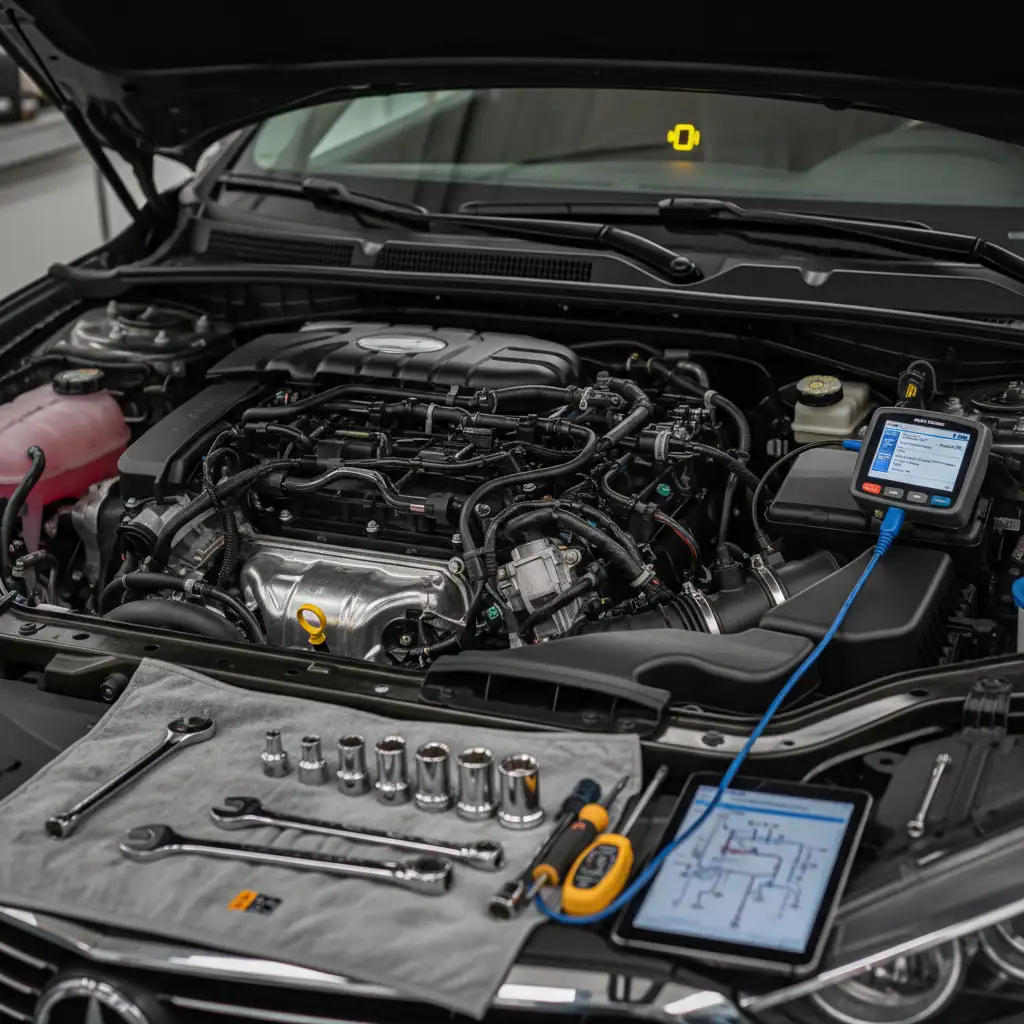
Engine misfires typically stem from one of three primary areas essential for combustion: spark, fuel, or compression. A problem in any of these can disrupt the ignition process within a cylinder. Understanding these common culprits is the first step towards an accurate diagnosis and effective repair by your Auckland mobile mechanic.
Ignition System Components
The ignition system is responsible for creating the spark that ignites the air-fuel mixture. Problems here are among the most frequent causes of misfires.
- Faulty Spark Plugs: Spark plugs generate the electric arc that ignites the air-fuel mixture. Over time, electrodes can wear down, become fouled with carbon deposits, or crack, leading to a weak or absent spark. This is a very common cause of misfires, particularly in older vehicles or those with high mileage.
- Worn Spark Plug Wires: In vehicles that use them, damaged or deteriorated spark plug wires can prevent the electrical current from reaching the spark plug efficiently. Cracks, fraying, or internal breaks can lead to electrical resistance and misfires.
- Defective Ignition Coils: Modern engines often use individual ignition coils for each spark plug (coil-on-plug system) or a coil pack for multiple cylinders. If an ignition coil fails, it cannot generate the high voltage needed for a strong spark, resulting in a misfire in its associated cylinder. Heat and vibration are common contributors to coil failure. For more detailed information on ignition systems, you can refer to authoritative sources like Wikipedia’s page on Ignition Systems.
Fuel Delivery System Faults
An engine needs a precise amount of fuel to combust correctly. Any disruption in fuel delivery can lead to a lean mixture (too much air, not enough fuel) or no fuel at all, causing a misfire.
- Clogged Fuel Injectors: Fuel injectors spray a fine mist of fuel into the combustion chamber. If an injector becomes clogged with varnish or carbon deposits, it can restrict fuel flow or alter the spray pattern, leading to insufficient fuel for proper combustion.
- Low Fuel Pressure: A weak or failing fuel pump, a clogged fuel filter, or a faulty fuel pressure regulator can all lead to inadequate fuel pressure reaching the injectors. Without sufficient pressure, the injectors cannot deliver the required amount of fuel, causing a misfire.
- Contaminated Fuel: Water or debris in the fuel tank can contaminate the fuel, leading to poor combustion and misfires. This is less common but can occur if fuel is sourced from unreliable stations.
Air Intake and Compression Problems
While less common than ignition or fuel issues, problems with air intake or engine compression can also trigger misfires.
- Vacuum Leaks: Unmetered air entering the engine through a cracked vacuum hose, a leaky intake manifold gasket, or a faulty PCV valve can create a lean air-fuel mixture, causing the engine to misfire, especially at idle.
- Low Compression: This is a more serious mechanical issue. If a cylinder loses compression due to worn piston rings, damaged valves, a blown head gasket, or a cracked cylinder head, it cannot generate the pressure needed for efficient combustion, leading to a persistent misfire in that cylinder.
- Faulty Sensors: Sensors like the Mass Air Flow (MAF) sensor, Oxygen (O2) sensors, or Crankshaft/Camshaft Position sensors provide crucial data to the PCM for managing air-fuel mixture and ignition timing. A faulty sensor can send incorrect data, causing the PCM to mismanage these parameters and induce misfires.
Pinpointing the exact cause requires a systematic diagnostic approach, which is where the expertise of a professional mobile mechanic in Auckland becomes invaluable.
Mobile Diagnostic Tools and Techniques for Misfires
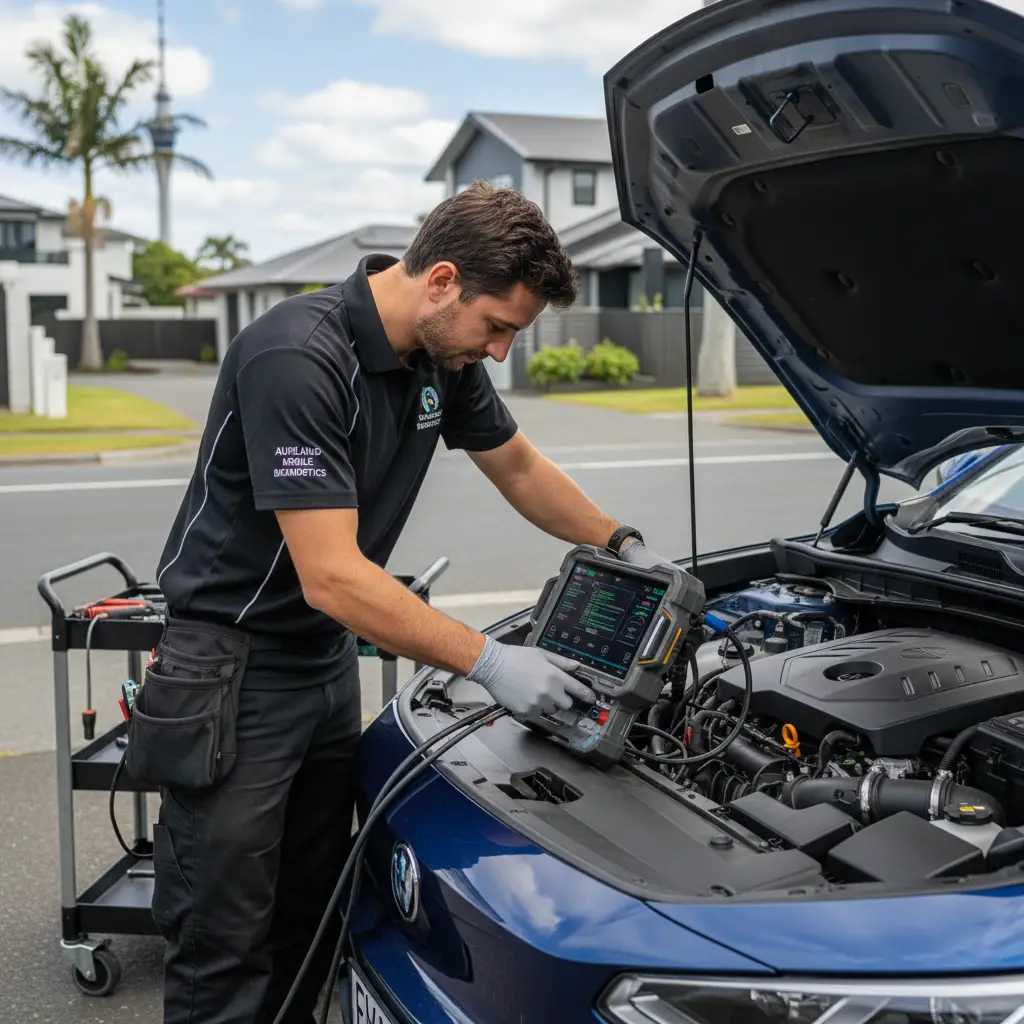
In today’s fast-paced world, convenience is key, especially when dealing with car troubles. Mobile mechanics in Auckland are equipped with advanced diagnostic tools that allow them to accurately identify the source of an engine misfire without the need for towing your vehicle to a workshop. This on-site diagnostic capability is a significant advantage for busy individuals or those stranded with a problematic vehicle.
Leveraging OBD-II Scanners
The primary tool for diagnosing engine misfires is the OBD-II scanner. Since 1996, all vehicles sold in New Zealand and most parts of the world have been equipped with an OBD-II port, which provides access to the vehicle’s computer system. When a misfire occurs, the Powertrain Control Module (PCM) stores specific diagnostic trouble codes (DTCs).
- Retrieving DTCs: A professional-grade OBD-II scanner can quickly read these codes, often providing a starting point for diagnosis (e.g., P0301 indicates a misfire in cylinder 1).
- Live Data Streaming: Beyond simple code reading, advanced scanners can access live data streams from various engine sensors. This allows the mechanic to monitor parameters like fuel pressure, oxygen sensor readings, engine RPM, ignition timing, and individual cylinder misfire counts in real-time. By observing these values, a skilled technician can identify anomalies that point directly to the problematic component, such as a struggling fuel injector or an intermittent spark plug.
- Freeze Frame Data: When a DTC is set, the PCM records a ‘snapshot’ of engine conditions at that exact moment. This freeze frame data can be invaluable for diagnosing intermittent misfires, providing context about engine load, speed, and temperature when the fault occurred.
Advanced On-Site Diagnostics
While OBD-II scanners are fundamental, a comprehensive misfire diagnosis often requires additional tools and techniques that Auckland mobile mechanics bring directly to your location:
- Spark Tester/Ignition System Tester: To confirm if a specific cylinder is indeed getting spark, a mechanic can use a spark tester to visually check for a strong, consistent spark from the ignition coil or spark plug wire. This helps rule out or confirm ignition system failures.
- Fuel Pressure Gauge: If fuel delivery issues are suspected, a fuel pressure gauge can be connected to the fuel rail to measure the actual fuel pressure. This directly verifies if the fuel pump, filter, or regulator is functioning correctly.
- Compression Tester: For more complex issues, especially if the misfire is persistent and not easily traced to spark or fuel, a compression tester can measure the pressure within each cylinder. Low compression in a cylinder points towards mechanical issues like worn piston rings, faulty valves, or a head gasket leak, requiring more involved repairs.
- Vacuum Gauge: A vacuum gauge can be connected to the engine’s intake manifold to detect vacuum leaks. An erratic or low vacuum reading can quickly indicate issues like a cracked intake manifold gasket or a leaking vacuum hose, which can cause misfires due to lean air-fuel mixtures.
- Thermal Imagers/Infrared Thermometers: These tools can sometimes be used to identify cold spots on exhaust manifold runners corresponding to misfiring cylinders, indicating a lack of combustion in that cylinder.
The ability of an Auckland mobile mechanic to perform these diverse diagnostic tests on-site means a quicker and more convenient path to accurately identifying the root cause of your engine misfire, minimizing your vehicle’s downtime and inconvenience.
Efficient Misfire Repair Services in Auckland
Once the root cause of your engine misfire has been accurately diagnosed by an Auckland mobile mechanic, the next step is efficient and effective repair. The convenience of having these repairs performed at your home, workplace, or roadside location cannot be overstated, especially for issues that can render your vehicle immobile or unsafe to drive. Mobile mechanics are equipped to handle a wide range of common misfire repairs on the spot.
On-Site Repair Capabilities
Many of the most frequent causes of engine misfires can be resolved directly at your location, saving you the hassle and cost of towing. Common on-site misfire repairs include:
- Spark Plug Replacement: This is often one of the quickest and most effective fixes for a misfire caused by worn or fouled spark plugs. A mobile mechanic can easily access and replace these components.
- Ignition Coil Replacement: If an individual ignition coil is found to be defective, it can usually be replaced on-site. This is a straightforward procedure for experienced technicians, restoring spark to the affected cylinder.
- Spark Plug Wire Replacement: For vehicles still using them, damaged spark plug wires are easily identified and replaced at your location, ensuring proper voltage delivery to the plugs.
- Fuel Injector Cleaning/Replacement: If a clogged fuel injector is the culprit, the mechanic may be able to perform an on-site fuel system cleaning or, if necessary, replace the faulty injector. This requires specific tools but is often manageable without a workshop.
- Fuel Filter Replacement: A clogged fuel filter can restrict fuel flow and cause misfires. This is a common maintenance item that mobile mechanics can easily replace on-site.
- Vacuum Leak Repair: Minor vacuum leaks from hoses or easily accessible gaskets can often be pinpointed and repaired or replaced at your location, restoring the correct air-fuel mixture. For comprehensive insights into engine care and maintenance, authoritative automotive resources such as SAE International can provide valuable technical information.
The key benefit of mobile misfire repair in Auckland is the direct, personalized service. The mechanic arrives with the necessary tools and often common replacement parts, aiming to get you back on the road as quickly as possible.
Preventative Maintenance and Advice
Beyond immediate repairs, a good mobile mechanic will also provide valuable advice on preventative maintenance to avoid future misfires. This might include:
- Regular Spark Plug Changes: Adhering to manufacturer-recommended intervals for spark plug replacement is crucial.
- Fuel System Maintenance: Using quality fuel and occasionally using fuel system cleaners can prevent injector clogs.
- Addressing Warning Signs: Noticing subtle changes in engine performance or the check engine light flashing should prompt immediate investigation.
While mobile mechanics can address a vast majority of misfire issues, there are instances where a more extensive repair might necessitate a workshop environment. For example, if the diagnosis reveals severe mechanical issues like low compression due to internal engine damage (e.g., piston rings, valves, head gasket), these repairs are typically beyond the scope of on-site service and would require the specialized equipment and facilities of a garage. However, the mobile mechanic will accurately diagnose such issues and advise you on the best course of action, helping you arrange for further specialized repair if necessary.

In conclusion, confronting an engine misfire in Auckland requires swift and informed action. By understanding the symptoms, common causes, and the efficient diagnostic and repair solutions offered by local mobile mechanics, you can ensure your vehicle receives the expert attention it needs. Don’t let a misfiring engine disrupt your daily routine; professional help is readily available to get you back on the road safely and efficiently.
People Also Ask About Car Engine Misfires
Is it safe to drive my car with an engine misfire in Auckland?
It is generally not safe to drive your car with an engine misfire for an extended period, especially if the check engine light is flashing. Driving with a misfire can lead to further damage to critical components like the catalytic converter, reduce power significantly, and increase emissions. It’s best to have it inspected by a mobile mechanic in Auckland as soon as possible.
How much does it cost to fix an engine misfire in Auckland?
The cost to fix an engine misfire in Auckland can vary significantly, typically ranging from NZD $150 to $800 or more, depending on the underlying cause. Simple fixes like replacing a spark plug or ignition coil might be at the lower end, while issues like clogged fuel injectors, vacuum leaks, or mechanical engine problems can be more expensive. A mobile mechanic can provide an accurate quote after diagnosis.
Can a mobile mechanic in Auckland diagnose any type of engine misfire?
Yes, experienced mobile mechanics in Auckland are equipped with advanced diagnostic tools, including professional-grade OBD-II scanners, spark testers, fuel pressure gauges, and compression testers. This allows them to accurately diagnose most common and many complex causes of engine misfires directly at your location, from ignition system failures to fuel delivery issues.
How long does it take to fix an engine misfire?
The time required to fix an engine misfire depends heavily on the cause. Simple repairs like replacing spark plugs or an ignition coil can often be completed within an hour or two by a mobile mechanic. More complex issues involving fuel injectors, vacuum leaks, or extensive diagnostics might take several hours. A professional will give you an estimated timeframe after diagnosis.
What are the signs of a serious engine misfire?
Signs of a serious engine misfire include a continuously flashing check engine light, significant loss of power, strong vibrations felt throughout the vehicle, severe rough idling, and noticeable strong fuel smells from the exhaust. These symptoms indicate a problem that needs immediate attention to prevent further damage, especially to the catalytic converter.
Can regular maintenance prevent engine misfires?
Yes, regular and timely vehicle maintenance is crucial for preventing engine misfires. This includes replacing spark plugs and fuel filters according to the manufacturer’s schedule, ensuring proper fuel system cleaning, and addressing any dashboard warning lights promptly. Proactive maintenance helps to keep all engine components in optimal working condition, reducing the likelihood of misfires.