
Car AC repair in Auckland involves expert mobile technicians diagnosing and fixing your vehicle’s air conditioning system directly at your home or workplace. This convenient service addresses issues from refrigerant leaks and faulty compressors to electrical problems, ensuring your car’s AC delivers optimal cooling performance efficiently and without the hassle of a workshop visit.
Common Reasons Your AC Isn’t Cold
Experiencing a car AC that blows warm air instead of cool can be incredibly frustrating, especially on a hot Auckland day. Several factors can contribute to a malfunctioning air conditioning system. Understanding these common culprits is the first step in diagnosing and effectively resolving the issue.
Low Refrigerant Levels (Leaking System)
The most frequent reason for a car’s AC not cooling is low refrigerant (also known as Freon) levels. Refrigerant is the essential chemical that absorbs heat from your car’s cabin and releases it outside. If the levels are low, it’s almost always due to a leak somewhere in the AC system. These leaks can be microscopic and occur in hoses, seals, the condenser, evaporator, or O-rings over time. A professional mobile AC repair service in Auckland can detect these leaks using specialised equipment and replenish the refrigerant.
Faulty Compressor
The compressor is the heart of your car’s AC system. It’s responsible for pressurising the refrigerant and circulating it throughout the system. If the compressor fails to engage or operate correctly, the AC system cannot cool the air. Signs of a failing compressor include strange noises when the AC is on, the clutch not engaging, or a complete lack of cold air. Compressor issues can stem from electrical problems, internal wear, or a lack of lubrication.
Clogged Condenser
The condenser, typically located at the front of your vehicle near the radiator, is responsible for dissipating heat from the hot, high-pressure refrigerant. If the condenser becomes clogged with dirt, debris, leaves, or even damaged from road impacts, airflow can be restricted. This prevents the refrigerant from cooling down effectively, leading to warm air from the vents. A mobile mechanic can inspect and clean or replace a damaged condenser.
Electrical Issues (Fuses, Relays, Wiring)
The car’s AC system relies heavily on electrical components to function. Blown fuses, faulty relays, or damaged wiring can interrupt the power supply to critical components like the compressor clutch, condenser fan, or blower motor. These electrical glitches can prevent the AC system from engaging or operating at full capacity. Diagnosing electrical issues requires specific automotive electrical knowledge and tools, which a qualified mobile AC technician in Auckland possesses.
Blower Motor Problems
Even if your AC system is producing cold air, a faulty blower motor will prevent that air from reaching your car’s cabin. If you hear the AC compressor engage but feel no air (or very weak airflow) from the vents, the blower motor or its resistor might be the problem. This can often be a relatively straightforward fix for a mobile mechanic.
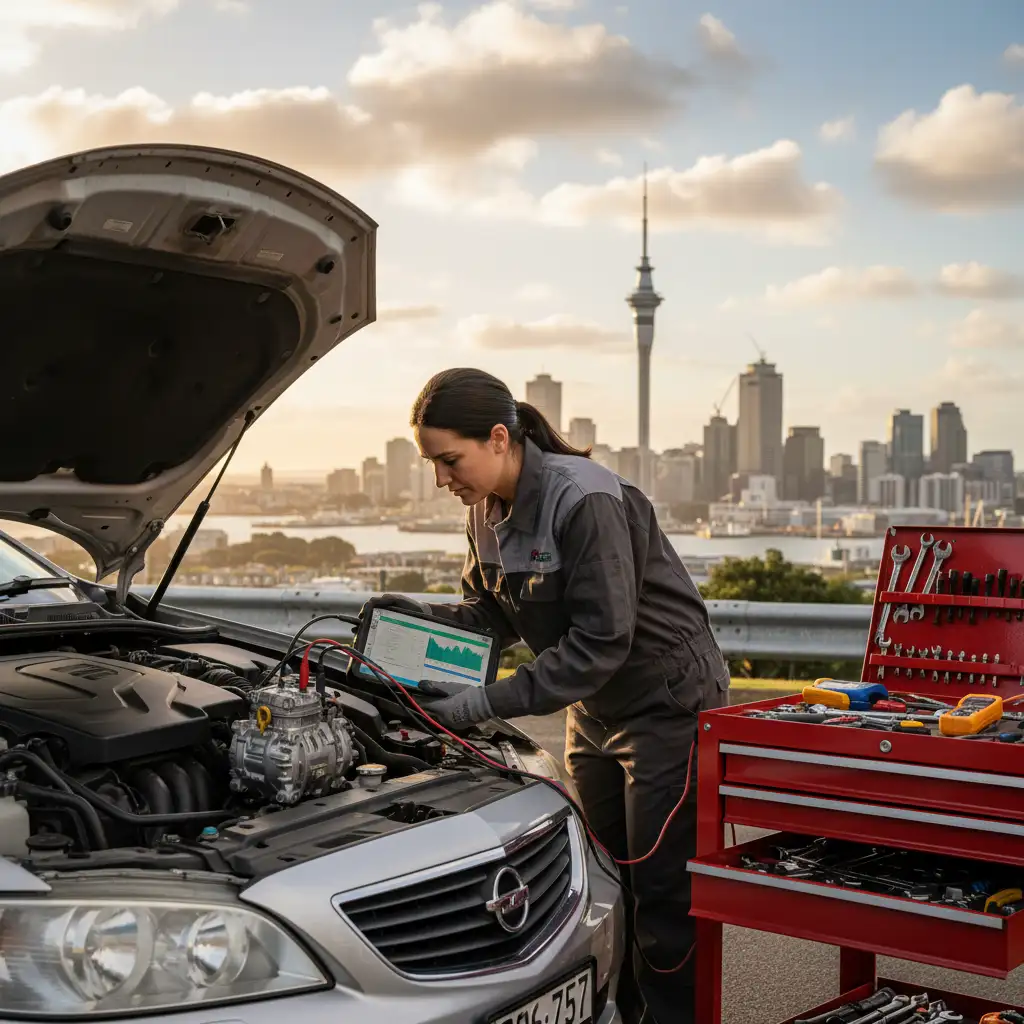
Blend Door Actuator Failure
Modern car AC systems use blend doors to control the mix of hot and cold air entering the cabin. If the blend door actuator malfunctions, it can get stuck in a position that allows only warm air through, regardless of your AC settings. This is a common electronic failure that a mobile technician can diagnose and often repair on-site.
Mobile AC System Diagnostics & Re-gas
When your car’s air conditioning isn’t performing as it should, the convenience of a mobile AC repair service in Auckland cannot be overstated. Our expert technicians come directly to your location, equipped with all the necessary tools and expertise to perform comprehensive diagnostics and efficient re-gassing.
The Convenience of Mobile Service
Imagine not having to drive your uncomfortably warm car to a workshop, arrange for alternative transport, and then wait for hours. Mobile AC repair brings the workshop to you. Whether you’re at home, at work, or even stranded somewhere within Auckland, our team can provide on-the-spot service, saving you time and hassle. This is particularly valuable for AC issues, which can render a vehicle unpleasant to drive.
Initial Inspection and Visual Check
Every mobile AC service begins with a thorough initial inspection. Our technicians visually check all accessible components of the AC system, including hoses, belts, the compressor, and condenser, looking for obvious signs of damage, leaks, or wear. They will also check the cabin air filter, as a severely clogged filter can restrict airflow and impact cooling efficiency.
Pressure Testing & Refrigerant Levels Check
Using specialised gauges, our mobile mechanics will accurately measure the pressure within your car’s AC system. Abnormally low or high pressures are key indicators of underlying problems, most commonly low refrigerant due to a leak. We will then check the exact refrigerant levels to determine if a top-up or full re-gas is required. This diagnostic step is crucial for understanding the system’s overall health.
Professional Re-gassing Process
If low refrigerant is identified as the problem, our team performs a professional re-gassing service. This involves safely recovering any remaining refrigerant, evacuating the system to remove moisture and contaminants, and then recharging it with the correct type and amount of refrigerant (typically R134a or R1234yf, depending on your vehicle’s specifications). This process not only restores cooling performance but also helps maintain the longevity of your AC components. It’s important to note that merely topping up a leaky system without addressing the leak is only a temporary fix; a proper repair involves finding and fixing the leak first.

Leak Detection & Component Replacement
Addressing leaks and replacing faulty components are critical steps in restoring your car’s air conditioning to optimal condition. Our mobile AC repair experts in Auckland are equipped with advanced tools and genuine parts to perform these essential services effectively.
UV Dye Testing
One of the most effective methods for pinpointing elusive AC leaks is UV dye testing. A small amount of fluorescent dye is injected into the AC system along with the refrigerant. The system is then run for a period to allow the dye to circulate and escape through any leak points. Using a special UV light, our technicians can then easily spot the glowing dye residue at the exact location of the leak, even minute ones that are otherwise invisible.
Electronic Leak Detectors
For an immediate and highly sensitive diagnosis, electronic leak detectors are invaluable. These handheld devices are designed to sniff out refrigerant gases, alerting the technician with an audible or visual signal when a leak is detected. This method is particularly useful for quickly scanning larger areas and confirming suspected leak sites found through visual inspection or UV dye.
Common Leak Points
AC systems have numerous potential leak points. Our experienced technicians meticulously check:
- Hoses and Seals: These components can degrade and crack over time, leading to refrigerant escape.
- O-Rings: Small rubber rings at connection points that can dry out and lose their seal.
- Condenser: Located at the front of the car, it’s vulnerable to road debris impact, causing punctures.
- Evaporator: Tucked deep within the dashboard, leaks here are harder to access but can cause refrigerant to drain into the cabin or appear as excessive condensation.
- Compressor Shaft Seal: A common wear point on the compressor.
Compressor Replacement
If the compressor is determined to be faulty, a replacement is often the most reliable solution. This is a complex procedure that involves safely evacuating the old refrigerant, disconnecting the old compressor, installing a new unit, replacing the receiver-drier/accumulator (a mandatory step with compressor replacement), evacuating and recharging the system, and performing leak checks. Our mobile team carries a range of common compressors or can quickly source specific parts for your vehicle.
Condenser/Evaporator Replacement
Damaged condensers (often from impact) or leaking evaporators (inside the dashboard) require replacement. While condenser replacement is relatively straightforward, replacing an evaporator is a more involved process as it often requires partial or full dashboard removal. Our skilled technicians are adept at these intricate repairs, ensuring all components are correctly installed and the system is sealed properly.
Receiver-Drier/Accumulator Replacement
The receiver-drier (for expansion valve systems) or accumulator (for orifice tube systems) acts as a filter for the AC system, removing moisture and debris. It also stores excess liquid refrigerant. It is standard practice and highly recommended to replace this component whenever the AC system is opened for major repairs, especially after a compressor replacement or significant leak. Failure to do so can lead to premature failure of other new components due to contamination or moisture.
Expansion Valve/Orifice Tube Replacement
These components regulate the flow of refrigerant into the evaporator, controlling the cooling process. If clogged or malfunctioning, they can cause poor cooling or even system freeze-ups. Diagnosing and replacing these parts correctly ensures the system maintains optimal pressure and temperature regulation. For more detailed information on how automotive AC systems work, you can refer to authoritative sources like Wikipedia’s Automotive Air Conditioning page.
Why Choose Mobile AC Repair in Auckland?
In the bustling city of Auckland, convenience and efficiency are paramount. When your car’s AC falters, a mobile repair service offers distinct advantages over traditional workshops, making it the preferred choice for many vehicle owners.
Unmatched Convenience: We Come to You
The primary benefit of mobile AC repair is its unparalleled convenience. You no longer need to disrupt your schedule, take time off work, or arrange for childcare to get your car to a garage. Our technicians travel to your home, office, or any other convenient location across Auckland, saving you valuable time and effort. This flexibility is particularly useful for busy professionals, parents, or those with limited mobility.
Time-Saving and Reduced Downtime
Traditional repair shops often involve waiting times, both for booking appointments and for the actual repair to be completed. With a mobile service, the technician is dedicated to your vehicle from the moment they arrive. This often results in faster diagnostic and repair times, getting you back on the road with a cool car much quicker. There’s no need for towing if your AC issue makes driving uncomfortable or potentially damaging.
Specialised Expertise and Tools
Our mobile mechanics are not just general repairers; they are specialists in automotive air conditioning systems. They carry a comprehensive set of diagnostic tools, refrigerant recovery and recharging equipment, leak detectors, and a range of common replacement parts specifically for AC systems. This specialisation ensures that your car’s AC issue is diagnosed accurately and repaired efficiently, leveraging deep knowledge of the intricacies of various vehicle AC designs.
Cost-Effectiveness
While some might assume mobile services are more expensive, they can often be more cost-effective in the long run. By eliminating the need for towing services, reducing your personal travel time, and often having lower overheads than fixed workshops, mobile AC repair can offer competitive pricing without compromising on quality. You pay for the service, not for the mechanic’s waiting room.
Transparent Communication
Being present during the inspection and repair process allows for direct and transparent communication with the technician. You can see firsthand what the problem is, ask questions, and receive clear explanations of the repair steps and associated costs. This fosters trust and ensures you are fully informed about your vehicle’s condition.
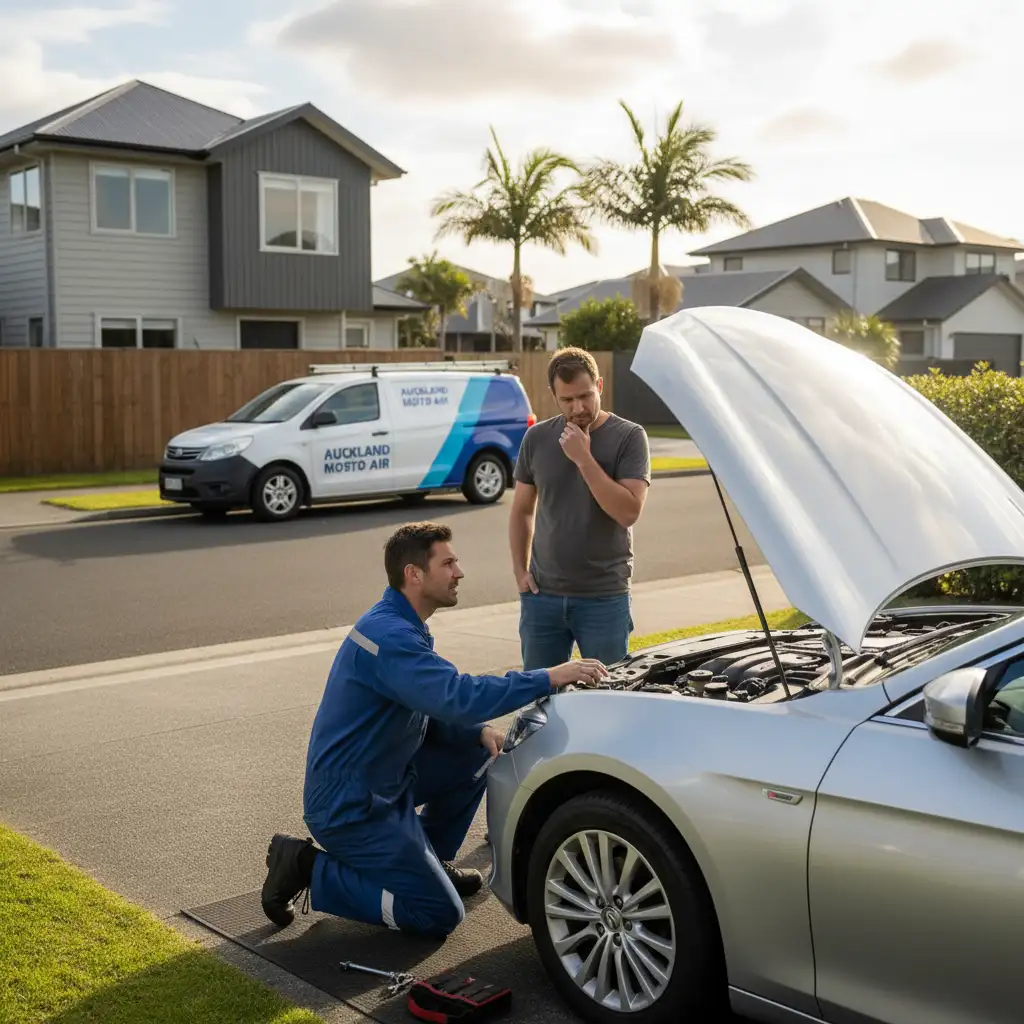
Stay Cool with Our Expert AC Service
Ensuring your car’s air conditioning system is in top condition is not just about comfort; it’s also about maintaining the value and functionality of your vehicle. Our mobile car AC repair service in Auckland is dedicated to providing high-quality, convenient, and reliable solutions to keep you cool on every journey.
Preventative Maintenance Tips
While our team is always ready to assist with repairs, a bit of preventative maintenance can go a long way in avoiding major AC issues:
- Run Your AC Regularly: Even in winter, run your AC for 10-15 minutes once a week. This keeps the compressor seals lubricated and prevents refrigerant leaks.
- Clean the Condenser: Periodically check the front of your car for debris (leaves, bugs, dirt) that might be blocking the condenser. Gently rinse it with water if needed.
- Replace Cabin Air Filter: A clean cabin air filter improves air quality and airflow, reducing strain on the blower motor and ensuring efficient cooling.
- Listen for Unusual Noises: Any strange sounds from your AC system (clunking, grinding, hissing) should be investigated promptly.
- Don’t Ignore Early Warning Signs: If your AC isn’t as cold as it used to be, or if it takes longer to cool down, address the issue before it escalates.
When to Call the Experts
If you notice any of the following symptoms, it’s time to contact our mobile car AC repair specialists in Auckland:
- Your AC is blowing warm or hot air.
- The airflow from the vents is weak or non-existent.
- You hear unusual noises (rattling, hissing, clunking) when the AC is on.
- There’s a strange smell coming from the AC vents.
- Your vehicle’s engine is overheating when the AC is running.
- There are visible puddles or leaks under your car that aren’t water from normal condensation.
Our team is committed to delivering exceptional service and lasting repairs. We use industry-standard practices and high-quality parts to ensure your car’s AC system functions flawlessly. With our expertise and mobile convenience, you can trust us to restore your driving comfort quickly and efficiently. Don’t let a faulty AC ruin your drive – contact us today for reliable mobile car AC repair services across Auckland.
For further reading on automotive maintenance best practices, reliable information can be found on reputable automotive industry blogs and technical guides. Organisations like AAA’s automotive guides often provide valuable insights into car care.
People Also Ask
Why is my car AC blowing hot air, but it’s not low on refrigerant?
Even if your refrigerant levels are adequate, your car’s AC can blow hot air due to a faulty compressor clutch that isn’t engaging, a clogged expansion valve or orifice tube, a malfunctioning blend door actuator stuck on heat, electrical issues preventing components from activating, or a condenser fan that isn’t spinning to dissipate heat. A professional diagnostic is needed to pinpoint the exact cause.
How often should I get my car’s AC re-gassed in Auckland?
There’s no fixed schedule for AC re-gassing; it should only be done if your system is experiencing a loss of refrigerant, which indicates a leak. If your AC is cooling efficiently, there’s no need to re-gas. However, it’s recommended to have your AC system checked every 2-3 years for performance and potential leaks to catch issues early.
Can a clogged cabin air filter affect my car’s AC cooling?
Yes, a severely clogged cabin air filter can significantly restrict airflow into your car’s cabin. While it doesn’t directly affect the AC system’s ability to produce cold air, it prevents that cold air from reaching you effectively, making it feel like the AC isn’t cooling properly. Replacing a dirty cabin filter is an easy and often inexpensive fix.
Is mobile car AC repair more expensive than going to a workshop?
Mobile car AC repair can often be more cost-effective than traditional workshops. While hourly rates might sometimes seem comparable, you save money on towing fees (if your AC is not drivable), fuel, and the invaluable time you would spend traveling to and from a garage. Plus, many mobile services have lower overheads, which can translate to competitive pricing.
What are the signs of a failing AC compressor in a car?
Signs of a failing AC compressor include a sudden lack of cold air, loud noises (grinding, clunking, squealing) coming from under the hood when the AC is on, the compressor clutch failing to engage, or a burning smell. Sometimes, a visual inspection might reveal a worn or seizing clutch.
How long does a car AC re-gas take with a mobile mechanic?
A standard car AC re-gas service, including pressure checks and evacuation, typically takes about 45 minutes to an hour with a mobile mechanic, assuming no major leaks or additional repairs are needed. If a leak detection and repair are required, the total time will be longer depending on the complexity of the fix.