
Hybrid battery maintenance in Auckland refers to the specialized care, diagnostic testing, and reconditioning of High Voltage (HV) battery packs to extend their operational lifespan. Given Auckland’s unique hilly terrain and humid climate, routine maintenance—including cooling fan cleaning and cell balancing—is essential to prevent premature failure and avoid costly full-pack replacements for vehicles like the Toyota Prius, Aqua, and Camry.
Introduction
In the bustling automotive landscape of New Zealand, hybrid vehicles have become the gold standard for fuel efficiency. From the ubiquitous Toyota Aqua zipping through Ponsonby to the trusted Prius navigating the Southern Motorway, hybrids are integral to Auckland’s transport network. However, the heart of these vehicles—the High Voltage (HV) battery—is a complex component that requires specific attention, far beyond a standard oil change.
Many vehicle owners mistakenly believe that a hybrid battery is a “fit and forget” component that will last the lifetime of the car. While manufacturers design them for longevity, factors such as heat, age, and usage patterns significantly impact their health. In Auckland, where stop-start traffic meets steep gradients, the strain on your HV battery is higher than on open rural roads. Ignoring the health of your battery can lead to the dreaded “Red Triangle of Death,” reduced fuel economy, and eventually, a breakdown that leaves you stranded.
This guide serves as the definitive resource for hybrid battery maintenance in Auckland. Whether you are looking to extend the life of your current pack through preventative care, considering reconditioning services, or facing the need for a full replacement, we provide the commercial insights and technical expertise required to make an informed decision. As mobile mechanics specializing in hybrid technology, we understand the nuances of these systems and bring the solution directly to your driveway.
Extending Hybrid Battery Life in Auckland
Prevention is invariably cheaper than the cure, especially when the “cure” involves a multi-thousand dollar battery pack. Extending the life of your hybrid battery requires understanding what kills them: heat and voltage imbalance.
The Critical Role of Cooling Fans
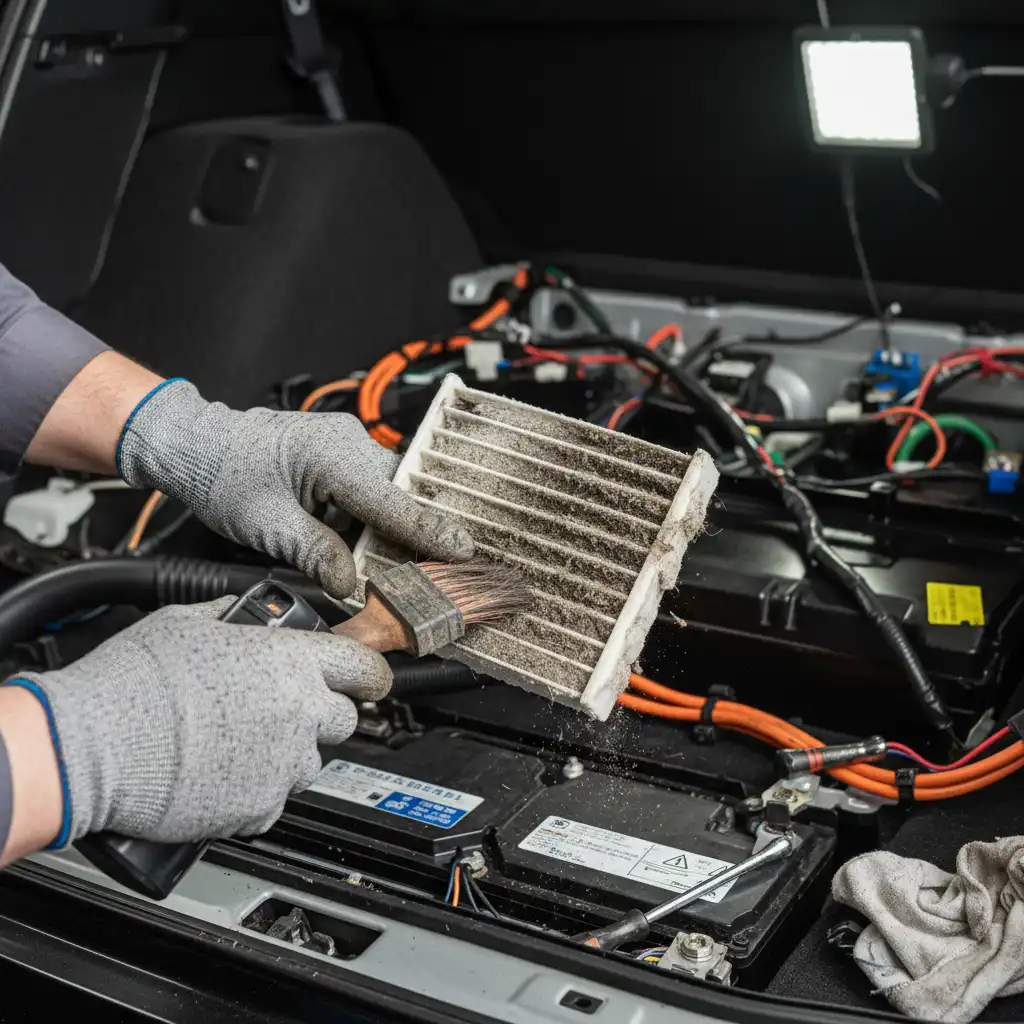
The number one enemy of any battery is heat. Hybrid battery packs, usually located under the rear seats or in the boot, rely on air-cooling systems to maintain an optimal operating temperature. Over time, the intake vents for these fans accumulate dust, pet hair, and lint. In Auckland’s humid environment, this debris can become sticky and block airflow effectively.
When the cooling fan is clogged, the battery runs hot. The vehicle’s computer (ECU) detects this heat and throttles the battery’s performance to protect it, forcing the internal combustion engine (ICE) to work harder. This results in poor fuel economy and accelerated degradation of the battery cells. We recommend a physical inspection and cleaning of the hybrid battery cooling fan every 12 months or 15,000 kilometers.
Managing State of Charge (SOC)
Driving habits influence battery longevity. To maximize life, avoid leaving your hybrid parked for extended periods (weeks or months) without driving it. Nickel-Metal Hydride (NiMH) batteries, common in older Toyotas, self-discharge over time. If the voltage drops too low, the car may refuse to start, requiring a specialized “jump” that standard chargers cannot provide.
Critical Signs of a Failing Hybrid Battery
Hybrid batteries rarely fail without warning. The vehicle usually provides subtle hints months before a catastrophic failure occurs. Recognizing these signs early allows for reconditioning—a much cheaper alternative to replacement.
1. The Internal Combustion Engine Runs Constantly
A healthy hybrid switches seamlessly between the electric motor and the petrol engine. If you notice the petrol engine running while you are stopped at a traffic light, or if it kicks in immediately upon light acceleration, your battery may be losing its capacity to hold a charge. The car is compensating for the weak battery by relying on the engine.
2. Rapid Battery Gauge Fluctuations
Watch your energy monitor. In a healthy system, the battery level usually stays within the middle range. If you see the battery indicator drop from “full” to one bar in a matter of minutes (or vice versa), this is a sign of “memory effect” or lost capacity. The battery isn’t actually full or empty; the voltage is just fluctuating wildly due to high internal resistance.
3. Decreased Fuel Economy
If your Prius used to get 20km/L and is now struggling to hit 14km/L, and your tire pressure and oil are fine, the hybrid battery is the likely culprit. The system is no longer assisting the petrol engine efficiently.
4. The Dashboard Warning Lights
The most obvious sign is the dashboard warning. On Toyotas, this is often the “Red Triangle of Death,” accompanied by a “Check Hybrid System” message. This indicates a hard fault code (usually P0A80) has been triggered.
Mobile Battery Diagnostic Services: We Come to You
When a hybrid vehicle enters “limp mode” due to battery failure, driving it to a workshop can be stressful and dangerous. It can also cause further damage to the transaxle inverter if the battery voltage is critically low. This is where Auckland mobile mechanic services become invaluable.
Professional mobile diagnostics involve more than just reading a code. A simple OBDII scanner might tell you “Replace Hybrid Battery Pack,” but it won’t tell you why or if the whole pack is actually dead. Our mobile service utilizes advanced diagnostic software (such as Toyota Techstream) to perform a “Health Check” on the spot.
What a Professional Diagnostic Includes:
- Code Retrieval: Identifying specific fault codes (e.g., P0A80 for Pack Replacement, P30xx for specific block faults).
- Live Data Analysis: Monitoring the voltage of each battery block in real-time while the car is under load (reverse braking or hard acceleration).
- Delta State of Charge: Measuring the difference between the strongest and weakest cell blocks. A difference of more than 0.3V often indicates a failure.
- Internal Resistance Check: High internal resistance creates heat and prevents the battery from accepting a charge efficiently.
For authoritative information on how hybrid systems function, you can refer to the US Department of Energy’s guide on Hybrid Batteries, which details the underlying chemistry and mechanics.
Hybrid Battery Reconditioning vs. Replacement
Once a fault is confirmed, Auckland owners are typically faced with three options: New OEM replacement, Aftermarket replacement, or Reconditioning. Understanding the difference is vital for your wallet.
Hybrid Battery Reconditioning
Reconditioning is a process of restoring the battery’s capacity rather than replacing it. A hybrid battery is made up of many individual modules (e.g., 28 modules in a Gen 2 Prius). Often, only two or three of these modules have failed, while the rest are healthy.
The Process:
- Disassembly: The pack is removed and opened.
- Load Testing: Each module is individually tested to measure capacity (Amp-hours).
- Discharge/Charge Cycling: Modules are deep cycled to break down crystal formations (voltage depression) inside the NiMH chemistry.
- Balancing: Bad modules are replaced with healthy ones that match the internal resistance and capacity of the existing pack. The entire pack is then balanced so all cells charge and discharge together.
Reconditioning is environmentally friendly and cost-effective, typically costing 30-50% of the price of a new battery. It is an excellent option for older cars where investing $3,000+ isn’t viable.
New and Aftermarket Replacement
If a battery is too far gone (e.g., widespread cell leakage or corrosion), replacement is necessary.
- OEM (Original Equipment Manufacturer): The most expensive but most reliable option. Guaranteed to last another 10-15 years.
- New Aftermarket: Cylindrical cells (often made in China) that fit into the original casing. These have improved in quality recently and offer a middle-ground price point.
The Cost of Hybrid Maintenance in New Zealand
Pricing for hybrid services in Auckland varies based on the vehicle model and the service provider. However, general market rates are as follows:
- Diagnostic Call-Out: $120 – $180 NZD. This usually includes the travel fee and the computerized scan.
- Cooling Fan Service: $150 – $250 NZD. A small price to pay to prevent overheating.
- Reconditioning: $800 – $1,500 NZD. Price depends on how many modules need replacing and the labour involved.
- Refurbished Replacement Pack: $1,200 – $1,800 NZD. A pre-built pack using tested used cells.
- New Aftermarket Pack: $2,200 – $2,800 NZD.
- Brand New OEM Pack: $3,000 – $4,500+ NZD (often dealership pricing).
It is crucial to verify the warranty offered. A reputable reconditioner should offer at least a 6 to 12-month warranty, while new packs should come with 2 to 3 years.
Why Choose a Specialized Mobile Mechanic?
General mechanics are fantastic for suspension, brakes, and oil changes. However, High Voltage systems are dangerous. A standard 12V car battery can spark, but a 200V+ hybrid battery can be lethal if mishandled. Specialized hybrid mechanics possess the high-voltage safety certifications (Level 3 or 4 EV/Hybrid qualifications) required to work safely.
Choosing a mobile specialist in Auckland offers distinct commercial advantages:
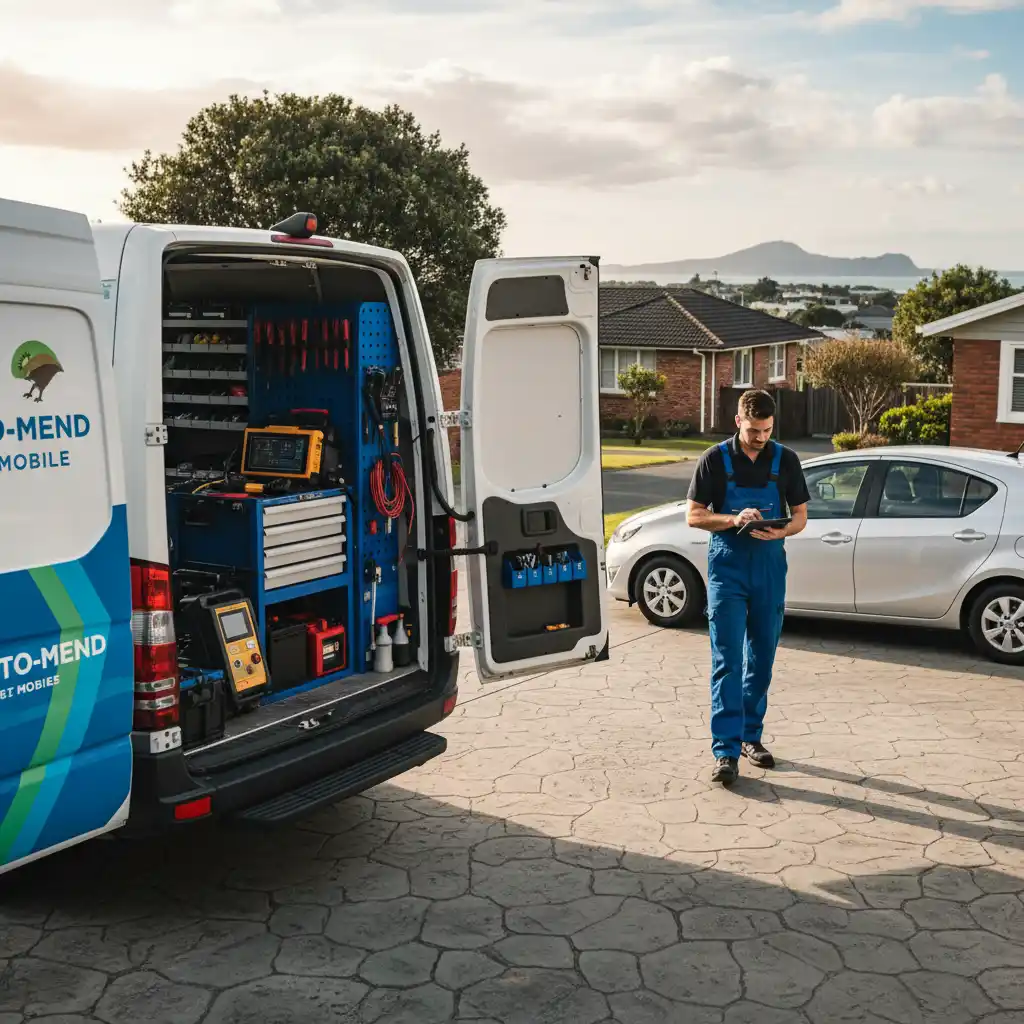
- Convenience: We service the car at your home or workplace, saving you hours of waiting in a workshop.
- Reduced Towing Costs: If your car won’t start, towing it to a garage can cost $150+. We eliminate that cost.
- Transparency: You can watch the diagnostic process and see the data on the screen yourself, ensuring you aren’t being sold a service you don’t need.
For more information on vehicle safety standards in New Zealand, the AA New Zealand provides excellent resources regarding vehicle maintenance requirements.
Frequently Asked Questions
Below are answers to the most common questions regarding hybrid battery maintenance in Auckland.
How long do hybrid batteries typically last in New Zealand?
In New Zealand conditions, original hybrid batteries typically last between 10 to 15 years or roughly 160,000 to 250,000 kilometers. However, this varies significantly based on terrain (hilly driving puts more strain on the battery) and maintenance of the cooling system.
Is hybrid battery reconditioning worth the cost?
Yes, reconditioning is often worth it for vehicles that are older or have lower resale value. It costs significantly less than a new battery (often 50% less) and can extend the vehicle’s life by several years. It is an excellent bridge solution for owners not ready to invest in a brand-new pack.
Can I still drive my car if the hybrid battery fails?
It is not recommended. While some models may enter a “limp mode” using only the petrol engine, doing so puts immense strain on the inverter and the engine itself. Continued driving with a dead hybrid battery can lead to total electrical system failure and much higher repair bills.
How much does a Toyota Prius battery replacement cost in Auckland?
The cost varies by model generation and battery type. A reconditioned pack typically costs between $800 and $1,500 NZD. A brand new aftermarket replacement ranges from $2,200 to $2,800 NZD, while an OEM replacement from a dealership can exceed $3,500 NZD.
What does the red triangle with an exclamation mark mean?
This is the Master Warning Light, often called the “Red Triangle of Death” in hybrid circles. When accompanied by a “Check Hybrid System” message, it usually indicates a critical fault in the High Voltage battery system, such as a failed module or isolation fault. Immediate diagnostic attention is required.
Do mobile mechanics carry hybrid batteries with them?
Most mobile hybrid specialists do not carry spare batteries on every run due to weight and variety. However, once a diagnostic is performed and the specific battery model is confirmed, they can return with the correct replacement unit to perform the installation on-site.