
Exhaust system repair Auckland refers to the professional diagnosis, maintenance, and remediation of vehicle emission control components to ensure compliance with New Zealand Warrant of Fitness (WOF) standards. This service typically involves fixing or replacing damaged mufflers, catalytic converters, manifolds, and piping to eliminate dangerous leaks, reduce noise pollution, and optimize engine fuel efficiency.
Understanding the Anatomy of Your Exhaust System
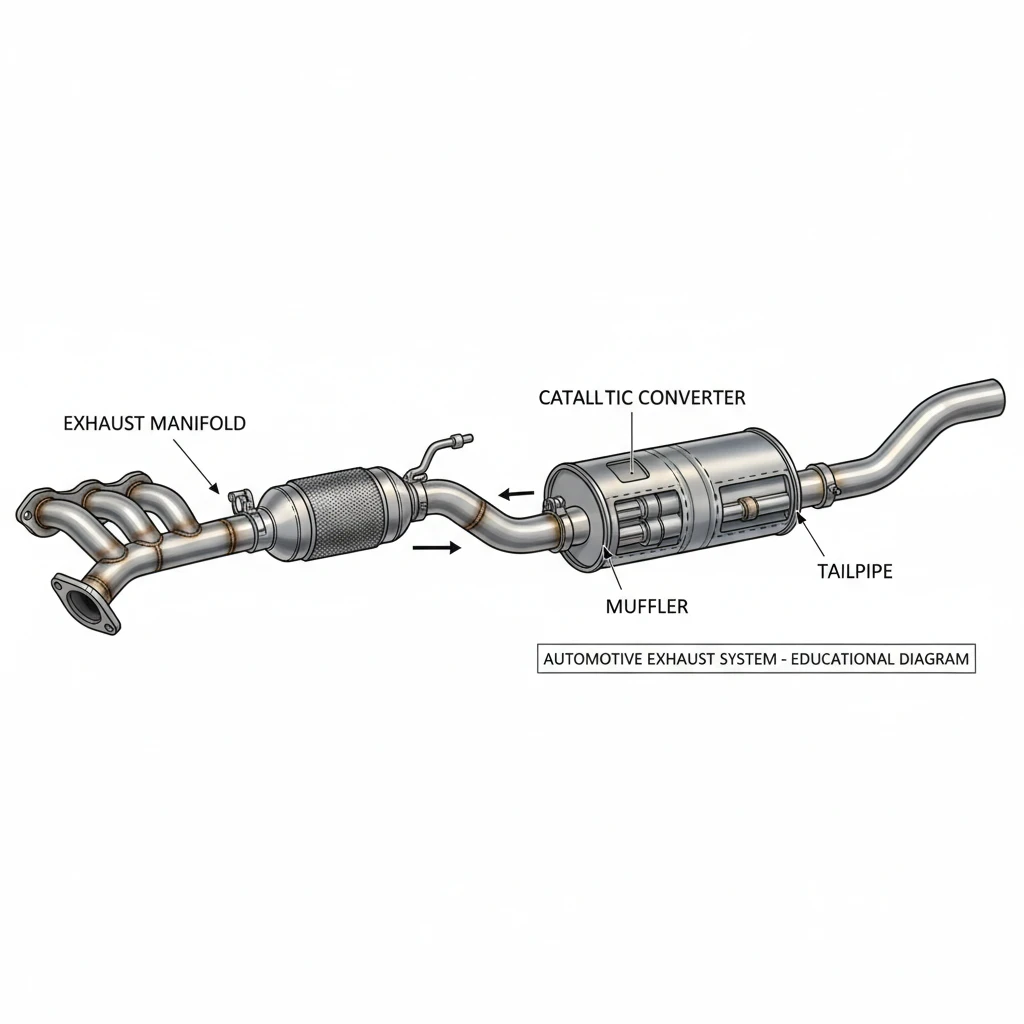
Many Auckland drivers view the exhaust system merely as the tailpipe at the back of the vehicle, but it is actually a complex series of chambers and pipes extending from the engine to the rear bumper. Its primary function is to route dangerous exhaust gases away from the cabin, reduce engine noise, and clean up emissions before they enter the atmosphere.
A healthy exhaust system is vital for both the performance of your vehicle and the environment. In the context of Auckland’s traffic and environmental regulations, maintaining this system is non-negotiable. The system generally comprises the exhaust manifold, oxygen sensors, catalytic converter, resonator, muffler, and tailpipe. Failure in any of these components can lead to reduced fuel economy, engine damage, or carbon monoxide entering the vehicle interior.
Critical Signs of a Failing Exhaust System
Identifying exhaust issues early can save you significant money on repairs and prevent your vehicle from failing its Warrant of Fitness (WOF). Because the exhaust system runs the length of the car, symptoms can manifest in various ways.
1. Excessive Engine Noise
The most obvious sign of an exhaust problem is a loud roaring or rumbling sound. If your muffler or exhaust pipes have holes or cracks, the sound dampening capabilities are compromised. A loud exhaust is not only a nuisance to your Auckland neighbors but is also an immediate WOF failure. A ticking noise upon acceleration often indicates a leak in the exhaust manifold.
2. Reduced Fuel Efficiency
If you notice you are visiting the petrol station more frequently, your exhaust system might be to blame. Oxygen sensors monitor the exhaust flow to help the engine computer determine the correct fuel-to-air mixture. If the exhaust is leaking or the sensors are faulty, the engine may burn more fuel than necessary, hitting your wallet hard.
3. Unpleasant Odours
A smell of rotten eggs is a classic symptom of a failing catalytic converter. This component is responsible for converting hydrogen sulfide into sulfur dioxide (which is odorless). When it clogs or fails, the sulfur smell becomes potent. More dangerously, if you smell exhaust fumes inside the cabin, you have a leak that could be poisoning the air with carbon monoxide. This requires immediate attention from a mobile mechanic.
4. Visual Rust and Dragging Parts
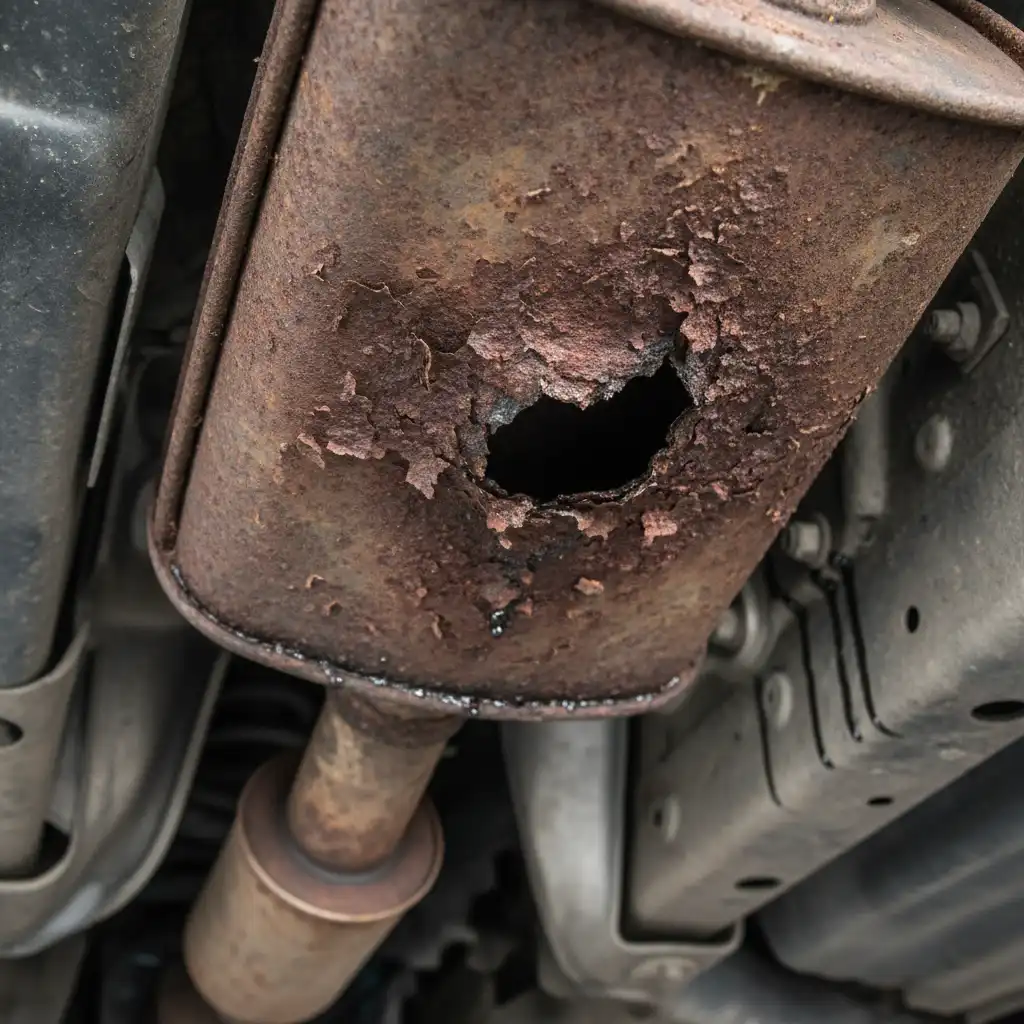
Ideally, you should not see your exhaust pipe hanging low. Broken hangers can cause the pipe to drag on the road, causing sparks and severe damage. Furthermore, visible rust, pitting, or holes in the metal are clear indicators that the structural integrity of the system is gone.
Common Exhaust Problems in Auckland
Auckland’s specific environment presents unique challenges for vehicles. The combination of high humidity and proximity to the ocean means that salt air is a constant factor. This saline environment accelerates the oxidation process, making rust the number one enemy of exhaust systems in the region.
Corrosion and Rust
Moisture reacts with the iron in the steel exhaust components to form rust. In Auckland, where vehicles are often parked near the coast or driven in humid conditions, this process is faster than in drier climates. Rust eats away at mufflers and pipes, creating holes that lead to leaks and noise. Short trips also contribute to this; if the engine doesn’t run long enough to evaporate the water vapor produced during combustion, that water sits in the muffler, rusting it from the inside out.
Catalytic Converter Failure
The catalytic converter is one of the most expensive parts of the exhaust system. Over time, it can become clogged with carbon deposits or physically damaged by road debris. In modern vehicles, a “Check Engine” light is often the first warning that the converter efficiency is below the threshold required by manufacturers and regulators.
Oxygen Sensor Malfunctions
Modern cars rely heavily on oxygen sensors. These sensors live in a harsh environment of extreme heat and exhaust gases. Over time, they become coated in oil, ash, and other byproducts, reducing their ability to send accurate data to the engine management system. Replacing these is a common task for mobile mechanics in Auckland.
The Advantage of Mobile Exhaust Repair Services
Traditionally, exhaust repair required taking your car to a garage and leaving it there for the day. However, the rise of the Auckland mobile mechanic has changed the landscape of automotive maintenance. Mobile services offer a distinct advantage for busy professionals and families.
Convenience and Efficiency
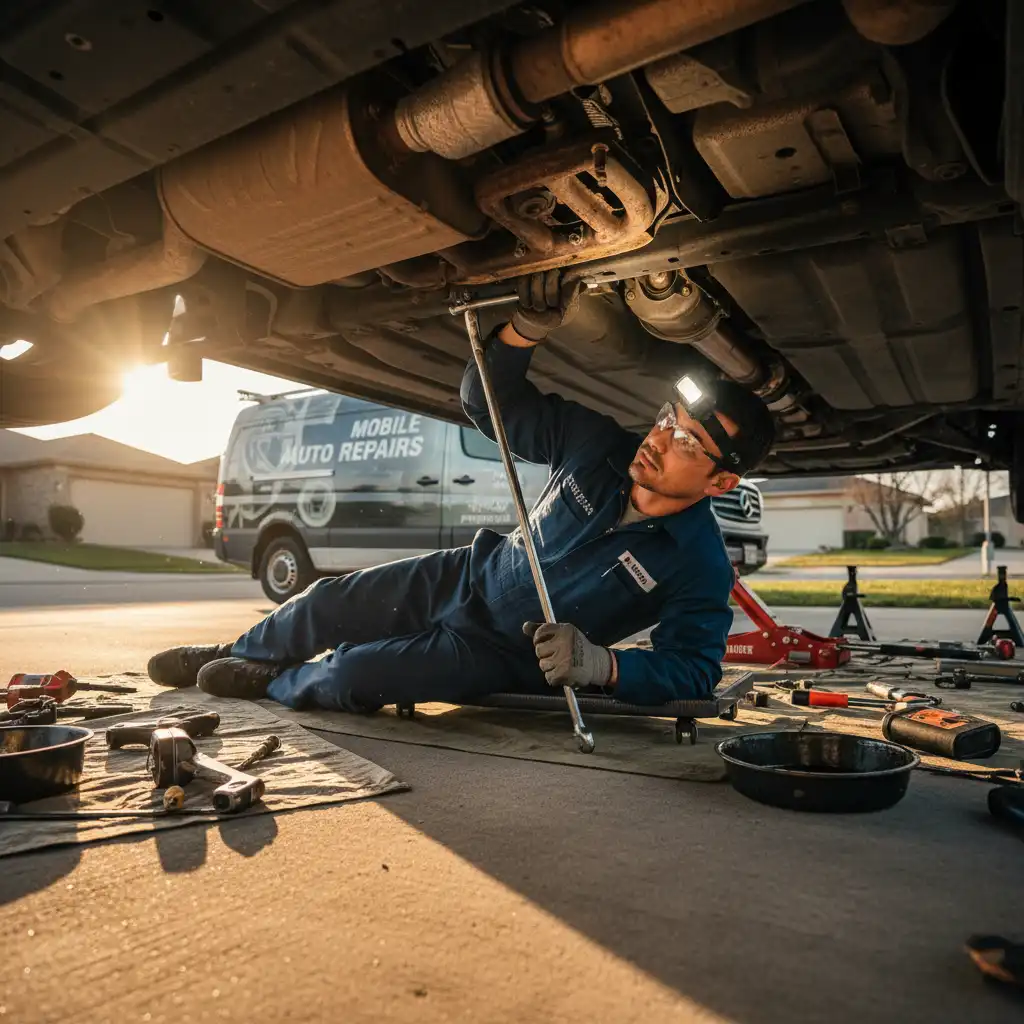
With a mobile service, the mechanic comes to your home or workplace. This eliminates the need for towing a loud, non-compliant vehicle across town or arranging a ride home from the shop. For exhaust repairs, many diagnostics and component replacements can be performed on-site.
On-Site Diagnostics
Mobile mechanics are equipped with advanced diagnostic tools to read engine codes related to oxygen sensors and catalytic converters. They can physically inspect the undercarriage using jacks and stands to identify leaks, broken hangers, or rusted sections. While major custom welding might sometimes require a workshop lift, a significant portion of repair work—including bolt-on replacements of mufflers and sensors—is perfectly suited for mobile service.
Passing Your WOF: NZ Exhaust Regulations
In New Zealand, the Warrant of Fitness (WOF) inspection is strict regarding exhaust systems. According to Waka Kotahi NZ Transport Agency, a vehicle must have an exhaust system that is secure, free from significant leaks, and does not emit excessive noise or smoke.
Inspectors look for:
- Security: The exhaust must be securely mounted. Missing hangers or loose bolts will result in a failure.
- Leaks: Any leak that allows gas to escape before the tailpipe is a safety hazard.
- Noise: The exhaust must not be noticeably louder than the original equipment. Modifications that increase noise levels significantly are illegal without certification.
- Smoke: Excessive blue (oil) or black (fuel) smoke indicates engine or exhaust issues that must be rectified.
Utilizing a professional Auckland mobile mechanic to pre-inspect your vehicle before your WOF date can save you the hassle of a failed inspection and a re-check fee.
Preventative Maintenance for Longevity
While exhaust parts are wear items that will eventually need replacement, you can extend their lifespan with proper care.
Regular Undercarriage Washing
Given Auckland’s coastal location, washing the underside of your car is crucial. Salt buildup accelerates rust. During your regular car wash, ensure you spray high-pressure water under the chassis to rinse away salt and road grime from the exhaust pipes and muffler.
Listen to Your Car
Do not ignore minor changes in sound. A small rattle often indicates a loose heat shield or a broken rubber hanger. Fixing these small issues immediately costs very little. If ignored, a loose pipe can flex and crack, leading to a much more expensive repair.
Drive Longer Distances Occasionally
If you only use your car for short 10-minute commutes, condensation accumulates in the muffler without getting hot enough to evaporate. Taking your car for a 20-30 minute drive at highway speeds once a week helps burn off this moisture, preventing internal rust.
The Professional Repair Process
When you engage a professional for exhaust system repair in Auckland, the process generally follows a structured approach to ensure safety and quality.
1. Inspection and Diagnosis
The technician will start the engine to listen for leaks and inspect the system visually. They may use a smoke machine to detect pinhole leaks that are invisible to the naked eye. Electronic diagnostics are used to check the health of the catalytic converter and oxygen sensors.
2. Quoting the Repair
You will be presented with options. In some cases, a small section of pipe can be patched or welded. However, if the rust is extensive, full component replacement is often the more economic long-term solution. A reputable mechanic will explain the pros and cons of aftermarket vs. OEM (Original Equipment Manufacturer) parts.
3. Installation and Testing
Old, rusted bolts are often seized and require heat or cutting to remove. Once the old part is out, the new component is installed with new gaskets to ensure a gas-tight seal. Finally, the engine is run to verify the repair, check for leaks, and ensure the noise levels are back to factory standards.
For more information on vehicle safety standards and environmental impact, you can refer to the Environmental Protection Agency or local NZ equivalents regarding emissions.
Frequently Asked Questions
Here are some of the most common questions we receive regarding exhaust system repair in Auckland.
How much does exhaust repair cost in Auckland?
The cost varies significantly based on the damage. Minor welding repairs might cost between $100 and $200 NZD. Replacing a muffler typically ranges from $250 to $500 NZD, while catalytic converters can cost between $500 and $1500+ NZD depending on the vehicle make and model.
Can a mobile mechanic fix my exhaust at my house?
Yes, mobile mechanics can handle many exhaust repairs on-site, including replacing mufflers, tailpipes, oxygen sensors, and hangers. However, complex custom fabrication or repairs requiring a full hydraulic lift might need to be referred to a workshop.
Will a hole in my exhaust fail a WOF?
Yes, a hole in the exhaust system is an automatic WOF failure in New Zealand. Leaks allow dangerous gases to escape and often cause noise levels to exceed legal limits.
How long does an exhaust repair take?
Most standard repairs, such as replacing a muffler or sensor, take between 1 to 2 hours. Diagnostics and more extensive system replacements may take 3 to 4 hours.
What causes exhaust systems to rust so quickly in Auckland?
Auckland’s coastal environment means the air has a higher salt content, which accelerates corrosion. Combined with humidity and short driving distances that leave moisture in the pipes, rust forms rapidly on untreated steel.
Is it safe to drive with a broken exhaust?
It is not recommended. Aside from the noise and risk of fines, a broken exhaust can allow carbon monoxide to seep into the cabin, which is odorless and potentially fatal. It can also cause heat damage to other car components.