
Common car issues Auckland drivers face are primarily dictated by the region’s humid maritime climate, steep volcanic terrain, and heavy stop-start motorway traffic. These conditions frequently lead to accelerated suspension wear, brake system fatigue, moisture-induced electrical faults, and specific hybrid battery degradation caused by insufficient cooling during congestion.
Understanding Auckland’s Unique Driving Environment
Owning a vehicle in Auckland presents a specific set of challenges that differ significantly from other parts of New Zealand. While the winters are mild compared to the South Island, the combination of high humidity, salt-laden air from the twin harbours, and the notoriously congested Southern and Northwestern motorways creates a harsh environment for mechanical components.
Furthermore, the topography of the Super City involves steep driveways and hilly suburbs like Remuera, Titirangi, and Birkenhead. This places immense strain on transmission systems and parking brakes. For the average Auckland commuter, understanding these environmental factors is the first step in diagnosing why your vehicle might be acting up. Whether you drive a rugged Ford Ranger for work or a Toyota Aqua for the city commute, local conditions accelerate specific wear patterns that require vigilant maintenance.
Toyota: Hybrid Batteries and Suspension Wear
Toyota is arguably the most popular brand on Auckland roads, dominated by both NZ New models and JDM (Japanese Domestic Market) imports like the Aqua, Prius, and Corolla. While renowned for reliability, they are not immune to local issues.
Hybrid Battery Degradation
Auckland’s traffic is notorious. In stop-start traffic, hybrid batteries cycle frequently. However, the most common issue we see isn’t necessarily the battery chemistry failing on its own, but rather overheating caused by blocked cooling fans. Many Auckland owners are unaware that hybrid battery cooling vents (often located near the rear seats) can become clogged with dust, pet hair, and lint. This causes the battery to overheat during long commutes on the motorway, leading to the dreaded “Check Hybrid System” warning light.
Suspension Bushings and Struts
The Corolla and Yaris are workhorses, but Auckland’s road infrastructure—specifically the abundance of speed bumps in suburbs and potholes caused by heavy rain—takes a toll. We frequently diagnose worn lower control arm bushings and leaking shock absorbers. The symptom is usually a clunking noise when going over bumps or loose steering handling on the Harbour Bridge during high winds.
Mazda: SkyActiv Carbon Buildup and i-Stop Faults
Mazda’s SkyActiv technology delivers excellent fuel economy, making models like the Mazda3 (Axela) and CX-5 incredibly popular in Auckland. However, these direct-injection engines have specific quirks.
Diesel Particulate Filter (DPF) Issues
For owners of diesel Mazda CX-5s living in central Auckland, DPF blockages are a major headache. The DPF requires the car to be driven at sustained highway speeds to burn off soot (regeneration). Auckland’s heavy congestion often prevents this cycle from completing. If you only drive short distances between Ponsonby and the CBD, the filter clogs, forcing the car into “limp mode.” Regular highway runs or professional forced regeneration services are essential.
i-Stop Battery System
Mazda’s i-Stop (start-stop system) relies on a specific type of battery (EFB or AGM). Many generic battery shops may install a standard lead-acid battery to save costs. In Auckland’s traffic, where the engine stops and starts dozens of times a trip, a standard battery will fail prematurely, often within 12 months. Furthermore, the vehicle’s computer must be reset to recognize the new battery. If your i-Stop light is flashing orange, it is usually a sign of battery health deterioration or a charging system fault.
Ford: Ranger Transmission and Cooling System Failures
The Ford Ranger is a staple of Auckland’s tradie culture and suburban lifestyle. While robust, they suffer from specific mechanical vulnerabilities, particularly in the 3.2L and 2.0L Bi-Turbo diesel variants.
EGR Cooler Failure
The Exhaust Gas Recirculation (EGR) cooler is a known weak point. In Auckland’s variable traffic, the thermal cycling can cause the cooler to crack internally, leaking coolant into the exhaust system or engine cylinders. Symptoms include a mysterious loss of coolant with no visible puddle on the ground, or white smoke from the exhaust. Catching this early is critical to preventing catastrophic engine failure.
Transmission Overheating
Towing boats to the Coromandel or hauling heavy loads up the Bombay Hills puts immense stress on the 6R80 transmission. Without an external transmission cooler, the fluid can overheat, leading to slip or “shuddering” during gear changes. We recommend shortening the transmission fluid service interval for Auckland Rangers that are used for towing, rather than sticking to the factory “sealed for life” recommendation.
For smaller Fords like the Focus or Fiesta, the older “Powershift” dual-clutch transmissions remain a common source of trouble, manifesting as jerking during acceleration in city traffic.
Hyundai: EPS Couplers and Engine Knocking
Hyundai has gained significant market share in New Zealand with the Santa Fe, Tucson, and i30. Generally reliable, they have a few component failures that mobile mechanics in Auckland see regularly.
Electric Power Steering (EPS) Coupler
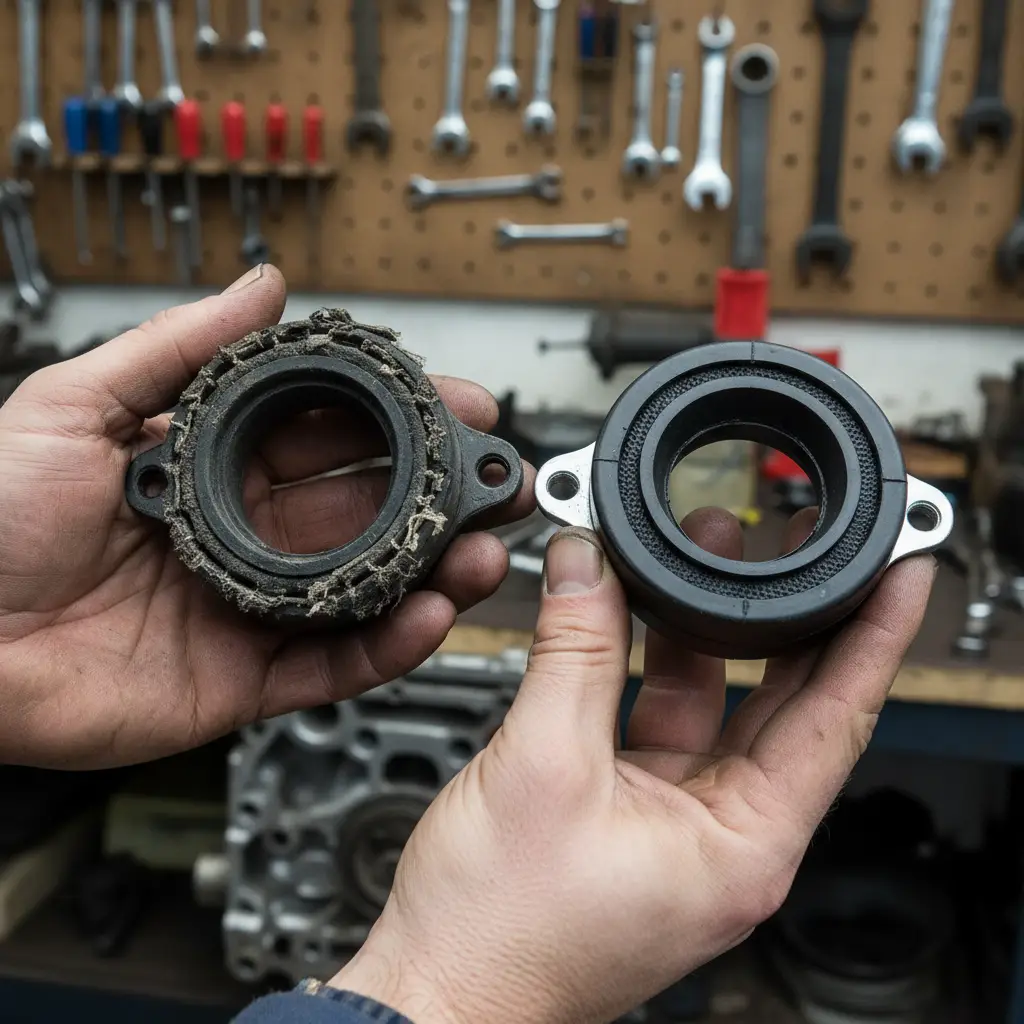
If you drive a Hyundai and hear a clicking or clunking noise coming from the steering column when turning the wheel, it is likely the disintegration of a small, star-shaped flexible coupler within the EPS motor. This rubber part dries out and crumbles over time—accelerated by Auckland’s humidity and temperature fluctuations. While the part costs only a few dollars, the labor involves disassembling the steering column. It is a very common fix for models from 2010–2016.
Theta II Engine Issues
Certain petrol engines in older Santa Fe and Sonata models are prone to connecting rod bearing wear. This manifests as a metallic knocking sound that increases with RPM. Regular oil changes using high-quality synthetic oil are the best defense against this, especially given the stop-start nature of Auckland commuting which degrades oil quality faster than highway driving.
General Factors: Humidity, Hills, and Traffic
Beyond brand-specific faults, the Auckland environment attacks all vehicles equally. Understanding these factors can help you perform preventative maintenance.
The Corrosion Factor
With harbours on both sides, no part of the Auckland isthmus is far from the sea. Salt spray is a silent killer of cars. We see significant surface rust on undercarriages, particularly on Japanese imports that were not undersealed before arriving in NZ. Brake lines and exhaust hangers are often the first victims. According to Waka Kotahi (NZ Transport Agency), structural corrosion is a leading cause of Warrant of Fitness (WOF) failure in older vehicles.
Braking Systems on Volcanic Terrain
Auckland is built on a volcanic field. Navigating steep suburbs requires constant braking. This leads to warped brake rotors (juddering when stopping) and glazed brake pads. Mobile mechanics often upgrade customers to heavy-duty brake pads that can withstand higher temperatures without fading, ensuring safety on those steep descents.
The Mobile Mechanic Advantage in Auckland
Dealing with car issues in Auckland often involves the logistical nightmare of towing a vehicle across the Harbour Bridge or sitting in traffic to get to a workshop before it closes. This is where the mobile mechanic model shines.
Mobile mechanics can perform diagnostics, battery replacements, brake repairs, and general servicing right in your driveway or office car park. This is particularly beneficial for:
- Dead Batteries: No need to jump-start and drive; we bring the battery to you.
- Alternator Failures: If the car won’t run, a mobile repair saves the cost of a tow truck.
- Pre-Purchase Inspections: buying a used car in West Auckland? A mobile mechanic can inspect it on-site before you commit.
Conclusion: Proactive Maintenance is Key
Whether you drive a Toyota, Mazda, Ford, or Hyundai, the key to avoiding a breakdown on the side of the motorway is proactive maintenance tailored to Auckland conditions. Don’t wait for the annual WOF to check your car. Listen for suspension clunks, watch for dashboard warning lights, and ensure your servicing schedule accounts for the “severe” driving conditions of city traffic.
For reliable advice and vehicle safety standards, you can always refer to the AA New Zealand Maintenance Guide for general tips on keeping your vehicle roadworthy.
Frequently Asked Questions
What is the most common car failure in Auckland?
Battery failure is the most common issue due to short trips and traffic congestion preventing full charging, followed closely by brake wear caused by the hilly terrain.
How much does a mobile mechanic cost in Auckland?
Mobile mechanic rates in Auckland generally range from $90 to $130 per hour, plus a call-out fee. This is often comparable to workshops, but saves you the cost and hassle of towing.
Why is my car battery dying so fast in NZ?
Modern cars with high electrical loads (GPS, cameras, start-stop) combined with short, stop-start commutes mean the alternator often doesn’t have enough time to fully recharge the battery.
Can mobile mechanics fix transmission issues?
Mobile mechanics can diagnose transmission faults, change transmission fluid, and replace external sensors. However, full transmission rebuilds usually require a specialized workshop environment.
Is it worth fixing a blown head gasket?
It depends on the vehicle’s value. For newer cars, yes. For older, high-mileage imports common in Auckland, the repair cost might exceed the car’s value. A mechanic can provide a cost-benefit analysis.
How often should I service my car in Auckland?
Due to “severe” driving conditions (traffic, hills), it is recommended to service your vehicle every 10,000km or every 6 months, whichever comes first, rather than the standard 15,000km interval.