
EV hybrid servicing Auckland refers to the specialized maintenance protocols required for electric and petrol-electric vehicles, focusing on high-voltage battery health, inverter cooling loops, and charging port safety. To ensure vehicle longevity and safety, certified technicians must perform advanced diagnostics on the electric drivetrain while maintaining the mechanical components unique to New Zealand’s road conditions.
The Evolution of Automotive Care in Auckland
Auckland’s automotive landscape is shifting rapidly. With the increasing adoption of electric vehicles (EVs) and hybrid electric vehicles (HEVs), the requirements for routine maintenance have evolved from simple oil changes to complex high-voltage diagnostics. While the perception exists that EVs require “no maintenance,” this is a dangerous misconception. While they have fewer moving parts than internal combustion engines (ICE), the systems they do have are sophisticated and require a higher level of technical expertise.
For Auckland drivers navigating the stop-start traffic of the Southern Motorway or the undulating terrain of the Waitakere ranges, ensuring your hybrid or EV is operating at peak efficiency is critical. Specialized servicing goes beyond the bonnet; it involves software updates, thermal management inspection, and ensuring the safety of high-voltage cabling. Ignoring these specific needs can lead to reduced range, battery degradation, and costly repairs down the line.
Hybrid Battery Maintenance and Diagnostics
The heart of any hybrid or electric vehicle is its high-voltage battery pack. Unlike a standard car battery, this component costs thousands of dollars and dictates the performance and fuel economy of your vehicle. Proper maintenance is not just about checking if it holds a charge; it is about ensuring longevity.
State of Health (SoH) and Cell Balancing
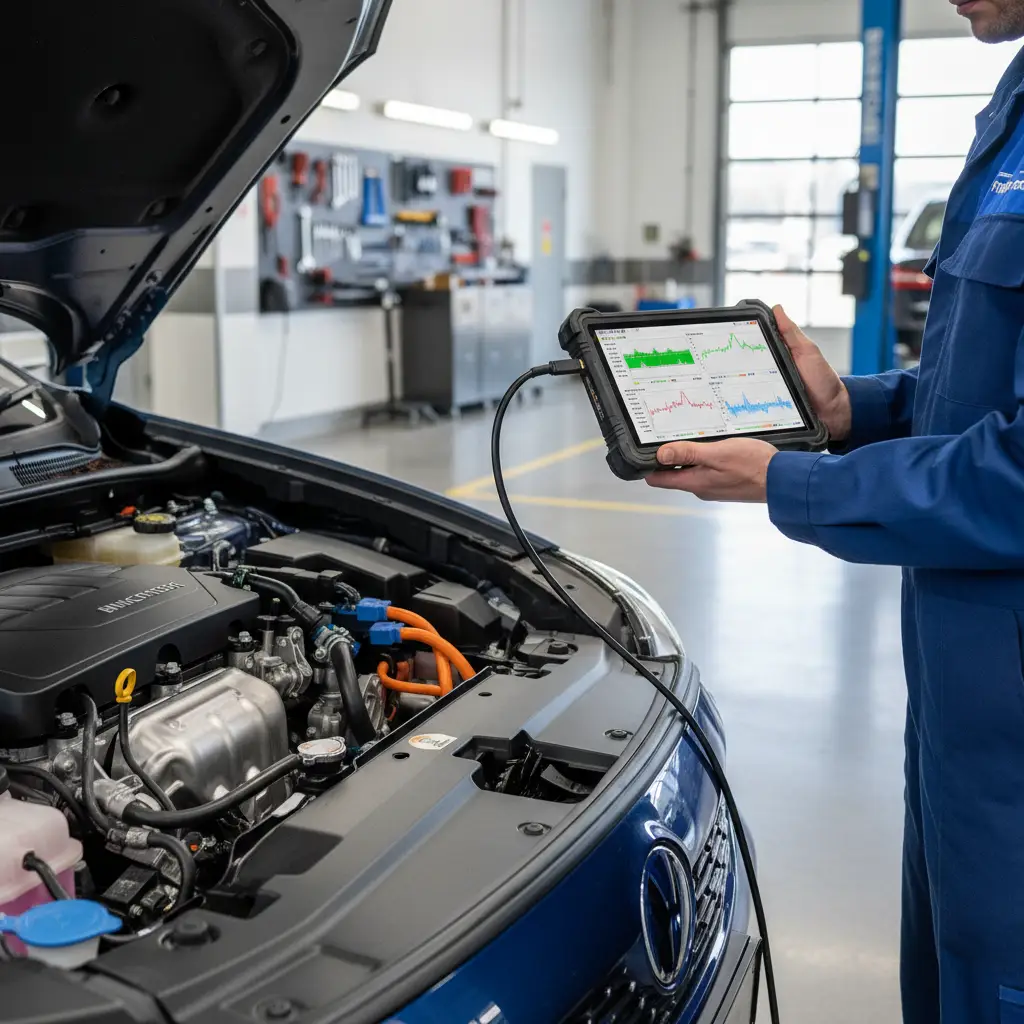
A crucial part of our service involves analyzing the State of Health (SoH) of the battery pack. Over time, individual cells within the battery pack can become unbalanced, meaning they hold different voltage levels. When this happens, the vehicle’s Battery Management System (BMS) limits the capacity of the entire pack to the level of the weakest cell to prevent damage. Specialized diagnostic tools allow us to read the voltage of every individual cell block to identify weak points before they cause a system failure.
Cooling System Filtration
Hybrid batteries generate significant heat during charging and discharging (driving). Most systems, particularly in popular models like the Toyota Prius or Camry, use air cooling systems that pull air from the cabin. This air passes through a cooling fan and a filter. In Auckland’s humid and often dusty environment, these filters can easily become clogged with lint, pet hair, and dust. A clogged filter restricts airflow, causing the battery to overheat. Chronic overheating is the number one cause of premature hybrid battery failure. Our servicing includes a mandatory inspection and cleaning of these cooling ducts and fans.
EV Charging System Checks and Safety
For Battery Electric Vehicles (BEVs) and Plug-in Hybrids (PHEVs), the charging system is the lifeline of the car. If you cannot charge efficiently, the vehicle is useless. Servicing the charging infrastructure on the vehicle is a safety-critical task that requires high-voltage certification.
Charging Port Inspection
The physical charging port (Type 2, CCS, or CHAdeMO) is subjected to mechanical wear every time you plug in. We inspect the pins for signs of arcing, corrosion, or heat damage. Poor connections can lead to increased resistance, which generates heat and can melt the charging socket or trigger safety shutdowns during a charge session.
Onboard Charger (OBC) Diagnostics
The Onboard Charger is the component that converts AC electricity from your home wall box or grid into DC electricity to store in the battery. We test the efficiency of the OBC to ensure it is converting power correctly and that the cooling system protecting the OBC is functioning. A failing OBC can trip household breakers or refuse to accept a charge entirely.
For detailed information on electric vehicle safety standards and charging configurations, you can refer to the NZ Transport Agency (Waka Kotahi) guide on electric vehicles.
PHEV Specific Servicing Needs
Plug-in Hybrid Electric Vehicles (PHEVs) represent a unique challenge because they possess two complete powertrains: an internal combustion engine and a high-voltage electric drive. Consequently, they often have the most intensive maintenance schedules.
The “Stale Fuel” and Moisture Issue
Many PHEV owners in Auckland commute purely on electric power, rarely engaging the petrol engine. While this is excellent for fuel economy, it can be detrimental to the engine. Petrol degrades over time, and moisture can accumulate in the engine oil if the engine never reaches operating temperature to boil it off. During a PHEV service, we pay special attention to the condition of the engine oil and fuel system, often recommending specific additives or more frequent oil changes based on time rather than mileage.
Complex Cooling Loops
PHEVs often have multiple cooling loops: one for the engine, one for the high-voltage battery, and one for the power electronics (inverter/converter). Each system may use different coolants and have different service intervals. Mixing these up or neglecting one can be catastrophic. Our technicians are trained to identify and service these independent systems correctly.
Understanding Regenerative Braking
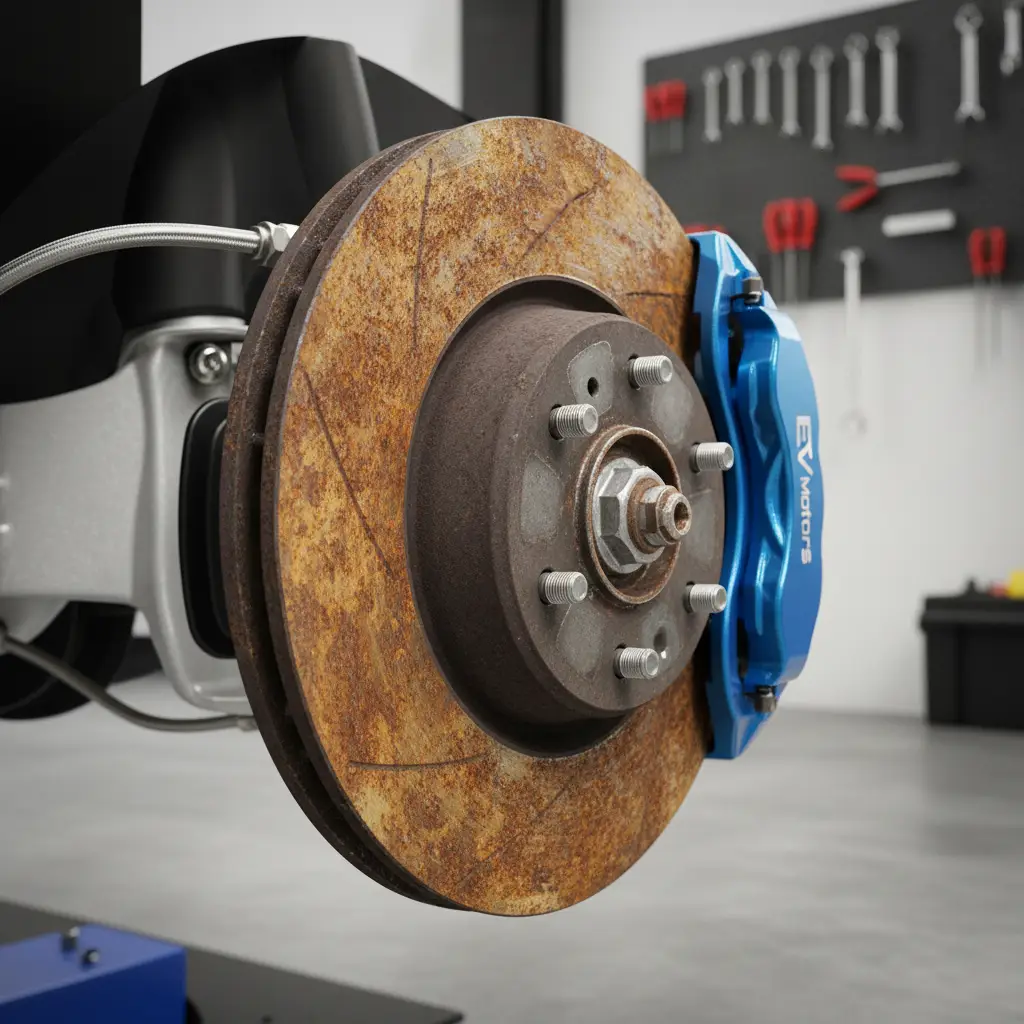
Regenerative braking is a defining feature of EVs and hybrids. It uses the electric motor as a generator to slow the car down, capturing energy and sending it back to the battery. This system reduces wear on the traditional friction brakes, but it introduces a new maintenance paradox known as the “rusty rotor” syndrome.
Mechanical Brake Maintenance
Because the regenerative system does most of the braking work, the mechanical brake pads and rotors are used infrequently. In Auckland’s humid climate, this lack of use allows rust to build up on the brake discs. Furthermore, the slide pins in the calipers can seize due to inactivity. If you suddenly need to perform an emergency stop, seized brakes can be dangerous.
Our service includes stripping, cleaning, and lubricating the mechanical brake components to ensure they are free-moving and ready for emergency use. We also flush the brake fluid, which is hygroscopic (absorbs water). Old fluid with high water content can boil under heavy braking or corrode the complex ABS modules used in hybrid braking systems.
The Critical Role of the 12-Volt Auxiliary Battery
It is a surprising statistic to many, but the most common cause of EV breakdowns is the failure of the standard 12-volt lead-acid battery. Even though the car has a massive high-voltage battery, it still relies on a small 12-volt battery to power the computers, lights, door locks, and, most importantly, the relay that engages the high-voltage pack.
If the 12-volt battery dies, the main computer cannot “boot up” the car, leaving you stranded even if your main battery is 100% charged. EVs do not have an alternator in the traditional sense; they use a DC-DC converter to charge the 12-volt battery. We test the health of the 12-volt battery and the output of the DC-DC converter to prevent these nuisance breakdowns.
Tyre Wear and Suspension Management for Heavy EVs
Electric vehicles are significantly heavier than their petrol counterparts due to the weight of the battery pack. They also deliver instant torque (acceleration force) to the wheels. This combination results in accelerated tyre wear.
EV-Specific Tyre Checks
We inspect tyres not just for tread depth, but for uneven wear patterns that indicate suspension misalignment. Because of the vehicle’s weight, maintaining correct tyre pressure is more critical than in a standard car. Under-inflated tyres on an EV will drastically reduce range and can overheat the sidewalls.
Suspension Bushes and Arms
The extra weight also places higher stress on suspension components like control arm bushes and ball joints. We perform rigorous pry-bar tests on these components to ensure they can handle the dynamic loads of Auckland’s roads. For further reading on vehicle dynamics and battery weight implications, the U.S. Department of Energy provides extensive technical resources.
Why Choose a Specialized Mobile Mechanic?
Servicing an EV or Hybrid requires more than just a spanner; it requires high-voltage safety gear (insulated tools, Class 0 gloves) and advanced diagnostic software. Choosing a specialized mobile mechanic in Auckland offers the ultimate convenience without compromising on technical rigor.
Whether you are at home or at your workplace, we bring the workshop to you. We handle the complex high-voltage checks, the software scans, and the mechanical maintenance in one visit. By proactively managing your hybrid or EV’s health, you protect your investment, ensure your safety, and maintain the resale value of your vehicle in New Zealand’s growing green fleet.
People Also Ask
How often should I service my hybrid car in Auckland?
Most manufacturers recommend servicing a hybrid vehicle every 15,000km or every 12 months, whichever comes first. However, in Auckland’s heavy traffic conditions, more frequent checks on the hybrid battery cooling fan and air filters are recommended to prevent overheating.
Do EVs require less maintenance than petrol cars?
Generally, yes, EVs have fewer moving parts and require less maintenance (no oil changes, spark plugs, or cam belts). However, they require specific maintenance that petrol cars do not, such as high-voltage battery conditioning, cabin air filter changes, and specific brake caliper lubrication due to regenerative braking usage.
What is included in an EV service checklist?
A comprehensive EV service includes a high-voltage battery health check (SOH), charging port inspection, coolant level checks for the inverter and battery, brake fluid test, mechanical brake cleaning and lubrication, tyre inspection, and a 12-volt auxiliary battery test.
How much does a hybrid battery replacement cost in NZ?
Hybrid battery replacement costs in New Zealand vary by model. A refurbished Prius battery might cost between $1,500 and $2,500 NZD, while a brand-new OEM battery can range from $3,000 to over $5,000 NZD. Regular servicing can extend the life of your current battery significantly.
Can mobile mechanics service electric vehicles?
Yes, provided they are qualified and carry the correct equipment. A specialized mobile mechanic can perform almost all EV maintenance tasks, including diagnostics, 12V battery replacement, cabin filter changes, and brake services, right at your home or office.
Why do my EV brakes look rusty?
EV brakes often look rusty because of regenerative braking. The electric motor slows the car down, so the mechanical brake pads don’t scour the rust off the rotors as frequently as they do in petrol cars. Regular servicing is required to clean them and prevent seizing.