
Future car technologies NZ encompass the integration of autonomous driving systems, Vehicle-to-Everything (V2X) connectivity, and advanced electric powertrains designed to navigate New Zealand’s unique topography. These innovations aim to reduce road trauma, alleviate Auckland’s congestion, and transition the national fleet toward a zero-emission, digitally connected ecosystem managed by smart infrastructure and evolving regulatory frameworks.
The automotive landscape in New Zealand is undergoing a seismic shift. Gone are the days when a vehicle was merely a mechanical assembly of pistons, gears, and steel. Today, we are witnessing the digitization of transport, where cars are becoming computers on wheels. For Kiwi drivers, particularly those navigating the bustle of Auckland or the winding roads of the South Island, these advancements promise safer, more efficient, and environmentally friendly travel.
This guide explores the cutting-edge technologies arriving on our shores, from self-driving capabilities to cars that “talk” to traffic lights, and analyzes how these changes are reshaping the automotive service industry.
The Evolution of Autonomous Driving in New Zealand
Autonomous driving is often viewed as the holy grail of future car technologies. While fully self-driving pods are not yet a staple on Queen Street, the technology is advancing through distinct levels of automation. Understanding these levels is crucial for New Zealand consumers as Advanced Driver Assistance Systems (ADAS) become standard in modern imports.
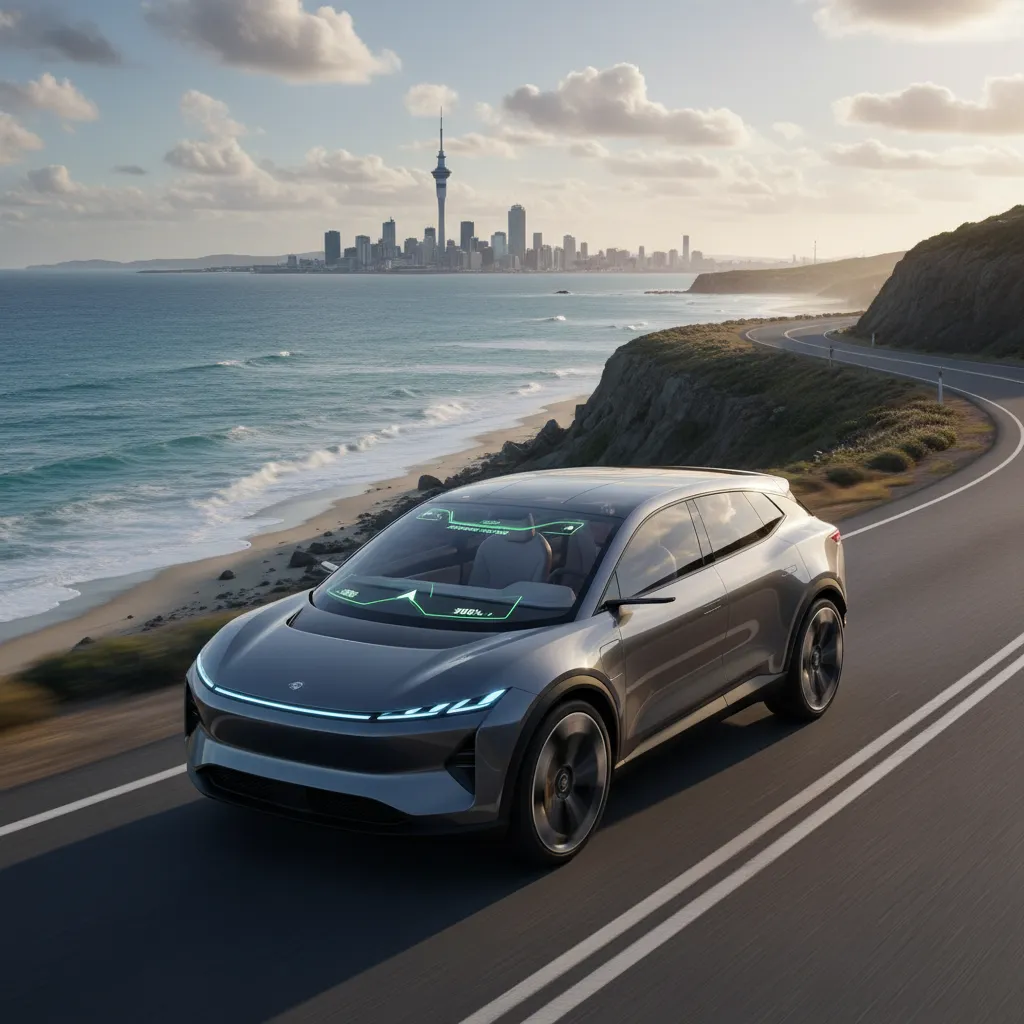
Defining the Levels of Autonomy
The Society of Automotive Engineers (SAE) defines six levels of driving automation, ranging from Level 0 (no automation) to Level 5 (full automation). In the New Zealand market, we are currently seeing a saturation of Level 1 and Level 2 technologies, with Level 3 on the horizon.
- Level 0-2 (Driver Support): This includes features already common in NZ, such as Adaptive Cruise Control, Lane Keep Assist, and Autonomous Emergency Braking (AEB). The driver must remain engaged and monitor the environment at all times.
- Level 3 (Conditional Automation): The vehicle can handle most driving tasks, but the human driver must be ready to take over when requested. This is the current regulatory frontier for many countries.
- Level 4 (High Automation): The car can operate without human input in specific conditions (e.g., geofenced areas like Auckland CBD or mapped highways).
- Level 5 (Full Automation): The vehicle can drive anywhere a human can, under all conditions, with no steering wheel or pedals required.
NZ-Specific Challenges for Autonomy
Implementing high-level autonomy in New Zealand presents unique challenges compared to the grid-like cities of the USA or Europe. Our road infrastructure varies wildly, from the multi-lane motorways of Auckland to unsealed gravel roads in rural regions. Autonomous systems rely heavily on clear lane markings and predictable infrastructure.
Furthermore, New Zealand’s weather patterns—four seasons in one day—can obscure sensors like LiDAR and cameras. However, trials are underway. Organizations and universities in NZ have been testing autonomous shuttles (such as the Ohmio shuttles) in controlled environments like airports and university campuses, signaling a commitment to integrating this tech into our public transport network first.
V2X: The Nervous System of Tomorrow’s Roads
While autonomy focuses on the vehicle’s ability to drive itself, connectivity focuses on the vehicle’s ability to communicate with the world around it. This is known as Vehicle-to-Everything (V2X) communication. V2X is a pillar of future car technologies NZ, aiming to drastically reduce accidents caused by human error.
Components of V2X
V2X is an umbrella term that covers several modes of communication:
- Vehicle-to-Vehicle (V2V): Cars exchange data regarding speed, position, and direction. If a car three vehicles ahead slams on its brakes, your car will know instantly, even before you see brake lights, potentially preventing a pile-up on the Southern Motorway.
- Vehicle-to-Infrastructure (V2I): Vehicles communicate with road infrastructure like traffic lights, signs, and cameras. Imagine your dashboard telling you the optimal speed to hit the next series of green lights, reducing idling and emissions.
- Vehicle-to-Pedestrian (V2P): Using smartphone signals, cars can detect pedestrians or cyclists who might be obscured by parked cars or blind corners, a vital feature for Auckland’s busy inner-city streets.
The rollout of 5G across New Zealand is the backbone of this technology. The low latency and high bandwidth of 5G networks allow for real-time data transfer, which is non-negotiable for safety-critical applications.
The Rise of Software-Defined Vehicles (SDVs)
The modern vehicle is increasingly defined by its software rather than its mechanics. This shift toward Software-Defined Vehicles (SDVs) means that a car you buy today can improve over time, much like a smartphone.
Over-the-Air (OTA) Updates
Historically, if a vehicle had a fault or needed an upgrade, a trip to the dealership or a mechanic was mandatory. With OTA updates, manufacturers can patch software bugs, improve battery management systems, or even add new infotainment features remotely. For Kiwi owners, this adds convenience but also changes the relationship with the vehicle. It means the car’s value and capability are dynamic.
Predictive Maintenance
SDVs utilize advanced telemetry to monitor the health of every component. Instead of waiting for a part to fail, the car can predict when a fuel pump or battery cell is degrading and notify the driver—or their mechanic—proactively. This shift from reactive to predictive maintenance is transforming how fleets operate in New Zealand.
Cybersecurity: Protecting the Connected Fleet
With great connectivity comes great vulnerability. As vehicles become nodes in a digital network, they become targets for cyber threats. Cybersecurity is now a critical aspect of automotive engineering.
Potential risks include:
- Data Privacy: Modern cars collect immense amounts of data, from location history to driving habits. Ensuring this data is stored securely and complies with New Zealand’s Privacy Act is paramount.
- Remote Hacking: In theory, a compromised vehicle could have its brakes disabled or steering manipulated remotely. While this sounds like science fiction, researchers have demonstrated these vulnerabilities in controlled settings.
To combat this, the global automotive industry is adopting ISO/SAE 21434 standards for cybersecurity engineering. For more information on how transport technology is governed, you can refer to the New Zealand Ministry of Transport, which oversees the integration of these technologies into national frameworks.
Impact on Auckland Mobile Mechanics and Maintenance
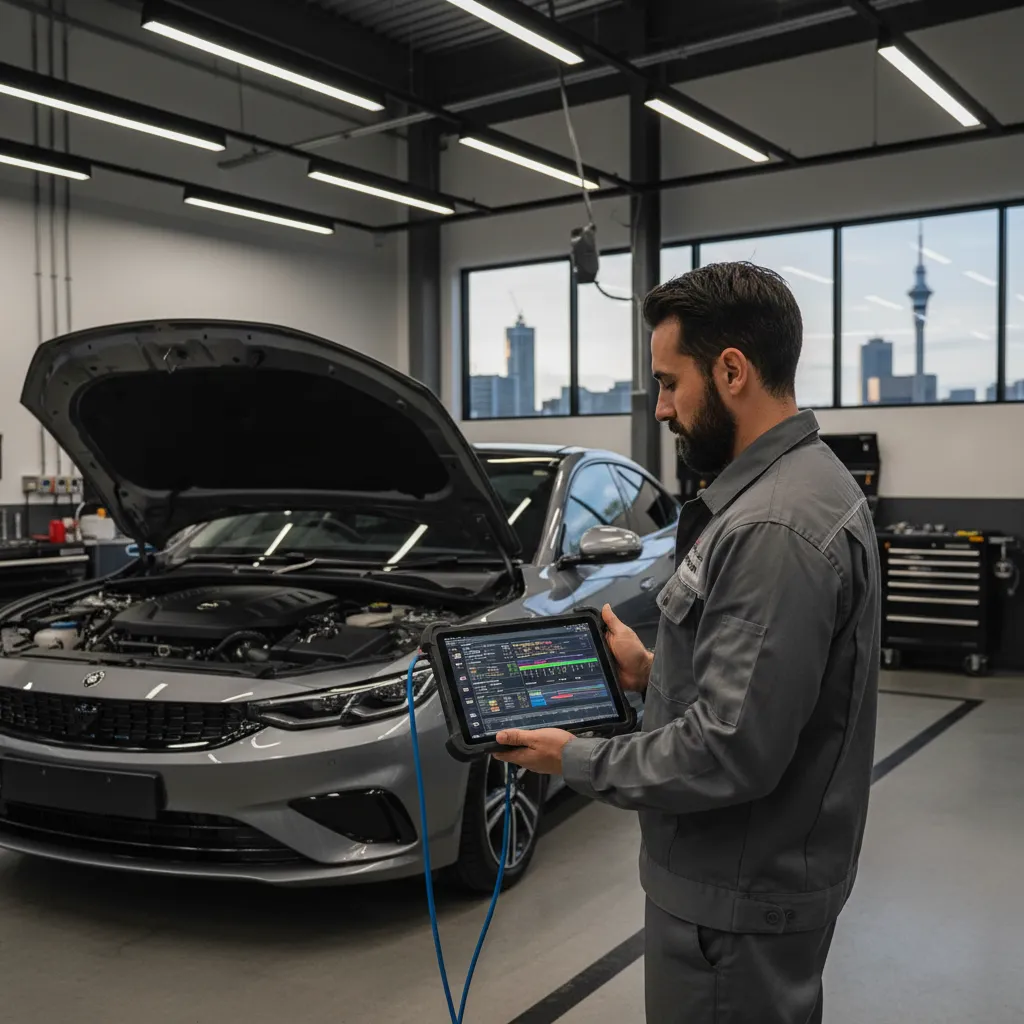
The influx of these technologies has profound implications for the automotive service industry. For an Auckland mobile mechanic, the toolkit is changing. The wrench and socket set are being joined by diagnostic laptops and software interfaces.
The Shift to Diagnostics
As vehicles become more complex, the “check engine” light is no longer a simple indicator; it is a gateway to thousands of potential error codes. Mechanics must now be IT technicians, capable of interpreting data from the Controller Area Network (CAN bus) and recalibrating sensitive sensors.
ADAS Calibration
One of the most significant changes is the need for ADAS calibration. If a windshield is replaced or a bumper is removed for repair, the cameras and radar sensors housed within them must be precisely recalibrated. If they are off by even a millimeter, the car’s emergency braking or lane-keeping systems may fail. This requires specialized equipment and training that goes beyond traditional mechanical knowledge.
EV High-Voltage Systems
With the New Zealand government’s push toward electrification, mechanics are increasingly encountering high-voltage systems. Safety protocols for working on 400V or 800V battery architectures are critical. Mobile mechanics are adapting by carrying specialized insulated tools and undergoing certification to safely service hybrid and electric vehicles (EVs) at the roadside.
NZ Regulatory Landscape and Infrastructure
Technology cannot exist in a vacuum; it requires a supportive legal and physical environment. New Zealand is actively updating its regulatory frameworks to accommodate future car technologies.
Waka Kotahi (NZ Transport Agency) is working on “smart motorways” that utilize variable speed limits and lane control signals managed by AI to optimize traffic flow. Additionally, legislation is being reviewed to determine liability in accidents involving autonomous vehicles. If a self-driving car crashes, is it the fault of the “driver,” the manufacturer, or the software developer? These are the legal questions currently being debated in Wellington.
Furthermore, the physical infrastructure—specifically EV charging stations—is expanding. However, for V2X to be fully realized, road infrastructure requires digital upgrades, such as smart traffic lights and roadside units (RSUs) that can broadcast data to passing vehicles. For a deeper dive into global standards that influence NZ policy, SAE International remains the authority on mobility engineering standards.
Conclusion
The future of car technologies in NZ is bright, connected, and increasingly autonomous. While we may not be surrendering the steering wheel entirely just yet, the cars we drive are becoming safer, smarter, and more efficient. For vehicle owners in Auckland and beyond, this means embracing a new era of mobility where the mechanic is a technician, the car is a computer, and the road is a network.
People Also Ask
When will autonomous cars be legal in NZ?
There is currently no specific date for when fully autonomous (Level 5) cars will be legal for general public use in NZ. However, New Zealand law does not explicitly ban driverless vehicles, provided they can be operated safely. Waka Kotahi allows for testing and trials under specific safety management plans, and semi-autonomous features (Level 2) are already legal and common.
What is V2X technology in cars?
V2X (Vehicle-to-Everything) technology allows vehicles to communicate with other vehicles (V2V), infrastructure like traffic lights (V2I), pedestrians (V2P), and the network (V2N). This connectivity improves safety by allowing cars to “see” around corners and anticipate hazards before the driver does.
Are electric cars the future in New Zealand?
Yes, electric vehicles (EVs) are considered a major part of New Zealand’s transport future. With over 80% of the country’s electricity generation coming from renewable sources, EVs offer a significant reduction in carbon emissions. Infrastructure is rapidly expanding to support the growing fleet of EVs.
How do smart cars affect mobile mechanics?
Smart cars require mobile mechanics to carry advanced diagnostic equipment alongside traditional tools. Mechanics need training in software interpretation, sensor calibration (ADAS), and high-voltage safety systems to service modern connected vehicles effectively.
What are the cybersecurity risks of connected cars?
Connected cars face risks such as unauthorized data access, location tracking, and potential remote hijacking of vehicle control systems. Manufacturers are implementing strict cybersecurity protocols and Over-the-Air (OTA) security patches to mitigate these threats.
What is the difference between Level 2 and Level 3 autonomy?
Level 2 autonomy (Driver Support) requires the driver to be constantly engaged and monitoring the road, even if the car is steering and accelerating. Level 3 autonomy (Conditional Automation) allows the car to drive itself in specific situations without the driver’s attention, though the driver must be ready to take over immediately upon request.