
As the automotive landscape shifts rapidly toward electrification, New Zealand drivers are encountering new technologies that fundamentally change how we drive and maintain our vehicles. Among the most significant advancements is the braking system found in Electric Vehicles (EVs) and Hybrids. It is no longer just about stopping power; it is about energy management.
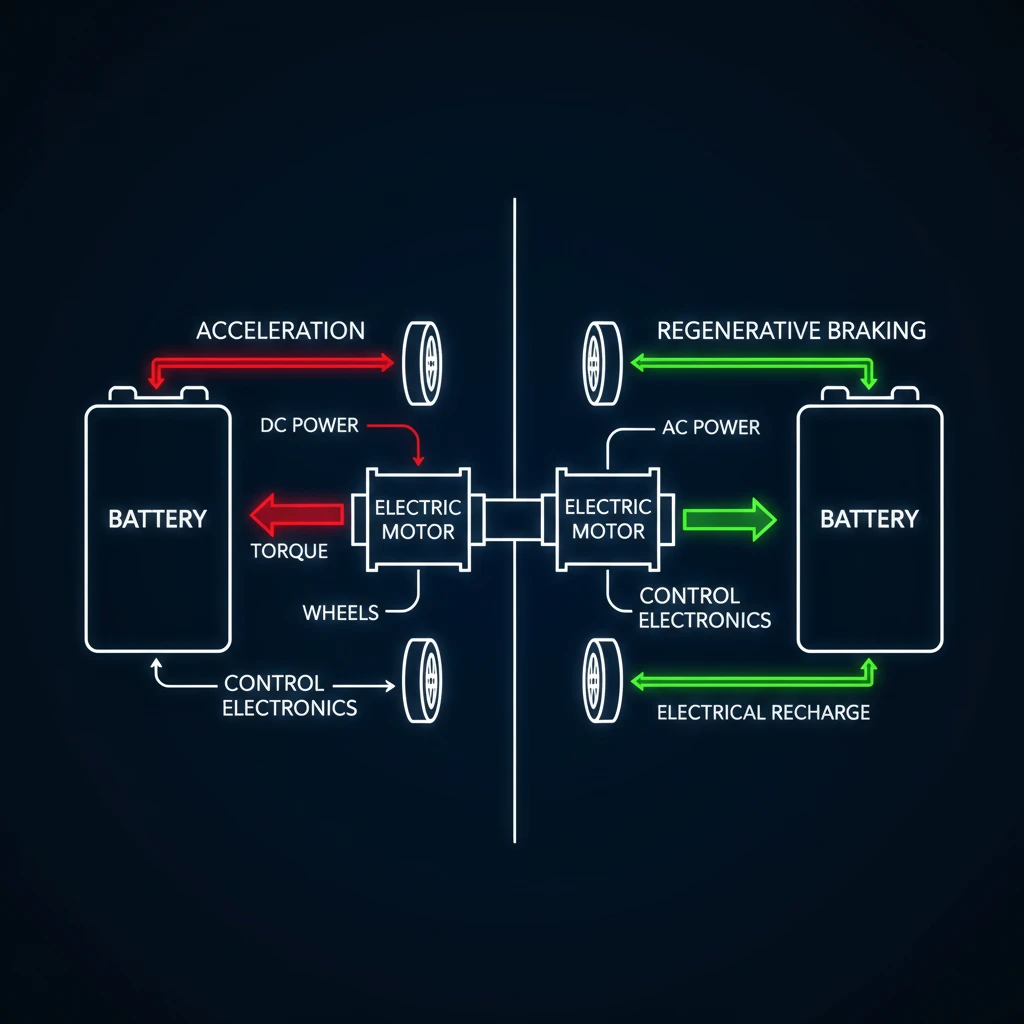
Regenerative braking explained: It is an energy recovery mechanism used in electric and hybrid vehicles that slows the car by converting its kinetic energy into electricity, which is then stored in the high-voltage battery. Unlike traditional friction brakes that waste energy as heat, this system reverses the electric motor to act as a generator, extending driving range and significantly reducing brake wear.
What is Regenerative Braking?
To understand regenerative braking, we must first look at the inefficiency of traditional internal combustion engine (ICE) vehicles. In a standard petrol or diesel car, when you press the brake pedal, hydraulic fluid pushes brake pads against a spinning rotor. This friction slows the vehicle, but it also converts the car’s massive kinetic energy into heat. That heat dissipates into the atmosphere and is lost forever. Effectively, you are paying for fuel to get the car moving, only to burn that energy off as waste heat when you stop.
Regenerative braking (often called “regen”) changes this equation entirely. It allows the vehicle to recapture a significant portion of that kinetic energy. While it was once a technology reserved for Formula 1 cars (under the name KERS – Kinetic Energy Recovery System), it is now a standard feature in everything from the Nissan Leaf to the Tesla Model 3 and hybrid Toyota Priuses seen all over Auckland roads.
The Mechanics: How It Works
The magic of regenerative braking lies in the dual nature of the electric motor. Electric motors and electric generators are essentially the same device, differing only in how they are used.
1. The Motor as a Motor
When you step on the accelerator, the car’s battery sends electricity to the electric motor. The motor uses electromagnetism to create torque, spinning the wheels and driving the car forward. In this state, electrical energy is converted into mechanical energy.
2. The Motor as a Generator
When you lift your foot off the accelerator or apply the brake, the flow of electricity is reversed. The car’s momentum keeps the wheels spinning, which in turn spins the motor. The onboard computer switches the motor’s mode to that of a generator. Instead of consuming electricity to turn the rotor, the spinning rotor moves through a magnetic field to generate electricity.
This process creates magnetic resistance (drag) on the motor, which is transferred to the wheels, slowing the car down. The electricity generated during this resistance is fed through an inverter and sent back into the high-voltage battery pack for later use.
For a deeper dive into the physics of electromagnetism and energy conservation, the U.S. Department of Energy offers excellent resources on how electric traction motors function.
Benefits for Efficiency and Range
For Auckland drivers navigating the stop-start traffic of the Southern Motorway or the undulating hills of the North Shore, regenerative braking offers tangible benefits that go beyond just “saving energy.”
Extended Range
The most immediate benefit is an increase in driving range. While regenerative braking cannot create a perpetual motion machine (energy is still lost to aerodynamic drag and tire rolling resistance), it can recover between 10% to 20% of the energy used. In heavy traffic conditions or hilly terrain, where braking events are frequent, this recovery rate is highest.
Reduced Wear on Consumables
Because the electric motor handles the majority of the deceleration duties, the traditional friction brakes (pads and rotors) are used far less frequently. It is not uncommon for EV brake pads to last over 100,000 kilometers, whereas an automatic petrol car might need new pads every 40,000 to 60,000 kilometers.
One-Pedal Driving Explained
One of the most distinct experiences of driving a modern EV is “One-Pedal Driving.” Manufacturers like Tesla, Nissan (with the e-Pedal), and Hyundai have tuned their regenerative systems to be aggressive enough to bring the car to a complete stop without the driver touching the brake pedal.
When One-Pedal driving is engaged:
- Lift Off: As you lift your foot off the accelerator, the regen engages immediately and strongly. The deceleration force can be as high as 0.2g to 0.3g.
- Modulation: You learn to modulate the accelerator pedal not just to speed up, but to control how fast you slow down.
- Complete Stop: In many systems, the car will regen down to walking speed, and then automatically blend in the friction brakes or use a magnetic hold function to stop the car completely.
This reduces driver fatigue in heavy Auckland traffic, as you are not constantly switching your foot between pedals.
Impact on Traditional Friction Brakes
It is important to clarify that all EVs and Hybrids still have traditional hydraulic friction brakes. They are required for emergency stops (where regen isn’t strong enough) and for holding the car stationary when parked.
However, the relationship between the two systems is complex. When you press the brake pedal in a hybrid or EV, the car’s computer (ECU) makes a split-second decision. For the first portion of the pedal travel, the car uses only regenerative braking. If you press harder, exceeding the braking capacity of the electric motor, the hydraulic system blends in, squeezing the pads against the rotors.
This seamless blending is difficult to engineer. In early hybrids, the brake pedal often felt “mushy” or unpredictable as the system switched between regen and friction. Modern systems are much smoother, though keen drivers can still feel the transition.
Maintenance and Service Requirements
As a mobile mechanic service operating in Auckland, we often hear customers ask: “If the brakes last forever, do I need to service them?” The answer is a resounding yes. In fact, regenerative braking introduces a unique set of maintenance challenges specifically because the friction brakes are used so rarely.
The Issue of “Brake Rot”
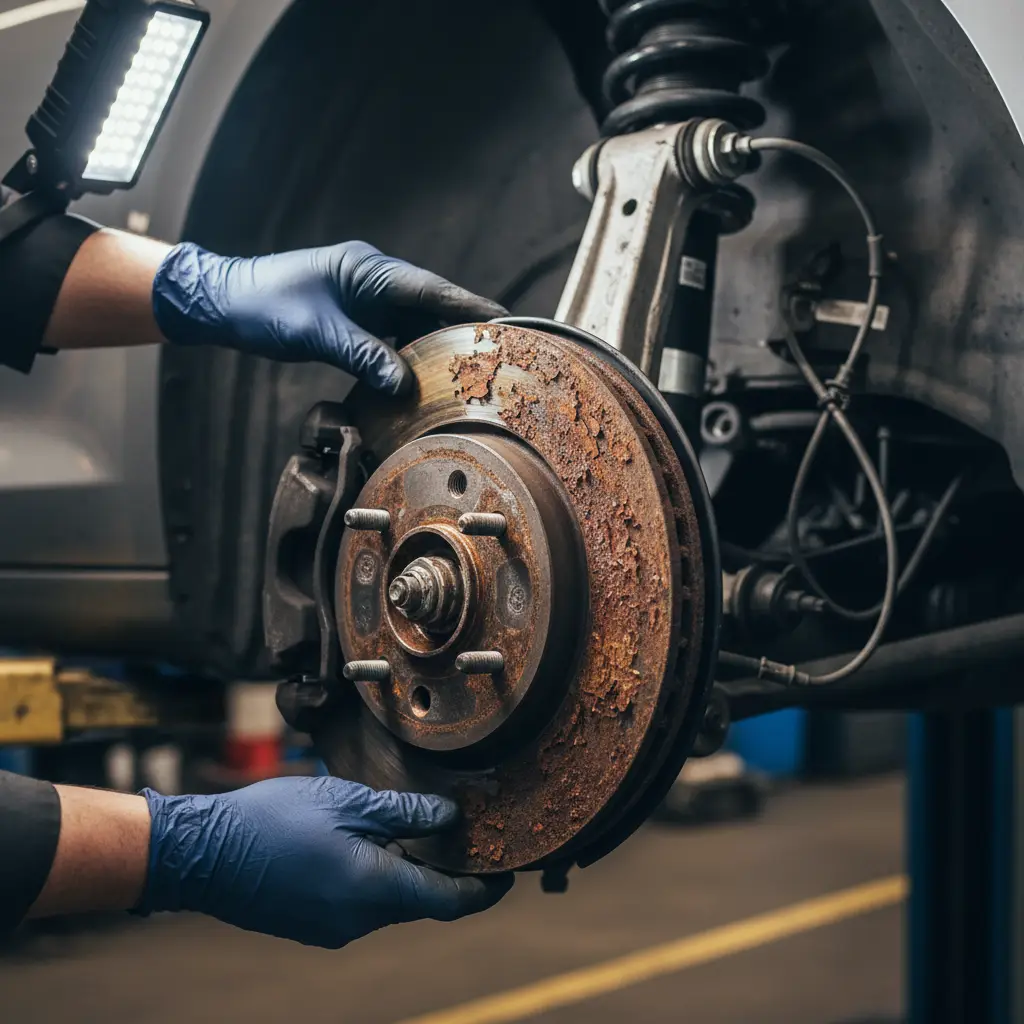
Because the friction brakes are rarely engaged, moisture and road grime can accumulate on the brake discs (rotors) without being burned off by heat and friction. In humid climates like Auckland, this leads to surface rust. If left unchecked, this rust can pit the rotors, leading to brake shudder and reduced stopping power during emergency situations.
Seized Caliper Pins
Mechanical parts need movement to stay free. If the brake calipers rarely slide back and forth, the guide pins can seize up due to lack of lubrication circulation and corrosion. A seized caliper can cause uneven pad wear or drag, which reduces your EV’s range.
Brake Fluid Hygroscopy
Brake fluid is hygroscopic, meaning it absorbs moisture from the air over time. Regardless of how often you use the brakes, the fluid degrades. Old fluid with high water content can boil under heavy emergency braking or corrode the internal components of the ABS module. Manufacturers typically recommend a brake fluid flush every 2 years, regardless of mileage.
Maintenance Tips for EV Owners
- The “Italian Tune-Up” for Brakes: Once a week (when safe to do so on an open road with no traffic behind you), perform a firm braking maneuver from a moderate speed. This forces the friction brakes to engage, scrubbing off surface rust and generating enough heat to evaporate moisture.
- Regular Lubrication: Have your mobile mechanic strip, clean, and lubricate the brake slides and pins annually.
- Fluid Checks: Ensure brake fluid moisture content is tested during every service.
Limitations of the System
While regenerative braking is a marvel of modern engineering, it does have physical limitations that drivers must be aware of.
1. Full Battery Limitation:
Regenerative braking works by sending energy into the battery. If your battery is charged to 100%, there is nowhere for that energy to go. Consequently, regen will be disabled or severely limited until you drive a few kilometers and deplete the battery slightly. This can catch drivers off guard if they are expecting the car to slow down automatically.
2. Temperature Sensitivity:
Lithium-ion batteries cannot accept high currents when they are very cold or extremely hot. On a freezing winter morning, you may notice reduced regenerative braking power until the battery management system heats the pack to an optimal operating temperature.
3. Traction Limits:
Regenerative braking applies braking torque only to the driven wheels (usually the rear or front, unless it is an AWD dual-motor vehicle). In slippery conditions, aggressive regen can cause the driven wheels to lose traction momentarily. Modern traction control systems handle this well, but it is a dynamic to be aware of.
For more on the history and development of these systems, Wikipedia’s entry on Regenerative Brakes provides a comprehensive overview of the technology’s evolution from trains to cars.
Frequently Asked Questions
Does regenerative braking replace the need for brake pads?
No, it does not replace them entirely. While it drastically reduces the wear on brake pads, your vehicle still requires traditional friction brakes for emergency stops and to hold the vehicle stationary. You will replace pads less often, but the system still needs maintenance.
At what speed does regenerative braking stop working?
Regenerative braking becomes less effective at very low speeds (typically under 5-8 km/h) because the motor is not spinning fast enough to generate significant current. Most EVs blend in friction brakes automatically to handle the final stop.
Can you turn off regenerative braking?
In most electric vehicles, you can adjust the level of regeneration from “High” (or One-Pedal) to “Low.” Some vehicles allow you to turn it off almost completely to simulate the “coasting” feel of a traditional automatic car, though this reduces efficiency.
Does regenerative braking work in reverse?
generally, no. While technically possible, the speeds in reverse are too low to generate meaningful energy, and the control logic usually relies on friction brakes for reverse maneuvering to ensure precision and safety.
Is regenerative braking bad for the battery?
No. The Battery Management System (BMS) carefully controls the amount of current flowing back into the battery to prevent overheating or overcharging. It is a normal operating condition designed to prolong the vehicle’s range.
Why do my EV brakes make a grinding noise?
If you hear a grinding noise, it is likely surface rust on the rotors being scrubbed off by the pads. This is common if the car has been parked for a few days or driven in wet weather without heavy braking. If the noise persists, contact a mechanic immediately.