
NZ vehicle import rules in Auckland require all vehicles to meet specific safety and emission standards set by Waka Kotahi, including mandatory Electronic Stability Control (ESC) and Euro 5 or higher emission ratings. To legally register an import, you must provide proof of ownership, pass strict biosecurity checks for pests, and obtain Entry Certification from an approved compliance center.
Importing a vehicle into New Zealand is a popular route for Auckland drivers seeking specific models, Japanese Domestic Market (JDM) gems, or luxury European vehicles at a competitive price point. However, the process is far from a simple “ship and drive” operation. New Zealand maintains some of the strictest biosecurity and vehicle safety standards in the world to protect both its unique ecosystem and its road users.
For Aucklanders, navigating the regulatory maze of Waka Kotahi (NZ Transport Agency), New Zealand Customs, and the Ministry for Primary Industries (MPI) can be daunting. From the bustling port of Auckland to the compliance centers in Penrose and Mt Wellington, understanding the rules is critical to avoiding costly delays or, in worst-case scenarios, having a vehicle slated for export or destruction. This guide provides a comprehensive breakdown of the import rules and compliance standards necessary to get your vehicle on Auckland roads legally and safely.
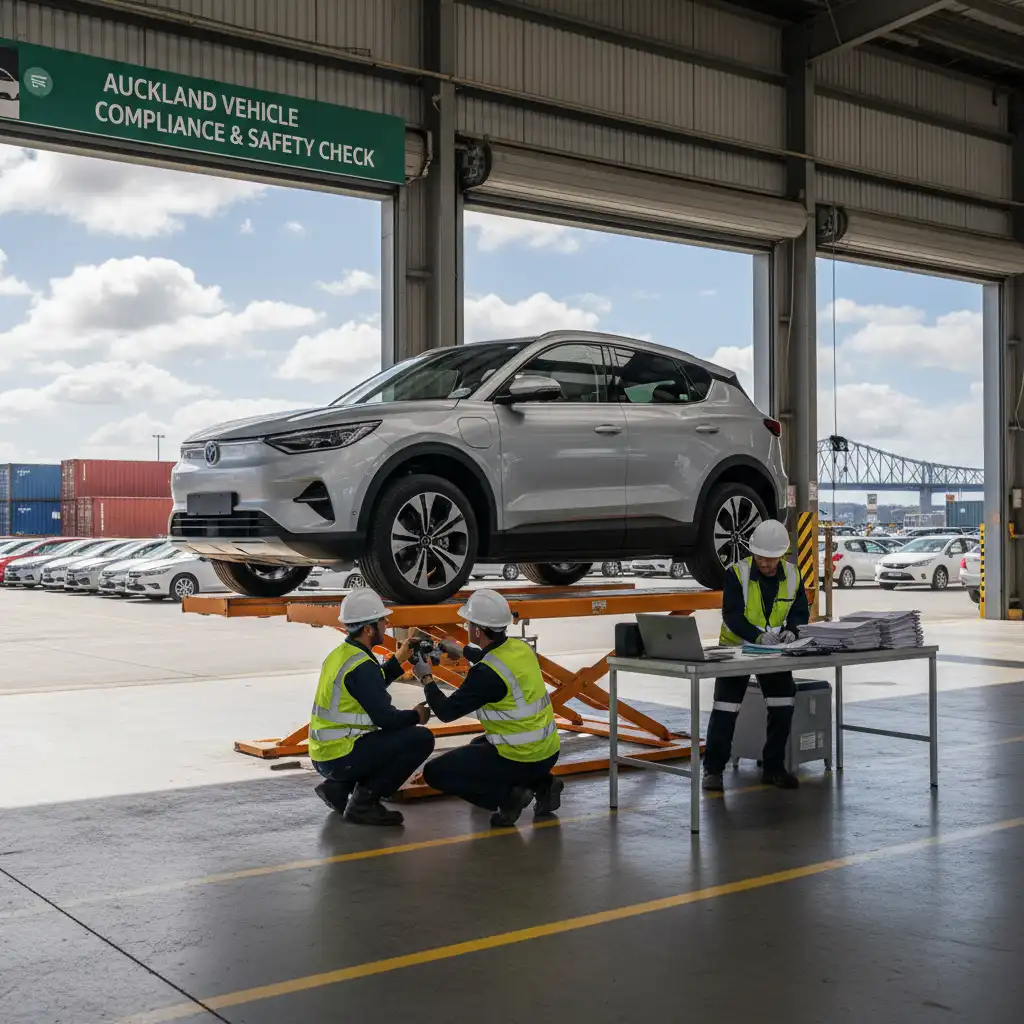
Understanding the NZ Import Landscape
New Zealand has a unique vehicle fleet, heavily reliant on used imports, primarily from Japan, followed by the UK and Australia. Because we do not have a domestic vehicle manufacturing industry, the government relies on strict border controls to ensure that the national fleet remains safe and environmentally friendly.
The rules for importing a vehicle differ slightly depending on whether you are bringing the car in as a private individual (for personal use) or as a registered motor vehicle trader. However, the fundamental vehicle standards—what the car must physically be capable of—remain largely the same. The governing principle is that any vehicle entering New Zealand must meet the standards applicable at the time of its manufacture, and in many cases, meet current NZ standards which may be higher than those in the country of origin.
Before purchasing a vehicle overseas, it is imperative to check that it belongs to a class of vehicle that is allowed entry. For most Auckland drivers, this falls under Class MA (passenger car) or Class MC (off-road passenger vehicle).
Key Compliance Standards for Imported Vehicles
Compliance is the most critical phase of the import process. If a vehicle does not meet these standards, it cannot be registered for use on New Zealand roads. Waka Kotahi updates these rules regularly, so reliance on outdated information can be financially disastrous.
Electronic Stability Control (ESC)
As of March 2020, almost all used class MA, MB, and MC vehicles entering New Zealand must be equipped with Electronic Stability Control (ESC). ESC is a safety technology that detects and reduces loss of traction (skidding). If you are looking at importing an older vehicle, you must verify that the manufacturer installed ESC at the factory. Retrofitting this technology is generally not accepted or is prohibitively expensive.
Frontal Impact Standards
Your vehicle must meet approved frontal impact standards. This ensures that in the event of a crash, the occupants are adequately protected. For Japanese imports, this usually means the vehicle must comply with specific Japanese safety regulations (often denoted on the chassis plate). For European cars, they must meet UN/ECE regulations. If a vehicle has been modified significantly (e.g., roll cages removed or structural changes), it may fail this standard.
Airbags and ABS
While now standard in most modern cars, older imports must be checked for Anti-lock Braking Systems (ABS). Furthermore, all airbags must be functional. Takata airbag recalls have been a major issue for imports; if the vehicle you are importing is flagged for a recall, the airbag must be replaced before the vehicle can be certified.
Emission Standards and the Clean Car Regime
New Zealand is aggressively moving towards a lower-emission fleet. This has introduced significant changes to import rules, specifically regarding what can be brought in without incurring massive penalties.
The Clean Car Standard regulates importers to bring in vehicles with lower CO2 emissions. While the “Clean Car Discount” (the rebate/fee scheme for buyers) has evolved, the underlying requirements for importers to meet emission benchmarks remain strict. Vehicles are assessed based on their CO2 grams per kilometer.
Currently, used imports generally need to meet Euro 5 emission standards or their Japanese/US equivalents. This effectively places an age limit on imports, as older diesel vehicles often do not meet these criteria. Bringing in a non-compliant diesel vehicle is essentially impossible for road use.
For authoritative details on the specific emission codes accepted, you should consult the Waka Kotahi (NZTA) official import guide.
Biosecurity and MPI Clearance
Before a vehicle even touches the tarmac at the Ports of Auckland, it must pass a biosecurity check. The Ministry for Primary Industries (MPI) is extremely vigilant regarding the Brown Marmorated Stink Bug (BMSB) and other pests that could devastate New Zealand’s agriculture.
Vehicles shipping from high-risk countries (including Japan and the USA) during the stink bug season (typically September to April) must undergo mandatory heat treatment or fumigation before leaving the port of origin. Failure to provide a cleaning certificate can result in the vehicle being refused entry or sent for immediate (and expensive) treatment upon arrival.
Additionally, the vehicle must be free of soil, plant material, and seeds. A clump of mud in a wheel arch or a dried leaf in the radiator grille can cause a vehicle to fail its MPI inspection. It is highly recommended to have the vehicle professionally steam-cleaned overseas before shipping.
Required Documentation for Entry
Bureaucracy is a major component of the import process. To clear Customs and begin compliance, you must possess the following documents:
- Proof of Ownership: An original invoice or bill of sale showing the purchase price and the buyer’s details.
- Export Certificate (Deregistration): This proves the vehicle has been legally removed from the registry of the originating country. In Japan, this is the “Export Certificate” (Yushutsu Masho Kari Toroku Shomeisho).
- Bill of Lading: The shipping document issued by the carrier.
- Emission Certificate: Proof of the vehicle’s emission code (often found on the Export Certificate for Japanese cars).
- Identification: Your passport and proof of address in Auckland.
Without these original documents, the Entry Certifier cannot process the vehicle. Digital copies are often insufficient for the final sign-off.

The Entry Certification Process
Once the vehicle clears Customs and MPI, it moves to an Entry Certification facility (such as VTNZ, VINZ, or AA). This is a far more rigorous inspection than a standard Warrant of Fitness (WoF).
Structural Inspection
Inspectors will strip parts of the vehicle interior to check for structural damage, rust, and previous repairs. Any sign of water damage (common in cars from flood-prone areas) or significant corrosion will lead to a fail. If structural repairs are needed, they must be carried out by a certified repair certifier.
Compliance Checks
The certifier verifies that the seatbelts, glazing (glass), lights, and tires meet NZ standards. For example, some JDM vehicles have rear windows with tint that is too dark for NZ laws, or headlights that are aimed for driving on the right-hand side of the road (though Japan drives on the left, so this is usually fine, unlike US imports).
Once the vehicle passes, a MR2A form is issued, and a chassis sticker is applied. The vehicle is now “complied” and ready for registration.
On-Road Costs and Registration in Auckland
After compliance, you must register the vehicle to get license plates. This involves paying “On-Road Costs” (ORC), which typically include:
- 12 months of registration (rego).
- New number plates.
- RUC (Road User Charges) licensing if the vehicle is diesel.
- The Clean Car Standard fees (if applicable based on emissions).
In Auckland, you can complete this at any NZTA agent (AA, VTNZ, VINZ). Once the plates are affixed and the rego label is in the window, the car is legally allowed on the road.
Maintaining Your Import: A Mechanic’s Perspective
Successfully importing a vehicle is a triumph, but maintaining it requires specific knowledge. Imported vehicles, particularly European and high-performance JDM models, often have different service requirements compared to NZ-new models.
Fluids and Filtration: Japanese imports often use different viscosity oils compared to what is standard in other markets. Using the wrong oil in a CVT transmission or a specialized engine can lead to premature failure. It is vital to consult a mechanic who has access to global technical data, not just local manuals.
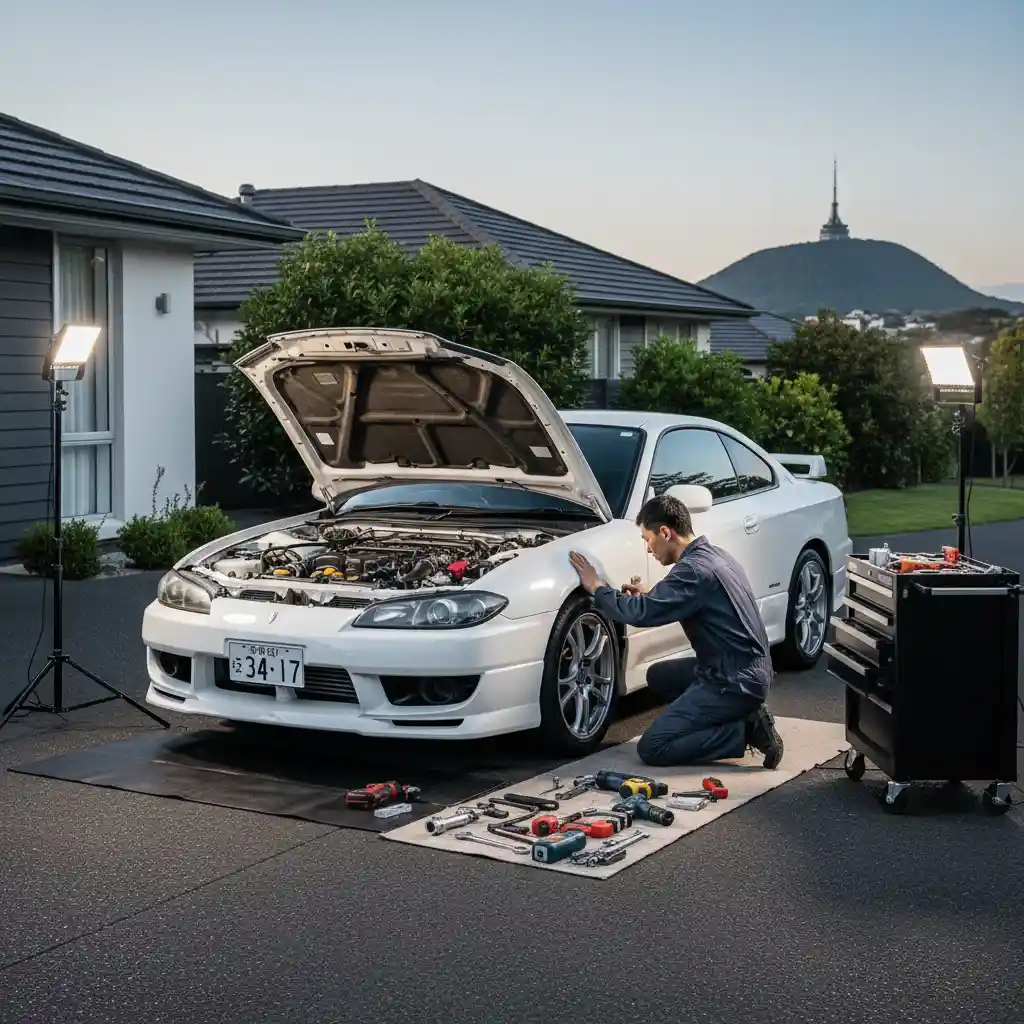
Rust Protection: While Auckland doesn’t salt its roads like the UK or parts of the USA, coastal driving can accelerate corrosion. Fresh imports should be inspected for underbody protection. A mobile mechanic can easily perform a post-import assessment at your home to identify any areas where the factory underseal has been compromised during shipping.
Parts Availability: One risk of importing unique models is parts availability. Common consumables (brake pads, filters) are usually available via aftermarket suppliers in Auckland, but body panels or electronic control units for obscure imports may need to be ordered from overseas. Establishing a relationship with a reliable mechanic who understands the import supply chain is essential for long-term ownership satisfaction.
For more information on border control and prohibited items, refer to the New Zealand Customs Service website.
People Also Ask
Can I import a car older than 20 years into NZ?
Yes, vehicles over 20 years old are often classified as “classic” or “enthusiast” vehicles. While they still need to meet safety standards relevant to their year of manufacture, they may be exempt from some modern requirements like Electronic Stability Control (ESC), provided they meet the specific criteria for the classic vehicle class.
How much does it cost to ship a car to Auckland?
Shipping costs vary wildly based on origin and method (Roll-on/Roll-off vs. Container). Generally, shipping a standard car from Japan to Auckland costs between $1,500 and $2,500 NZD, excluding insurance, GST, and port service charges.
What is the 20-year rule for importing cars to NZ?
The “20-year rule” generally refers to the exemption from certain modern frontal impact and emission standards for vehicles that are over 20 years old. This allows enthusiasts to import classic cars that would otherwise fail modern compliance checks.
Do I have to pay GST on an imported car?
Yes. Customs will collect 15% GST on the landed value of the vehicle. The landed value includes the cost of the vehicle, the cost of shipping (freight), and the insurance premiums (CIF value). There is no import duty on private motor vehicles, but GST is mandatory.
What cars are banned from import into NZ?
Vehicles that have significant water damage, structural corrosion, or have been written off (statutory write-off) in their country of origin are generally banned. Additionally, vehicles that do not meet the required emission (Euro 5) or safety (ESC) standards cannot be registered for road use.
How long does compliance take in Auckland?
Once the vehicle arrives at the compliance center, the physical inspection takes a few hours. However, if repairs are needed or parts must be ordered, it can take 1-2 weeks. During peak import seasons, booking delays at compliance centers like VTNZ or VINZ can add additional time.