
Ford maintenance in Auckland involves specialized servicing protocols tailored to the region’s unique driving conditions, ensuring optimal performance for models like the Ranger, Focus, and Mondeo. To maintain your vehicle’s reliability, you must utilize qualified technicians who understand common EcoBoost and PowerShift vulnerabilities while offering convenient mobile diagnostic solutions.
The Importance of Specialized Ford Maintenance in Auckland
Owning a Ford in Auckland presents a unique set of challenges that differ significantly from driving in rural New Zealand. The combination of high humidity, coastal air, and the notorious stop-start traffic on the Southern and Northern Motorways places immense stress on vehicle components. For Ford owners, particularly those driving models equipped with sophisticated EcoBoost engines or PowerShift transmissions, specialized maintenance is not a luxury—it is a necessity.
Standard servicing often overlooks the specific requirements of Ford’s engineering. Unlike general Japanese imports which may tolerate generic fluids, Ford vehicles require strict adherence to manufacturer specifications, particularly regarding oil viscosity and coolant types. Using the wrong oil in a modern Ford engine can lead to catastrophic failure, a scenario unfortunately common in non-specialized workshops.
Furthermore, Auckland’s topography, with its steep driveways and hilly suburbs like Remuera and Titirangi, puts additional load on transmission clutches and braking systems. A specialized Ford maintenance strategy accounts for these environmental factors, ensuring that wear and tear is identified before it evolves into a costly breakdown.
Common Ford Faults and Troubleshooting
While Ford vehicles are renowned for their driving dynamics and chassis tuning, they are susceptible to specific faults that every owner should be aware of. Recognizing the early warning signs of these issues can save thousands of dollars in repair bills. In Auckland, where traffic congestion exacerbates thermal stress on engines and transmissions, these faults often manifest earlier than expected.
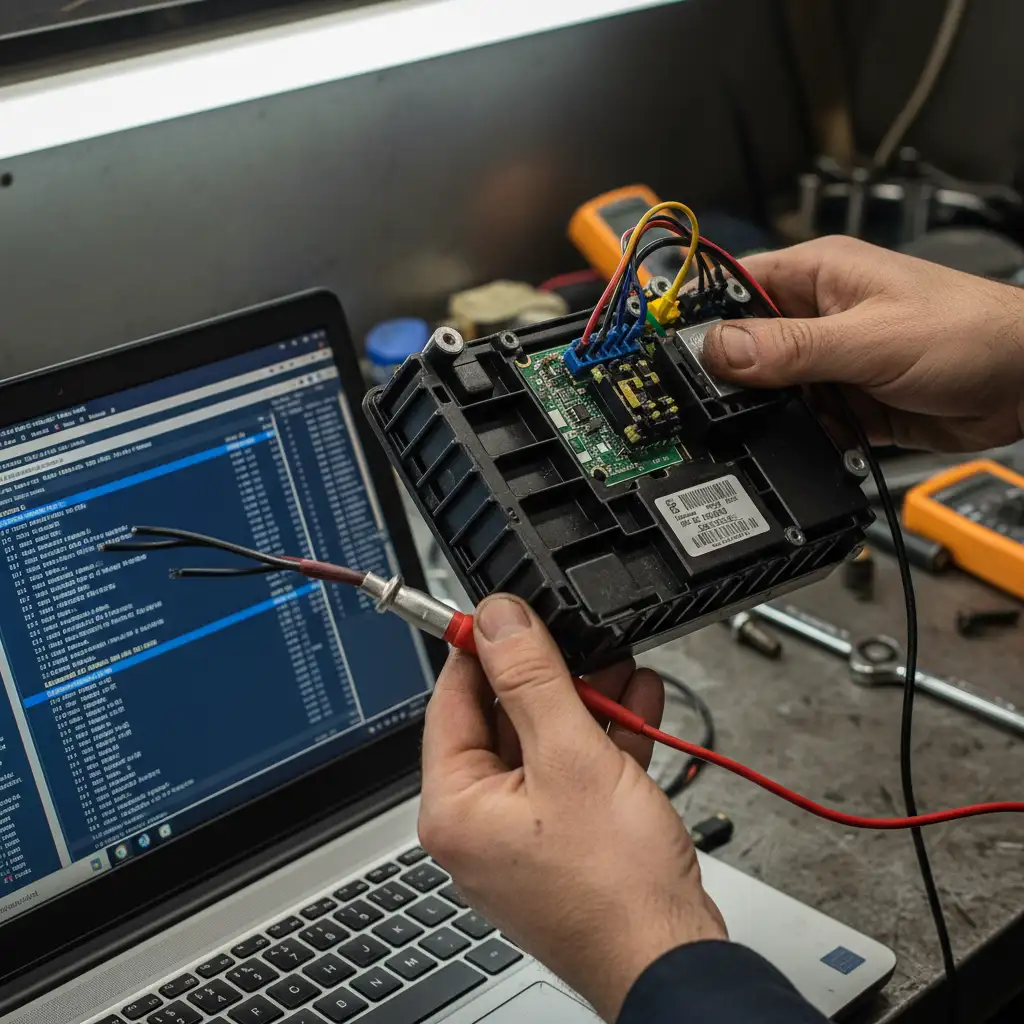
Effective troubleshooting requires diagnostic equipment compatible with Ford’s VCM (Vehicle Communication Module) interface. Generic OBDII scanners may read basic engine codes, but they often fail to access the deeper proprietary codes stored in the Body Control Module (BCM) or Transmission Control Module (TCM), which are critical for diagnosing complex electrical and mechanical issues.
Ford EcoBoost Engine Care and Wet Belt Issues
The Ford EcoBoost engine is a marvel of engineering, delivering high power from a small displacement through direct injection and turbocharging. However, the 1.0L EcoBoost engine, commonly found in the Ford Focus, Fiesta, and EcoSport, has a specific maintenance requirement that is critical to its longevity: the “wet belt” timing system.
Understanding the Wet Belt Design
Unlike traditional timing belts that run dry outside the engine block, the EcoBoost wet belt runs inside the engine, submerged in oil. This design reduces friction and improves fuel economy. However, it makes the engine extremely sensitive to oil quality. If the wrong oil is used, or if oil change intervals are neglected, the belt material can degrade. Degraded belt fibers then detach and block the oil pickup strainer, starving the engine of lubrication and leading to seizure.
Coolant Leaks and Overheating
Another common issue with early generations of the EcoBoost engine involves the coolant system. Plastic coolant pipes and Degas hoses are prone to becoming brittle and cracking over time due to heat cycles. In Auckland’s traffic, where airflow is limited during idling, a sudden loss of coolant can cause the aluminum cylinder head to warp rapidly. We recommend replacing these plastic components with upgraded parts or inspecting them at every service interval.
PowerShift Transmission Problems Explained
One of the most discussed topics in Ford maintenance is the PowerShift dual-clutch transmission (DPS6). Found in many Focus and Fiesta models manufactured between 2011 and 2016, this dry-clutch system has been the subject of significant scrutiny. For detailed background on the technical specifications and history of this transmission, you can refer to the Ford PowerShift transmission entry on Wikipedia.
Symptoms of Failure
In Auckland’s heavy traffic, the PowerShift transmission often struggles. The constant “creeping” in bumper-to-bumper traffic causes the dry clutches to overheat, leading to glazing. Symptoms include:
- Shuddering: Violent vibration when accelerating from a standstill.
- Hesitation: A delay in engagement when pressing the accelerator.
- Loss of Reverse: The vehicle refuses to engage reverse gear due to a stuck actuator fork or TCM failure.
The TCM Solution
Often, the mechanical gears are intact, but the Transmission Control Module (TCM) fails electronically. A specialized mobile mechanic can often diagnose a faulty TCM, perform the necessary software updates, or replace the unit and perform the critical “re-learning” procedure where the computer is taught the bite points of the clutches. This calibration is essential and cannot be done without dealer-level software.
Ford Ranger Specific Maintenance: DPF and EGR
The Ford Ranger is consistently one of New Zealand’s best-selling vehicles. While robust, the 2.2L and 3.2L diesel engines have specific emissions systems that struggle with city driving. The Diesel Particulate Filter (DPF) is designed to trap soot, which is then burned off during a “regeneration” cycle that requires sustained high speeds.
The City Driving Dilemma
For Rangers used primarily for the school run or commuting across Auckland city, the exhaust often never gets hot enough to trigger a passive regeneration. This leads to the DPF becoming clogged with soot. When the blockage reaches a critical level, the vehicle enters “Limp Mode,” severely restricting power to protect the engine.
EGR Valve Issues
Closely related is the Exhaust Gas Recirculation (EGR) valve. This valve recirculates exhaust gases back into the engine to lower combustion temperatures and reduce NOx emissions. Over time, this valve becomes caked in carbon deposits, causing it to stick open or closed. This results in rough idling, poor fuel economy, and black smoke. Regular cleaning of the intake manifold and EGR system is a preventative service highly recommended for Auckland-based Rangers.
The Advantage of Mobile Ford Mechanics in Auckland
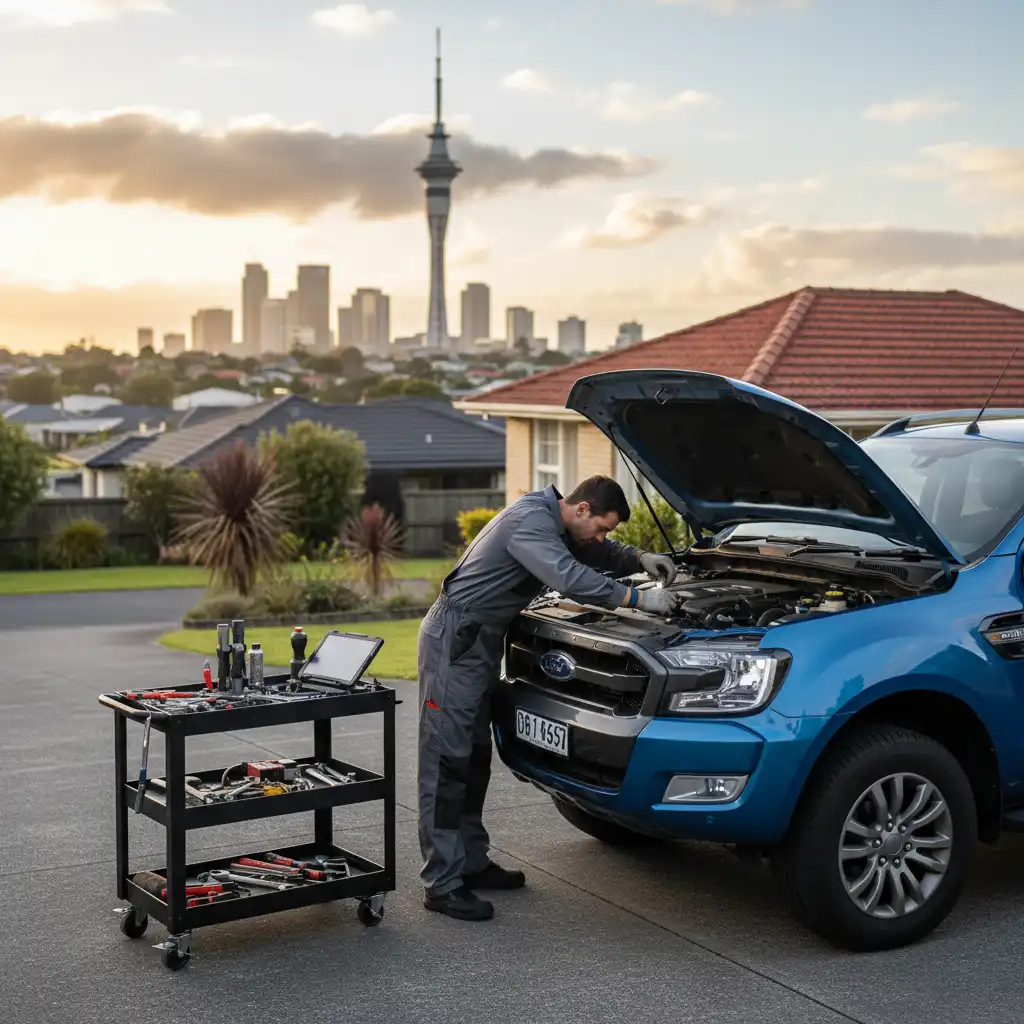
The traditional model of dropping your car off at a workshop for the entire day is becoming increasingly impractical for busy Aucklanders. This has given rise to the mobile mechanic sector, which is particularly well-suited for Ford maintenance. Mobile specialists carry the same diagnostic tools as static workshops but offer superior convenience.
On-Site Diagnostics
When a Ford fails—whether it’s a dead battery in a Mondeo or a transmission fault in a Focus—it often happens at the most inconvenient time. Towing a vehicle to a garage adds significant cost and stress. A mobile mechanic can come to your home or workplace to perform the initial diagnosis. In many cases, issues like battery replacement, alternator failure, or sensor replacements can be resolved on the spot.
Transparency and Trust
One of the hidden benefits of using a mobile service is transparency. You have the opportunity to speak directly with the technician working on your car, rather than a service receptionist. You can see the parts being replaced and the quality of the fluids being used. This is vital for Ford owners ensuring that Motorcraft-approved fluids are actually going into their vehicles.
Preventative Care for Long-Lasting Performance
Preventative maintenance is the key to avoiding the common faults listed above. A reactive approach—fixing things only when they break—is invariably more expensive than a proactive schedule.
Fluid Integrity
Transmission fluid changes are crucial. For the 6-speed automatic transmissions (6R80) found in Rangers and Territorys, fluid degradation leads to torque converter shudder. We recommend shortening the manufacturer’s recommended service interval for transmission fluids if you frequently tow boats or carry heavy loads, which is common in the Auckland lifestyle.
Battery Management System (BMS) Reset
Modern Fords are equipped with a Smart Charge system and a Battery Management System. When replacing a battery, it is not enough to simply swap the unit. The BMS must be reset using a diagnostic tool to tell the alternator that a new battery has been installed. Failing to do this can lead to the alternator overcharging the new battery, significantly shortening its lifespan. This is a step often missed by generalist mechanics but always performed by Ford specialists.
Booking Your Ford Service in Auckland
Ensuring your Ford receives the highest standard of care requires choosing a partner who understands the intricacies of the brand. Whether you drive a commercial Transit van requiring urgent attention to minimize downtime, or a family SUV needing a safety check before a holiday road trip, expert assistance is available.
When booking a service, always ask if the provider uses OEM (Original Equipment Manufacturer) or equivalent quality parts, and ensure they have the specific software required to communicate with Ford’s complex electronic modules. Regular maintenance not only preserves the resale value of your vehicle but ensures the safety of you and your family on New Zealand roads.
For authoritative information on vehicle safety standards and recalls in New Zealand, you can consult the NZ Transport Agency (Waka Kotahi) safety recalls page.
Frequently Asked Questions
How often should I service my Ford Ranger in Auckland?
While the standard interval is often every 15,000km or 12 months, for Auckland city driving or heavy towing, we recommend an intermediate oil change every 7,500km to protect the turbo and timing chain.
Why is my Ford Focus shuddering when I accelerate?
This is a classic symptom of a PowerShift dual-clutch transmission issue. It usually indicates that the clutches are glazed or the Transmission Control Module (TCM) requires recalibration or replacement.
Can a mobile mechanic fix my Ford’s ECU problems?
Yes, provided they have professional diagnostic scanners capable of coding and programming. Mobile specialists can diagnose engine lights, reset BMS systems, and often update module software on-site.
What is the Ford EcoBoost wet belt issue?
The 1.0L EcoBoost engine uses a timing belt submerged in oil. If oil changes are neglected or incorrect oil is used, the belt degrades, clogging the oil pickup and potentially destroying the engine. Replacement is recommended every 10 years or 240,000km, though sooner is safer.
Do I need to use genuine Ford parts for my service?
It is highly recommended, especially for oil filters, fuel filters, and electrical sensors. Ford engines are sensitive to flow rates and tolerances that aftermarket parts sometimes fail to match.
Why is my Ford Ranger DPF light on?
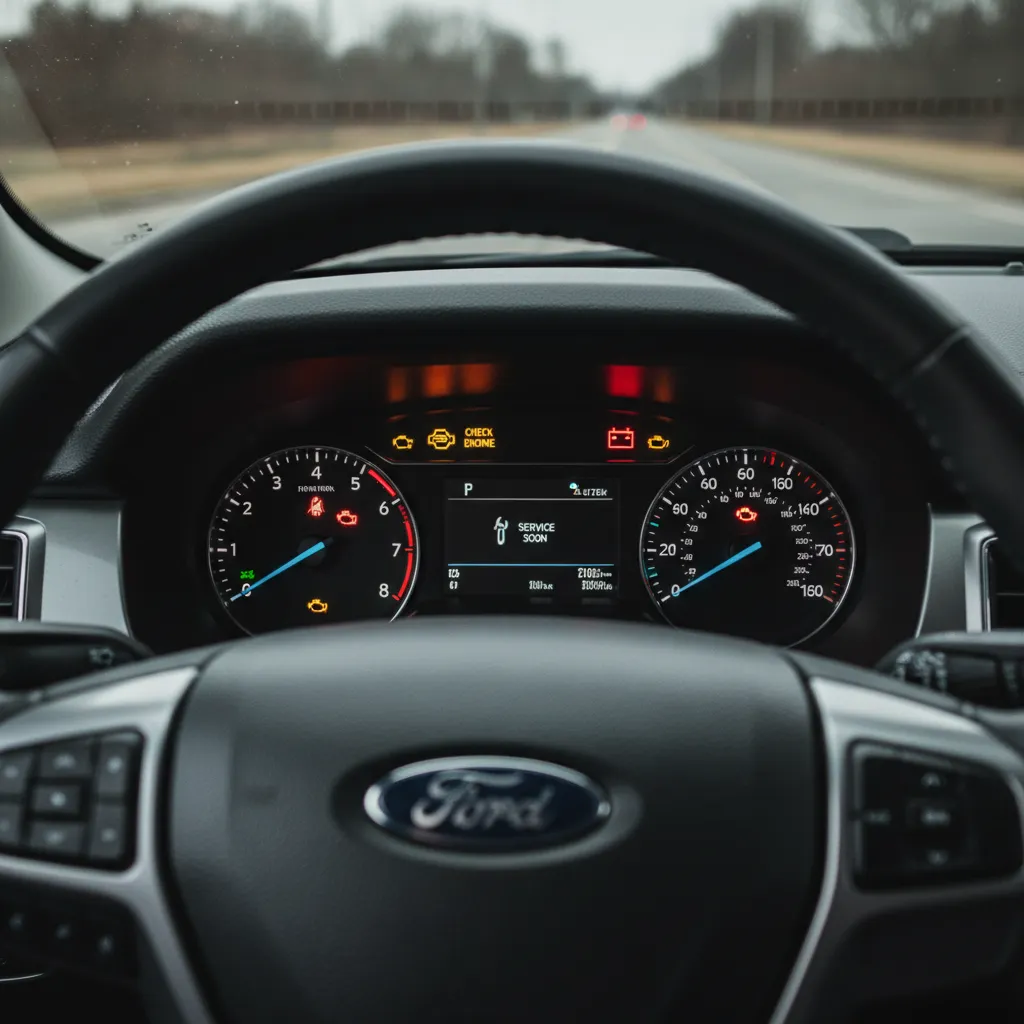
The DPF light indicates the Diesel Particulate Filter is clogged with soot. This happens if the vehicle is only driven on short trips. You may need a “forced regeneration” performed by a mechanic or a long highway drive to clear it.