
Holden Commodore electrical faults in Auckland typically manifest as battery drains, faulty ABS modules, or ECU errors common in VE and VF models. Diagnosing these requires specialized scanning tools to isolate wiring issues versus component failure. Professional mobile diagnostics provide the most efficient solution for restoring your vehicle’s reliability on Auckland roads.
The Holden Commodore holds a special place in the automotive history of New Zealand. For decades, it has been the vehicle of choice for families, enthusiasts, and fleets across Auckland. However, as these vehicles age—particularly the popular VZ, VE, and VF models—electrical gremlins have become a notorious headache for owners. Unlike mechanical failures which are often audible or visible, electrical faults can be invisible, intermittent, and deeply frustrating.
In the humid, coastal environment of Auckland, electrical connectors and grounding points are susceptible to corrosion, exacerbating inherent design quirks within the Commodore’s complex wiring loom. Whether you are dealing with a persistent “Check Engine” light, a drain that kills your battery overnight, or an infotainment system that resets itself, understanding the root cause is critical. This guide provides a comprehensive look at diagnosing and fixing these issues, specifically tailored for Auckland vehicle owners utilizing mobile mechanic services.
Common Electrical Issues in Commodores
The electrical architecture of the Holden Commodore, particularly from the VE series onwards, represented a significant leap forward in technology. The introduction of the CAN-bus (Controller Area Network) system allowed various modules to communicate, but it also meant that a single fault could trigger a cascade of errors across the vehicle. Below are the most frequent electrical failures encountered by mechanics in Auckland.
The VE/VF ABS Module Failure
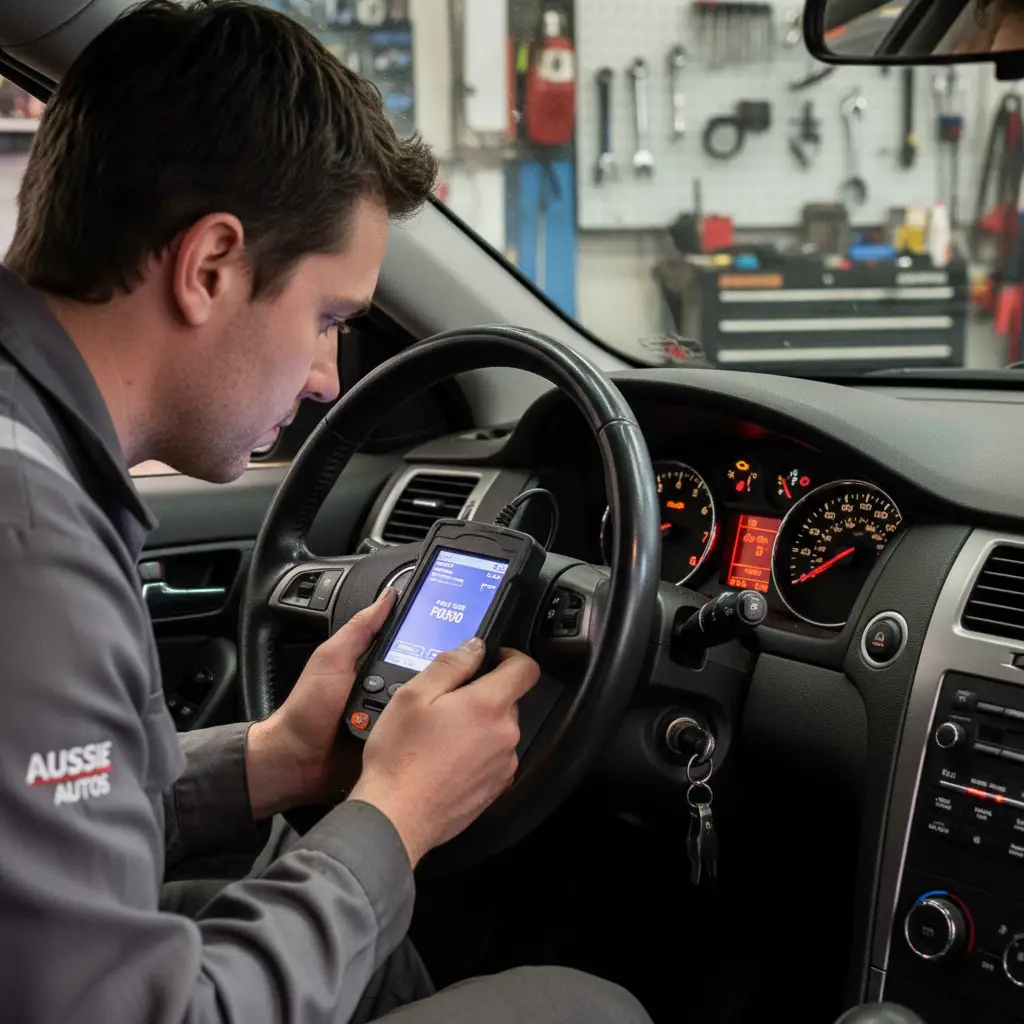
One of the most widespread issues in the VZ and VE Commodore range is the failure of the ABS (Anti-lock Braking System) control module. This component is located in the engine bay, where it is subjected to intense heat and vibration. Over time, the internal soldering joints can fracture, leading to a loss of communication.
When this module fails, it doesn’t just disable your ABS. Because the ABS module is a central node in the vehicle’s data network, its failure often triggers a “Stability Control Off” warning, disables the speedometer, and can even prevent the car from starting. In Auckland’s stop-start traffic, losing stability control is a safety risk that requires immediate attention.
Timing Chain Induced Sensor Errors
While technically a mechanical issue, timing chain stretch in the Alloytec V6 engines often presents as an electrical fault. As the chain stretches, the correlation between the crankshaft and camshaft sensors drifts. The ECU (Engine Control Unit) interprets this as a sensor failure, throwing codes such as P0008 or P0017.
Many vehicle owners mistakenly replace the sensors or the ECU, assuming it is an electrical glitch, only to find the check engine light returns. Accurate electrical diagnosis involves inspecting the live data stream to verify the cam/crank correlation before condemning electrical components.
Alternator and Charging System Weaknesses
The alternator on the V8 and V6 Commodores is a hardworking component that often fails prematurely. In the VE model, the alternator is controlled by the ECU to manage fuel economy. However, when the alternator begins to fail, it can send voltage spikes through the system or fail to charge the battery adequately during short trips—a common driving pattern in Auckland suburbs.
Symptoms often include dimming headlights, a battery light on the dash, or the radio cutting out when the indicators are used. For authoritative information on how charging systems function, Wikipedia’s overview of automotive alternators provides an excellent technical breakdown of the components involved.
Symptoms of Electrical Problems
Recognizing the early signs of electrical failure can save you from a costly tow or being stranded on the Auckland Harbour Bridge. Electrical faults rarely fix themselves; they tend to escalate. Here are the key symptoms to watch for.
The “Christmas Tree” Dashboard
This term describes a situation where multiple warning lights illuminate simultaneously. You might see the ABS light, Traction Control light, Airbag warning, and Check Engine light all trigger at once. This usually indicates a communication breakdown on the CAN-bus network rather than four separate mechanical failures. It suggests that the main computer (ECU) or the Body Control Module (BCM) is receiving corrupted data.
Parasitic Battery Drain
A parasitic drain occurs when an electrical component continues to draw power after the engine is turned off. In Commodores, common culprits include:
- Bluetooth Modules: In some models, the Bluetooth module fails to enter “sleep mode,” draining the battery within 24 hours.
- Boot Lights: Faulty latches can keep the boot light illuminated without the driver knowing.
- Aftermarket Accessories: Poorly installed alarms or audio systems are frequent offenders.
If you find yourself needing a jump start frequently despite having a relatively new battery, you likely have a parasitic drain.
Intermittent Power Loss and Stalling
Perhaps the most dangerous symptom is intermittent power loss. This can be caused by a loose ground wire, a failing crank angle sensor, or a degrading main relay. In the heat of an Auckland summer, electrical resistance increases, which can cause failing components to open the circuit, cutting the engine instantly. Once the component cools down, the car may restart, making the issue difficult to diagnose without professional equipment.
Mobile Electrical Diagnostics for Commodore
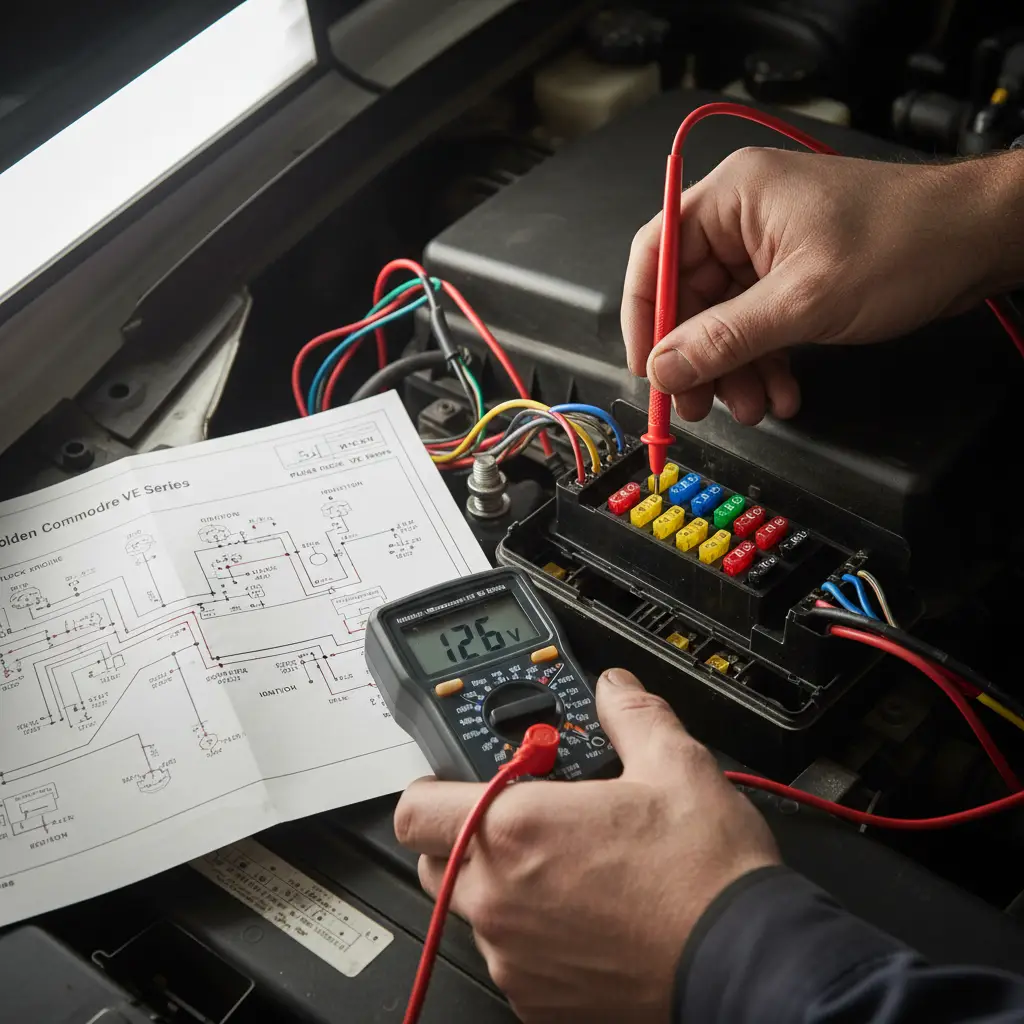
Gone are the days when a test light was sufficient to diagnose a car. Modern Commodores require advanced diagnostic computers that can interrogate the vehicle’s various modules. Mobile mechanics in Auckland have adapted to this need, bringing workshop-level diagnostics directly to your driveway.
The Advantage of Mobile Diagnosis
Electrical faults often render a vehicle unsafe or impossible to drive. Towing a vehicle to a workshop adds significant cost and hassle. A mobile auto electrician or mechanic can perform the initial triage on-site. This is particularly valuable for intermittent faults, as the mechanic can test the vehicle in the environment where the fault occurred.
The Diagnostic Process
A professional diagnosis follows a structured path to ensure accuracy:
- Code Scanning: Using a high-level scan tool (such as Snap-on or G-Scan) to retrieve current and historical error codes from all modules (Engine, Transmission, ABS, BCM).
- Live Data Analysis: Watching the sensors operate in real-time. For example, observing the voltage output of the oxygen sensors or the wheel speed sensor data while driving.
- Circuit Testing: If a component is flagged, the mechanic uses a multimeter and oscilloscope to check the wiring integrity. They look for high resistance, shorts to ground, or open circuits.
- Module Isolation: In complex network faults, modules are disconnected one by one to see if the communication network stabilizes, identifying the rogue unit.
Reliable Fixes for Your Holden
Once the fault is identified, the repair process for a Holden Commodore requires precision and quality parts. Using cheap, aftermarket sensors on these sensitive vehicles often leads to a recurrence of the fault.
ECU Repair and Programming
If the Engine Control Unit is deemed faulty, it is rarely a simple plug-and-play swap. The new ECU must be security-linked to the vehicle’s BCM and key fobs using dealer-level software (Tech2 or MDI). Mobile mechanics equipped with programming capabilities can perform this onsite, syncing the immobilizer system so the car will start.
Clock Spring Replacement
For VF Commodores, a common electrical failure involves the “clock spring” behind the steering wheel. This component maintains the electrical connection to the airbag and steering wheel controls while the wheel turns. Failure results in an airbag warning light. Replacement is delicate work requiring the deactivation of the SRS (Safety Restraint System) to prevent accidental airbag deployment.
Wiring Loom Repairs
Rather than replacing entire harnesses, which is cost-prohibitive, skilled technicians can repair specific sections of the loom. This involves cutting out corroded or burnt wire, soldering in new marine-grade wire (essential for Auckland’s climate), and heat-shrinking the connection to seal it against moisture. Particular attention is paid to the wiring passing through the door jams and the boot lid, which flexes every time the car is used.
Preventative Maintenance for Auckland Drivers
Prevention is always cheaper than cure. Given the age of the Commodore fleet, proactive maintenance can prevent being stranded.
Check Your Drains
The VE Commodore has a known issue where the plenum chamber drains (located near the windscreen wipers) become blocked with leaves and debris. When this happens, rainwater fills the cavity and spills over into the cabin, often flooding the ECU or the interior fuse box. Regularly clearing these drains is a critical preventative step for Auckland owners who park outside.
Battery Health Checks
Modern Holdens are incredibly sensitive to voltage. A battery that is operating at 80% capacity might start the car but can cause havoc with the sensitive electronics, triggering false error codes. Regular load testing of your battery, especially before winter, ensures the system receives the stable voltage it requires. For more tips on vehicle maintenance and safety, the NZ Transport Agency (Waka Kotahi) offers guidelines on keeping your vehicle roadworthy.
By understanding the specific electrical vulnerabilities of the Holden Commodore and utilizing expert mobile diagnostic services in Auckland, you can extend the life of your vehicle and ensure a safe, reliable drive.
Frequently Asked Questions
Why does my Holden Commodore have a “Check Drivetrain” warning?
The “Check Drivetrain” warning in Commodores (especially VE/VF models) is a generic alert that can indicate anything from a stretched timing chain and cylinder misfires to transmission sensor faults. It requires a scan tool to read the specific P-codes to diagnose the root cause accurately.
How much does a mobile electrical diagnosis cost in Auckland?
Mobile electrical diagnosis fees in Auckland typically range from $120 to $180 NZD for the initial call-out and first hour of labor. This usually covers the scan, visual inspection, and basic circuit testing.
Can a mobile mechanic fix a Commodore ECU fault onsite?
Yes, provided they have the correct programming equipment (such as Tech2 or MDI tools). They can replace the ECU and perform the necessary security linking to the Body Control Module and keys onsite.
What causes the ABS light to stay on in a VE Commodore?
The most common cause is a wheel speed sensor failure or a fault within the ABS module itself. In VE Commodores, the rear wheel speed sensor wiring harnesses are also prone to damage from suspension movement.
Is it worth fixing electrical issues on an older Commodore?
Generally, yes. Commodores are robust vehicles, and electrical faults are often isolated to specific sensors or modules. Once fixed properly, the car can remain reliable for many years. However, a proper diagnosis is needed first to ensure the repair cost doesn’t exceed the vehicle’s value.
Why does my Commodore battery keep going flat?
This is usually due to a parasitic drain. Common culprits in Commodores include the Bluetooth module staying active, boot lights sticking on, or aftermarket accessory installations. A mechanic can perform a parasitic draw test to identify the specific circuit causing the drain.