
A properly functioning air conditioning system is not a luxury but a necessity for comfort and safety, especially during Auckland’s warmer months or for demisting purposes. For Honda Civic owners, maintaining this system is crucial for an enjoyable driving experience. When your Civic’s AC starts blowing warm air, making strange noises, or simply stops working, it signals a need for professional attention.
Honda Civic AC repair in Auckland addresses issues from refrigerant leaks to compressor failures, ensuring your vehicle’s air conditioning system operates at peak efficiency. Our mobile mechanics provide convenient, on-site diagnostics and regas services, restoring comfortable, cold air to your Civic without the need for a workshop visit.
Common AC Issues in Honda Civics
Honda Civics are renowned for their reliability, but like any vehicle, their AC systems can develop specific problems over time. Understanding these common issues can help you identify a problem early and seek timely repairs.
Refrigerant Leaks: The Silent System Killer
Refrigerant is the lifeblood of your AC system, responsible for cooling the air. Over time, seals, O-rings, hoses, and connections can degrade, leading to slow leaks. These leaks often go unnoticed until the AC performance significantly drops. Common leak points in Civics include the compressor seals, condenser, evaporator, and various pressure lines. A dye test is usually required to pinpoint these elusive leaks.
Compressor Failure: The Heart of the System
The AC compressor is essentially the pump that circulates refrigerant. It’s a complex component that can fail due to lack of lubrication (often from low refrigerant), electrical issues, or simply wear and tear. Symptoms of a failing compressor can include loud noises when the AC is on, a complete lack of cooling, or the AC clutch failing to engage. Replacing a compressor is a significant repair but often necessary to restore full functionality.
Electrical Malfunctions: Fuses, Relays, and Wiring
The AC system in a Honda Civic relies heavily on electrical components. Fuses can blow, relays can fail, and wiring can fray or become corroded, all of which can disrupt the flow of power to critical components like the compressor clutch or the blower motor. Diagnosing electrical issues requires specialized tools and expertise to trace the fault accurately.
Condenser and Evaporator Problems
The condenser, located at the front of the car, is susceptible to damage from road debris, leading to leaks or blockages. The evaporator, inside the dashboard, can become clogged with debris or develop leaks, affecting cooling efficiency and sometimes leading to a musty smell. Both components are vital for heat exchange, and damage to either can severely impact AC performance.
Blower Motor Issues: No Air, No Cool
Even if your AC system is producing cold air, it’s useless if the blower motor isn’t pushing that air into the cabin. A failing blower motor might produce weak airflow, intermittent operation, or no airflow at all. This can be due to a faulty motor, a worn-out resistor, or blockages in the air intake.
Symptoms of a Failing Civic AC
Recognizing the signs of a struggling AC system in your Honda Civic early can prevent more extensive and costly repairs down the line. Pay attention to these common indicators:
Warm Air from Vents: The Obvious Sign
The most unmistakable sign of an AC problem is when your system starts blowing air that isn’t cold, or worse, is warm. This almost always indicates low refrigerant, a failing compressor, or a significant leak somewhere in the system. Don’t ignore it; the longer you run a low-refrigerant system, the more damage it can cause to the compressor.
Unusual Noises: Grinding, Clicking, or Squealing
Strange sounds emanating from your engine bay when the AC is engaged are a strong indicator of mechanical trouble. A grinding or squealing noise often points to a failing compressor, a worn clutch, or issues with the pulley bearing. A constant clicking sound might indicate an electrical fault with the compressor clutch repeatedly trying to engage and disengage.
Foul Odours: Musty, Mildewy, or Chemical Smells
If you notice a musty, moldy, or mildew-like smell when your AC is running, it’s likely due to bacterial or fungal growth on the evaporator core. This is a common issue and can often be resolved with an AC system clean. However, a sweet, chemical smell could indicate a refrigerant leak, which requires immediate attention as refrigerants can be harmful.
Visible Leaks or Stains: Oily Residue
While refrigerant itself is clear, it often contains a lubricant oil. If you spot oily stains or residue under your car, especially near AC components, it could be a sign of a refrigerant leak. A UV dye test can confirm the presence and location of these leaks, as the dye glows under a special light.
Intermittent Cooling: On-Again, Off-Again
An AC system that cools sporadically, working sometimes but not others, can be particularly frustrating. This often points to electrical issues, a failing pressure switch, or a compressor clutch that’s intermittently seizing. It requires careful diagnostics to identify the root cause of the inconsistency.
On-Site AC Diagnostics & Repair
The convenience of a mobile mechanic for AC diagnostics and repair in Auckland cannot be overstated. Instead of taking time off work and waiting at a garage, the service comes to you, minimizing disruption to your day.
The Convenience of Mobile Service
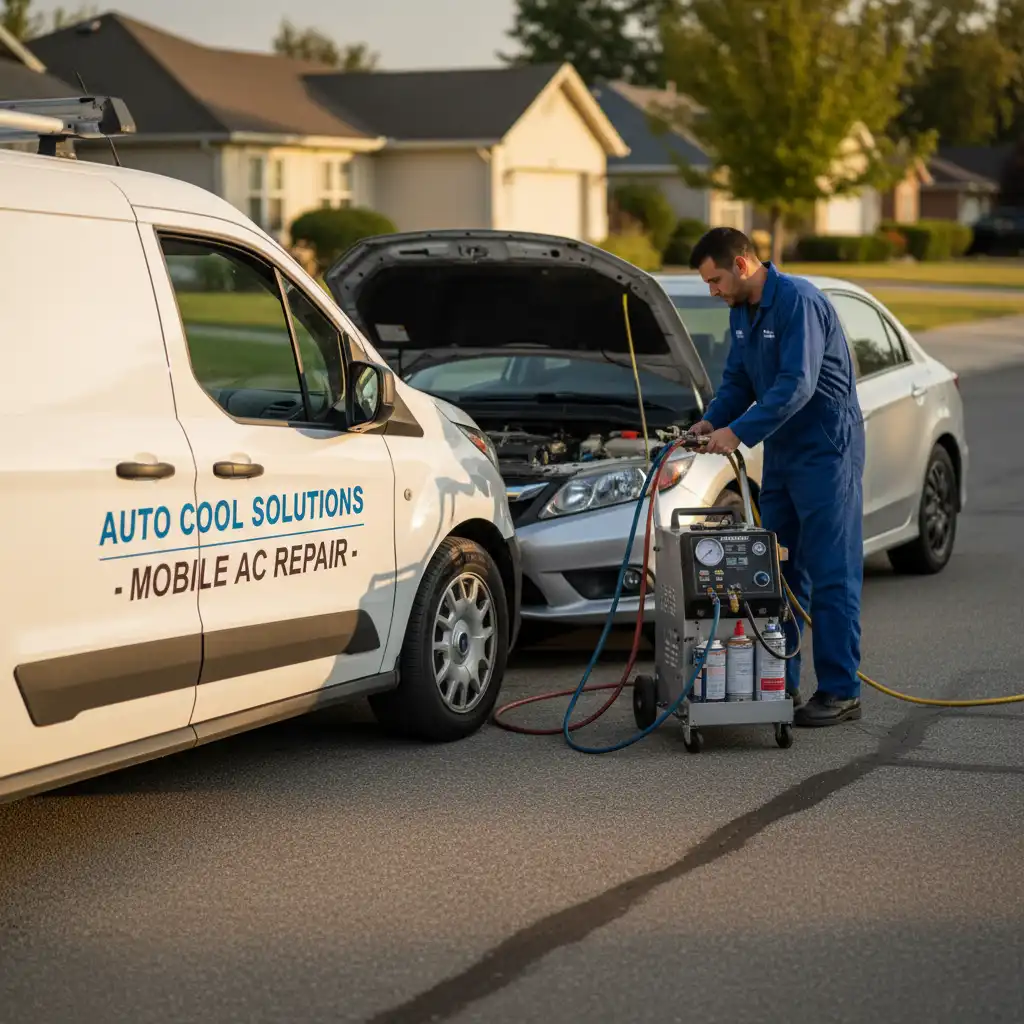
For Honda Civic owners in Auckland, our mobile AC repair service eliminates the hassle of transport and waiting rooms. Whether you’re at home, work, or even stranded, our technicians can arrive equipped to diagnose and repair your AC system on the spot. This transactional convenience is ideal for busy individuals who value efficiency and professional service at their location.
Comprehensive Diagnostics Process
Our diagnostic process is thorough and precise. We don’t just guess; we use specialized equipment to accurately identify the problem. This includes:
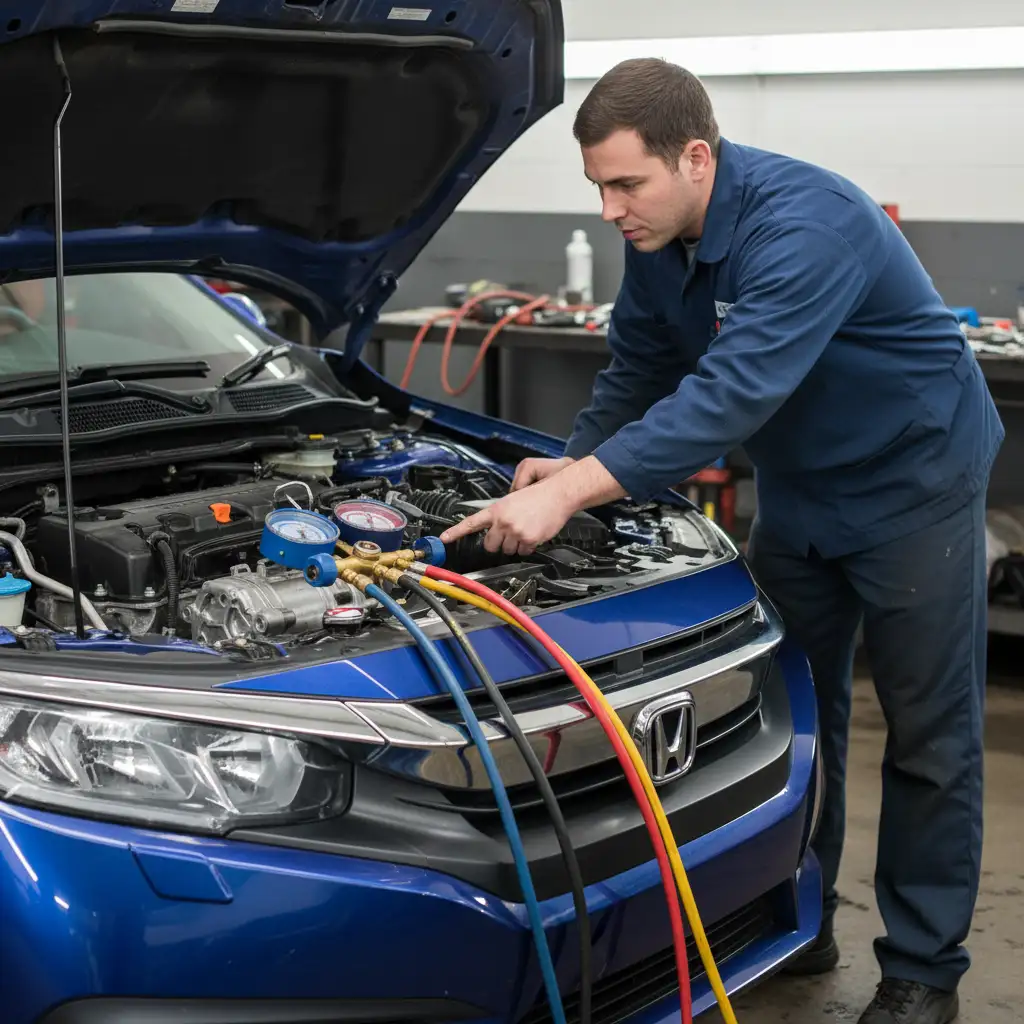
- Pressure Testing: Checking the high and low-side pressures of the refrigerant system to identify over- or under-charging, or component restrictions.
- Leak Detection: Utilizing UV dye and electronic sniffers to pinpoint even the smallest refrigerant leaks.
- Electrical System Checks: Testing fuses, relays, wiring, and sensors to ensure all electrical components are functioning correctly.
- Component Inspection: Visually inspecting the compressor, condenser, evaporator, hoses, and lines for physical damage, corrosion, or wear.
Our goal is to accurately diagnose the problem the first time, ensuring that only necessary repairs are carried out.
Regas and Refrigerant Recharge for Optimal Performance
One of the most common solutions for a warm-blowing AC is a professional regas service. Over time, even without a major leak, refrigerant can slowly escape the system, leading to diminished cooling performance.
The Importance of Proper Refrigerant Levels
The efficiency of your Honda Civic’s AC system relies on the correct amount of refrigerant. Too little, and it won’t cool effectively; too much, and it can put undue stress on the compressor and other components. Our regas service involves evacuating the old refrigerant, vacuuming the system to remove moisture and air, and then recharging it with the precise amount of new, high-quality refrigerant (typically R134a for most Civics, or R1234yf for newer models as specified by the manufacturer).
Identifying and Fixing Leaks Before Regassing
Crucially, simply regassing a system with a leak is a temporary fix and a waste of refrigerant. Before any regas, our technicians always perform a thorough leak detection process. If a leak is found, it must be repaired first to ensure the new refrigerant remains in the system, providing lasting cold air. This commitment to proper procedure saves you money and protects the environment. For more information on refrigerants, you can refer to authoritative sources like Wikipedia’s page on Refrigerants.
Component Replacement Solutions
Sometimes, a regas isn’t enough, and specific components need replacement to restore your AC system to full health. Our mobile service is equipped to handle these more involved repairs.
Compressor Replacement: Restoring the Pumping Power
If diagnostics reveal a faulty compressor, replacement is often the most reliable solution. We source high-quality replacement compressors that match your Honda Civic’s specifications, ensuring longevity and optimal performance. The process involves safely evacuating the system, removing the old compressor, installing the new one, and then performing a full system flush, vacuum, and regas. This comprehensive approach is vital for preventing premature failure of the new component.
Condenser and Evaporator Replacement
Damage to the condenser or evaporator, whether from impacts or corrosion, necessitates replacement. Our mobile technicians can meticulously replace these components, which can be time-consuming, especially the evaporator which is often buried deep within the dashboard. We ensure all new parts are properly installed and the system is sealed and tested to factory specifications.
Hose and Line Repairs or Replacement
AC hoses and lines are subject to vibrations, heat, and pressure fluctuations, which can lead to cracks or leaks. We can repair or replace damaged hoses and lines, using high-quality materials designed to withstand the harsh conditions of an automotive AC system. Proper crimping and sealing are critical to prevent future leaks.
Restore Cold Air to Your Civic
Our ultimate goal is to get your Honda Civic’s air conditioning blowing cold air again, ensuring your comfort on the road. We understand the specific nuances of Honda AC systems and apply our expertise to deliver effective, lasting solutions.
Why Professional Service Matters for Your Honda Civic AC
Attempting DIY AC repairs or opting for inexperienced technicians can lead to further damage, costly mistakes, or incomplete fixes. Professional AC service ensures that certified technicians with specialized tools and knowledge handle your Honda Civic. We follow manufacturer guidelines and industry best practices, guaranteeing a safe and effective repair. Furthermore, proper handling of refrigerants is essential not only for system integrity but also for environmental responsibility.
Preventative AC Maintenance for Longevity
To avoid frequent AC repair issues, regular preventative maintenance is key. Simple steps can significantly extend the life and efficiency of your Honda Civic’s air conditioning system.
Regular System Checks and Cabin Filter Replacement
Scheduling annual AC system checks allows technicians to identify potential problems before they escalate. This includes checking refrigerant levels, inspecting hoses and belts, and testing system pressures. Regularly replacing your cabin air filter (typically every 15,000-25,000 km or annually) is also crucial. A clogged cabin filter restricts airflow, reduces cooling efficiency, and can introduce allergens and unpleasant odours into the cabin. This small, often overlooked task plays a significant role in maintaining air quality and AC performance. For general car maintenance tips, reputable sources like NZTA’s guide on vehicle maintenance can be helpful.
Running Your AC Year-Round
Even during colder months, it’s beneficial to run your Honda Civic’s AC system for about 10-15 minutes once a week. This circulates the refrigerant and lubricants, keeping the compressor seals lubricated and preventing them from drying out and cracking, which can lead to leaks. It also helps to prevent mold and mildew growth within the system, reducing foul odours.

Why Choose Mobile AC Repair in Auckland?
Choosing a mobile mechanic for your Honda Civic AC repair and regas in Auckland offers unparalleled benefits:
- Convenience: We come to your home or workplace, saving you valuable time.
- Transparency: All diagnostics and repairs are performed in front of you, fostering trust and clear communication.
- Expertise: Our technicians are highly trained and equipped with specialized tools for all Honda Civic AC models.
- Cost-Effective: Eliminating towing fees and workshop overhead often translates to more competitive pricing.
- Speed: Many common AC issues, including regas services, can be resolved efficiently on-site, getting you back on the road with cold air faster.
Don’t let a faulty AC diminish your driving comfort. For reliable, expert Honda Civic AC repair and regas service throughout Auckland, trust our mobile mechanics to bring the solution directly to you.