
Failed WOF repairs in Auckland involve addressing specific safety defects identified during a Warrant of Fitness inspection, such as worn tyres, faulty brakes, or suspension issues. To pass the re-inspection, vehicle owners must rectify these faults within 28 days at an authorized automotive workshop to avoid paying a second inspection fee.
Failing a Warrant of Fitness (WOF) can be a stressful experience for any motorist. In New Zealand, the WOF is not just a bureaucratic hurdle; it is a critical safety check designed to ensure that every vehicle on the road meets minimum safety standards established by Waka Kotahi (NZ Transport Agency). When your vehicle fails, it is legally deemed unsafe, and the clock immediately starts ticking on getting it back to a roadworthy condition.
For drivers in Auckland, navigating the repair process efficiently is essential to minimize downtime and cost. Whether it is a simple blown bulb or complex suspension play, understanding the scope of repairs required is the first step toward getting your updated WOF label. This guide covers everything you need to know about interpreting your failure sheet, prioritizing repairs, and finding reliable service providers to handle your failed WOF repairs in Auckland.

Understanding the WOF Checksheet
When your vehicle fails an inspection, the inspector provides a checksheet (often called a ‘fail sheet’) detailing exactly why the WOF was withheld. Interpreting this document correctly is vital for obtaining accurate repair quotes.
Deciphering Inspector Notes
The checksheet is divided into sections corresponding to different vehicle systems (e.g., Lights, Brakes, Steering). Inspectors will circle or list specific defect codes. While some are self-explanatory, others use technical jargon. For instance, a note saying “Play in LH lower ball joint” refers to a specific suspension component that has worn out, allowing excessive movement. Understanding that this is a safety-critical issue helps you realize why the car failed.
Regulatory Standards
It is important to remember that the inspector is not failing your car to be difficult; they are bound by the Vehicle Inspection Requirements Manual (VIRM). This manual sets the specific tolerances for every component. If a tyre tread is 1.4mm, it fails because the legal limit is 1.5mm. There is no grey area in these measurements. Recognizing that these are objective standards can help you approach the repair process with a clear focus on compliance rather than frustration.
Common WOF Failure Items & Quick Fixes
Many WOF failures in Auckland are caused by relatively minor issues that are easily rectified. Being proactive about these items before your inspection can often save you the hassle of a failure.
Lighting and Electrical Systems
Lighting defects are among the most frequent reasons for failure. This includes:
- Blown Bulbs: Headlights, brake lights, indicators, and specifically the high-stop light (the central brake light in the rear window).
- Lens Condition: Cracked or faded lenses can alter the beam pattern or light color. Yellow, oxidized headlight lenses are a common failure point for older vehicles as they reduce light output.
- Aiming: Headlights must be aligned correctly to avoid blinding oncoming traffic while sufficiently illuminating the road.
Tyres and Wheels
Your tyres are your only contact with the road, making them a primary focus of the inspection.
- Tread Depth: In New Zealand, the absolute minimum tread depth is 1.5mm across 75% of the tyre width. However, most mechanics recommend replacing them before they reach this limit for safety.
- Condition: Cracks in the sidewall, bulges, or exposed cords are instant failures.
- Directional Fitment: Some tyres are designed to rotate in one direction only. If a tyre has been put on backward (often after a puncture repair), it will fail the WOF.
Wipers and Vision
Visibility is paramount. Wipers that streak or leave unwiped patches will result in a failure. Furthermore, the condition of the windscreen is critical. Damage in the “Critical Vision Area” (the driver’s direct line of sight) is strictly regulated. A small chip might pass, but a crack or significant bullseye damage in this zone will require a windscreen replacement.
Addressing Structural and Mechanical Faults
While bulbs and wipers are quick fixes, structural and mechanical failures require professional intervention and are often the reason drivers search for specialized failed WOF repairs in Auckland.
Brake System Efficiency
The WOF test measures brake balance and efficiency on a roller machine. Common failures include:
- Imbalance: If the brakes on the left pull significantly harder than the right, the car could spin during an emergency stop. This is often caused by a seized caliper or a leaking wheel cylinder.
- Pad and Disc Wear: Brake pads must not be worn below the manufacturer’s limit. If the brake discs (rotors) are too thin or heavily scored, they cannot dissipate heat effectively and must be replaced.
- Handbrake Travel: If the handbrake lever pulls up too high or fails to hold the vehicle, it requires adjustment or new cables.
Rust and Structural Integrity
Rust is a major concern in older vehicles, particularly in coastal cities like Auckland. The VIRM distinguishes between cosmetic rust and structural rust. Structural rust affects the vehicle’s crashworthiness and is usually found in sills, cross-members, and A-pillars. Repairs for structural rust must be carried out by a certified panel beater and often require a specific repair certification to prove the strength of the weld matches the original manufacturing standards.
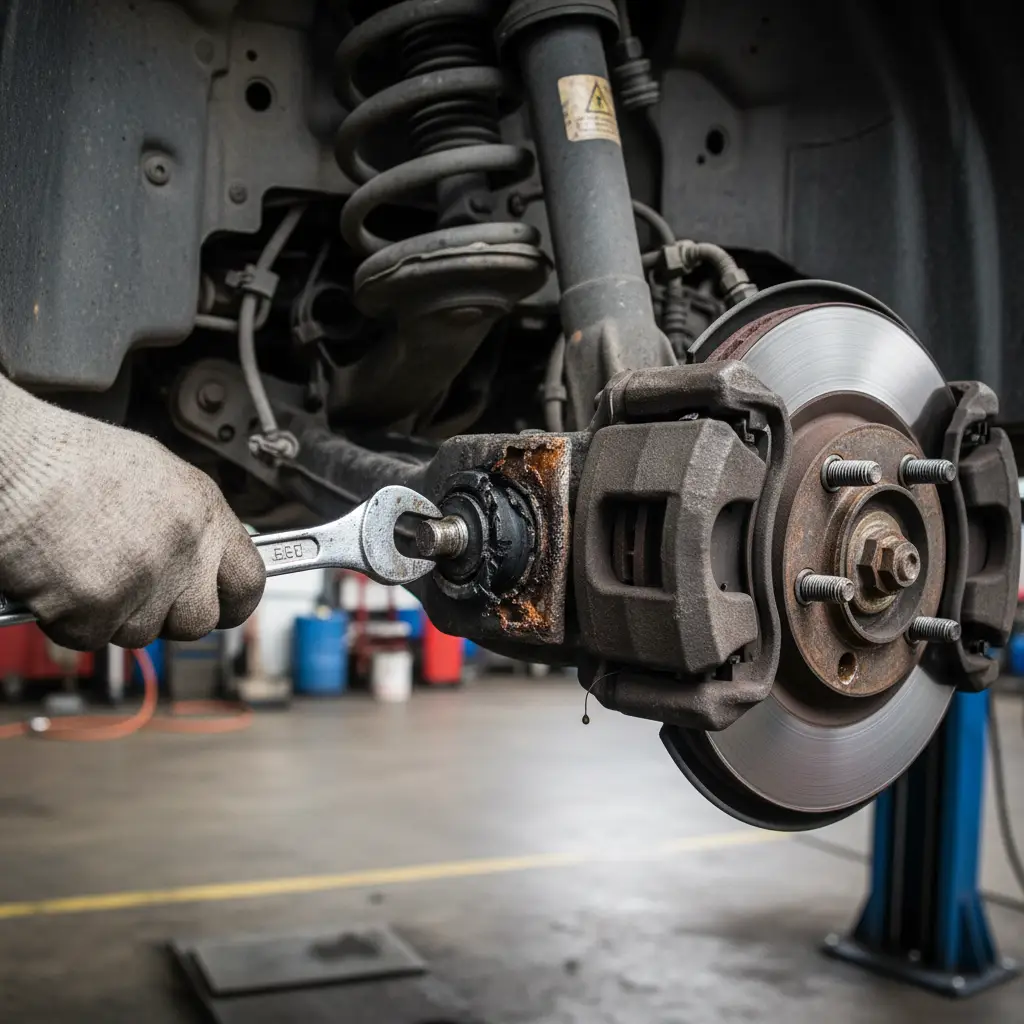
Fixing Suspension Play and Steering Issues
Suspension faults are perhaps the most common “expensive” failure item. The suspension system is complex, composed of various arms, links, and bushes that degrade over time due to New Zealand’s road conditions.
Identifying “Play”
When an inspector notes “play,” they are referring to unwanted movement in a joint. This movement affects handling and tyre wear. Common culprits include:
- Ball Joints: These pivot points connect the control arms to the steering knuckles. When they wear, they can clunk and cause vague steering.
- Control Arm Bushes: These rubber components isolate vibration. Over time, the rubber perishes and cracks, allowing metal-on-metal contact or excessive movement.
- Tie Rod Ends and Rack Ends: These connect the steering rack to the wheels. Wear here leads to sloppy steering and uneven tyre wear.
The Repair Process
Fixing suspension issues usually involves replacing the worn component entirely. In modern vehicles, it is often more cost-effective to replace a complete control arm (which comes with new bushes and a ball joint pre-installed) rather than pressing out individual bushes. After any suspension work, a wheel alignment is strictly mandatory. Without an alignment, your new parts will wear out prematurely, and your steering wheel may be off-center.
The 28-Day Re-inspection Rule Explained
There is a widespread misconception regarding the 28-day period following a WOF failure. It is critical to understand the legalities to avoid fines.
It Is Not a Grace Period for Driving
If your WOF has expired and you fail an inspection, you are not allowed to drive the vehicle for general purposes for 28 days. The vehicle is technically unroadworthy. You are only legally permitted to drive the car to a place of repair or to a testing station for a re-inspection. Driving for any other reason risks a fine and may void your insurance.
The Re-inspection Fee
The “28 days” refers to the window in which you can return to the same testing station for a re-check without paying the full inspection fee again. Usually, re-inspections are free or carry a nominal fee, provided you return within this timeframe. If you wait 29 days, the entire inspection process starts over, and you will be charged the full price again.
For authoritative information on vehicle standards and the inspection process, you can refer to Waka Kotahi NZ Transport Agency.
Choosing the Right Repairer in Auckland
Once you have your failure sheet, the next step is finding a trustworthy mechanic to perform the failed WOF repairs in Auckland. Not all workshops are created equal, and choosing the right one can impact both the quality of the repair and the final bill.
MTA Assured Workshops
Look for members of the Motor Trade Association (MTA). MTA members adhere to a strict code of ethics and offer a warranty on their workmanship. This provides a layer of consumer protection that is valuable when dealing with safety-critical repairs.
Specialist vs. Generalist
For general failures like brakes and tyres, most general automotive workshops in Auckland are suitable. However, if your vehicle failed due to complex electrical faults (ABS lights, airbag warnings) or structural rust, you may need a specialist. Auto-electricians are best for warning lights, while panel beaters are required for rust repairs.
Getting Estimates
Because the WOF sheet lists exactly what is wrong, you can often get fairly accurate estimates over the phone or via email. Send a photo of your fail sheet to local workshops and ask for a quote. Be wary of quotes that seem too cheap—they may use inferior parts that will wear out quickly, leading to another failure at your next inspection.
Maintaining a vehicle to WOF standards ensures not only compliance with the law but the safety of you and your family. By addressing failed WOF repairs promptly and professionally, you ensure your vehicle remains reliable on Auckland’s busy roads.
People Also Ask
Can I drive my car after it fails a WOF in NZ?
No, you cannot drive the vehicle for general use if your WOF has expired. You are only legally permitted to drive the car to a place of repair or to a testing station for a re-inspection. Driving for any other reason risks a fine and may void your insurance.
How much does it cost to fix a failed WOF?
The cost varies entirely based on the failure items. A simple bulb replacement might cost $20, while suspension repairs or new tyres can cost hundreds of dollars. It is best to take your WOF checksheet to a mechanic for an accurate quote.
What happens if I don’t fix my WOF within 28 days?
If you do not return for a re-inspection within 28 days, the initial inspection becomes void. You will have to start the process again, meaning you must pay for a brand new full WOF inspection.
Do I have to go back to the same place for a WOF re-check?
To avoid paying for a new inspection, yes. The testing station that failed the vehicle will usually perform the re-check for free (or a small fee). If you go to a different station, they are required to conduct a full inspection from scratch, charging the full fee.
Can a mechanic fix my car and give me a WOF at the same time?
Yes, many workshops in Auckland are authorized WOF providers. If they identify a fault, they can often quote for the repair, fix it on-site, and then issue the WOF immediately, saving you a second trip.
Is a wheel alignment required for a WOF?
A wheel alignment itself is not part of the WOF check, but the inspector checks for uneven tyre wear which indicates alignment issues. However, if you fail due to suspension components and have them replaced, a wheel alignment is necessary to complete the repair properly.