
A car wont start clicking noise is most commonly caused by a dead or weak battery that lacks the voltage necessary to fully engage the starter motor. Alternatively, if the battery tests fine, the issue often stems from a faulty starter solenoid (for more on Starter Motor Problems Diagnosis & Repair Auckland), corroded battery terminals, or a bad ground connection preventing the electrical current from turning the engine over.
Understanding the Clicking Noise: Rapid vs. Single Click
When you turn your key in the ignition or press the start button, and the engine refuses to roar to life, the specific sound it makes is your most valuable diagnostic clue. In the automotive world, not all clicks are created equal. Distinguishing between a rapid, machine-gun-style clicking and a single, loud clunk can save you hours of troubleshooting and prevent unnecessary part replacements.
The sound usually originates from the starter system. The starter relies on a high-amperage electrical current to extend a pinion gear, mesh it with the engine’s flywheel, and physically spin the internal components of the engine to begin the combustion cycle. When this process is interrupted, audible clicking occurs.
The Rapid Clicking Sound
If you hear a fast, repetitive clicking noise (click-click-click-click), this is almost exclusively a voltage issue. The starter solenoid tries to engage, but as soon as it makes contact, the voltage drop caused by the load of the starter motor causes the solenoid to disengage. As the load drops, voltage recovers slightly, and the solenoid tries again. This cycle repeats rapidly, creating the chattering sound. This usually points to a dead battery or loose terminal connections.
The Single Loud Click
A single, solid click each time you turn the key suggests a different set of problems. This sound indicates that the solenoid is receiving power and slamming the pinion gear forward, but the starter motor itself is not spinning. This is often a sign of a bad starter motor (dead spot in the armature), a seized engine (rare but serious), or a high-resistance electrical cable that cannot carry enough current to rotate the motor.
The Primary Culprit: Battery and Charging System
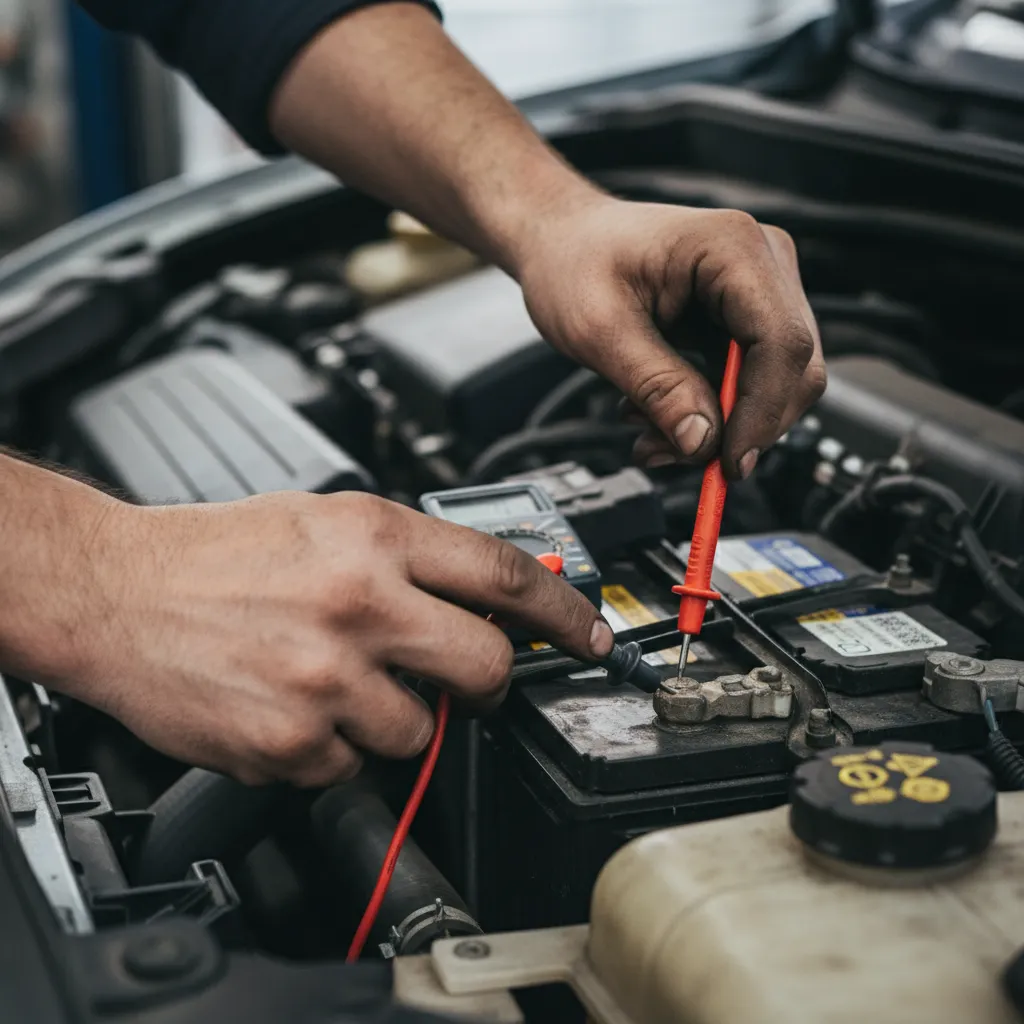
Before assuming you have a catastrophic mechanical failure, you must rule out the battery. According to automotive service data, over 70% of “no-start” conditions accompanied by clicking noises are battery-related. Even if your dashboard lights turn on and the radio works, the battery may not have enough “Cold Cranking Amps” (CCA) to turn the engine.
Visual Inspection and Terminal Cleaning
Begin by popping the hood and inspecting the battery terminals. Look for white, blue, or green powdery corrosion. This substance, lead sulfate, is non-conductive and can create a barrier between the battery post and the cable clamp. If corrosion is present:
- Disconnect the negative (-) cable first, followed by the positive (+).
- Clean the posts and clamps using a wire brush and a mixture of baking soda and water.
- Reconnect the positive cable first, then the negative, ensuring they are tight enough that you cannot wiggle them by hand.
Voltage Testing
Using a multimeter set to DC Volts, measure the battery’s resting voltage. A fully charged automotive battery should read approximately 12.6 volts. If the reading is 12.2 volts or lower, the battery is significantly discharged. If it reads below 10 volts, it may have a dead cell and require replacement. For a deeper understanding of lead-acid battery chemistry and maintenance, you can refer to Wikipedia’s guide on Lead-Acid Batteries.
Starter Motor and Solenoid Diagnostics
If the battery is fully charged and the connections are clean, but the car still won’t start and makes a clicking noise, the focus shifts to the starter assembly. The starter motor is a heavy-duty electric motor mounted low on the engine, subject to heat, vibration, and oil leaks, all of which contribute to eventual failure.
One common “field fix” or diagnostic trick for a single-click scenario involves tapping the starter motor. If the starter has a “dead spot” or the brushes are worn, firmly tapping the body of the starter with a hammer (while a helper turns the key) can sometimes jar the components enough to make contact one last time. If the car starts after tapping, the starter is undeniably faulty and must be replaced immediately.
Additionally, check the starter signal wire. This is the smaller wire connected to the solenoid. Ensure it hasn’t become corroded or disconnected. If this wire doesn’t receive 12 volts when the key is in the “Start” position, the issue lies upstream in the ignition switch or relay, not the starter itself.
Ignition Switch Diagnosis and Electrical Paths
The ignition switch is the gatekeeper of your vehicle’s electrical power. Over time, the internal contacts can wear out, causing intermittent starting issues. A faulty ignition switch can mimic a dead battery or bad starter.
Symptoms of a Bad Ignition Switch
To perform an ignition switch diagnosis, pay attention to the instrument cluster. When you turn the key to the “ON” position (before cranking), the dashboard warning lights (Check Engine, Battery, Oil) should illuminate. If they flicker or fail to turn on, the ignition switch may be failing to send power to the vehicle’s main relay.
Another test involves the “wiggle test.” While the key is in the ignition, gently wiggle it. If the accessories cut in and out or the car suddenly decides to start, the mechanical tumbler or the electrical switch behind it is worn out.
Beyond the Click: The Fuel, Spark, Compression Triad
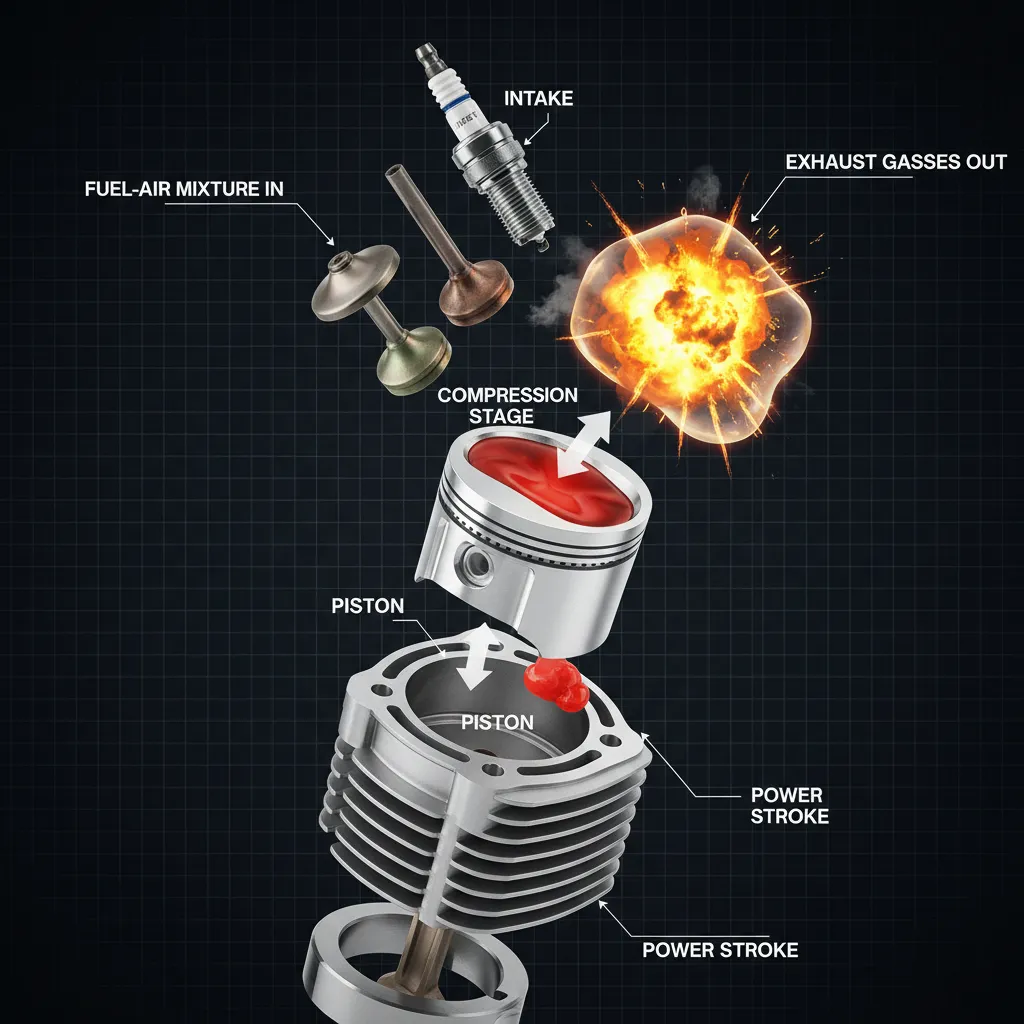
Sometimes, the clicking stops, the engine cranks (turns over), but it still refuses to run. This moves us from an electrical starting problem to a combustion problem. For an internal combustion engine to run, it requires three absolute necessities, often referred to as the “Holy Trinity” of engine mechanics: Fuel, Spark, and Compression.
Spark
The ignition system (coils, spark plugs, and wires) must deliver a high-voltage arc at the precise moment the piston reaches the top of its compression stroke. A failure here—often caused by a bad crankshaft position sensor—will result in the engine spinning endlessly without firing.
Compression
Compression refers to the engine’s ability to seal the combustion chamber. If the timing belt snaps or a valve is bent, the cylinder cannot build pressure. An engine with no compression will often sound different when cranking; it will spin unusually fast because there is no resistance against the pistons.
Fuel Pump Failure Symptoms and Solutions
Fuel delivery is the most common reason for a “crank, no start” condition. Modern vehicles use electric fuel pumps submerged inside the gas tank. These pumps rely on the gasoline itself for cooling and lubrication, meaning frequently driving on “Empty” can shorten the pump’s lifespan.
The Audible Hum Test
The easiest way to diagnose a fuel pump is to listen. When you turn the ignition key to the “ON” position (do not crank the engine yet), you should hear a faint, 2-3 second hum coming from the rear of the vehicle. This is the pump priming the fuel lines. If the environment is silent and you hear absolutely nothing, the fuel pump circuit may be open, the relay may be bad, or the pump motor has failed.
Fuel Pressure Testing
If you suspect fuel pump failure symptoms, the definitive test requires a fuel pressure gauge. Attach the gauge to the Schrader valve on the fuel rail. Compare the reading to the manufacturer’s specifications (usually between 30 and 60 PSI for most port-injected cars). Zero pressure confirms a lack of fuel delivery.
Immobilizer Issues and Security Systems
In modern vehicles (post-1996), a non-start condition can often be attributed to the car’s anti-theft system. The immobilizer system uses a transponder chip inside your key fob that communicates with the car’s ECU. If the car does not recognize the key, it will disable the fuel system or the starter.
Immobilizer issues often present with a specific dashboard indicator—usually a flashing key icon or a red security light. If this light flashes rapidly when you try to start the car, the system is in “lockout” mode. This can happen if the key fob battery is dead, the key has been de-programmed, or you are using a non-chipped spare key. Try using a second master key if available, or hold the fob directly against the start button (for push-to-start vehicles) to bypass a weak fob battery.
When to Call a Professional
While many starting issues can be resolved with a multimeter and a wrench, some scenarios require professional intervention. If you’re in need of professional assistance, consider contacting a Mobile Mechanic in Remuera & Parnell. Beyond immediate repairs, it’s also smart to be prepared with Preparing for a Road Trip: Roadside Coverage Essentials to avoid unexpected breakdowns. If you have replaced the battery and starter, verified fuel pressure, and checked for spark, but the vehicle remains dormant, you may be dealing with complex issues like ECU failure, timing chain jumps, or internal engine damage.
Furthermore, dealing with high-pressure fuel systems (Direct Injection) or hybrid high-voltage batteries carries significant safety risks. For reliable maintenance schedules and safety recalls that might affect your starting system, consult resources like the National Highway Traffic Safety Administration (NHTSA).
Troubleshooting a car that won’t start with a clicking noise is a process of elimination. By systematically checking the battery, starter, ignition, and fuel systems, you can isolate the variable and get your vehicle back on the road.
People Also Ask
Why does my car make a rapid clicking noise when I try to start it?
A rapid clicking noise usually indicates that the battery has enough voltage to engage the starter solenoid but not enough amperage to spin the starter motor. The solenoid engages and disengages repeatedly, creating the fast clicking sound. This is most often caused by a dead battery or loose/corroded battery terminals.
Can a bad starter cause a clicking noise?
Yes, a bad starter can cause a clicking noise. Typically, a bad starter will produce a single loud click each time you turn the key. This means the solenoid is working, but the internal motor is seized or has a dead spot.
How do I know if it’s my battery or my starter?
Turn on your headlights and try to start the car. If the lights go completely dim or turn off while the car clicks, it is likely a battery issue. If the lights stay bright but the car only clicks once or does nothing, it is likely a starter or connection issue.
What does a single click mean when starting a car?
A single loud click usually points to a faulty starter motor or a bad starter solenoid. It indicates the electrical signal is reaching the starter, but the mechanical components are failing to rotate the engine.
Can I jumpstart a car with a bad starter?
No, you cannot jumpstart a car if the starter motor is broken. Jumpstarting only adds voltage to the system to overcome a dead battery. If the starter itself is mechanically failed, extra electricity will not make it work.
Why is my car clicking but the lights and radio work?
Accessories like lights and radios require very low amperage to operate, whereas the starter motor requires hundreds of amps. A weak battery may have enough surface charge to power the radio but fail immediately under the heavy load of the starter.