
A check engine light flashing indicates a severe engine misfire that is currently dumping unburned fuel into the exhaust system. This condition can rapidly overheat and destroy the catalytic converter. You must immediately reduce speed, avoid heavy acceleration, and seek repair to prevent catastrophic engine damage.
The Urgency: Why is My Check Engine Light Flashing?
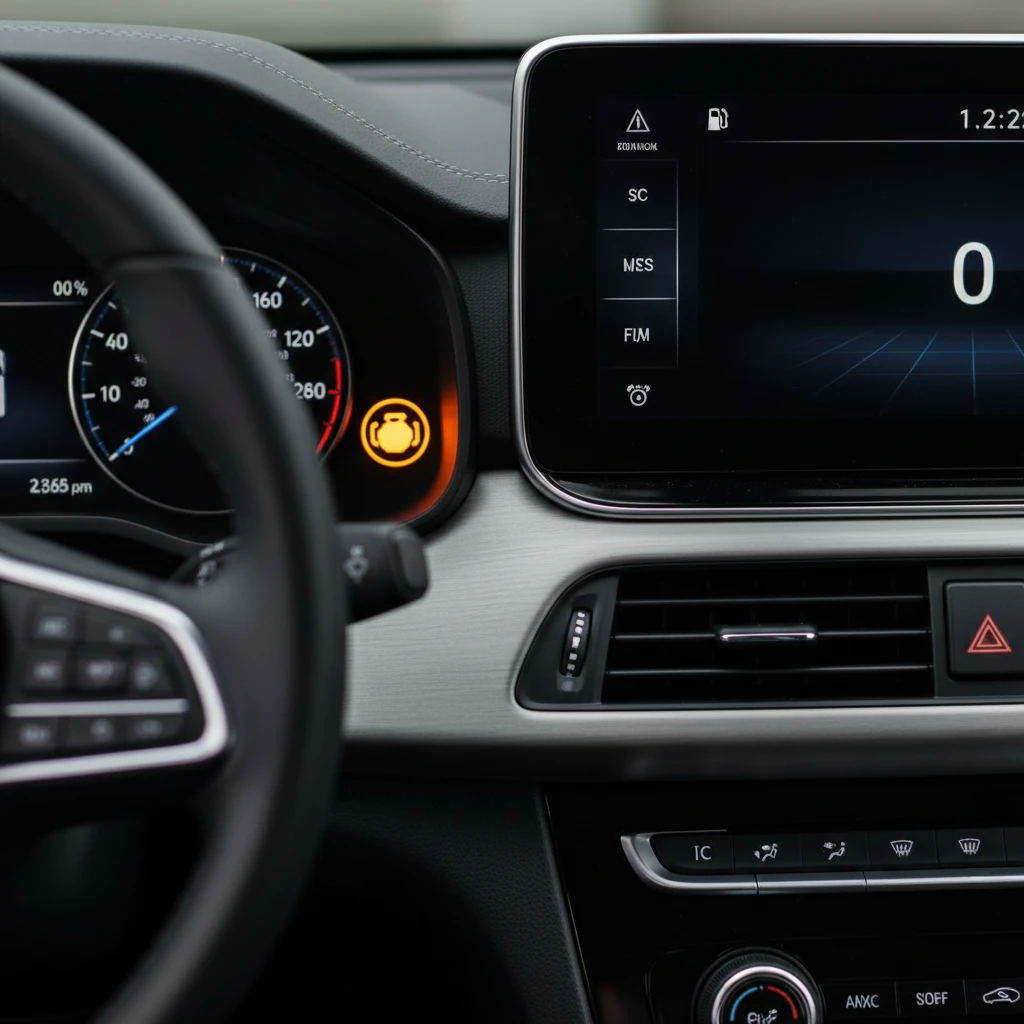
When the Malfunction Indicator Lamp (MIL)—commonly known as the check engine light—illuminates on your dashboard, it serves as a warning that the vehicle’s onboard computer (ECU) has detected a problem. However, the behavior of the light dictates the urgency of the response required. A solid light suggests a non-critical emission or sensor failure that should be addressed soon. In contrast, a check engine light flashing is a critical distress signal.
A flashing light is universally programmed across all OBD2-compliant vehicles to signify a Type A misfire. This means that one or more cylinders are failing to ignite the fuel-air mixture properly. When this happens, raw fuel is pumped directly into the exhaust manifold and the catalytic converter. The catalytic converter operates at extremely high temperatures to burn off emissions; the introduction of raw fuel causes it to superheat, potentially reaching temperatures that can melt the internal honeycomb structure, leading to a blockage and permanent failure.
If you see the light flashing, you are not just risking a breakdown; you are risking a repair bill that could easily triple if the catalytic converter is destroyed. The immediate course of action is to stop driving. If you are on a highway, reduce your speed, stop towing any loads, and gently navigate to the nearest service station.
Decoding OBD2 Error Codes: The Language of Your Car
Since 1996, all cars sold in the United States have been required to use the On-Board Diagnostics II (OBD2) standard. This system monitors the performance of the engine and emissions systems. When a fault is detected, the computer stores a “Diagnostic Trouble Code” (DTC) and turns on the check engine light.
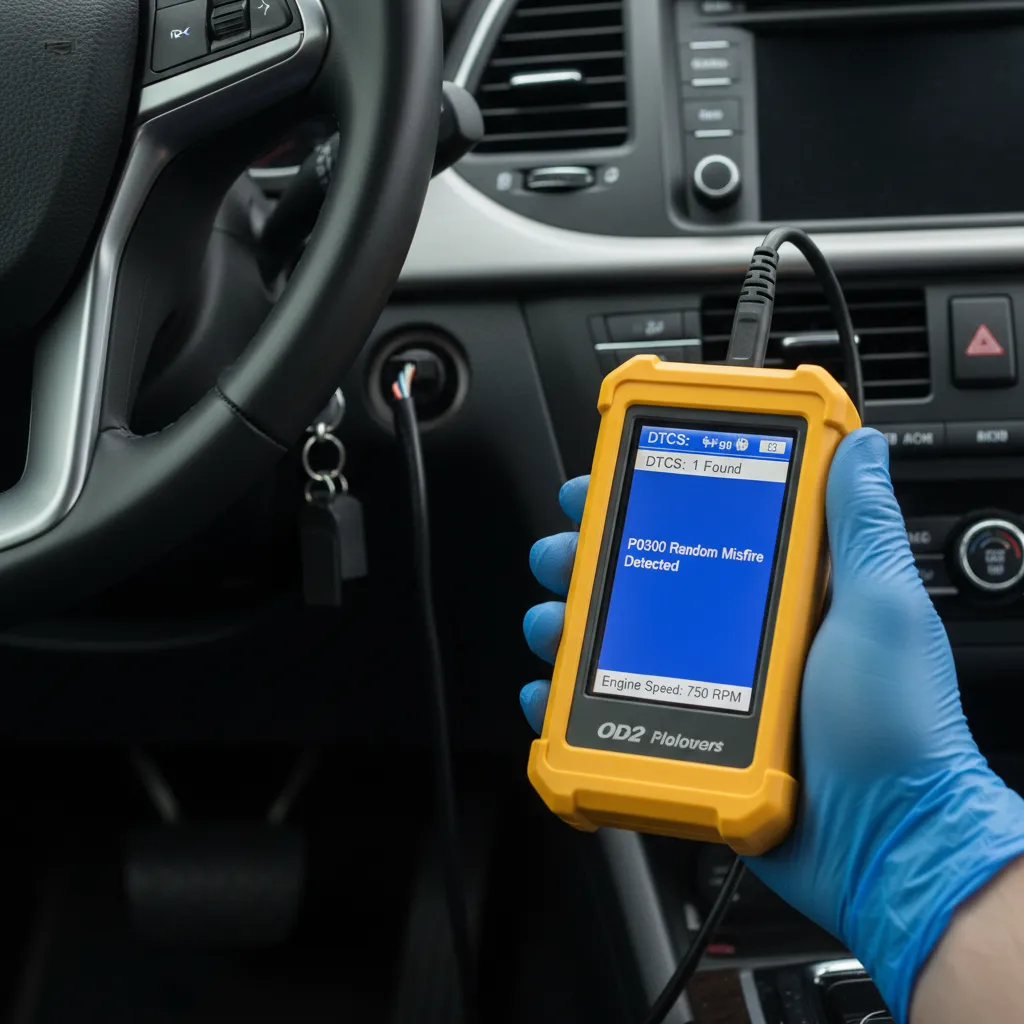
To understand why your light is flashing, you must retrieve these codes. This is done using an OBD2 scanner, which plugs into a port typically located under the driver’s side dashboard. While professional mechanics use expensive, bi-directional scan tools, inexpensive consumer scanners can also read the basic P-codes necessary for diagnosis.
Understanding the P-Code Structure
Most engine-related codes start with the letter ‘P’ (Powertrain). Here is how a typical code like P0301 breaks down:
- P: Powertrain (Engine and Transmission).
- 0: Generic code (standardized across all manufacturers).
- 3: Ignition system or Misfire.
- 01: Specific cylinder identifier (Cylinder 1).
For a flashing check engine light, you will almost certainly see codes in the P0300 to P0312 range. P0300 indicates a “Random/Multiple Cylinder Misfire,” while P0301 through P0312 identify the specific cylinder that is misfiring. For more detailed technical specifications on OBD standards, you can refer to Wikipedia’s comprehensive guide on On-Board Diagnostics.
Common Triggers for a Flashing Engine Light
Since a flashing light equals a severe misfire, the diagnosis focuses on the three elements required for combustion: Spark, Fuel, and Compression. If any one of these is missing or timed incorrectly, the cylinder will misfire.
Ignition System Failures
The most common culprit for a flashing check engine light is the ignition system. Modern vehicles use coil-on-plug (COP) ignition systems where each cylinder has its own ignition coil sitting on top of the spark plug.
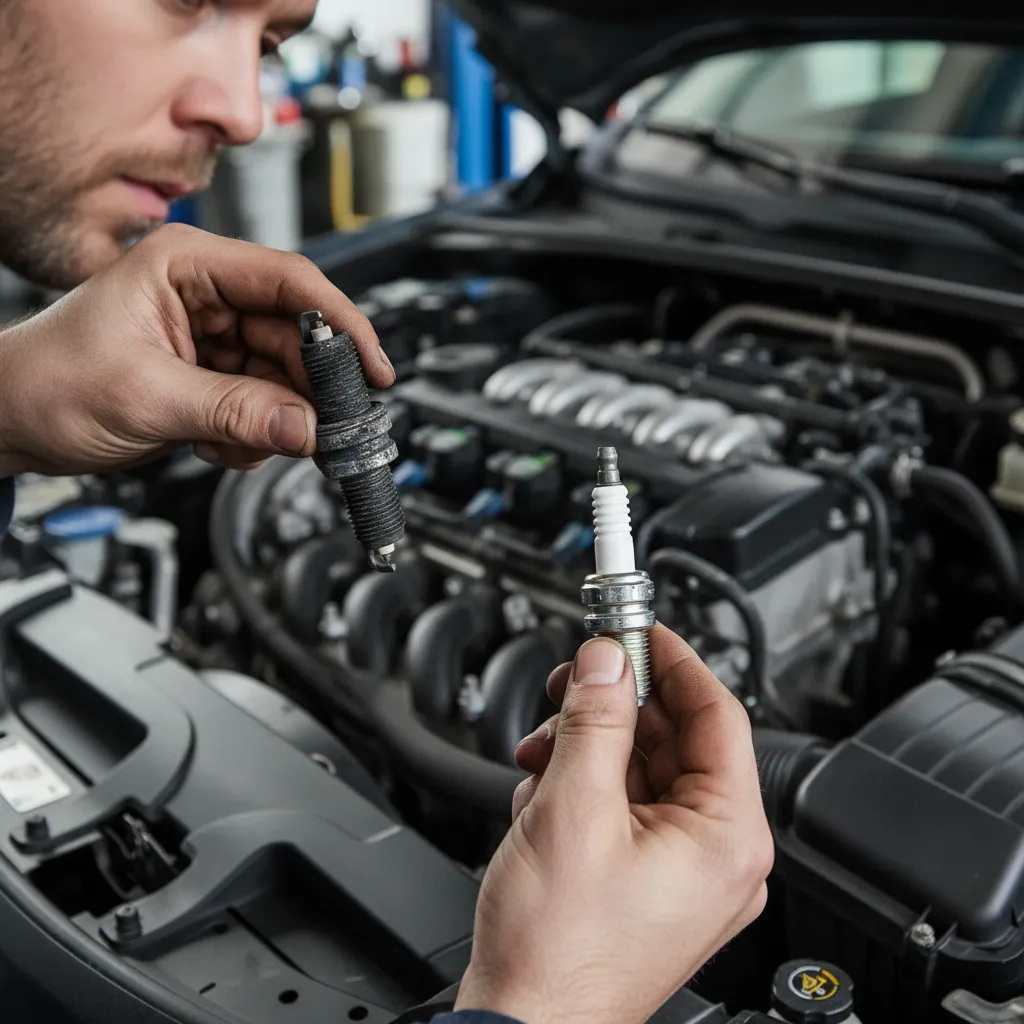
- Worn Spark Plugs: Over time, the gap between the spark plug electrodes widens, requiring more voltage to create a spark. Eventually, the coil cannot bridge the gap, resulting in a misfire.
- Failed Ignition Coils: Coils are subjected to intense heat and vibration. When the insulation breaks down, the voltage can leak out (arcing) instead of firing the plug, or the coil can fail completely.
- Bad Spark Plug Wires: On older vehicles with distributor caps, worn wires can cause the spark to jump to the engine block rather than the plug.
Fuel Delivery Issues
If the ignition system is functioning, the next suspect is fuel delivery. A cylinder cannot fire if it is lean (not enough fuel) or rich (too much fuel).
- Clogged Fuel Injectors: Carbon deposits can restrict fuel flow, causing a lean misfire.
- Leaking Injectors: An injector stuck open will flood the cylinder, preventing the spark from igniting the mixture.
- Low Fuel Pressure: A failing fuel pump or clogged fuel filter usually causes a random misfire (P0300) across all cylinders rather than a specific one.
Mechanical Compression Loss
The most expensive cause of a misfire is a loss of compression. This is a mechanical failure where the cylinder cannot compress the air-fuel mixture enough for ignition. Causes include burned exhaust valves, blown head gaskets, or worn piston rings.
General Check Engine Light Causes (Solid Light)
While the flashing light indicates an emergency, a solid light often points to sensor degradation. Understanding these common triggers is vital for overall vehicle health and passing emissions tests.
Oxygen Sensor (O2 Sensor)
The O2 sensor measures the amount of unburned oxygen in the exhaust system. This data tells the computer whether the fuel mixture is too lean or too rich. A faulty O2 sensor can reduce gas mileage and eventually damage the catalytic converter, though it rarely causes a flashing light on its own.
Mass Airflow Sensor (MAF)
The MAF sensor measures the volume of air entering the engine. The computer uses this to calculate the correct amount of fuel to inject. A dirty or failed MAF sensor can cause rough idling, stalling, and a solid check engine light. In severe cases, a completely failed MAF can upset the mixture enough to trigger a misfire.
Loose or Damaged Gas Cap
Believe it or not, a loose gas cap is a frequent trigger. The fuel system is sealed to prevent vapors from escaping (EVAP system). If the cap is loose, the system detects a leak and triggers a code. This is the simplest fix: tighten the cap and see if the light clears after a few drive cycles.
Limp Mode Troubleshooting and Symptoms
Modern vehicles are equipped with a fail-safe strategy known as “Limp Mode” or “Limp Home Mode.” If the computer detects a fault that could damage the powertrain—such as a severe misfire or transmission failure—it may restrict engine power.
Symptoms of Limp Mode include:
- RPM Limitation: The engine may not rev past 2,500 or 3,000 RPM.
- Transmission Locking: Automatic transmissions may stay in 2nd or 3rd gear to reduce strain.
- Reduced Speed: Top speed may be capped at 35-45 mph.
If your check engine light is flashing and the car enters Limp Mode, the vehicle is actively trying to save itself. Do not attempt to “push through” this mode. The reduced power is intentional to lower cylinder pressures and heat. You should navigate to a safe location immediately. Troubleshooting Limp Mode always begins with scanning the codes, as the mode itself is a symptom, not the root cause.
Step-by-Step Diagnostic Process
Diagnosing a flashing check engine light requires a systematic approach. Here is a professional workflow to identify the root cause.
Step 1: Scan the Codes
Connect your OBD2 scanner and record the codes. Note specifically which cylinder is misfiring (e.g., P0302 is Cylinder 2).
Step 2: Visual Inspection
Open the hood and inspect the area around the specific cylinder. Look for loose electrical connectors on the coil or injector, chewed wires (rodent damage is common), or signs of arcing (burn marks).
Step 3: The Coil Swap Method
This is the most effective DIY diagnostic technique for a specific cylinder misfire.
- Remove the ignition coil from the misfiring cylinder (e.g., Cylinder 2).
- Remove the coil from a known good cylinder (e.g., Cylinder 1).
- Swap them: Put the coil from Cylinder 2 into Cylinder 1, and vice versa.
- Clear the codes using the scanner.
- Start the engine and drive until the light flashes again.
- Re-scan the codes.
Result Analysis: If the misfire code moves to Cylinder 1 (now P0301), the ignition coil is bad. If the misfire stays at Cylinder 2, the coil is fine, and the issue is likely the spark plug, injector, or compression.
Step 4: Check Spark Plugs
If the coil swap didn’t reveal the issue, remove the spark plug from the affected cylinder. Inspect it for fouling (oil or carbon buildup), a worn electrode, or cracked ceramic. Replacing spark plugs is inexpensive and often resolves the issue.
Clearing Codes and Resetting Monitors
Once the repair is completed—whether you replaced a coil, spark plugs, or an injector—you must communicate to the car that the issue is resolved.
Using your OBD2 scanner, select the “Erase Codes” or “Clear DTCs” function. This turns off the check engine light. However, this also resets the vehicle’s “Readiness Monitors.” These monitors are self-tests the computer runs to ensure emissions systems are working.
After clearing codes, you must drive the vehicle through a specific “Drive Cycle” to reset these monitors. This usually involves a mix of city driving and steady highway cruising. If you go for an emissions inspection immediately after clearing codes, you will likely fail because the system status will read “Not Ready.” For official drive cycle procedures, you can often consult your owner’s manual or resources like the EPA’s transportation guidelines which discuss vehicle compliance.
Conclusion: Protecting Your Engine Investment
A flashing check engine light is one of the most serious warnings a driver can face. It signifies that the combustion process has failed and that downstream damage to the catalytic converter is imminent. By understanding the difference between a solid and flashing light, utilizing OBD2 diagnostics, and following a logical troubleshooting path, you can often identify the issue before it becomes a catastrophic engine failure.
Whether it is a simple $50 ignition coil or a more complex injector issue, timely attention to a flashing light is the only way to ensure the longevity of your vehicle. Never ignore the flash; it is your car screaming for help.
People Also Ask
Can I drive with a flashing check engine light?
No, you should not drive with a flashing check engine light. A flashing light indicates a severe engine misfire that allows unburned fuel to enter the exhaust system. This can overheat and permanently damage the catalytic converter within minutes. You should pull over safely and have the vehicle towed or serviced immediately.
What is the most common cause of a flashing check engine light?
The most common cause is an ignition system failure, specifically faulty ignition coils or worn-out spark plugs. These components are responsible for igniting the fuel; when they fail, the cylinder misfires, triggering the flashing light.
Will the check engine light turn off by itself?
If the condition was temporary (like a loose gas cap or poor quality fuel), the light may turn off after several drive cycles where the fault is not detected. However, for a flashing light caused by a hard part failure (like a bad coil), it will not turn off until the part is replaced and the code is cleared.
How much does it cost to fix a flashing check engine light?
Costs vary significantly based on the cause. Replacing a spark plug or ignition coil may cost between $150 and $400. However, if the catalytic converter has been damaged due to prolonged driving with the light flashing, repairs can exceed $1,500 to $2,500.
What is a P0300 code?
P0300 is a generic OBD2 diagnostic code indicating a “Random/Multiple Cylinder Misfire.” This means the computer detects misfires but they are jumping between cylinders or occurring randomly, often caused by vacuum leaks, low fuel pressure, or a faulty mass airflow sensor.
Can low oil cause the check engine light to flash?
Yes, indirectly. In modern engines with variable valve timing (VVT), low oil pressure can prevent the VVT solenoids from functioning correctly. This can throw off the engine timing enough to cause a misfire, resulting in a flashing check engine light.