
A mobile transmission fluid change is a convenient automotive maintenance service where a certified mechanic travels to your location to drain old transmission fluid, replace the filter, and refill the system with fresh manufacturer-specified lubricant. This on-site service helps prevent gear slippage, overheating, and catastrophic transmission failure without the need to visit a traditional repair shop.
Maintaining your vehicle’s transmission is arguably as critical as changing your engine oil, yet it is frequently overlooked until major symptoms arise. The transmission is the powerhouse that transfers engine energy to the wheels; without clean, effective fluid, the complex system of gears, hydraulics, and friction plates can self-destruct. In recent years, the rise of mobile mechanics has revolutionized how this service is performed, offering a seamless “mobile transmission fluid change” experience that saves time and often reduces costs.
Whether you drive a rugged manual truck or a modern automatic sedan, understanding the health of your transmission fluid is paramount. This guide provides a comprehensive look at checking fluid levels, recognizing signs of wear, and determining when to book a mobile professional for a fluid exchange.
Checking Fluid Levels and Condition
Before booking a service, it is often helpful to understand the current state of your transmission. While engine oil is checked with the engine off, checking automatic transmission fluid (ATF) usually requires a different protocol to ensure accuracy. However, many modern vehicles have moved away from user-accessible dipsticks, utilizing “sealed” transmissions that require professional tools to inspect.
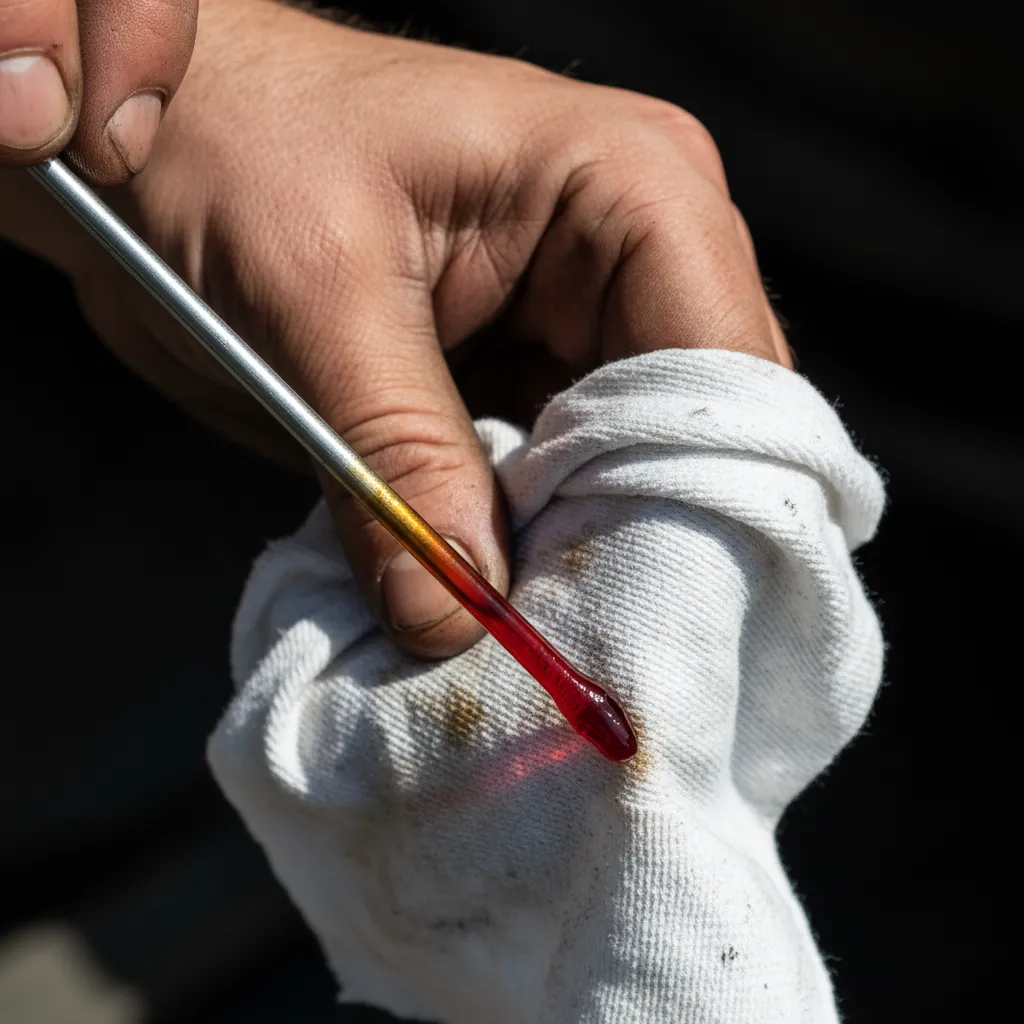
The Dipstick Method (Older Vehicles)
If your vehicle is equipped with a transmission dipstick (usually a yellow or red handle located near the back of the engine bay), follow these steps for an accurate reading:
- Warm Up the Vehicle: Drive the car for 10–15 minutes. ATF expands when hot, and dipsticks are calibrated for warm fluid.
- Park on Level Ground: This is crucial. An incline will give a false reading.
- Keep the Engine Running: Unlike engine oil, most manufacturers recommend checking ATF with the engine idling in Park or Neutral (consult your owner’s manual).
- Inspect the Fluid: Pull the dipstick, wipe it clean, reinsert it fully, and pull it again. Check the level against the “Hot” hash marks.
Analyzing Fluid Condition
The level is important, but the condition of the fluid tells the real story of your transmission’s health:
- Healthy Fluid: Bright red, translucent, and smells slightly sweet or like petroleum.
- Old/Degraded Fluid: Dark red or brown, but still smells normal. This indicates a change is due soon.
- Burnt Fluid: Black or very dark brown with a distinct burnt toast smell. This suggests internal overheating and potential clutch damage.
- Milky/Pink Froth: This is the “strawberry milkshake” of death, indicating coolant has leaked into the transmission (usually via the radiator). This requires immediate, major repairs.
Sealed Transmissions
Many vehicles manufactured after 2010 feature sealed transmissions. These units do not have a dipstick. Manufacturers often claim the fluid is “lifetime,” but most automotive experts agree that “lifetime” usually means the warranty life of the vehicle, not the actual operational life. To check these, a mobile mechanic must lift the vehicle and access a check plug on the side of the transmission case while monitoring the fluid temperature via a scan tool. This is a primary reason why searching for a “mobile transmission fluid change” has become so popular—it removes the technical barrier for the average owner.
Signs of Transmission Wear and Fluid Degradation
Fluid that has lost its viscosity or frictional properties cannot protect the transmission components. If you neglect routine maintenance, your vehicle will eventually communicate its distress through physical symptoms. Recognizing these early can save you thousands of dollars in rebuild costs.
1. Slipping Gears
If you are driving and the engine RPMs spike without a corresponding increase in vehicle speed, your transmission is slipping. This is often caused by low fluid levels or fluid that has become too thin to maintain the hydraulic pressure required to hold the gear clutches engaged.
2. Rough or Delayed Shifting
In an automatic transmission, shifts should be nearly imperceptible. If you feel a “thud” or “clunk” when the car changes gears, or if there is a noticeable hesitation (lag) between when you press the gas and when the car moves, the fluid may be contaminated with sludge or varnish.
3. Unusual Noises
Transmissions are generally quiet. A whining or buzzing sound that increases with vehicle speed can indicate a clogged fluid filter or a failing fluid pump. In manual transmissions, a grinding noise when shifting usually points to worn synchronizers, often exacerbated by old gear oil.
4. Check Engine Light
Modern cars have sophisticated sensors monitoring input and output shaft speeds. If the computer detects that the transmission isn’t shifting efficiently, it will trigger a Check Engine Light (or a specific Transmission Warning Light). A mobile mechanic can scan these codes to confirm if a fluid change might resolve the issue.
Automatic vs. Manual Transmission Fluid
When booking a mobile transmission fluid change, it is vital to specify your transmission type, as the fluids used are chemically distinct and generally not interchangeable.
Automatic Transmission Fluid (ATF)
ATF is a complex hydraulic fluid. It doesn’t just lubricate; it powers the transmission. It acts as a hydraulic medium to engage clutch packs and shift valves. It contains detergents to keep the system clean, anti-foaming agents, and friction modifiers specific to the vehicle manufacturer (e.g., Mercon V, Dexron VI, ATF+4). Using the wrong ATF can destroy a transmission in less than 100 miles.
Manual Transmission Fluid (Gear Oil)
Manual transmissions are simpler, using gears and synchronizers. The fluid here is typically a heavier gear oil (like 75W-90) designed primarily for lubrication and heat dissipation. It must be thick enough to cushion the gears under high shock loads but thin enough to allow synchronizers to spin up to speed. Some modern manuals, however, do use lighter ATF-style fluids, which reinforces the need for professional verification.
CVT Fluid
Continuously Variable Transmissions (CVTs) require a highly specialized fluid. CVT fluid relies on high friction to prevent the metal belt from slipping on the pulleys, which is the opposite of standard ATF which seeks to reduce friction. Using standard ATF in a CVT will cause immediate failure.
For detailed specifications on fluid types, reputable sources like Edmunds Car Maintenance Guide provide manufacturer-specific data that can help you verify what your mobile mechanic intends to use.
Drain and Fill vs. Workshop Flush
One of the most common questions regarding mobile transmission services is the difference between a “drain and fill” and a “flush.” Understanding this distinction is key to managing expectations and ensuring vehicle health.
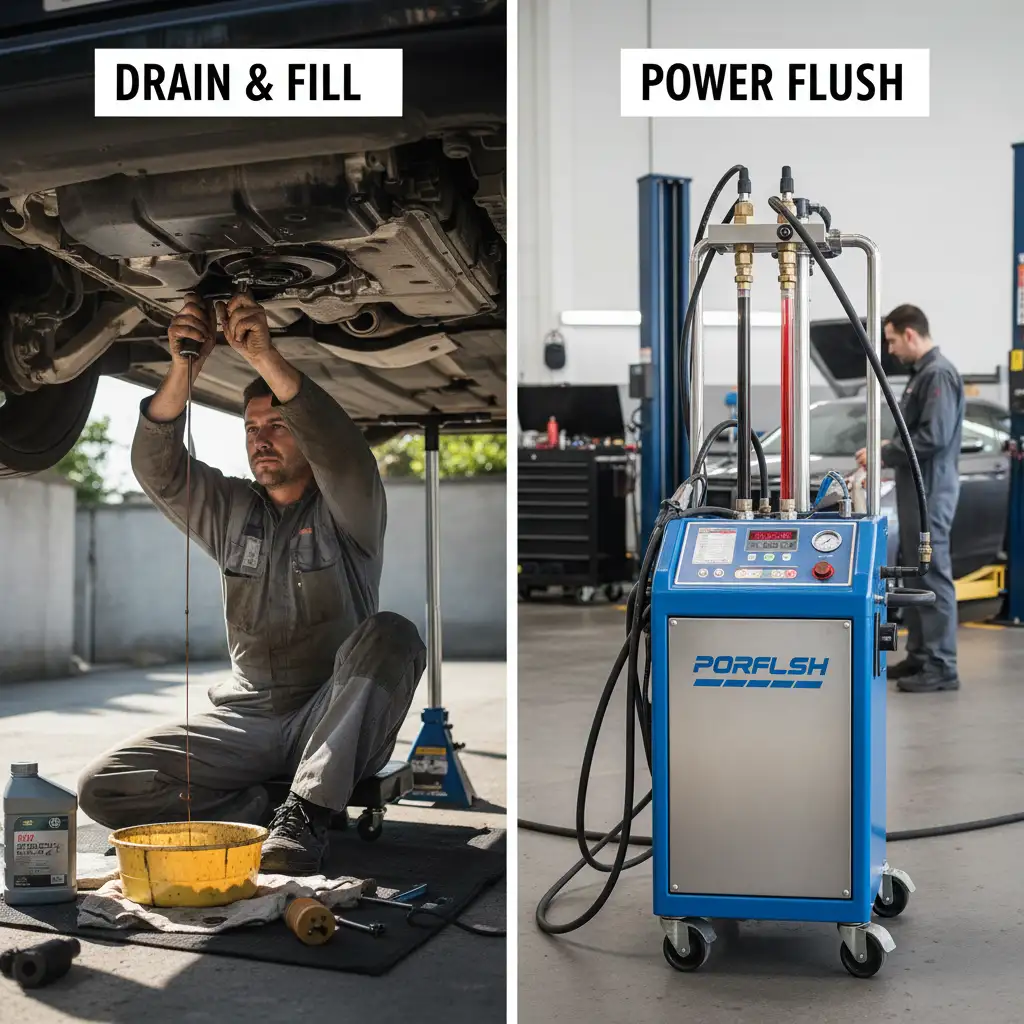
The Mobile Standard: Drain and Fill
Most mobile transmission fluid change services perform a Drain and Fill. This involves removing the drain plug (and often the transmission pan), letting gravity drain the fluid, replacing the filter (if accessible), and refilling with fresh fluid.
Pros:
- Safety: It is gentle on older transmissions. It replaces about 40-60% of the fluid, introducing fresh detergents without shocking the system.
- Filter Replacement: Dropping the pan allows the mechanic to change the filter, which is crucial for removing physical contaminants.
- Cost: Generally cheaper than a flush.
When is a Workshop Flush Needed?
A full Power Flush uses a machine to force new fluid through the transmission cooler lines, pushing out nearly 100% of the old fluid. While this sounds superior, it carries risks. On high-mileage vehicles that have not been maintained, high-pressure flushing can dislodge sludge and varnish that are actually helping worn seals hold pressure. Once this sludge is removed, the transmission may begin to slip.
You should visit a workshop for a flush if:
- The fluid is severely contaminated but the transmission is not slipping.
- The manufacturer specifically requires a heated flush procedure (rare).
- You need to clear out the torque converter completely (which holds a significant amount of fluid that doesn’t drain by gravity).
However, for routine maintenance, the Drain and Fill method provided by mobile mechanics is widely considered the safest and most effective method for vehicle longevity.
The Mobile Transmission Service Process
Booking a mobile transmission fluid change offers transparency that drop-off shops cannot match. You can watch the mechanic work in your driveway. Here is the typical workflow:
- Arrival and Setup: The mechanic arrives with a service van equipped with jacks, fluid disposal containers, and the correct ATF for your VIN.
- Test Drive (Diagnostic): A professional will often drive the vehicle briefly to check for pre-existing shifting issues.
- Lifting and Draining: The vehicle is safely lifted. The mechanic removes the drain plug or drops the transmission pan.
- Filter and Gasket Service: If applicable, the old filter is removed, and the magnet in the pan (which catches metal shavings) is cleaned. A new pan gasket is installed.
- Refill: The system is refilled with premium fluid.
- Level Check: The engine is run to circulate the fluid, and the level is final-checked at operating temperature.
- Disposal: The mobile mechanic takes the old hazardous fluid away for recycling, ensuring environmental compliance.
Recommended Maintenance Intervals
There is often a discrepancy between what the owner’s manual says and what mechanics recommend. Many manuals state intervals of 100,000 miles or “lifetime” for normal driving. However, “severe” driving conditions—which include stop-and-go city traffic, towing, or driving in extreme heat—require more frequent changes.
General Guidelines:
- Manual Transmissions: Every 30,000 to 60,000 miles.
- Automatic Transmissions: Every 60,000 to 100,000 miles (or sooner for severe use).
- CVTs: Every 30,000 to 50,000 miles (CVTs are extremely sensitive to fluid degradation).
For further reading on vehicle maintenance schedules and fluid types, the AAA Auto Repair Guide offers excellent, unbiased advice regarding service intervals.
People Also Ask
How much does a mobile transmission fluid change cost?
The cost for a mobile transmission fluid change typically ranges between $150 and $250. This price varies based on the type of vehicle, the cost of the specific transmission fluid required (synthetic fluids are more expensive), and whether a filter replacement is included in the service.
Can a mobile mechanic change transmission fluid on any car?
Most mobile mechanics can service the vast majority of vehicles, including those with sealed transmissions. However, some high-end luxury or exotic vehicles may require proprietary software to measure fluid temperature during the refill process, which some general mobile mechanics may not carry.
Is it safe to change transmission fluid on high mileage cars?
Yes, but with caution. If a car has high mileage (over 100k) and the fluid has never been changed, a simple “drain and fill” is recommended over a “power flush.” A drain and fill is less aggressive and less likely to dislodge sludge that might be sealing worn internal components.
How long does a mobile transmission service take?
A standard mobile transmission fluid change usually takes between 45 minutes to 90 minutes. This includes time for jacking up the car, draining the fluid, replacing the filter (if applicable), and performing the final level check.
Do I need to be present for the service?
While you don’t need to hover over the mechanic, you generally need to be present to provide the keys and authorize the service. Many owners prefer mobile services specifically because they can watch the work being performed, ensuring the filter is actually changed.
What happens if I don’t change my transmission fluid?
Failure to change transmission fluid leads to a breakdown of the fluid’s lubricating and cooling properties. This causes increased friction, overheating, and eventual failure of gears and clutch packs. Replacing a transmission can cost between $3,000 and $6,000, making fluid changes a cost-effective preventative measure.