
Toyota Honda Nissan mobile service refers to specialized, on-site automotive maintenance and repair solutions designed specifically for Japanese Domestic Market (JDM) vehicles. To ensure longevity, certified technicians bring diagnostic tools and OEM-grade parts directly to your location, addressing unique import requirements such as CVT fluid changes, hybrid battery health checks, and cambelt verification without the need for a workshop visit.
Japanese imports represent some of the best value-for-money vehicles on the road today. Renowned for their engineering precision and long-term durability, brands like Toyota, Honda, and Nissan dominate the global market. However, owning a Japanese import often comes with a specific set of maintenance requirements that differ from models built for the local market. Whether you drive a Toyota Aqua, a Honda Fit, or a Nissan Note, understanding the nuances of Japanese import servicing is critical to keeping your vehicle running smoothly.
Many owners mistakenly believe that general servicing is sufficient. However, imports often feature different engine tunes, specific transmission fluid requirements, and unique electrical systems. This guide explores the essential aspects of maintaining these vehicles and how a dedicated mobile service can provide the specialized care your car needs.
The Convenience of Toyota, Honda, and Nissan Mobile Service
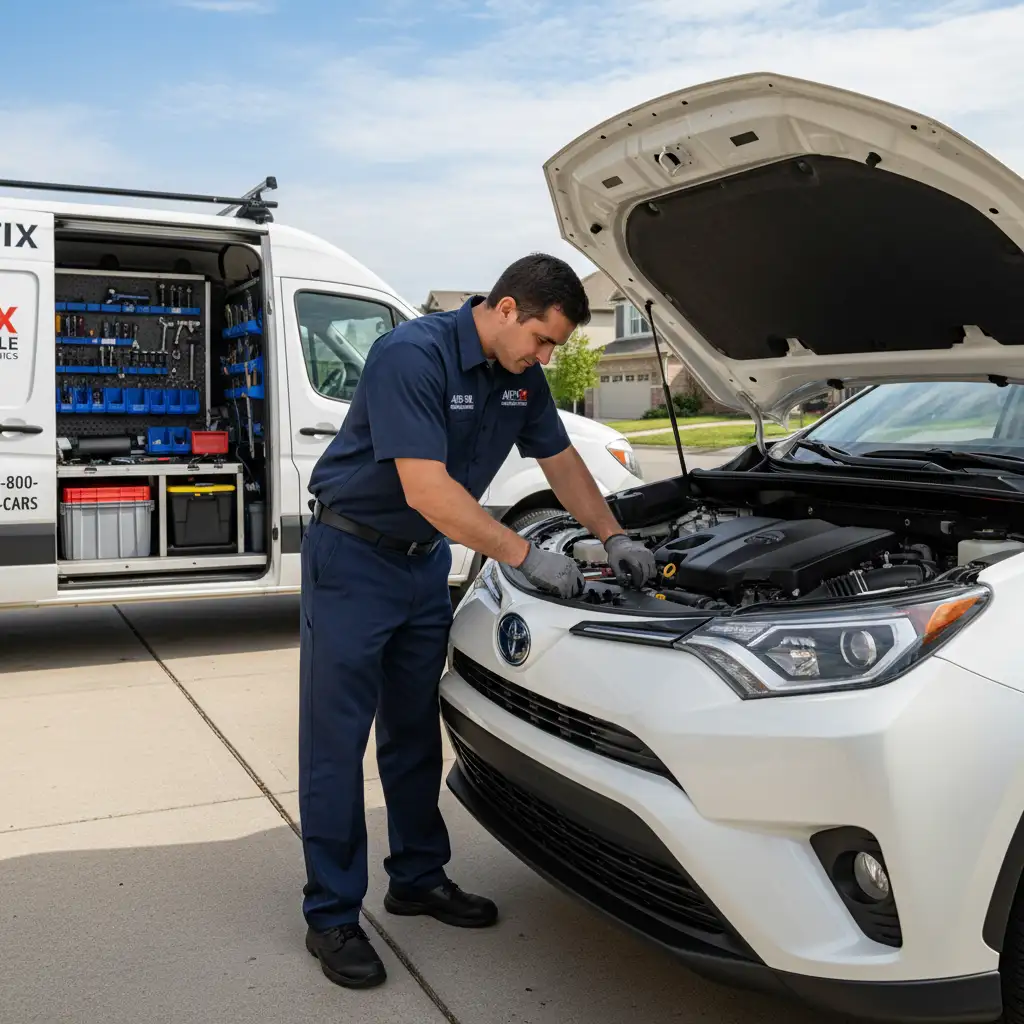
In today’s fast-paced world, the traditional model of dropping your car off at a garage and losing it for the day is becoming obsolete. A professional Toyota Honda Nissan mobile service brings the workshop to your driveway or office car park. This is particularly beneficial for import owners who may otherwise struggle to find a local garage with the specific diagnostic software required for JDM computers.
Mobile mechanics equipped for Japanese vehicles carry specialized scan tools capable of reading Japanese fault codes that standard generic scanners might miss. Furthermore, they stock high-turnover parts specific to these brands, such as oil filters with the correct flow rates and spark plugs designed for high-compression import engines. By utilizing a mobile service, you not only save time but also gain the transparency of watching the work being performed on your vehicle, ensuring that critical checks are not skipped.
Reliability Checks for High-Mileage Imports
Many Japanese imports enter the country with odometer readings ranging from 80,000km to 120,000km. While these engines are built to last, this is the mileage window where ancillary components begin to fail. A comprehensive service must go beyond a simple oil change.
For high-mileage imports, the following reliability checks are non-negotiable:
- Suspension Bushings and Mounts: Japanese roads are generally smoother than those in many other countries. Consequently, suspension components on imports may wear out faster once subjected to rougher local tarmac. Technicians should check for play in control arm bushings and stabilizer links.
- Cooling System Integrity: The plastic tanks on radiators in older Toyotas and Nissans are prone to cracking after heat cycling. A pressure test should be performed to detect hairline cracks before they lead to catastrophic overheating.
- Hybrid Battery Health: For models like the Prius, Aqua, or Fit Hybrid, a mobile service should include a “block test” of the high-voltage battery. This identifies if specific cells are underperforming before the entire battery pack fails.
- Brake Caliper Slides: Imports that have sat at docks for extended periods can suffer from seized brake calipers due to salt air exposure. Cleaning and greasing slide pins is a vital preventative measure.
Critical Transmission Care: CVT Fluid Checks
One of the most defining features of modern Japanese commuter cars is the Continuously Variable Transmission (CVT). While efficient, CVTs are notoriously sensitive to fluid quality. Neglecting this is the number one cause of premature failure in Nissans and Hondas.
Unlike traditional automatic transmissions, CVTs rely on friction between a steel belt and pulleys. The fluid provides this friction while cooling the unit. If the fluid degrades, the belt slips, creating metal shavings that destroy the transmission. A specialized Toyota Honda Nissan mobile service will prioritize this check.
Manufacturer-Specific Fluid Requirements
You cannot use generic “Multi-Vehicle” transmission fluid in these specialized units. Using the wrong fluid can void warranties and cause instant damage.
- Nissan: Requires NS-2 or NS-3 fluid depending on the generation. The “CVT shudder” is a common symptom of degraded fluid in models like the Tiida or Note.
- Honda: Uses HCF-2 for newer Earth Dreams engines and CVTF for older models. The start clutch calibration often needs to be reset via software after a fluid change.
- Toyota: utilizes TC or FE fluid. Toyota CVTs are generally robust, but the fluid level must be set at a specific temperature range, which mobile mechanics can monitor using scan tools.
For a deeper understanding of how these transmissions operate and why fluid friction is so vital, you can refer to this detailed explanation on Continuously Variable Transmissions (Wikipedia).
Cambelt History Verification and Replacement
The “cambelt roulette” is a dangerous game to play with a Japanese import. Many engines from Toyota (like the older 3S-GE), Honda (F-series), and Nissan (RB series) are “interference engines.” This means if the timing belt snaps, the pistons will collide with the valves, effectively destroying the engine.
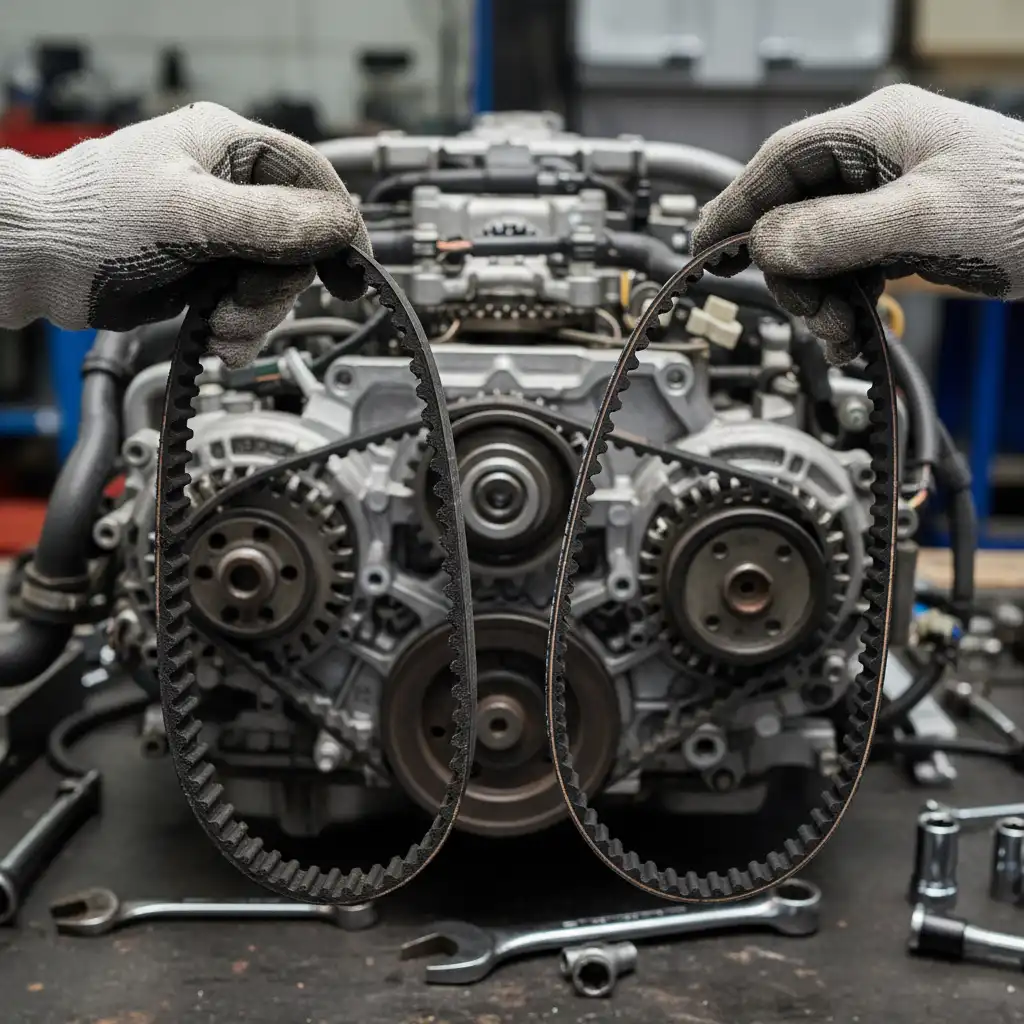
When booking a service, verifying the cambelt history is paramount. In Japan, a sticker is usually applied to the engine cover or timing case indicating the date and mileage of the last replacement. However, if this sticker is missing, faded, or illegible, you must assume the belt has not been changed.
A competent mobile mechanic can perform a visual inspection by removing the upper timing cover. They look for:
- Cracking at the base of the belt teeth.
- Fraying on the edges of the belt.
- Glazing on the back of the belt (indicating age and heat hardening).
If there is any doubt, the recommendation is always to replace the belt, tensioner, and water pump simultaneously.
Cost-Effective Maintenance Strategies
Owning an import doesn’t have to break the bank. In fact, one of the primary reasons for choosing a Toyota, Honda, or Nissan is the low cost of ownership. However, smart maintenance is key to keeping costs down.
OEM vs. Aftermarket Parts
While Original Equipment Manufacturer (OEM) parts are the gold standard, high-quality aftermarket parts from reputable Japanese suppliers (like Denso, NGK, or Aisin) offer identical performance at a fraction of the price. A trusted mobile service provider will know which aftermarket parts are safe to use and which components (like sensors and electronics) must remain OEM to avoid check engine lights.
Preventative vs. Reactive Maintenance
Reactive maintenance—fixing things only when they break—is the most expensive way to own a car. For example, ignoring a $200 transmission fluid service can lead to a $3,000 transmission replacement. Similarly, failing to change coolant can lead to head gasket failure. Mobile servicing makes preventative maintenance easier by removing the friction of booking a garage visit, encouraging owners to stick to schedules.
Common Issues: Toyota, Honda, and Nissan
Every manufacturer has its quirks. A specialist in Toyota Honda Nissan mobile service will be on the lookout for these specific fault patterns:
Toyota
Toyota is synonymous with reliability, but they are not immune to issues. The 2AZ-FE engines found in older RAV4s and Camrys are known for excessive oil consumption due to piston ring design. Mobile mechanics should always check oil levels and advise on top-up intervals. Additionally, water pump leaks are common on the Prius line, which can be fatal for the hybrid inverter if not caught early.
Honda
Honda engines are engineering marvels, but they are sensitive to oil quality. The VTEC solenoids rely on oil pressure to activate variable valve timing. Sludge buildup from missed oil changes can clog the solenoid screens, causing the vehicle to go into “limp mode.” Regular oil changes with high-quality synthetic oil are mandatory for Hondas.
Nissan
Aside from the CVT issues mentioned earlier, Nissan engines like the HR15DE and MR20DE can suffer from timing chain stretch if oil changes are neglected. This triggers a cam/crank correlation code (P0335/P0340). Listening for a “rattle” on cold startup is a key diagnostic step during a mobile service inspection.
Understanding Import Documentation and Service History
When servicing an import, the history is often a puzzle. The Japanese “Shaken” (vehicle inspection) is rigorous, meaning cars are generally well-maintained while in Japan. However, once they are exported, there can be a gap in maintenance.
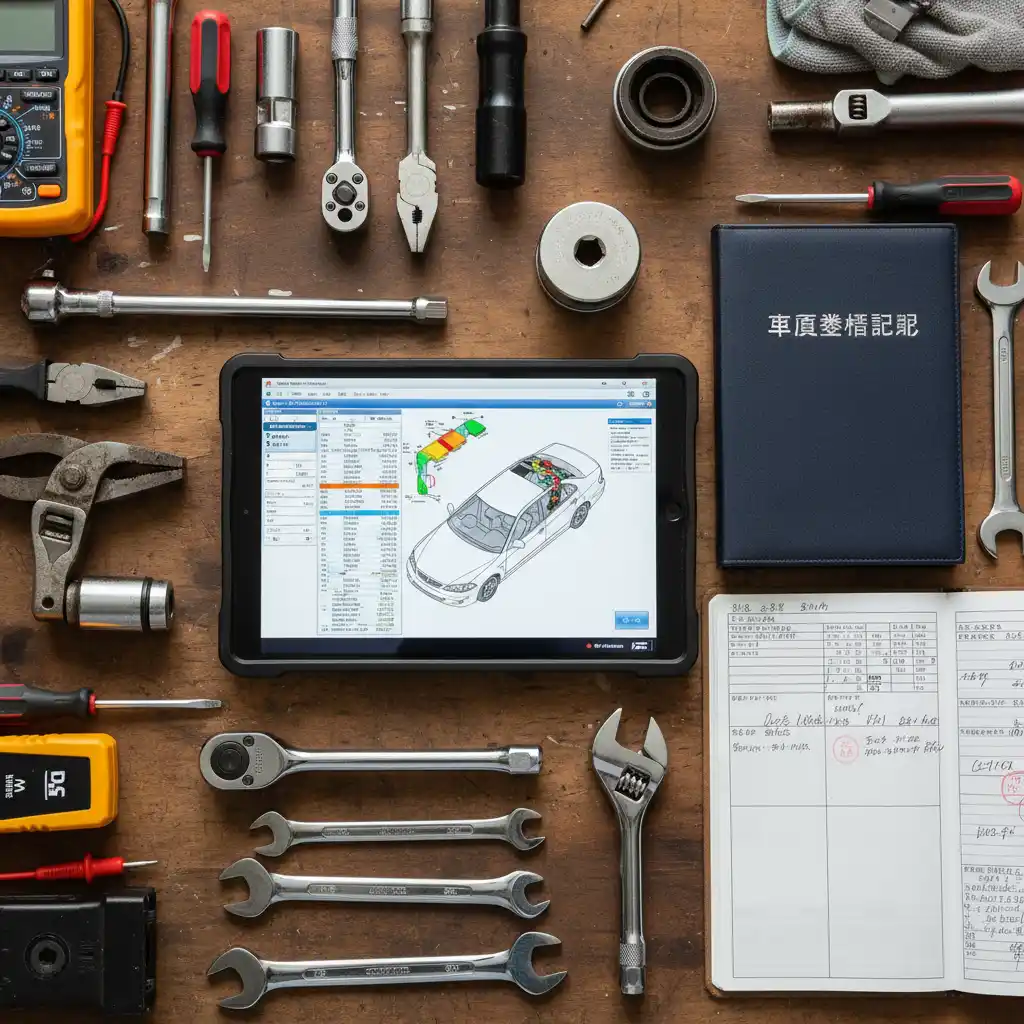
A thorough mobile service technician will look for the maintenance note (maintenance notebook) often found in the glovebox. Even if it is in Japanese, the dates and kilometer readings are universal. Translating these records can reveal if the vehicle has had major work done, such as a transmission replacement or major recall repairs. For more information on vehicle safety and import standards, resources like the NHTSA (or your local transport authority) provide guidelines on safety recalls that may apply to your specific import model.
Frequently Asked Questions
Below are common questions regarding mobile servicing for Japanese import vehicles.
How often should I service my Japanese import?
It is generally recommended to service Japanese imports every 10,000km or every 6 months, whichever comes first. However, for high-mileage imports or vehicles used for short city trips (severe service), reducing the interval to 5,000km or 7,500km is advisable to protect the engine and turbo components.
Do mobile mechanics carry OEM parts for Toyota and Honda?
Professional mobile mechanics specializing in Japanese imports usually carry a stock of common OEM-equivalent parts (like filters and spark plugs). For specific sensors or body parts, they can order genuine OEM components from Toyota, Honda, or Nissan suppliers prior to your appointment.
Is mobile servicing cheaper than a dealership?
Yes, mobile servicing is often more cost-effective than a dealership. Mobile mechanics have lower overhead costs (no physical workshop rent), allowing them to offer competitive pricing while still using high-quality parts and fluids comparable to dealership standards.
Can mobile mechanics fix CVT transmission issues?
Mobile mechanics can perform CVT fluid changes, filter replacements, and diagnostic scans to identify transmission codes. However, if the CVT requires a full rebuild or internal mechanical repair, the vehicle will typically need to be transported to a transmission specialist workshop.
What is included in a major service for a Nissan import?
A major service for a Nissan import typically includes engine oil and filter change, air filter replacement, cabin filter replacement, brake fluid flush, coolant check/top-up, spark plug inspection (or replacement), CVT fluid check, and a comprehensive safety inspection of suspension, brakes, and tires.
How do I verify the mileage on a Japanese import?
Mileage can be verified by checking the export certificate (often available from the dealer who imported the car) or by looking for auction sheets. During a service, a mechanic can also scan the ECU and ABS modules, which sometimes store mileage data independently of the dashboard odometer.