
When analyzing mobile mechanic vs garage cost, mobile mechanics are typically 20% to 30% cheaper for routine maintenance and minor repairs because they do not carry the high overhead costs of a physical facility, such as rent and utilities. However, fixed workshops are often more cost-effective for complex engine or transmission work requiring heavy lifts, as their specialized stationary equipment reduces labor hours and diagnostic time.
The Core Dilemma: Convenience vs. Capability
In the modern automotive landscape, the traditional model of towing a broken-down vehicle to a brick-and-mortar repair shop is being challenged by the rising popularity of mobile mechanics. For vehicle owners, the decision often hinges on a balance between budget, time constraints, and the severity of the mechanical issue. While the allure of having a technician arrive at your driveway is strong, understanding the nuances of mobile mechanic vs garage cost is essential for making a financially sound decision.
The automotive repair industry has evolved. Historically, mechanics were tethered to workshops due to the sheer size of diagnostic equipment. Today, handheld scanners and compact high-torque tools allow highly skilled technicians to perform dealership-level work in a parking lot. Yet, the fixed workshop remains a fortress of heavy-duty capability. This guide dissects the financial and practical differences between these two service models to help you navigate your next repair bill with confidence.
Mobile Mechanic vs Garage Cost: A Detailed Financial Breakdown
Price is often the primary driver for consumers. On the surface, the hourly rate is the most visible metric, but the total cost of a repair involves several variables including overhead, labor time, and ancillary fees.
Hourly Labor Rates
The most significant differentiator in the mobile mechanic vs garage cost equation is the hourly labor rate. Fixed workshops, particularly dealership service centers, have massive overheads. They pay for prime real estate, customer waiting lounges, service advisors, shuttle drivers, and massive utility bills. Consequently, labor rates at a physical garage typically range from $100 to $170+ per hour depending on the location and vehicle make.
In contrast, a mobile mechanic operating out of a well-equipped van has significantly lower operating expenses. They do not pay for a storefront or a large support staff. These savings are often passed on to the customer, with mobile labor rates generally falling between $80 and $120 per hour. For a job requiring four hours of labor, this difference alone can save a vehicle owner upwards of $200.
Call-Out Fees vs. Diagnostic Fees
While the hourly rate favors the mobile technician, the fee structure differs. Mobile mechanics almost always charge a “call-out fee” or “trip fee” to cover the cost of travel to your location. This fee usually ranges from $50 to $100 but is frequently waived if you proceed with the recommended repair. Similarly, fixed garages charge a “diagnostic fee” to inspect the vehicle, which is also often applied toward the repair cost. In this regard, the upfront costs are comparable, but the mobile mechanic saves you the potential cost of towing.
Part Markups and Sourcing
Both business models make a profit on parts. However, fixed workshops often have exclusive contracts with suppliers or, in the case of dealerships, mandates to use Original Equipment Manufacturer (OEM) parts, which carry a premium price tag. Independent mobile mechanics often have more flexibility. They can offer you the choice between OEM parts and high-quality aftermarket alternatives, potentially lowering the total bill. It is crucial to verify the warranty on parts regardless of who installs them.
According to data from the Bureau of Labor Statistics, the automotive repair sector is highly competitive, and labor costs are the primary variable consumers can control. By eliminating the facility overhead, mobile mechanics structurally have the advantage in pricing for standard repairs.
The Convenience Factor: Quantifying the Value of Time
When calculating the true cost of a repair, one must consider the economic concept of “opportunity cost.” The price on the invoice is not the only price you pay; your time has value. This is where the mobile mechanic model disrupts the industry.
The Hidden Costs of Fixed Garages
Taking a car to a shop involves a logistical chain that incurs hidden costs:
- Towing Fees: If the car is not drivable, a tow truck can cost anywhere from $75 to $150 just to get the vehicle to the shop.
- Lost Wages: Dropping off a car usually happens during business hours. This often requires taking time off work or using vacation hours.
- Alternative Transport: Once the car is at the shop, you may need a rental car or rideshare services (Uber/Lyft) to get to work or home. A three-day repair could add $150+ in transport costs.
The Mobile Advantage
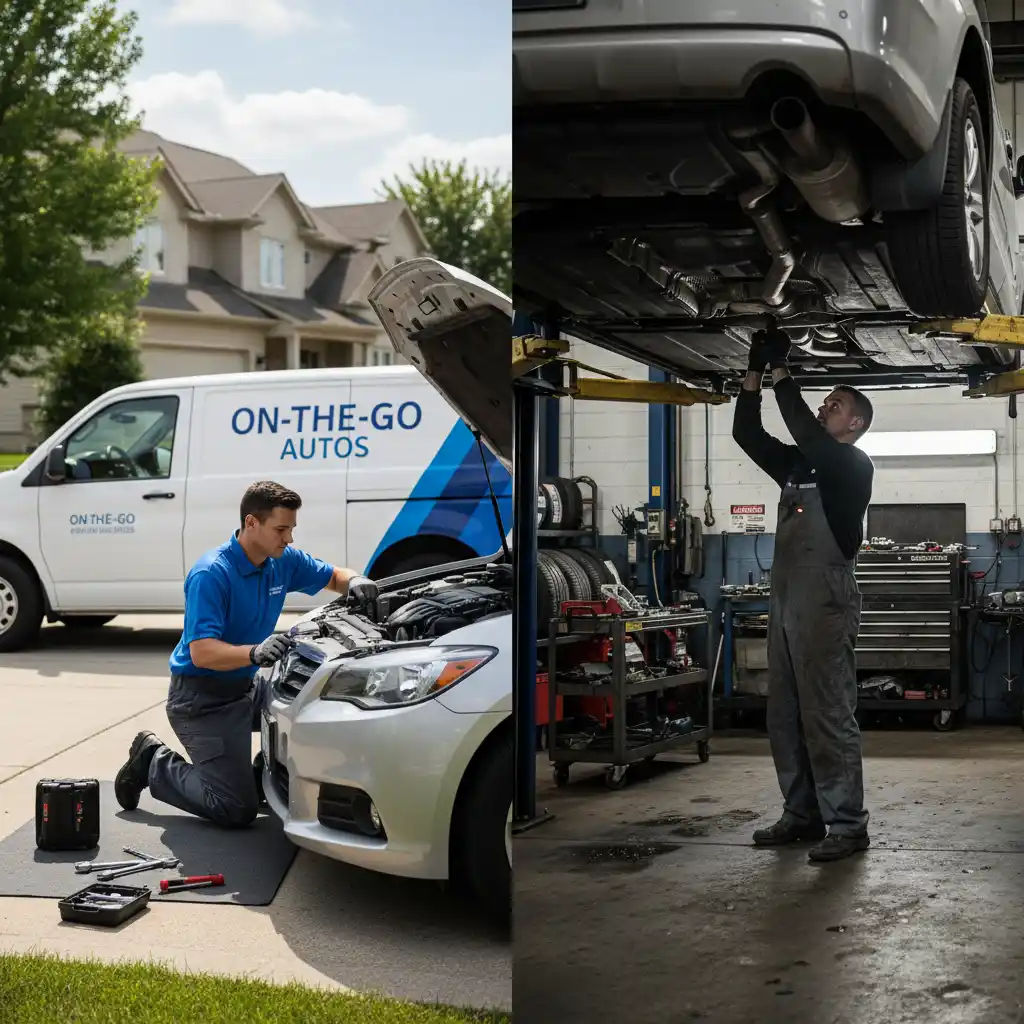
Mobile mechanics eliminate these friction points. They come to your home or office. You can continue working, caring for children, or relaxing in your own home while the repair is conducted outside. There is no towing fee, no rental car needed, and no need to coordinate a ride from a spouse or friend. When you factor in these savings, the mobile mechanic vs garage cost comparison heavily favors the mobile option for busy professionals and parents.

Equipment, Capabilities, and Repair Quality
While mobile mechanics offer cost and convenience benefits, there are physical limitations to what can be achieved in a driveway. This is where the fixed workshop justifies its higher costs.
The Limitations of Mobile Repair
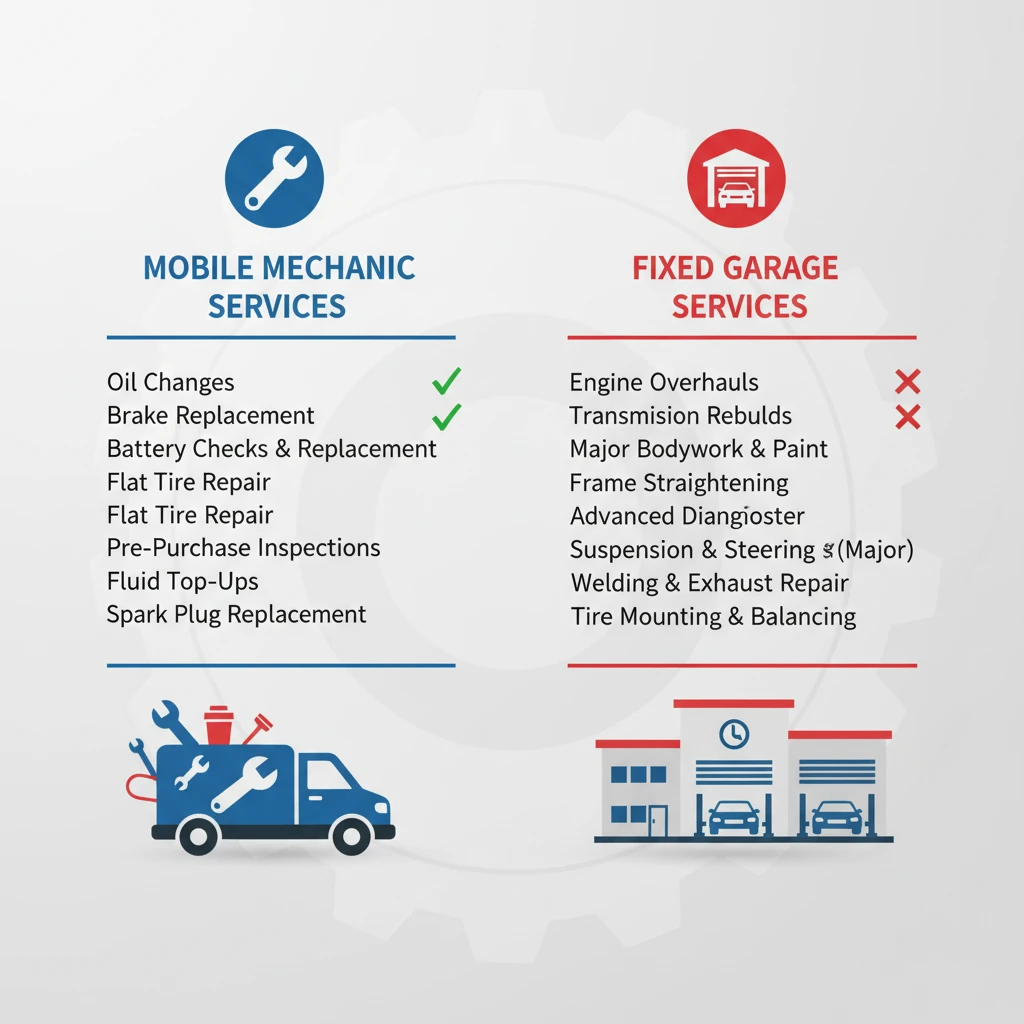
A mobile mechanic’s van is an engineering marvel, often packed with generators, air compressors, and a full suite of hand tools. They can easily handle:
- Brake pad and rotor replacements
- Battery, alternator, and starter replacements
- Diagnostic scans (Check Engine Light)
- Fluid flushes and oil changes
- Belts and hoses
However, they lack hydraulic lifts. If a repair requires dropping a transmission, removing a fuel tank, or extensive undercarriage work, a mobile mechanic is at a severe disadvantage. Working on jack stands is safe for minor work but inefficient and potentially dangerous for heavy-duty powertrain removal. Furthermore, mobile mechanics cannot perform wheel alignments, as this requires a large, stationary alignment rack.
The Workshop Superiority
Fixed garages invest heavily in specialized equipment. This includes tire mounting and balancing machines, precision alignment racks, and heavy-duty lifts that allow mechanics to stand under the vehicle. This access allows for faster diagnosis of underbody issues (exhaust leaks, suspension rattles) and enables major repairs like engine rebuilds or clutch replacements. For these jobs, the “cheaper” hourly rate of a mobile mechanic might be negated by the extra time it takes them to complete the job without a lift.
Reputable organizations like the National Institute for Automotive Service Excellence (ASE) certify technicians regardless of where they work. Always check for ASE certification whether you choose a shop or a mobile service to ensure competency.
The Verdict: When to Choose Mobile Over a Fixed Workshop
To summarize the mobile mechanic vs garage cost debate, the right choice depends entirely on the nature of the repair. Using the wrong service for the job will result in frustration and wasted money.
Choose a Mobile Mechanic When:
- The Car Won’t Start: If it’s a battery, starter, or alternator issue, you save the cost of a tow truck.
- Routine Maintenance: Oil changes, filters, and brake jobs are standard procedure and can be done cheaper and faster in your driveway.
- Pre-Purchase Inspections: If you are buying a used car, a mobile mechanic can meet the seller and inspect the vehicle on-site.
- Your Schedule is Tight: If you cannot afford to leave work or spend a Saturday morning in a waiting room.
Choose a Fixed Workshop When:
- Major Engine/Transmission Work: Internal engine repairs or transmission rebuilds require a sterile environment and heavy lifting equipment.
- Wheel Alignments and Tires: Mounting, balancing, and aligning require large stationary machines.
- Complex Electrical Diagnostics: While mobile mechanics have scanners, some deep electrical gremlins require massive wiring diagrams and testing equipment that is better suited for a shop environment.
- Weather Conditions: Mobile mechanics are at the mercy of the elements. Extreme cold, rain, or heat can delay repairs or compromise the quality of work (e.g., moisture getting into sensitive areas).
Frequently Asked Questions
Is a mobile mechanic cheaper than a garage?
Generally, yes. Mobile mechanics typically charge 20-30% less than fixed workshops because they do not have the overhead costs of rent, utilities, and support staff. However, for very complex jobs taking many hours, a shop might be more efficient.
Do mobile mechanics charge for travel time?
Most mobile mechanics charge a ‘call-out fee’ or ‘trip fee’ ranging from $50 to $100. This covers their fuel and travel time. Many providers will waive this fee if you agree to let them perform the repair work.
Can a mobile mechanic do everything a garage can do?
No. Mobile mechanics are limited by what they can carry in their van. They cannot perform wheel alignments, tire mounting/balancing, or major engine/transmission removal that requires a hydraulic lift.
Are mobile mechanics as qualified as shop mechanics?
Yes, many mobile mechanics are highly experienced, ASE-certified technicians who have moved away from dealerships to start their own businesses. Always ask to see their certification and insurance before hiring.
Do mobile mechanics offer warranties?
Reputable mobile mechanics offer warranties on both parts and labor, typically ranging from 12 months/12,000 miles to 24 months/24,000 miles. Always get the warranty terms in writing before service begins.
Is it safe to have a mechanic work in my driveway?
Yes, provided you have a flat, paved surface. Mobile mechanics cannot safely lift a vehicle on a steep incline, dirt, or gravel. Ensure your HOA or landlord permits vehicle repairs on the premises.